Kirjojen hintavertailu. Mukana 11 717 486 kirjaa ja 12 kauppaa.

Kirjahaku

Etsi kirjoja tekijän nimen, kirjan nimen tai ISBN:n perusteella.

1000 tulosta hakusanalla Adam Daigle

Adam Reparte - Time Traveler: How I Changed History
Adam Reparte is just like any other ten-year old except for one thing, he's a time traveler. Follow him on his journeys and experience how it used to be back in the day. Meet the lady who invented disposable diapers. Learn how Shakespeare really came up with Romeo and Juliet. Ride with Francis Scott Key as he pens the words to "The Star-Spangled Banner". Adam will tell you the truth, and nothing but the truth, about hot air balloons, football, and sandwiches. Learn the facts (well, mostly the facts) about some of your favorite stuff. Adam will keep you laughing as he explains the way it used to be. He knows all about it, he was there
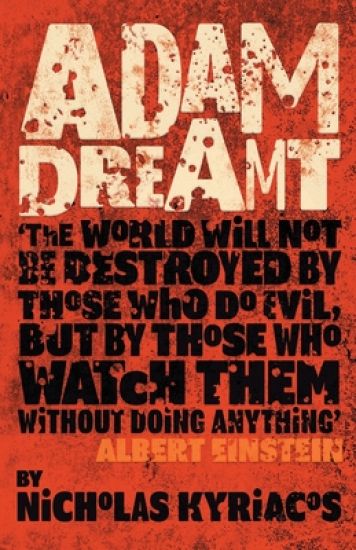
Adam Dreamt

Adam Dreamt

Nicholas Kyriacos

Seymour Design
2023
pokkari
Adam knows something is seriously wrong. The lower levels of the city are under water and uninhabitable, the temperature of the air is rising and an unpleasant odour has pervaded every tunnel, vault and chamber and is seeping out to the surface above. But as the youngest and most recently appointed Elder in AntLand, his concerns are being ignored. It is only when the Queen herself charges him with the responsibility of finding a suitable site for a new city-state that he discovers he is not alone in his fears. In giving Adam this undertaking, however, the Queen has made him an enemy of the most powerful ant in the kingdom: AyJay Heartland, the Queen's Senior Advisor and ChairAnt of The Council of Elders, whose desire is to make AntLand 'bigger, better, best'. Adam sets off on his quest under the cover of darkness, taking with him Zekiel the Wise and a contingent of JourneyAnts. He soon discovers that the perils facing AntLand are more serious than he could ever have imagined.
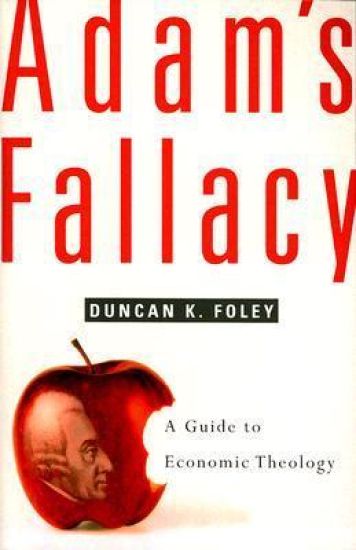
Adam’s Fallacy

Adam’s Fallacy

Duncan K. Foley

The Belknap Press
2008
nidottu
This book could be called “The Intelligent Person’s Guide to Economics.” Like Robert Heilbroner’s The Worldly Philosophers, it attempts to explain the core ideas of the great economists, beginning with Adam Smith and ending with Joseph Schumpeter. In between are chapters on Thomas Malthus, David Ricardo, Karl Marx, the marginalists, John Maynard Keynes, Friedrich Hayek, and Thorstein Veblen. The title expresses Duncan Foley’s belief that economics at its most abstract and interesting level is a speculative philosophical discourse, not a deductive or inductive science. Adam’s fallacy is the attempt to separate the economic sphere of life, in which the pursuit of self-interest is led by the invisible hand of the market to a socially beneficial outcome, from the rest of social life, in which the pursuit of self-interest is morally problematic and has to be weighed against other ends.Smith and his successors argued that the market and the division of labor that is fostered by it result in tremendous gains in productivity, which lead to a higher standard of living. Yet the market does not address the problem of distribution—that is, how is the gain in wealth to be divided among the classes and members of society? Nor does it address such problems as the long-run well-being of the planet.Adam’s Fallacy is beautifully written and contains interesting observations and insights on almost every page. It will engage the reader’s thoughts and feelings on the deepest level.
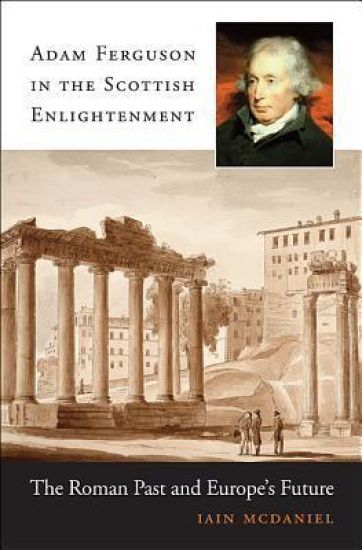
Adam Ferguson in the Scottish Enlightenment

Adam Ferguson in the Scottish Enlightenment

Iain McDaniel

Harvard University Press
2013
sidottu
Although overshadowed by his contemporaries Adam Smith and David Hume, the Scottish philosopher Adam Ferguson strongly influenced eighteenth-century currents of political thought. A major reassessment of this neglected figure, Adam Ferguson in the Scottish Enlightenment: The Roman Past and Europe’s Future sheds new light on Ferguson as a serious critic, rather than an advocate, of the Enlightenment belief in liberal progress. Unlike the philosophes who looked upon Europe’s growing prosperity and saw confirmation of a utopian future, Ferguson saw something else: a reminder of Rome’s lesson that egalitarian democracy could become a self-undermining path to dictatorship.Ferguson viewed the intrinsic power struggle between civil and military authorities as the central dilemma of modern constitutional governments. He believed that the key to understanding the forces that propel nations toward tyranny lay in analysis of ancient Roman history. It was the alliance between popular and militaristic factions within the Roman republic, Ferguson believed, which ultimately precipitated its downfall. Democratic forces, intended as a means of liberation from tyranny, could all too easily become the engine of political oppression—a fear that proved prescient when the French Revolution spawned the expansionist wars of Napoleon.As Iain McDaniel makes clear, Ferguson’s skepticism about the ability of constitutional states to weather pervasive conditions of warfare and emergency has particular relevance for twenty-first-century geopolitics. This revelatory study will resonate with debates over the troubling tendency of powerful democracies to curtail civil liberties and pursue imperial ambitions.
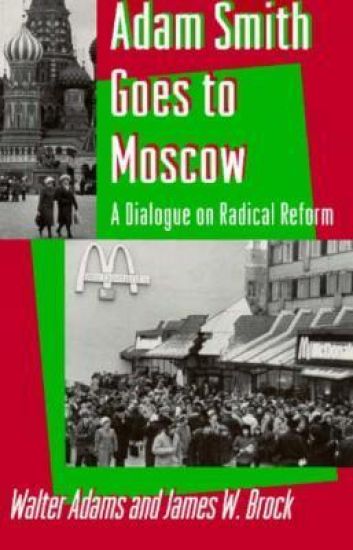
Adam Smith Goes to Moscow

Adam Smith Goes to Moscow

Walter Adams; James W. Brock; Robert Heilbroner

Princeton University Press
1994
pokkari
Adam Smith Goes to Moscow is a captivating dialogue between the head of a hypothetical, formerly socialist East European country and a fervently market-minded American adviser. Their spirited give-and-take highlights the monumental political as well as economic complexities currently faced by the former Soviet bloc countries as they struggle to transform themselves into free market economies.
Adam Smith in His Time and Ours

Adam Smith in His Time and Ours

Jerry Z. Muller

Princeton University Press
1995
pokkari
Counter to the popular impression that Adam Smith was a champion of selfishness and greed, Jerry Muller shows that the Inquiry into the Nature and Causes of the Wealth of Nations maintained that markets served to promote the well-being of the populace and that government must intervene to counteract the negative effects of the pursuit of self-interest. Smith's analysis went beyond economics to embrace a larger "civilizing project" designed to create a more decent society.
Adam Smith

Adam Smith

Princeton University Press
2016
sidottu
Adam Smith (1723-90) is perhaps best known as one of the first champions of the free market and is widely regarded as the founding father of capitalism. From his ideas about the promise and pitfalls of globalization to his steadfast belief in the preservation of human dignity, his work is as relevant today as it was in the eighteenth century. Here, Ryan Hanley brings together some of the world's finest scholars from across a variety of disciplines to offer new perspectives on Smith's life, thought, and enduring legacy. Contributors provide succinct and accessible discussions of Smith's landmark works and the historical context in which he wrote them, the core concepts of Smith's social vision, and the lasting impact of Smith's ideas in both academia and the broader world. They reveal other sides of Smith beyond the familiar portrayal of him as the author of the invisible hand, emphasizing his deep interests in such fields as rhetoric, ethics, and jurisprudence. Smith emerges not just as a champion of free markets but also as a thinker whose unique perspective encompasses broader commitments to virtue, justice, equality, and freedom. An essential introduction to Adam Smith's life and work, this incisive and thought-provoking book features contributions from leading figures such as Nicholas Phillipson, Amartya Sen, and John C. Bogle. It demonstrates how Smith's timeless insights speak to contemporary concerns such as growth in the developing world and the future of free trade, and how his influence extends to fields ranging from literature and philosophy to religion and law.
Adam Smith’s America

Adam Smith’s America

Glory M. Liu

PRINCETON UNIVERSITY PRESS
2022
sidottu
The unlikely story of how Americans canonized Adam Smith as the patron saint of free marketsOriginally published in 1776, Adam Smith’s The Wealth of Nations was lauded by America’s founders as a landmark work of Enlightenment thinking about national wealth, statecraft, and moral virtue. Today, Smith is one of the most influential icons of economic thought in America. Glory Liu traces how generations of Americans have read, reinterpreted, and weaponized Smith’s ideas, revealing how his popular image as a champion of American-style capitalism and free markets is a historical invention.Drawing on a trove of illuminating archival materials, Liu tells the story of how an unassuming Scottish philosopher captured the American imagination and played a leading role in shaping American economic and political ideas. She shows how Smith became known as the father of political economy in the nineteenth century and was firmly associated with free trade, and how, in the aftermath of the Great Depression, the Chicago School of Economics transformed him into the preeminent theorist of self-interest and the miracle of free markets. Liu explores how a new generation of political theorists and public intellectuals has sought to recover Smith’s original intentions and restore his reputation as a moral philosopher.Charting the enduring fascination that this humble philosopher from Scotland has held for American readers over more than two centuries, Adam Smith’s America shows how Smith continues to be a vehicle for articulating perennial moral and political anxieties about modern capitalism.
Adam Smith Reconsidered

Adam Smith Reconsidered

Paul Sagar

PRINCETON UNIVERSITY PRESS
2022
sidottu
A radical reinterpretation of Adam Smith that challenges economists, moral philosophers, political theorists, and intellectual historians to rethink him—and why he mattersAdam Smith has long been recognized as the father of modern economics. More recently, scholars have emphasized his standing as a moral philosopher—one who was prepared to critique markets as well as to praise them. But Smith’s contributions to political theory are still underappreciated and relatively neglected. In this bold, revisionary book, Paul Sagar argues that not only have the fundamentals of Smith’s political thought been widely misunderstood, but that once we understand them correctly, our estimations of Smith as economist and as moral philosopher must radically change.Rather than seeing Smith either as the prophet of the free market, or as a moralist who thought the dangers of commerce lay primarily in the corrupting effects of trade, Sagar shows why Smith is more thoroughly a political thinker who made major contributions to the history of political thought. Smith, Sagar argues, saw war, not commerce, as the engine of political change and he was centrally concerned with the political, not moral, dimensions of—and threats to—commercial societies. In this light, the true contours and power of Smith’s foundational contributions to western political thought emerge as never before.Offering major reinterpretations of Smith’s political, moral, and economic ideas, Adam Smith Reconsidered seeks to revolutionize how he is understood. In doing so, it recovers Smith’s original way of doing political theory, one rooted in the importance of history and the necessity of maintaining a realist sensibility, and from which we still have much to learn.
Adam Smith Reconsidered

Adam Smith Reconsidered

Paul Sagar

PRINCETON UNIVERSITY PRESS
2024
pokkari
A radical reinterpretation of Adam Smith that challenges economists, moral philosophers, political theorists, and intellectual historians to rethink him—and why he mattersAdam Smith has long been recognized as the father of modern economics. More recently, scholars have emphasized his standing as a moral philosopher—one who was prepared to critique markets as well as to praise them. But Smith’s contributions to political theory are still underappreciated and relatively neglected. In this bold, revisionary book, Paul Sagar argues that not only have the fundamentals of Smith’s political thought been widely misunderstood, but that once we understand them correctly, our estimations of Smith as economist and as moral philosopher must radically change.Rather than seeing Smith either as the prophet of the free market, or as a moralist who thought the dangers of commerce lay primarily in the corrupting effects of trade, Sagar shows why Smith is more thoroughly a political thinker who made major contributions to the history of political thought. Smith, Sagar argues, saw war, not commerce, as the engine of political change and he was centrally concerned with the political, not moral, dimensions of—and threats to—commercial societies. In this light, the true contours and power of Smith’s foundational contributions to western political thought emerge as never before.Offering major reinterpretations of Smith’s political, moral, and economic ideas, Adam Smith Reconsidered seeks to revolutionize how he is understood. In doing so, it recovers Smith’s original way of doing political theory, one rooted in the importance of history and the necessity of maintaining a realist sensibility, and from which we still have much to learn.
Adam Smith’s America

Adam Smith’s America

Glory M. Liu

PRINCETON UNIVERSITY PRESS
2024
pokkari
The unlikely story of how Americans canonized Adam Smith as the patron saint of free marketsOriginally published in 1776, Adam Smith’s The Wealth of Nations was lauded by America’s founders as a landmark work of Enlightenment thinking about national wealth, statecraft, and moral virtue. Today, Smith is one of the most influential icons of economic thought in America. Glory Liu traces how generations of Americans have read, reinterpreted, and weaponized Smith’s ideas, revealing how his popular image as a champion of American-style capitalism and free markets is a historical invention.Drawing on a trove of illuminating archival materials, Liu tells the story of how an unassuming Scottish philosopher captured the American imagination and played a leading role in shaping American economic and political ideas. She shows how Smith became known as the father of political economy in the nineteenth century and was firmly associated with free trade, and how, in the aftermath of the Great Depression, the Chicago School of Economics transformed him into the preeminent theorist of self-interest and the miracle of free markets. Liu explores how a new generation of political theorists and public intellectuals has sought to recover Smith’s original intentions and restore his reputation as a moral philosopher.Charting the enduring fascination that this humble philosopher from Scotland has held for American readers over more than two centuries, Adam Smith’s America shows how Smith continues to be a vehicle for articulating perennial moral and political anxieties about modern capitalism.