

Kirjahaku
Etsi kirjoja tekijän nimen, kirjan nimen tai ISBN:n perusteella.
1000 tulosta hakusanalla Alfredo Rodriguez
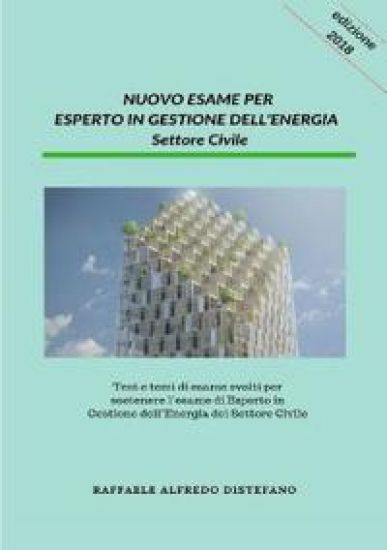
NUOVO ESAME PER ESPERTO IN GESTIONE DELL'ENERGIA - Settore Civile
Alfredo Raffaele DiStefano
Lulu.com
2018
pokkari
Il volume aggiornato nel 2018 riporta tutte le sintesi degli argomenti generali oggetto di esame. Il volume raccoglie pi di 300 test con risposte e diversi temi svolti per l'esame di certificazione di Esperto in Gestione dell' Energia in ambito del Settore Civile.

NUOVO ESAME PER ESPERTO IN GESTIONE DELL'ENERGIA - Settore Industriale
Alfredo Raffaele DiStefano
Lulu.com
2018
pokkari
Il volume aggiornato nel 2018 riporta tutte le sintesi degli argomenti generali oggetto di esame. Il volume raccoglie pi di 300 test con risposte e diversi temi svolti per l'esame di certificazione di Esperto in Gestione dell' Energia in ambito del Settore Industriale.

Il libro ripercorre la storia della stagione calcistica 1919-20 dei vari campionati dove l'Internazionale vince il campionato di prima categoria, nel libro ci sono riportati tutti i tabellini delle partite giocate le amichevoli tornei e coppe le partite della Nazionale Italiana le cronache e i commenti delle giornate di campionato e numerose foto

A classic of Brazilian literary criticism and historiography, Brazil and the Dialectic of Colonization explores the unique character of Brazil from its colonial beginnings to its emergence as a modern nation. This translation presents the thought of Alfredo Bosi, one of contemporary Brazil's leading intellectuals, to an English-speaking audience. Portugal extracted wealth from its Brazilian colony. Slaves--first indigenous peoples, later Africans--mined its ore and cut its sugarcane. From the customs of the colonists and the aspirations of the enslaved rose Brazil. Bosi scrutinizes signal points in the creation of Brazilian culture--the plays and poetry, the sermons of missionaries and Jesuit priests, the Indian novels of José de Alencar and the Voices of Africa of poet Castro Alves. His portrait of the country's response to the pressures of colonial conformity offers a groundbreaking appraisal of Brazilian culture as it emerged from the tensions between imposed colonial control and the African and Amerindian cults--including the Catholic-influenced ones--that resisted it.
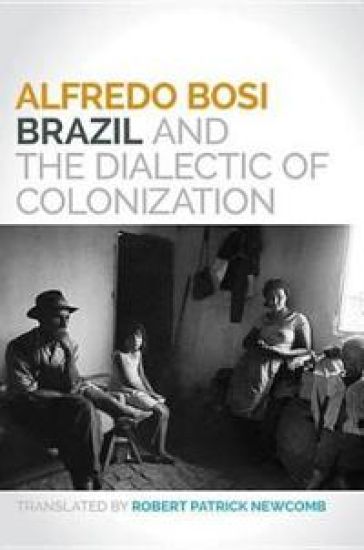
A classic of Brazilian literary criticism and historiography, Brazil and the Dialectic of Colonization explores the unique character of Brazil from its colonial beginnings to its emergence as a modern nation. This translation presents the thought of Alfredo Bosi, one of contemporary Brazil's leading intellectuals, to an English-speaking audience. Portugal extracted wealth from its Brazilian colony. Slaves--first indigenous peoples, later Africans--mined its ore and cut its sugarcane. From the customs of the colonists and the aspirations of the enslaved rose Brazil. Bosi scrutinizes signal points in the creation of Brazilian culture--the plays and poetry, the sermons of missionaries and Jesuit priests, the Indian novels of José de Alencar and the Voices of Africa of poet Castro Alves. His portrait of the country's response to the pressures of colonial conformity offers a groundbreaking appraisal of Brazilian culture as it emerged from the tensions between imposed colonial control and the African and Amerindian cults--including the Catholic-influenced ones--that resisted it.


Mirandé offers a detailed examination of Chicano social history and culture that includes studies of: Chicano labor and the economy; the Mexican immigrant and the U.S.-Mexico border conflict; the evolution of Chicano criminality; the American educational system and its impact on Chicano culture; the tensions between the institutional Church and Chicanos; and the myths and misconceptions of "machismo."
Gringo Justice is a comprehensive analysis and interpretation of the experiences of the Chicano people with the legal and judicial system in the United States. Beginning in 1848 and working to the present, a theory of Gringo justice is developed and applied to specific areas--displacement from the land, vigilantes and social bandits, the border, the police, gangs, and prisons. A basic issue addressed is how the image of Chicanos as bandits or criminals has persisted in various forms.
Gringo Justice is a comprehensive analysis and interpretation of the experiences of the Chicano people with the legal and judicial system in the United States. Beginning in 1848 and working to the present, a theory of Gringo justice is developed and applied to specific areas—displacement from the land, vigilantes and social bandits, the border, the police, gangs, and prisons. A basic issue addressed is how the image of Chicanos as bandits or criminals has persisted in various forms.

In the midst of a long and distinguished academic career, Alfredo Mirandé left his position as professor of sociology and chair of ethnic studies at the University of California, Riverside, to attend law school at Stanford University. This book is an extraordinary chronicle of the events in his life that led him to make this dramatic change and of the many obstacles he encountered at law school. The Stanford Law Chronicles is a comprehensive, first-person account of the law school experience, written by a person of color. Mirandé delivers a powerful and moving critique of the rigid hierarchies he encountered and of systematic attempts to strip him of his identity and culture. He also reflects on the implications of an increasing number of women and minority law school students for law and legal education. Although Stanford is considered to be one of the most progressive law schools in the country, Mirandé's experience there was one of alienation and frustration, as he encountered elitism and rigid hierarchies. Covering all three years at Stanford, he describes his experiences and the problems he encountered in the classroom. He also discusses Law Review, which he found to be pretentious, the Immigration Clinic where he successfully represented his first client, and the alternative Lawyering for Social Change curriculum that became a haven in an otherwise hostile environment. Interspersed with his account of law school are autobiographical snapshots and experiences, including that of the death of his brother, Héctor, which was the catalyst for his decision to pursue his childhood dream of attending law school and becoming a lawyer. This controversial book is certain to spark lively debate.
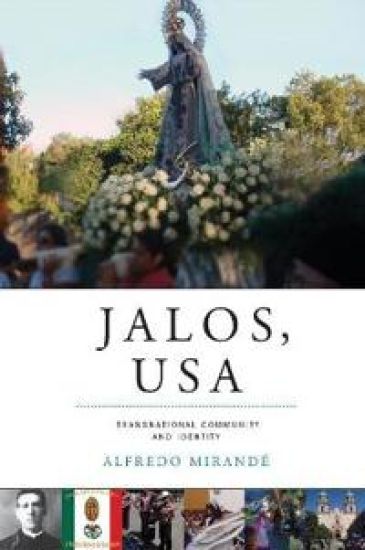
In Jalos, USA, Alfredo Mirandé explores migration between the Mexican town of Jalostotitlán, Jalisco, and Turlock, California, and shows how migrants retain a primal identity with their community of origin. The study examines how family, gender, courtship, religion, and culture promote a Mexicanized version of the "American Dream" for la gente de Jalos. After introducing traditional theories of migration and describing a distinctly circular migration pattern between Jalos and Turlock, Mirandé introduces a model of transnationalism. Residents move freely back and forth across the border, often at great risk, adopting a transnational village identity that transcends both the border and conventional national or state identities. Mirandé's findings are based on participant observation, ethnographic field research, and captivating in-depth personal interviews conducted on both sides of the border with a wide range of respondents. To include multiple perspectives, Mirandé conducts focus group interviews with youth in Jalos and Turlock, as well as interviews with priests and social service providers. Together, these data provide both a rich account of experiences as well as assessments of courtship practices and problems faced by contemporary migrants. Jalos, USA is written in an accessible style that will appeal to students and scholars of Latino and migration studies, policy makers, and laypersons interested in immigration, the border, and transnational migration.

This revised, second edition of The Chicano Experience offers a new interpretation of the social, cultural, and economic forces that shape the situation of Chicanos today. For more than thirty years, and now in its ninth printing, Alfredo Mirandé's The Chicano Experience has captivated readers with its groundbreaking analysis of Chicanos in the United States. Although its original context differs markedly from the current demographic landscape, it remains no less relevant today—Latinos have emerged as the largest minority population in the United States. With updated chapters revised in light of contemporary scholarship, this second edition speaks to the Chicano of today, in addition to puertoriqueños, Central Americans, and other groups who share common experiences of colonization, racialization, and, especially in the last decade, demonization. In this foundational text, Mirandé develops a comprehensive framework for Chicano sociology that, in attending closely to Chicano experience, aims to correct the biases and misconceptions that have prevailed in the field. He demonstrates how the conventional immigrant group model of society, with its focus on assimilation into mainstream American culture, does not apply to Chicanos. Supporting this constructive proposal are analyses of Chicano social history and culture, with chapters focusing on the economy, the border, law, education, family, gender and machismo, and religion. The book concludes with a case study of community attitudes toward the police in an urban barrio. In many ways, the first edition of The Chicano Experience anticipated the sensitivity to the experiences of the underrepresented in American culture. This second edition reaffirms the prescience of Mirandé's work and makes it available to a new generation of students and scholars of Chicano and Latino studies, ethnic and race studies, sociology, and cultural studies.

This revised, second edition of The Chicano Experience offers a new interpretation of the social, cultural, and economic forces that shape the situation of Chicanos today. For more than thirty years, and now in its ninth printing, Alfredo Mirandé's The Chicano Experience has captivated readers with its groundbreaking analysis of Chicanos in the United States. Although its original context differs markedly from the current demographic landscape, it remains no less relevant today—Latinos have emerged as the largest minority population in the United States. With updated chapters revised in light of contemporary scholarship, this second edition speaks to the Chicano of today, in addition to puertoriqueños, Central Americans, and other groups who share common experiences of colonization, racialization, and, especially in the last decade, demonization. In this foundational text, Mirandé develops a comprehensive framework for Chicano sociology that, in attending closely to Chicano experience, aims to correct the biases and misconceptions that have prevailed in the field. He demonstrates how the conventional immigrant group model of society, with its focus on assimilation into mainstream American culture, does not apply to Chicanos. Supporting this constructive proposal are analyses of Chicano social history and culture, with chapters focusing on the economy, the border, law, education, family, gender and machismo, and religion. The book concludes with a case study of community attitudes toward the police in an urban barrio. In many ways, the first edition of The Chicano Experience anticipated the sensitivity to the experiences of the underrepresented in American culture. This second edition reaffirms the prescience of Mirandé's work and makes it available to a new generation of students and scholars of Chicano and Latino studies, ethnic and race studies, sociology, and cultural studies.

La América Central. Su história, geografía, etc.
Alfredo Opisso
Creative Media Partners, LLC
2018
pokkari
Special Education in Latin America
Alfredo J. Artiles; Daniel P. Hallahan
Praeger Publishers Inc
1995
sidottu
Comparative special education is a topic rarely covered in research. This is a ground-breaking assessment of special education services for students with mild disabilities in eight Latin American countries (Brazil, Chile, Guatemala, Honduras, Jamaica, Mexico, Panama, and Uruguay). Considering that people with mild disabilities comprise more than two-thirds of the disabled population in the world, this is an important area of study. The editors have identified two broad areas in which experiences could be recounted: the provision of services and the preparation of personnel. The focus is on the elementary education level, although early intervention and secondary education are also discussed.
Neuropsychological Evaluation of the Spanish Speaker
Alfredo Ardila; Monica Rosselli; Antonio E. Puente
Kluwer Academic/Plenum Publishers
1994
sidottu
This book is the culmination of a research program conducted in Colombia during the past several years. The fundamental aim of the program was to develop neuropsychological tests for Spanish speakers, especially elderly individuals and those with limited edu cational attainment. The lack of norms for these populations repre sents a significant practical problem not only in developing countries but also in more developed countries. For example, norms are usually obtained with middle-class Anglo-Saxon English-speaking popula tions, often university students, and such norms do not usually include individuals older than 65 years. Furthermore, very few neuro psychological tests have been developed for Spanish speakers; fre quently, tests are translated into Spanish (often poor translations at that), but the norms used are still those obtained from English speaking populations. This volume summarizes the normative results of this research program. We anticipate that these tests and norms will be particularly useful in the neuropsychological evaluation of Spanish speakers, especially those with limited educational attainment, and the elderly. The United States represents the fifth largest Spanish-speaking coun try in the world (after Mexico, Spain, Argentina, and Colombia), with over 20 million speakers. It is anticipated that by the year 2025 there will be as many Hispanics in the United States as members of all other ethnic minority groups combined. Further, about 10% of the U. S. population are considered functionally illiterate, with Hispanics rep resenting an unusually large segment.

French Theories of Regulation and Conceptions of the International Division of Labour
Alfredo C. Robles Jr
Palgrave Macmillan
1994
sidottu
This book argues that a satisfactory theory of the international division of labour must come to grips with the problems of economism, functionalism and determinism that have sometimes characterised Marxian approaches to this theme. It assesses the implications of French regulation theories for this central concept of international political economy. It covers not only the Parisian variant, well represented in English through the work of Michel Aglietta and Alain Lipietz, but also the no less important Grenoble school.

The Sixth Amendment in Modern American Jurisprudence
Alfredo Garcia
Praeger Publishers Inc
1992
sidottu
Alfredo Garcia, who has been both a prosecuting and a defense attorney in criminal processes, reviews the United States Supreme Court's interpretations of the Sixth Amendment--the right to a fair trial--as they have evolved since the 1960s. He determines that the Court, with a few notable exceptions, has demonstrated doctrinal inconsistency and has failed to adhere to the core values embedded in the amendment. Garcia argues that the functional and symbolic roles of the Sixth Amendment have been eroded, and that this is particularly evident in the three clauses that provide defendants the means to respond to charges and to be assured of fair process. The clauses considered specifically involve the right to counsel, the right to confrontation, and the right to compulsory process. The Supreme Court's emphasis in more recent years is perceived to be on efficiency rather than on protecting the ideal of a fair trial.The six chapters cover the rights to counsel, to confrontation, to compulsory process, to a speedy trial, and to a jury trial, and the sometime conflict between a free press (First Amendment) and the Sixth Amendment assurance of a fair trial free of antecedent prejudicial publicity. This is a timely, much-needed, and substantive examination of the highest court's interpretations of a defendant's constitutional right to a fair, speedy trial.
The Fifth Amendment is typically equated in both popular and legal discourse with the privilege against self-incrimination. This concept, Garcia reminds us, represents an incomplete view of the amendment. Often forgotten are the other two criminal clauses embodied in the text of the amendment: the right to a grand jury indictment for a serious crime and the freedom from double jeopardy for the same offense. Garcia emphasizes the relationship among these criminal protections. Historical developments suggest that these seemingly disparate provisions have common threads: to provide constitutional protection for all trial-related rights. Underlying these constitutional provisions is the need to check the potential abuse of governmental power over the individual. Indeed, this theme permeated the historical backdrop to the Fifth Amendment. Finally, Garcia examples the practical ties of these clauses. The right to a grand jury indictment, the privilege against self-incrimination and the protection against double-jeopardy represent points in the continuum of the criminal justice process. An important resource for scholars and students involved with Amerian constitutional law, criminal justice, and criminology.