Kirjojen hintavertailu. Mukana 12 083 983 kirjaa ja 12 kauppaa.

Kirjahaku

Etsi kirjoja tekijän nimen, kirjan nimen tai ISBN:n perusteella.

1000 tulosta hakusanalla Andreas Herrmann

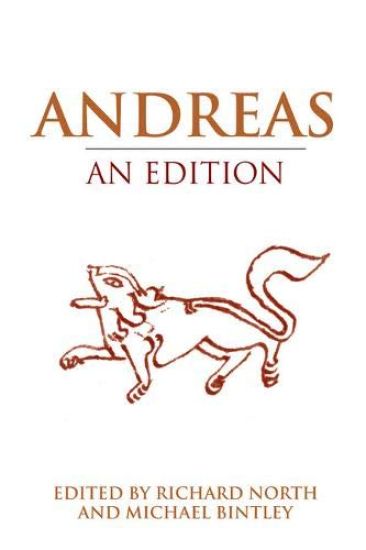
Andreas: An Edition

Andreas: An Edition

Liverpool University Press
2016
sidottu
This is the first edition of Andreas for 55 years, also the first to present the Anglo-Saxon, or rather Old English, text with a parallel Modern English poetic translation. The book aims not only to provide both students and scholars with an up-to-date text and introduction and notes, but also to reconfirm the canonical merit of Andreas as one of the longest and most important works in Old English literature. The introduction to our text is substantial, re-positioning this poem in respect of nearly six decades’ progress in the palaeography, sources and analogues, language, metrics, literary criticism and archaeology of Andreas. The book argues that the poet was Mercian, that he was making ironic reference to Beowulf and that his story of St Andrew converting pagan Mermedonian cannibals was coloured by King Alfred’s wars against the Danes (871-9, 885-6, 892-6). Andreas is here dated to Alfred’s later reign with such analysis of contexts in history and ideology that the author’s name is also hypothesized. The Old English text and Modern English translation of Andreas are presented in a split-page format, allowing students at whatever level of familiarity with the Anglo-Saxon vernacular to gain a direct access to the poem in close to its original form. The translation follows the poem’s word order and style, allowing modern readers to feel the imagination, ideology and humour of Andreas as closely as possible. The text of the Old English poem is accompanied by a full set of supporting notes, and a glossary representing the translation.
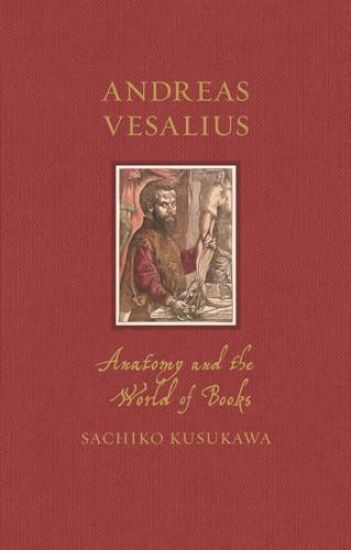
Andreas Vesalius

Andreas Vesalius

Sachiko Kusukawa

REAKTION BOOKS
2024
sidottu
In 1543 the young and ambitious physician Andreas Vesalius published what became the most famous book in the history of medicine, On the Fabric of the Human Body. While we tend to think of dissection as a form of destroying the body, Vesalius believed that it helped establish how the human body was constructed. Sachiko Kusukawa shows how Vesalius’s book presented this view through innovative use of Renaissance art, printing technology and the classical tradition. She replaces the conventional view of Vesalius as a proto-modern, anti-authoritarian father of anatomy with a more nuanced account of how Vesalius exploited cultural and technological developments to create an astounding, beautiful book that propelled him to the post of imperial physician and secured his enduring fame.
Andreas: An Edition

Andreas: An Edition

Liverpool University Press
2019
nidottu
This is the first edition of Andreas for 55 years, also the first to present the Anglo-Saxon, or rather Old English, text with a parallel Modern English poetic translation. The book aims not only to provide both students and scholars with an up-to-date text and introduction and notes, but also to reconfirm the canonical merit of Andreas as one of the longest and most important works in Old English literature. The introduction to our text is substantial, re-positioning this poem in respect of nearly six decades’ progress in the palaeography, sources and analogues, language, metrics, literary criticism and archaeology of Andreas. The book argues that the poet was Mercian, that he was making ironic reference to Beowulf and that his story of St Andrew converting pagan Mermedonian cannibals was coloured by King Alfred’s wars against the Danes (871-9, 885-6, 892-6). Andreas is here dated to Alfred’s later reign with such analysis of contexts in history and ideology that the author’s name is also hypothesized. The Old English text and Modern English translation of Andreas are presented in a split-page format, allowing students at whatever level of familiarity with the Anglo-Saxon vernacular to gain a direct access to the poem in close to its original form. The translation follows the poem’s word order and style, allowing modern readers to feel the imagination, ideology and humour of Andreas as closely as possible. The text of the Old English poem is accompanied by a full set of supporting notes, and a glossary representing the translation.
Andreas, the Boy Who Imagines

Andreas, the Boy Who Imagines

Jeraco Rivers

Independently Published
2019
nidottu
Andreas has a unique gift. His energy was Epicnomenal since the day he was born. Unlike the average year old whose mind has been distracted by the world of technology, Andreas spends a lot of time talking to his best friend the sun. The absence of his father creates a greater sense of love for his mom. Andreas speaks to the universe every day, and even more when he encounters those in need or in pain. His mother is not aware of his gift. Everything he speaks has the power to be born into existence.It's been 7 years since he and the sun first formed their unbelievably unbreakable bond. At 7, he understands the laws of attraction, and the power of the tongue. While most children are playing games, he utilizes his time making a change for those he loves, and even strangers that he has crossed paths with. He understands that every person that is blessed with his presence has already been destined for greatness. Andreas, The Boy Who Imagines brings hope back to a powerful generation.
Andreas Gryphius

Andreas Gryphius

Blake Lee Spahr

Camden House Inc
1993
sidottu
Andreas Gryphius (1616-1664) was the greatest German poet and dramatist of the 17th century, yet he remains virtually unknown outside his own country. One of the chief reasons for his relative obscurity outside Germany is that almost all studies devoted to him are written in German. Another problem has to do with the inaccessibility of the recondite forms of Baroque literature. This book is designed especially for students and scholars in disciplines other than German, particularly those in comparative literature and the modern languages, where a lack of knowledge about this major German writer distorts a proper international perspective on major figures of the 17th century. But it also addresses the Germanist, especially scholars in Germany; they will find interpretations and a way of presenting them entirely new.
Andreas Dresen

Andreas Dresen

Peter Lang Ltd
2016
nidottu
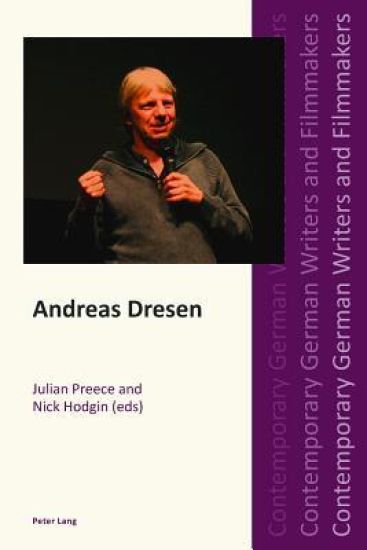
Andreas Dresen is a leading European filmmaker whose oeuvre now spans three decades and includes some of the most acclaimed German films of recent times, such as Halbe Treppe (Grill Point, 2002), Sommer vorm Balkon (Summer in Berlin, 2005) and Halt auf freier Strecke (Stopped on Track, 2011). The essays collected in this volume by leading scholars from the USA, UK and Ireland place him in the tradition of auteur cinema while emphasising his roots in the pre-1990 film industry of DEFA in the GDR. Dresen works with an established team of performers, technicians and scriptwriters, uses improvisation and non-professional actors, and makes music and song an integral component of many of his films. He is a scholar-filmmaker who pushes at the boundaries of his chosen modes and genres (documentary, neo-realism, films about films or literary adaptation); he is socially committed, casting a Brechtian eye on interpersonal encounters in neoliberal environments; and he is always interested to tell universal stories from the localities he knows best, the working-class milieus of Germany's east.
The Internet of Money Volume Two: A collection of talks by Andreas M. Antonopoulos
"The Internet of Money Volume Two: a collection of talks" is the spectacular sequel to the cult classic and best seller "The Internet of Money Volume One: a collection of talks" by Andreas M. Antonopoulos. Volume Two contains 11 more of his most inspiring and thought-provoking talks, including: Introduction to Bitcoin; Blockchain vs Bullshit; Fake News, Fake Money; Currency Wars; Bubble Boy and the Sewer Rat; Rocket Science and Ethereum's Killer App; and many more. Volume Two also includes an all-new frequently asked questions section In 2013, Andreas M. Antonopoulos started publicly speaking about bitcoin and quickly became one of the world's most sought-after speakers in the industry. To date, he has delivered more than 75, TED-style talks in venues ranging from the Henry Ford Museum in the United States to packed-out Bitcoin Meetups around the world including Brazil, the Czech Republic, and New Zealand, and every talk is completely different.In these performances, Antonopoulos walks onto the stage and delivers a live, unscripted talk. Without a deck in sight, he unleashes his latest insights into the lightning-fast changes surrounding bitcoin. Combining the knowledge of one of the world's leading blockchain technologists, with cultural context, comedy, and the flair of a performance artist, Antonopoulos conveys an up-to-the-second understanding of bitcoin to live audiences worldwide.Many of these talks were so visionary, their content so educational, that they were curated and refined into a book form. On 7 September 2016, The Internet of Money Volume One was launched on The Joe Rogan Experience podcast (the interview has since been viewed more than 300,000 times). With its genesis in the lived, human experience, The Internet of Moneyoffered something that was desperately needed: an explanation of the philosophy, economics, politics, poetics, and technologies of bitcoin and open blockchains set within a broad historical context and using clear, simple language that delighted general audiences and bitcoin enthusiasts alike. During its first year, Volume One quickly became a hit in the global crypto-currency community-appealing to audiences from fields as diverse as the arts, sciences, and humanities. As one reader wrote: "It provides a uniquely accessible take on a mind-bendingly abstract system." The Internet of Money Volume Two: a collection of talks builds on that momentum and offers readers an opportunity to experience more these inspiring and thought-provoking talks in print. It also includes a bonus question and answer section, where Andreas answers some of the most frequently asked questions from audience members during his worldwide tour. Volume Two is a sequel that rivals, even exceeds, the first, in content, scope, and vision. These talks are intellectual fire-starters you won't want to miss. Make this book part of your collection and see why Andreas M. Antonopoulos is considered the most powerful and engaging voice in crypto-currency and blockchain.
Andreas Vesalius and his Fabrica, 1537-1564

Andreas Vesalius and his Fabrica, 1537-1564

Vivian Nutton

Springer International Publishing AG
2024
sidottu
This monograph presents a study of the most significant book in the history of anatomy, Fleming Andreas Vesalius’ (1514-1564) De humani corporis fabrica. Vesalius’ Fabrica was immediately recognised as changing the view of the human body when it was published in 1543, and it remains iconic today. Despite this, little has been written about Vesalius’ later revisions and corrections to the work, as well as his annotations leading up to the book. The author addresses this lacuna by examining the Fabrica from its inception in Paris in the 1530s, through its publication in 1543, to subsequent revisions and its present status as an expensive treasure. The book also contains new discoveries about the period of Vesalius’ earliest publications from 1537-8, the printing and production of the 1543 Fabrica, and the extensive remaking of the 1555 edition. Chapters also explore Vesalius’ background in new humanist medicine and anatomical teaching in Paris and Italy, the verbal message that the Fabrica was intended to convey, and the immediate responses to the book.
Andreas Gryphius (1616–1664)
Der Tagungsband eröffnet neue Perspektiven auf das Gesamtwerk des berühmtesten deutschen Autors des literarischen Barock. Im Zentrum steht eine zeithistorische, staatsphilosophische, theologische und wissenschaftsgeschichtliche Kontextualisierung seines Œuvres, das sich in einem spannungsvollen Feld zwischen christlich-transzendenter Perspektive und ‚säkularer‘ Zeitdiagnostik, zwischen theologischem Sinnhorizont und Realitätsbezug bewegt. Damit setzt der Band im Anschluss an gegenwärtige Tendenzen der Frühneuzeitforschung einen neuen Akzent innerhalb der Gryphius-Philologie, die diskursgeschichtliche Zusammenhänge vernachlässigte und einen zu revidierenden Dualismus zwischen theologischer und säkularer Deutung etablierte. Dabei spielen komparatistische und interkulturelle Aspekte eine bedeutende Rolle: Gryphius war auf seinen akademischen Reisen mit der rezenten französischen, italienischen und niederländischen Literatur bekannt geworden. Deren Rezeption durch Gryphius wird ebenso verstärkt untersucht wie das lateinische Werk des Schlesiers. Gryphius erscheint als Zeitgenosse tiefgreifender Erneuerungsdebatten, die er mit feinem Gespür aufzunehmen und in seinen Dichtungen zu verhandeln weiß.
Andreas Gryphius: Mumiae Wratislavienses
1662 veröffentlichte Andreas Gryphius die „Mumiae Wratislavienses“, eine Abhandlung über ägyptische Mumien in lateinischer Sprache. Anlass hierzu gab ihm die Sektion zweier Mumienkörper, die wenige Jahre zuvor in Breslau stattgefunden hatte. Der Text greift jedoch weit darüber hinaus und mischt sich in mehrere zeitgenössische Debatten der Mumienkunde ein – ein Wissensgebiet, das noch kaum systematisiert war und unter den ägypteninteressierten Gelehrten zunehmend Aufmerksamkeit fand.„Mumiae Wratislavienses“ ist die einzige erhaltene gelehrt-wissenschaftliche Schrift des Barockliteraten. Mit dem vorliegenden Band liegt der Text nun erstmals in einer Neuedition vor. Er wird ergänzt durch eine Übersetzung sowie einen Stellenkommentar und in einer Werkstudie aufbereitet, die Gryphius’ gelehrte Tätigkeit in den Fokus stellt. Zur Kontextualisierung des Werkes wird die Arbeit durch eine umfangreiche Auseinandersetzung mit den Mumienstudien der Frühen Neuzeit eingeleitet.
Andreas Gryphius (1616–1664)

Andreas Gryphius (1616–1664)

De Gruyter
2022
isokokoinen pokkari
Der Tagungsband eröffnet neue Perspektiven auf das Gesamtwerk des berühmtesten deutschen Autors des literarischen Barock. Im Zentrum steht eine zeithistorische, staatsphilosophische, theologische und wissenschaftsgeschichtliche Kontextualisierung seines Œuvres, das sich in einem spannungsvollen Feld zwischen christlich-transzendenter Perspektive und ‚säkularer‘ Zeitdiagnostik, zwischen theologischem Sinnhorizont und Realitätsbezug bewegt. Damit setzt der Band im Anschluss an gegenwärtige Tendenzen der Frühneuzeitforschung einen neuen Akzent innerhalb der Gryphius-Philologie, die diskursgeschichtliche Zusammenhänge vernachlässigte und einen zu revidierenden Dualismus zwischen theologischer und säkularer Deutung etablierte. Dabei spielen komparatistische und interkulturelle Aspekte eine bedeutende Rolle: Gryphius war auf seinen akademischen Reisen mit der rezenten französischen, italienischen und niederländischen Literatur bekannt geworden. Deren Rezeption durch Gryphius wird ebenso verstärkt untersucht wie das lateinische Werk des Schlesiers. Gryphius erscheint als Zeitgenosse tiefgreifender Erneuerungsdebatten, die er mit feinem Gespür aufzunehmen und in seinen Dichtungen zu verhandeln weiß.
Andreas Gryphius- Grossmuetiger Rechtsgelehrter Oder Sterbender Aemilius Paulus Papinianus

Andreas Gryphius- Grossmuetiger Rechtsgelehrter Oder Sterbender Aemilius Paulus Papinianus

Andreas Gryphius

Herbert Cie Lang AG, Buchhandlung Antiquariat
1977
nidottu
Gryphius erschliesst sich dem modernen Leser nur muhsam. Sein Satzbau und seine Wortverbindungen sind kompliziert und anspruchsvoll. Die Anmerkungen von Gryphius zu seinen eigenen Stucken sind teilweise noch schwerer verstandlich als das Stuck selbst. Die vorliegende Neu- ausgabe des -Papinian- mochte vor allem dem Studenten der Germanistik den Zugang zu Gryphius' Trauerspiel erleichtern. Sie bringt erstmals einen ausfuhrlichen Zeilenkommentar zum Text des Dramas und zu den An- merkungen von Gryphius."
Andreas Hofer

Andreas Hofer

Luise Mühlbach

Hansebooks
2017
pokkari
Andreas Hofer - An historical novel is an unchanged, high-quality reprint of the original edition of 1868. Hansebooks is editor of the literature on different topic areas such as research and science, travel and expeditions, cooking and nutrition, medicine, and other genres. As a publisher we focus on the preservation of historical literature. Many works of historical writers and scientists are available today as antiques only. Hansebooks newly publishes these books and contributes to the preservation of literature which has become rare and historical knowledge for the future.