Kirjahaku
Etsi kirjoja tekijän nimen, kirjan nimen tai ISBN:n perusteella.
1000 tulosta hakusanalla Arvil Wiley
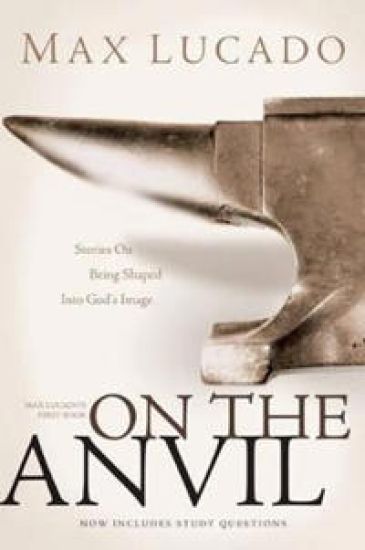
We are all somewhere in the Blacksmith's shop. We are either on the scrap pile, in the Master's hands on the anvil, or in the tool chest. (Some of us have been in all three.) In this collection of writings, best-selling author Max Lucado takes us on a tour of the “shop.” We'll examine all tools and look in all corners, from the shelves to the workbench, from the water to the fire. And for you who make the journey—who leave the heap and enter the fire, dare to be pounded on God's anvil, and doggedly seek to discover your own purpose—take courage, for you await the privilege of being called “God's chosen instruments.” This new edition includes discussion questions and a new foreword from the author.

This groundbreaking book examines the role of rulers with nomadic roots in transforming the great societies of Eurasia, especially from the thirteenth to sixteenth centuries. Distinguished historian Pamela Kyle Crossley, drawing on the long history of nomadic confrontation with Eurasia’s densely populated civilizations, argues that the distinctive changes we associate with modernity were founded on vernacular literature and arts, rising literacy, mercantile and financial economies, religious dissidence, independent learning, and self-legitimating rulership. Crossley finds that political traditions of Central Asia insulated rulers from established religious authority and promoted the objectification of cultural identities marked by language and faith, which created a mutual encouragement of cultural and political change. As religious and social hierarchies weakened, political centralization and militarization advanced. But in the spheres of religion and philosophy, iconoclasm enjoyed a new life. The changes cumulatively defined a threshold of the modern world, beyond which lay early nationalism, imperialism, and the novel divisions of Eurasia into “East” and “West.” Synthesizing new interpretive approaches and grand themes of world history from 1000 to 1500, Crossley reveals the unique importance of Turkic and Mongol regimes in shaping Eurasia’s economic, technological, and political evolution toward our modern world.

A crewman has been murdered aboard the "U.S.S. Trident, " and all evidence points to Ensign Janos of the "Excalibur." Captain Mackenzie Calhoun is reluctant to accept that Janos, a powerful non-humanoid whom the captain has known and trusted for years, could be a killer, and immediately launches an investigation into the crime. But this troubling murder mystery soon escalates into a full-fledged diplomatic crisis that threatens to pit Calhoun and Captain Elizabeth Shelby against the entire United Federation of Planets -- and the "Starship Enterprise™." Meanwhile, the turmoil involving Ensign Janos forces Calhoun to recall his own tempestuous past, his rocky relationship with a young Elizabeth Shelby -- and a long-ago exploit that may have everything to do with the deadly emergency that now confronts them all
Hammer or Anvil: The Story of the German Working Class Movement
Evelyn Anderson
Createspace Independent Publishing Platform
2010
nidottu
Little Orphan Anvil: the Shades of Fate
Joseph Beekman
Createspace Independent Publishing Platform
2012
nidottu
Accepting the task of protecting Billie Womack is a no-brainer for ex-counterterrorist soldier Joe Hunter, but it comes with its own set of complications. Billie's husband, Richard, stole thirty million dollars from some violent people. He apparently died in a car crash with Billie's daughter, Nicola, during a desperate attempt to elude his pursuers. But his enemies don't believe him dead. They think he escaped the plunge into the icy river that killed Nicola and has now decided to come back for the money. If he's alive, they believe he'll contact Billie. It doesn't take long for the bad guys to arrive at her remote farmhouse. Soon she and Joe are fugitives. Dead or alive, Richard's fate means nothing to Hunter, but he promises to do everything in his power to protect the grieving mother. Even if it means taking a bullet for her, it's a price he'll pay. It's a pledge he will come to regret, as he learns that killers are forged on the Devil's anvil.


Destiny's Anvil: A Tale of Politics, Payback & Pigs
Steven Wells Hicks
Createspace Independent Publishing Platform
2014
nidottu
Will Guidry's career as a backwater lawyer is going nowhere until he has a couple of beers with up-and-coming political operative Tucker Callahan, whose family's petrochemical fortune instills in him a confidence bordering on hubris. As Tucker explains to his rudderless brother, Carter, "Guidry and I made a deal because he needed a miracle and I wanted to play God." Guidry rides Tucker's political horse sense into the office of Louisiana's Attorney General, while Tucker capitalizes on Guidry's victory to bolster his own political reputation. But what should become a powerful alliance deteriorates into a bitter feud when Guidry tries to flex his political muscle and Tucker suspects he may have maneuvered a calculating sociopath into the marble halls of power. Caught in the crossfire is Carter, the story's narrator. Devastated by betrayal at the hands of his brother and the woman he loved for a lifetime, Carter watches the power struggle between Tucker and Guidry from the sidelines. Everything changes when he stumbles on the charismatic attorney general committing a monstrous crime, and finds himself drawn into the vortex of his brother's private war. Racing from a bungled execution through ruthless political payback, before culminating in a no-holds-barred courtroom showdown, the stakes continue to rise and Carter finds his small-town naivet peeling away. Replacing it is a mounting dread of what will happen when the hammer of justice meets destiny's anvil.
More than half these poems were written in prison. This came about because the Islamic Movement in Sudan took power by a military coup, on 30th June 1989, and began their dictatorship; returning the country to the dark ages. Most Sudanese are without choice, without democracy, but are being oppressed in their own country by Islamic ideology; a country like Sudan, which has its local African traditional worship, Christianity and atheism. During the ten years between" 1990-2000"; I was arrested as a prisoner of conscience; twenty four times. This took place in many different towns, in Sudan. In October of 2000, during my 23rd arrest; I was taken from my home at Elhasahisa, after midnight; as usual; and driven to Wad Medani, the capital of the province of middle Sudan. I was put into a small dirty cell; before this, I was placed in "Reception Meal" in other words, the place for beating and plastic hose assaults on victims. In the morning of the second day in this cell; I noticed the wall. This wall was covered in writing from previous prisoners from my secret party, Communist Party of Sudan. I knew most of them. Some slogans were in blood; other were carved out of the wall; painstakingly. The clearest one I could see was written in blood saying "Vive for the struggle of Sudanese People". This writing was written there by my friend and comrade "Abdelmnaim Rahma", who died as a result of torture by the security police of the Islamic Sudanese government. Like this great man, many Sudanese brave souls were martyred in this way. When I saw this slogan written in blood, my spirit rose within me, and strengthened me to keep on struggling for my people. I also begin to write; in my mind; a poem to honour this martyr. As paper was not allowed in the prison; nothing in fact; I began to compose in my mind, many poems which gave me much spiritual healing. The cell became secondary. My spirit became afire with a need to express the pain in my heart, my body and in my soul, and grew beyond the cell. My spirit in this way joined my comrades in the world. Even so. I was becoming weaker because bad food was given to me; some time only once a day. I was taken out and stood in the sun for hours-Interrogations were long and usually conducted by 3- 4 men. Questions; aimed to break me down. I was suffering with malaria before arrest, but was not permitted access to medication. This added to my weakness- Before arrests, I learned to hide a very small pencil in the band of my trousers. After a while I was allowed to visit ablutions. During that time, I secreted paper scraps from soap covers. I would hide them to write on, bringing great relief, because my mind was bursting with poems After three weeks of detention, news of me was circulating on the other side of the wall, in Sudan and other countries, where Sudanese exiled resistance fighters were campaigning for human rights; both internationally and in other Arabic countries. They petitioned the Islamic government on my behalf. The only way lives could be saved was by protests from human rights fighters inside and outside my country. As a result, my close relatives were allowed to visit me. I gave my mother my poems to take away. I felt that my poems were free like a bird; this prison has not been able to contain me or isolate me from my goals. The jailer is no longer effective. I got, after that, two sheet of white paper. In the whole of my life; since; there has not been a greater gift. I made the two sheets of paper into a small booklet of 16 pages, by using small writing and use of every millimeter; I composed half of "Bet of the Argil". The other half of this work was composed between many different cities i.e. "Alhasahisa, Khartoum, Cairo, Alexandria, Sophia, Berlin"; before and after prison; 1990-2002. Having said all that, my dear wish is that the reader will view my poems from their own heart and minds, and not from my perspective.