This book introduces students to the effects used to modulate or deflect light using an electrical control. The electro-optical effect and the acousto-optic effect are used to illustrate important concepts and methods for modeling the resulting components. The tensorial description of optical properties and their variations, the notions of phase agreement between two waves of the same nature (Bragg condition in a periodic medium) or between an optical wave and an electric wave (electro-optical components with traveling waves) are essential. These notions are illustrated by components which sometimes constitute advanced subsystems and which are part of the culture of the optical engineer.
Covers both theoretical and practical aspects of electron beam curing of composites, with the intention to bridge the gap between academic knowledge and industrial applications. The reader is introduced to fundamental information regarding curing reactions, to material requirements and parameters affecting EB curing, and the analysis of current molding technologies combined with EB curing.
The interaction of an electron beam with a solid target has been studied since the early part of the past century. Since 1960, the electron–solid interaction hasbecomethesubjectofanumberofinvestigators’workowingtoitsfun- mental role in scanning electron microscopy, in electron-probe microanalysis, in Auger electron spectroscopy, in electron-beam lithography and in radiation damage. The interaction of an electron beam with a solid target has often been investigated theoretically by using the Monte Carlo method, a nume- cal procedure involving random numbers that is able to solve mathematical problems. This method is very useful for the study of electron penetration in matter. The probabilistic laws of the interaction of an individual electron with the atoms constituting the target are well known. Consequently, it is possible to compute the macroscopic characteristics of interaction processes by simulating a large number of real trajectories, and then averaging them. The aim of this book is to study the probabilistic laws of the interaction of individual electrons with atoms (elastic and inelastic cross-sections); to - vestigate selected aspects of electron interaction with matter (backscattering coe?cients for bulk targets, absorption, backscattering and transmission for both supported and unsupported thin ?lms, implantation pro?les, seconda- electron emission, and so on); and to introduce the Monte Carlo method and its applications to compute the macroscopic characteristics of the inter- tion processes mentioned above. The book compares theory, computational simulations and experimental data in order to o?er a more global vision.
Epitaxial growth and electronic properties of semiconductor thin films are becoming increasingly important for fundamental and applied research and for device applications. This book contains a comprehensive collection of over 1500 references covering the first 25 years of molecular beam epitaxy of III-V compound semiconductors. Molecular beam epitaxy is a versatile thin- film growth technique which emerged from the 'Three-temperature method' de- veloped in the 1950s and from surface kinetic studies performed in the 1960s. III-V semiconductors such as GaAs, AlAs, (Galn)As, InP, etc. , play an important role in the application to optoelectronic and high-speed devices. Over the past three years the technology of molecular beam epitaxy has spread rapidly to most major research and development laboratories through- out the world, and an increasing number of highly refined III-V semiconduc- tor structures with exactly tailored electronic properties have been pro- duced and explored for fundamental studies as well as for device appl ica- tion. The comprehensive bibliography on this dramatically expanding topic helps chemists, engineers, materials scientists, and physicists working in semiconductor research and development areas to sort out the important lit- erature of their particular interest. A direct reproduction of the output of a computer printer has been used to enable rapid publication and to keep printing costs low. The work was sponsored by the 'Bundesministerium fUr Forschung und Technologie' of the Federal Republic of Germany. Stuttgart, January 1984 K. Ploog . K. Graf Subject Categories and References Introduction ...Year 1977 ...
Laser-Beam Interactions with Materials treats, from a physicist's point of view, the wide variety of processes that lasers can induce in materials. Physical phenomena ranging from optics to shock waves are discussed, as are applications in such diverse fields as semiconductor annealing, hole drilling and fusion plasma production. The approach taken emphasizes the fundamental ideas and their interrelations. The newcomer is given the necessary important background material, while the active research worker finds a critical and comprehensive review of the field.
Stephen Ambrose has quoted,"The past is a source of knowledge, and the future is a source of hope. Love of the past implies faith in the future".Imaging is an important diagnostic adjunct to the clinical assessment of the dental patient. In 2001, the introduction of low-cost, low-radiation dose, high-resolution cone beam computed tomography (CBCT) in clinical orthodontics created the potential for new discoveries in craniofacial biology and facial growth. This technology provides researchers and clinicians with the tools needed to study 3-dimensional changes in craniofacial anatomy associated with the growth process and clinical care. CBCT can eliminate the projection inaccuracies inherent in 2D cephalograms, and can further provide accurate assessment of the craniofacial structures in three dimensions with exposure sequences that are shorter than those for standard panoramic radiography, and only several times greater in dose than for one such image.
The interaction of an electron beam with a solid target has been studied since the early part of the past century. Since 1960, the electron–solid interaction hasbecomethesubjectofanumberofinvestigators’workowingtoitsfun- mental role in scanning electron microscopy, in electron-probe microanalysis, in Auger electron spectroscopy, in electron-beam lithography and in radiation damage. The interaction of an electron beam with a solid target has often been investigated theoretically by using the Monte Carlo method, a nume- cal procedure involving random numbers that is able to solve mathematical problems. This method is very useful for the study of electron penetration in matter. The probabilistic laws of the interaction of an individual electron with the atoms constituting the target are well known. Consequently, it is possible to compute the macroscopic characteristics of interaction processes by simulating a large number of real trajectories, and then averaging them. The aim of this book is to study the probabilistic laws of the interaction of individual electrons with atoms (elastic and inelastic cross-sections); to - vestigate selected aspects of electron interaction with matter (backscattering coe?cients for bulk targets, absorption, backscattering and transmission for both supported and unsupported thin ?lms, implantation pro?les, seconda- electron emission, and so on); and to introduce the Monte Carlo method and its applications to compute the macroscopic characteristics of the inter- tion processes mentioned above. The book compares theory, computational simulations and experimental data in order to o?er a more global vision.
Novalis® Shaped Beam Radiosurgery has set new standards by delivering highly precise radiation treatments to tumors anywhere in the body through the use of a proprietary multileaf collimator. By shaping the radiation beam to the exact contours of the tumor or lesion, Novalis permits maximum dose delivery to the entire tumor while protecting healthy tissue; this makes it eminently suitable for the treatment of irregularly shaped tumors. This book provides a complete guide to radiosurgery treatments with Novalis. After a thorough discussion of the clinical and technical basis for Shaped Beam Radiosurgery, current clinical applications are considered in detail, including brain, body, skull base, and spinal tumors as well as arteriovenous malformations. Careful consideration is also given to future developments and applications, including new technologies that promise to offer even more accurate treatments. This state-of-the-art book will appeal to a wide audience of physicians and their multidisciplinary clinical and technical collaborators.
'Cone Beam CT of the Head and Neck' presents normal anatomy of the head using photographs of cadavers and CBCT images in sagittal, axial and coronal planes with the anatomic structures and landmarks clearly labelled. Important structures and regions are presented in detailed view. The photographs of human tissue (based on slicing of cadaveric heads) combined with CBCT images have not been used previously for an atlas of anatomy. Scanned objects with the possibility of 3D reconstruction present better understanding of the anatomy.
The book provides a detailed, up-to-date account of the basics, the technology, and the clinical use of ion beams for radiation therapy. Theoretical background, technical components, and patient treatment schemes are delineated by the leading experts that helped to develop this field from a research niche to its current highly sophisticated and powerful clinical treatment level used to the benefit of cancer patients worldwide. Rather than being a side-by-side collection of articles, this book consists of related chapters. It is a common achievement by 76 experts from around the world. Their expertise reflects the diversity of the field with radiation therapy, medical and accelerator physics, radiobiology, computer science, engineering, and health economics. The book addresses a similarly broad audience ranging from professionals that need to know more about this novel treatment modality or consider to enter the field of ion beam therapy as a researcher. However, it is also written for the interested public and for patients who might want to learn about this treatment option.
Novalis® Shaped Beam Radiosurgery has set new standards by delivering highly precise radiation treatments to tumors anywhere in the body through the use of a proprietary multileaf collimator. By shaping the radiation beam to the exact contours of the tumor or lesion, Novalis permits maximum dose delivery to the entire tumor while protecting healthy tissue; this makes it eminently suitable for the treatment of irregularly shaped tumors. This book provides a complete guide to radiosurgery treatments with Novalis. After a thorough discussion of the clinical and technical basis for Shaped Beam Radiosurgery, current clinical applications are considered in detail, including brain, body, skull base, and spinal tumors as well as arteriovenous malformations. Careful consideration is also given to future developments and applications, including new technologies that promise to offer even more accurate treatments. This state-of-the-art book will appeal to a wide audience of physicians and their multidisciplinary clinical and technical collaborators.
This book supplies a systematic description of the preparation, characterization, and manipulation of cluster beams for the synthesis of nanocrystalline materials. It addresses all issues relevant to the realization of nanophase structures, providing an excellent introduction for scientists working in different fields. Particular emphasis is placed on using the technique for nanostructured materials and on explaining the role of cluster beams within the context of other experimental techniques in surface-science.
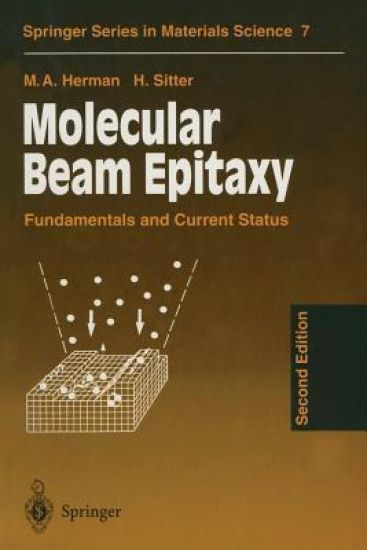
Molecular Beam Epitaxy describes a technique in wide-spread use for the production of high-quality semiconductor devices. It discusses the most important aspects of the MBE apparatus, the physics and chemistry of the crystallization of various materials and device structures, and the characterization methods that relate the structural parameters of the grown (or growing) film or structure to the technologically relevant procedure. In this second edition two new fields have been added: crystallization of as-grown low-dimensional heterostructures, mainly quantum wires and quantum dots, and in-growth control of the MBE crystallization process of strained-layer structures. Out-of-date material has been removed.
Since a molecular-beam apparatus was first successfully used by Cho and Arthur in the late 1960s to crystallize and investigate GaAs epilayers, high vacuum epitaxial growth techniques using particle beams have developed rapidly. This development accelerated when different semiconductor devices with quantum- well structures were invented in the 1970s. The important implementation of these structures in devices like quantum-well lasers, high electron mobility tran- sistors or superlattice avalanche photodiodes gave added impetus to research work and to increasing production aims. Coincident with this development, orig- inal research papers and reviews devoted to problems concerning these growth techniques have also rapidly grown in number, and in addition they have become very disversified. At present several hundred original papers on this subject ap- pear in the literature each year. However, in contrast to this there is a lack of comprehensive monographs comprising the whole variety of problems related to epitaxial growth of semiconductor films from atomic and molecular beams. This book, which presents a review of the state of the art of molecular beam epitaxy (MBE), as applied to the growth of semiconductor films and multilayer structures, may serve the reader as a convenient general guide to the topics related to this crystallization technique.