Kirjojen hintavertailu. Mukana 11 699 587 kirjaa ja 12 kauppaa.

Kirjahaku

Etsi kirjoja tekijän nimen, kirjan nimen tai ISBN:n perusteella.

554 tulosta hakusanalla Beef Baker

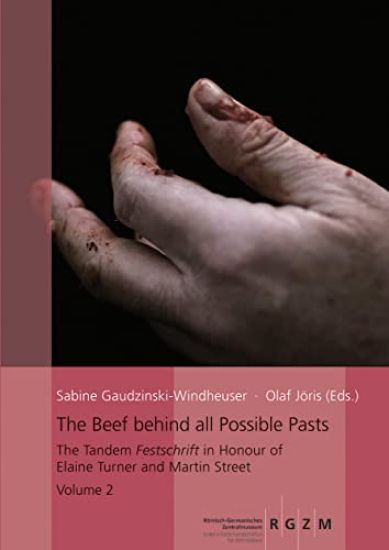
The Beef behind all Possible Pasts

The Beef behind all Possible Pasts

Schnell Steiner GmbH, Verlag
2021
sidottu
This Tandem Festschrift pays tribute to Elaine Turner and Martin Street, to celebrate all they have both contributed to the MONREPOS Archaeological Research Centre and Museum for Human Behavioural Evolution of the Römisch-Germanisches Zentralmuseum, in ensuring high research standards, and for your contributions to Palaeolithic Archaeology in Germany and beyond. It should be understood as a big “CHEERS” from the MONREPOS staff and many other friends and colleagues from all over the world, who contributed to this Festschrift. This double volume covers a broad spectrum of topics from the Lower Palaeolithic to the early Holocene and even to the Medieval period – touching upon the vast array of topics Elaine and Martin have dealt with over the last more than 30 years. It starts with the discussion of the oldest evidence for fire and addresses many other key-topics of scientific debate at fascinating levels of detail. "There is no doubt that Elaine Turner and Martin Street are to be especially acknowledged as the trailblazers for the internationalisation of Pleistocene Archaeology in Germany. The diversity of topics reflected by these contributions is due in large part to their rock-solid research, which is based on their exceptionally broad expertise and reflected in their highly interdisciplinary research projects.” (The Editors)
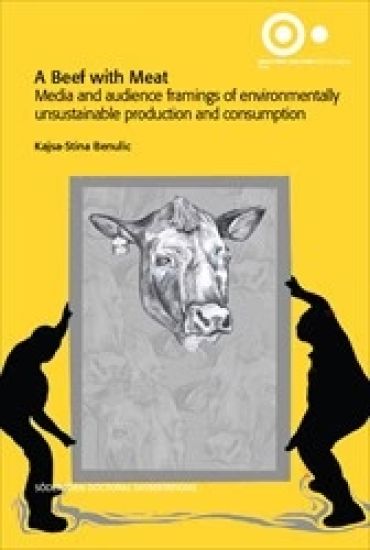
A Beef with Meat : Media and audience framings of environmentally unsustainable production and consumption
The scientists: ‘Meat is bad for the environment’. The Food and Agriculture Organization and the Swedish government authorities: ‘We must remedy this somehow’. All together: ‘Consumers must be informed and educated about this. That way, they can choose what to eat more wisely, and put pressure on politicians and commercial actors’. By making this suggestion together, the scientists and authorities followed the script for how environmental problems are commonly managed: through individualized consumer responsibility. But individuals can refuse to play the parts they have been assigned, or rewrite the script. This thesis analyses media and audience framings to identify potential routes to making the Swedish meat production and consumption environmentally sustainable. Media is an important source of information on environmental and food-related issues, and audiences include the individual consumers whose participation is sought in solving environmental problems. Kajsa-Stina Benulic carries out research in the field of environmental studies with a special focus on communication. This is her PhD thesis.
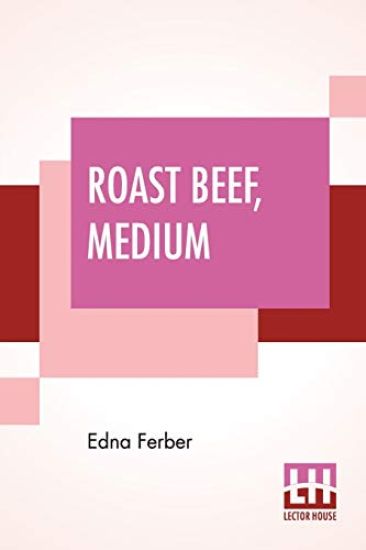
Roast Beef, Medium

Roast Beef, Medium

Edna Ferber

Lector House
2019
pokkari
This book is a result of an effort made by us towards making a contribution to the preservation and repair of original classic literature. In an attempt to preserve, improve and recreate the original content, we have worked towards: 1. Type-setting & Reformatting: The complete work has been re-designed via professional layout, formatting and type-setting tools to re-create the same edition with rich typography, graphics, high quality images, and table elements, giving our readers the feel of holding a 'fresh and newly' reprinted and/or revised edition, as opposed to other scanned & printed (Optical Character Recognition - OCR) reproductions. 2. Correction of imperfections: As the work was re-created from the scratch, therefore, it was vetted to rectify certain conventional norms with regard to typographical mistakes, hyphenations, punctuations, blurred images, missing content/pages, and/or other related subject matters, upon our consideration. Every attempt was made to rectify the imperfections related to omitted constructs in the original edition via other references. However, a few of such imperfections which could not be rectified due to intentional\unintentional omission of content in the original edition, were inherited and preserved from the original work to maintain the authenticity and construct, relevant to the work. We believe that this work holds historical, cultural and/or intellectual importance in the literary works community, therefore despite the oddities, we accounted the work for print as a part of our continuing effort towards preservation of literary work and our contribution towards the development of the society as a whole, driven by our beliefs. We are grateful to our readers for putting their faith in us and accepting our imperfections with regard to preservation of the historical content. HAPPY READING
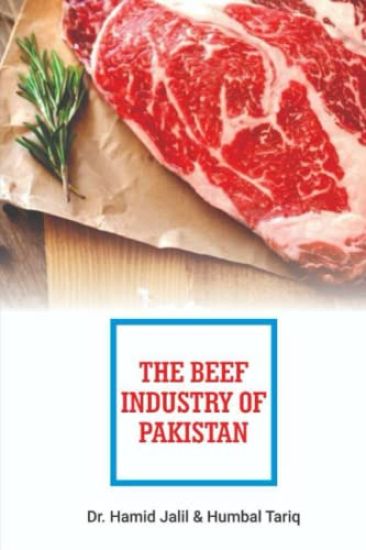
The Beef Industry Of Pakistan

The Beef Industry Of Pakistan

Hamid Jalil; Humbal Tariq

Multi Matrix Communications
2019
pokkari
"This appears to be the first comprehensive book produced on the topic."Prof. Dr. Talat Naseer Pasha, Vice Chancellor, University of Veterinary & Animal Health Sciences, Lahore. The book covers all stages of the beef value chain in Pakistan including Farming, Supply Chain, Livestock Markets, Food Processing and the International Market for the product. It is a technical, as well as a business guide; equally valuable for investors, businessmen, technical experts, agribusiness students and faculty.
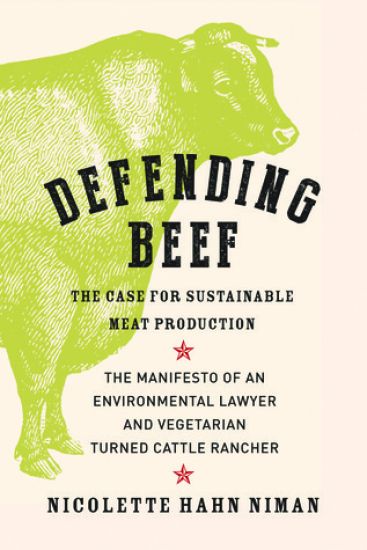
Defending Beef

Defending Beef

Nicolette Hahn Niman

Chelsea Green Publishing Co
2014
nidottu
For decades it has been nearly universal dogma among environmentalists and health advocates that cattle and beef are public enemy number one. But is the matter really so clear cut? Hardly, argues environmental lawyer turned rancher Nicolette Hahn Niman in her new book, Defending Beef. The public has long been led to believe that livestock, especially cattle, erode soils, pollute air and water, damage riparian areas, and decimate wildlife populations. In Defending Beef, Hahn Niman argues that cattle are not inherently bad for either the Earth or our own nutritional health. In fact, properly managed livestock play an essential role in maintaining grassland ecosystems by functioning as surrogates for herds of wild ruminants that once covered the globe. Hahn Niman argues that dispersed, grass-fed, small-scale farms can and should become the basis for American food production, replacing the factory farms that harm animals and the environment. The author-a longtime vegetarian-goes on to dispel popular myths about how eating beef is bad for our bodies. She methodically evaluates health claims made against beef, demonstrating that such claims have proven false. She shows how foods from cattle-milk and meat, particularly when raised entirely on grass-are healthful, extremely nutritious, and an irreplaceable part of the world's food system. Grounded in empirical scientific data and with living examples from around the world, Defending Beef builds a comprehensive argument that cattle can help to build carbon-sequestering soils to mitigate climate change, enhance biodiversity, help prevent desertification, and provide invaluable nutrition. Defending Beef is simultaneously a book about big ideas and the author's own personal tale-she starts out as a skeptical vegetarian and eventually becomes an enthusiastic participant in environmentally sustainable ranching. While no single book can definitively answer the thorny question of how to feed the Earth's growing population, Defending Beef makes the case that, whatever the world's future food system looks like, cattle and beef can and must be part of the solution.
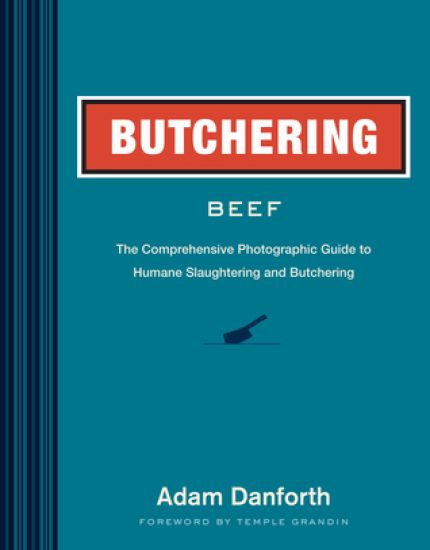
Butchering Beef: The Comprehensive Photographic Guide to Humane Slaughtering and Butchering
Learn how to humanely slaughter cattle and butcher your own beef with ths straightforward guide. In Butchering Beef, Adam Danforth provides clear instructions and step-by-step photography of the entire butchering process, from creating the right preslaughter conditions through killing, skinning, and perfecting expert cuts. With plenty of encouragement and expert advice on food safety, packaging, and necessary equipment, this comprehensive guide has all the information you need to start butchering your own beef.
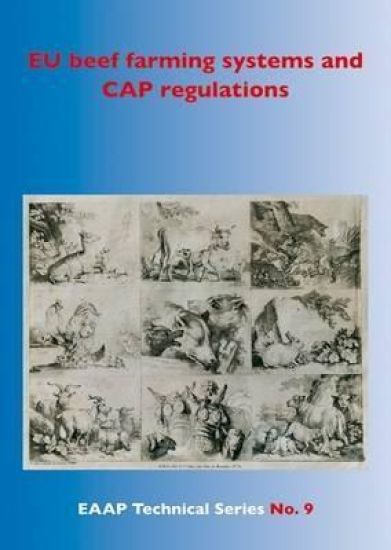
EU beef farming systems and CAP regulations

EU beef farming systems and CAP regulations

WAGENINGEN ACADEMIC PUBLISHERS
2007
nidottu
The new Common Agricultural Policy, launched in 2003 and implemented since 2005, appears as a big change mainly due to the introduction of the Single Payment Scheme and the decoupling of subsidies from production. EU beef production is one of the sectors mostly affected by the existing CAP regulations. This book addresses what the impact could be on the future of European beef farming systems and in what ways could beef farmers adapt in order to ensure the sustainability of their farms. Within the Cattle Network Working Group of EAAP, a group of European economists, The Beef Task Force, composed of experts and researchers from a number of EU countries, engaged in a common project with the object of monitoring and developing studies on policy impact and farm strategy analysis. The BTF joined national studies into a common report, which is divided into four parts: the current picture of beef farming systems in Europe; CAP implementation at national level; first impact of reformed CAP on farming systems; future evolution of European beef production and land use. This book highlights disparities in CAP implementation and presents the main developments regarding EU beef farming systems: size increase, farm/regional specialization, adaptation to market requirements and, eventually, social expectations. It is of interest to policy makers and all those who concern themselves with the cattle industry.
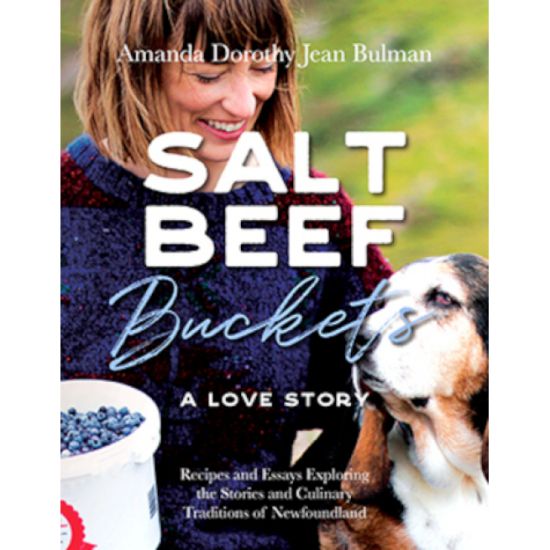
Salt Beef Buckets: A Love Story

Salt Beef Buckets: A Love Story

Amanda Dorothy Jean Bulman

Breakwater Books
2021
nidottu
Recipes and essays exploring the stories and culinary traditions of Newfoundland. Three facts: 1. The culinary history of Newfoundland is unique and diverse. 2. Anyone can cook anything and make it delicious, so long as they prioritize local and seasonal ingredients. 3. Food tastes better when it is connected to stories and memory. These are the core beliefs of Salt Beef Buckets: A Love Story, an affectionate tribute to the land, the people, and their meals.
Aguecheek's Beef, Belch's Hiccup, and Other Gastronomic Interjections
We didn’t always eat the way we do today, or think and feel about eating as we now do. But we can trace the roots of our own eating culture back to the culinary world of early modern Europe, which invented cutlery, haute cuisine, the weight-loss diet, and much else besides. Aguecheek’s Beef, Belch’s Hiccup tells the story of how early modern Europeans put food into words and words into food, and created an experience all their own. Named after characters in Shakespeare’s Twelfth Night, this lively study draws on sources ranging from cookbooks to comic novels, and examines both the highest ideals of culinary culture and its most grotesque, ridiculous and pathetic expressions. Robert Appelbaum paints a vivid picture of a world in which food was many things—from a symbol of prestige and sociability to a cause for religious and economic struggle—but always represented the primacy of materiality in life.Peppered with illustrations and a handful of recipes, Aguecheek’s Beef, Belch’s Hiccup will appeal to anyone interested in early modern literature or the history of food.
Aguecheek's Beef, Belch's Hiccup, and Other Gastronomic Interjections
We didn't always eat the way we do today, or think and feel about eating as we now do. But we can trace the roots of our own eating culture back to the culinary world of early modern Europe, which invented cutlery, haute cuisine, the weight-loss diet, and much else besides. "Aguecheek's Beef, Belch's Hiccup" tells the story of how early modern Europeans put food into words and words into food, and created an experience all their own. Named after characters in Shakespeare's "Twelfth Night", this lively study draws on sources ranging from cookbooks to comic novels, and examines both the highest ideals of culinary culture and its most grotesque, ridiculous, and pathetic expressions. Robert Appelbaum paints a vivid picture of a world in which food was many things - from a symbol of prestige and sociability to a cause for religious and economic struggle - but always represented the primacy of materiality in life. Peppered with illustrations and a handful of recipes, "Aguecheek's Beef, Belch's Hiccup" will appeal to anyone interested in early modern literature or the history of food.