Kirjojen hintavertailu. Mukana 11 393 034 kirjaa ja 12 kauppaa.

Kirjahaku

Etsi kirjoja tekijän nimen, kirjan nimen tai ISBN:n perusteella.

1000 tulosta hakusanalla Benjamin Sacks

Benjamin Silliman

Benjamin Silliman

Chandos Michael Brown

Princeton University Press
2016
sidottu
Poet, essayist, chemist, geologist, educator, entrepreneur, publisher--Benjamin Silliman (1779-1864) was one of the virtuosi of the Early Republic and a founder of the American scientific community. This absorbing biography is not only a study of the youth and early career of a complex and remarkable man but also a window on his times. In lively and often moving detail, Chandos Michael Brown opens the broad context of Silliman's life in his native Connecticut. From Silliman's father's disastrous captivity among the British during the Revolution to the intensities of New England religious revivals, from the international celebrity of the Weston Meteor to the economic hazards of introducing artificial mineral waters to the New York market, here is an engaging portrayal of the growth of an American scientist within his rich cultural setting. Brown tells how the young Silliman confronted the declining fortunes of his distinguished family and how he strove to invent a new career worthy of his ambition and social standing. He describes Silliman's education at Yale College and in Philadelphia, his European tour, and his subsequent activities as a professor of chemistry and mineralogy, founder of the Yale Medical School, and editor of the American Journal of Science. Throughout this cultural biography, Silliman appears as the concerned member of an often troubled family--a man who nonetheless managed to achieve that elusive quality, greatly admired by his contemporaries, that of the representative American. Originally published in 1990. The Princeton Legacy Library uses the latest print-on-demand technology to again make available previously out-of-print books from the distinguished backlist of Princeton University Press. These editions preserve the original texts of these important books while presenting them in durable paperback and hardcover editions. The goal of the Princeton Legacy Library is to vastly increase access to the rich scholarly heritage found in the thousands of books published by Princeton University Press since its founding in 1905.
Benjamin Thornton: Fly Detective in Indianapolis

Benjamin Thornton: Fly Detective in Indianapolis

Patrick R. Pearsey

Patrick Pearsey
2018
nidottu
Born a slave, 12 year old Ben Thornton ran away and reached the Union army lines. In 1876 he became one of the first African-American police officers in Indianapolis, Indiana. In 1886 he was chosen as the first of his race to serve as a detective in that city's police force. Detective Ben Thornton became nationally famous for his skill in tracking down criminals. This is a true account of his life and the many cases he worked.
Benjamin Franklin Unmasked

Benjamin Franklin Unmasked

Jerry Weinberger

University Press of Kansas
2005
sidottu
Moral paragon, public servant, founding father; scoundrel, opportunist, womanizing phony: There are many Benjamin Franklins. Now, as we celebrate the tercentenary of Franklin's birth, Jerry Weinberger reveals the Franklin behind the many masks and shows that the real Franklin was far more remarkable than anyone has yet discovered. Taking the Autobiography as the key to Franklin's thought, Weinberger argues that previous assessments have not yet probed to the bottom of Ben's famous irony and elusiveness. While others take the self-portrait as an elder statesman's relaxed and playful retrospection, Weinberger unveils it as the window to Franklin's deepest reflections on God, virtue, justice, equality, natural rights, love, the good life, the modern technological project, and the place and limits of reason in politics and human experience. Along the way, Weinberger explores Franklin's ribald humor, usually ignored or toned down by historians and critics, and shows it to be charming - and philosophic. Following Franklin's rhetorical twists and turns, Weinberger discovers a serious thinker who was profoundly critical of religion, moral virtue, and political ideals and whose grasp of human folly constrained his hopes for enlightenment and political reform. This close and amusing reading of Franklin portrays a scrupulous dialectical philosopher, humane and wise, but more provocative and disturbing than even the most hardboiled interpreters have taken Franklin to be - a freethinking critic of Enlightenment freethinking, who played his moral and theological cards very close to the vest. Written for general readers who want to delve more deeply into the mind of a great man and great American, ""Benjamin Franklin Unmasked"" shows us a massively powerful intellect lurking behind the leather-apron countenance. This lively, witty, and revelatory book is indispensable for those who want to meet the real Franklin.
Benjamin Franklin Unmasked

Benjamin Franklin Unmasked

Jerry Weinberger

University Press of Kansas
2005
nidottu
Reveals the Benjamin Franklin behind the many masks and shows that the real Franklin was far more remarkable than anyone has yet discovered. The author shows us a powerful intellect lurking behind the leather-apron countenance. This lively, witty, and revelatory book is written for readers who want to delve into the mind of this great man.
Benjamin Britten

Benjamin Britten

Oliver Michael

Phaidon Press Ltd
2008
nidottu
Benjamin Britten (1913–76) changed the course of English music with highly original works such as his opera Peter Grimes. While his music is performed more widely than those of any other English composer, his international success did not prevent him from continuing to draw inspiration from his native land. In this engaging biography, the author creates a portrait of a great artist, exploring his wide-ranging compositions in detail and discussing the many contradictions that pervaded Britten's fascinating life and career.
The Sayings of Benjamin Disraeli

The Sayings of Benjamin Disraeli

Benjamin Disraeli; Alistair Lexden

Duckworth
2019
nidottu
The wit and wisdom of Benjamin Disraeli, British statesman and twice Prime Minister of the United Kingdom – with a new foreword by Lord Lexden. Disraeli was one of the least orthodox of Prime Ministers. He was an adventurer who fought his way to ‘the top of the greasy pole’ in a blaze of controversy, and became Queen Victoria’s favourite statesman. He was a novelist and a wit as well as politician. He was a brilliant orator. Like Byron he was both a romantic and a cynic. His aphorisms have become part of the discourse of political life. This collection is based on his novels, letters and speeches. He was never dull, but he was fundamentally serious behind the firework display, and he had a lasting influence on the course of party history. Seen by some of the founder of ‘one-nation’ conservatism, Disraeli is today one of the most co-opted political figures of history. For those seeking clarity on Disraeli’s views, this collection will confound and surprise.
Benjamin's Arcades

Benjamin's Arcades

Peter Buse; Ken Hirschkop; Scott McCracken; Bertrand Taithe

Manchester University Press
2006
nidottu
The Arcades Project, Walter Benjamin’s unfinished masterpiece, is a brilliant but maddening book. Benjamin’s Arcades: an unGuided Tour looks for the method behind the madness, carefully reconstructing the intellectual and political context of the work and unpacking its numerous analogies, metaphors and conceptual gambits. Written by three literary scholars and one historian, this text is both a reading companion and a vigorous interpretation of one of the most important humanistic texts of the twentieth century.Benjamin’s Arcades is composed of 16 entries and a specially designed 'convoluted' index. Some of the entries confront Benjamin with a different reading of his own historical sources (Blanqui, Marx, Giedion), others look intensively at key themes, obsessions, and images (the gambler, commodity fetishism, the Angel of History, magic). Throughout there is discussion of the relationship of Benjamin’s work to current and past debate on topics such as modernity, Judaism, fascism, and psychoanalysis. Benjamin’s Arcades opens up Benjamin’s texts to a variety of interdisciplinary perspectives and will be an essential text for those seeking to better understand this extraordinary work.
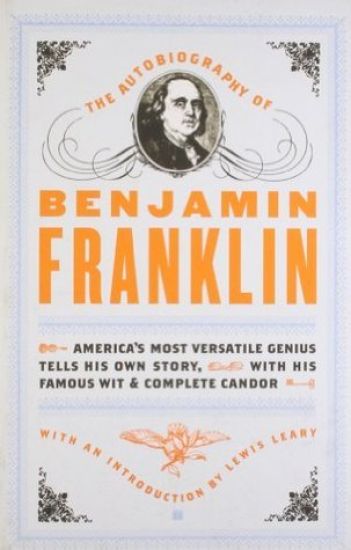
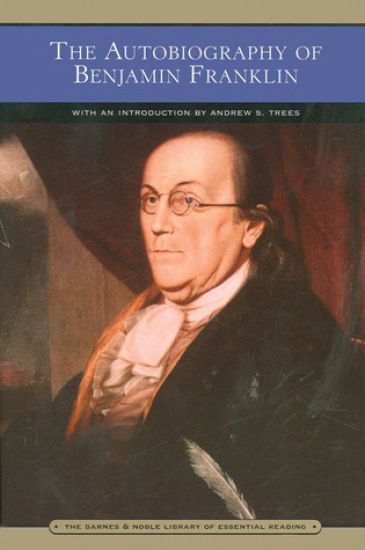
The Autobiography of Benjamin Franklin

The Autobiography of Benjamin Franklin

Benjamin Franklin; Lewis (INT) Leary

Simon Schuster
2003
pokkari
Written initially to guide his son, Benjamin Franklin's autobiography is a lively, spellbinding account of his unique and eventful life, now a classic of world literature that is sure to inspire and delight readers everywhere. Few men could compare to Benjamin Franklin. Virtually self-taught, he excelled as an athlete, a man of letters, a printer, a scientist, a wit, an inventor, an editor, and a writer, and he was probably the most successful diplomat in American history. David Hume hailed him as the first great philosopher and great man of letters in the New World.
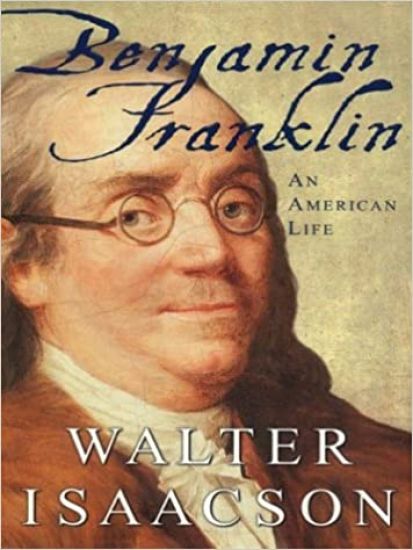
Benjamin Franklin

Benjamin Franklin

Walter Isaacson

Simon Schuster
2004
pokkari
Chronicles the founding father's life and his multiple careers as a shopkeeper, writer, inventor, media baron, scientist, diplomat, business strategist, and political leader, while showing how his faith in the wisdom of the common citizen helped forge an American national identity based on the virtues of its middle class. Reprint. 150,000 first printing.
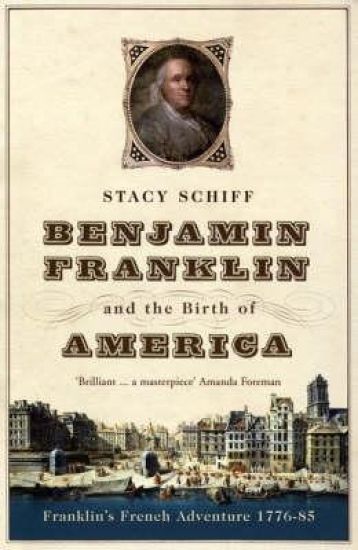
Benjamin Franklin and the Birth of America

Benjamin Franklin and the Birth of America

Stacy Schiff

Bloomsbury Publishing PLC
2006
nidottu
Six months after America declared her independence, Congress dispatched Benjamin Franklin to France to solicit aid and arms for the upcoming fight. He was seventy years old, possessed of the most rudimentary French and had no diplomatic training. But this most remarkable of envoys was also among the most famous men in the world. During his eight years in Paris he charmed the French, outwitted the British spies and stirred a passion for a republic in those who lived under an absolute monarchy. Stacy Schiff tells a tale of international intrigue and from it emerges an intimate portrait of a brilliant man, as well as a sense of the fragility and improvisation of his country's bid for independence.
The Autobiography of Benjamin Franklin (Barnes & Noble Library of Essential Reading)
"The Autobiography of Benjamin Franklin" is one of the most important and influential works in American history. It tells the story of Franklin's life from his humble beginnings to his emergence as a leading figure in the American colonies. In the process, it creates a portrait of Franklin as the quintessential American. Because of the book, Franklin became a role model for future generations of Americans, who hoped to emulate his rags to riches story. "The Autobiography" has also become one of the central works not just for understanding Franklin but for understanding America. Benjamin Franklin (1706-1790) was a man of many roles-printer, author, philosopher, scientist, inventor, diplomat, and politician to name only a few. He lived a wide and varied life and found himself at the center of virtually every major event involving America during the second half of the eighteenth century. He was so successful as a businessman that he was able to retire at the age of 42. He proved equally adept at science, and his experiments in electricity made him the most famous American in the colonies. Politics and diplomacy occupied him for most of the latter half of his life.
Benjamin Disraeli

Benjamin Disraeli

Bernard Glassman

University Press of America
2002
sidottu
This book utilizes previously ignored or little known sources to provide new insights into how one of the most famous Jewish converts was viewed by the Jewish community he ignored and by the larger Christian world that would not accept him. Although Benjamin Disraeli was baptized prior to his thirteenth birthday, he could not escape his origins. Labeled as a 'Jew Scamp' by his detractors when he entered the political arena, he exploited his background to demonstrate the nobility of his ancient race and the superiority of his ancestral origins over those of his opponents. Rather than deny his roots, he chose to make them an integral part of his mystique. Though Disraeli's support of Jewish causes was problematic, his growing prominence attracted the attention of Anglo-Jewry who needed a hero to validate their own Englishness. Gradually, in spite of his baptism, they accepted him as a true representative of their faith and culture. Ultimately, a diverse group used and abused his achievements for their own purposes both during and especially after his lifetime. Zionists, Victorian racists, mid-twentieth century Nazis, Jewish apologists, and present day hate-mongers found abundant material in his novels to support their causes. This book shows how a myth can take on a life of its own in the collective memory of the Jewish people, as well as in the thought processes of a variety of anti-Semitic groups. Its fresh approach to the life and lore of a colorful Victorian figure also raises the issue of ethnic identity and minority acceptance in our pluralistic society.
Benjamin Disraeli

Benjamin Disraeli

Bernard Glassman

University Press of America
2003
nidottu
This book utilizes previously ignored or little known sources to provide new insights into how one of the most famous Jewish converts was viewed by the Jewish community he ignored and by the larger Christian world that would not accept him. Although Benjamin Disraeli was baptized prior to his thirteenth birthday, he could not escape his origins. Labeled as a 'Jew Scamp' by his detractors when he entered the political arena, he exploited his background to demonstrate the nobility of his ancient race and the superiority of his ancestral origins over those of his opponents. Rather than deny his roots, he chose to make them an integral part of his mystique. Though Disraeli's support of Jewish causes was problematic, his growing prominence attracted the attention of Anglo-Jewry who needed a hero to validate their own Englishness. Gradually, in spite of his baptism, they accepted him as a true representative of their faith and culture. Ultimately, a diverse group used and abused his achievements for their own purposes both during and especially after his lifetime. Zionists, Victorian racists, mid-twentieth century Nazis, Jewish apologists, and present day hate-mongers found abundant material in his novels to support their causes. This book shows how a myth can take on a life of its own in the collective memory of the Jewish people, as well as in the thought processes of a variety of anti-Semitic groups. Its fresh approach to the life and lore of a colorful Victorian figure also raises the issue of ethnic identity and minority acceptance in our pluralistic society.
Benjamin B. Warfield and Right Reason

Benjamin B. Warfield and Right Reason

Owen Anderson

University Press of America
2005
nidottu
Benjamin B. Warfield and Right Reason offers a study of Princeton Theologian Benjamin B. Warfield's view of apologetics and the role of reason in religious belief. In order to understand Warfield's view of "right reason," the book explores the intellectual development of Princeton Theological Seminary, Warfield's debate with Abraham Kuyper over the need for apologetics, and the manner in which Cornelius VanTil attempted to adopt the best from both Warfield and Kuyper. The first chapter examines the influence of Scottish Common Sense Philosophy on Princeton Theological Seminary. This chapter focuses on Charles Hodge and his affirmation that reason can be used to know God. The second chapter concentrates on Warfield and his continuation of the Princeton approach to apologetics. The third chapter considers the challenge raised by Abraham Kuyper and looks at Warfield's response. The final chapter discusses Cornelius VanTil and his attempt to take what he saw as best from Warfield and Kuyper while avoiding potential problems in each. The theme of this book is Warfield's affirmation that the redemptive claims of Christianity must be established by first arguing that there is a God and a need for special revelation. Warfield's approach to apologetics contains the potential to establish the foundation for a natural theology, especially with respect to the existence and nature of God.
Benjamin Verdery

Benjamin Verdery

Hamilton Books
2018
nidottu
This book honors the classical guitarist Benjamin Verdery, Professor at the Yale School of Music. It contains personal reflections from his friends and colleagues which illustrate several aspects of Professor Verdery: his influence on his peers, his students, and the classical guitar world; features of his musical career; and characteristics of his personality. In addition, there is an extensive essay by Professor Verdery himself in which he presents his thoughts and ideas on such musical endeavors as performing, composing, arranging, teaching, and recording. Rounding out the book are listings of his compositions, a discography, online video and audio files, recital programs, publications, and related websites.
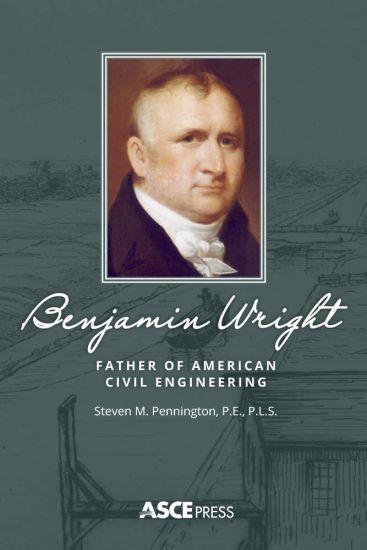
Benjamin Wright

Benjamin Wright

Steven M. Pennington

American Society of Civil Engineers
2020
nidottu
The early nineteenth century was a time of great change as the United States transitioned from the colonial era to the industrial age. Benjamin Wright's engineering career spanned the better part of that time from 1790 to 1840.In Benjamin Wright: Father of American Civil Engineering, Steven M. Pennington chronicles Wright's life and varied career from country surveyor to his early work on America's railroads. After surveying the Mohawk River for navigation improvements and supervising the engineering of the Erie Canal project, he then went on to contribute to such projects as the Chesapeake and Delaware Canal near Philadelphia, and the Chesapeake and Ohio Canal near Washington, DC. From the capital city, Wright advanced his engineering practice as America grew and viewed its manifest expansion to the West.Throughout his life and work, Wright's personal connections, politically, socially, and technically, were far reaching. Wright understood the mechanics and connectivity of how politics and economics demonstrated themselves. He worked with leaders across the business and engineering communities to make a lasting social, economic, and historical contribution.Benjamin Wright understood the necessity to establish an organization of practicing engineers to stimulate technical, business, ethical, and professional attitudes. In 1839, he participated in organizational meetings of what would become the American Society of Civil Engineers which, in 1970, designated him the "Father of American Civil Engineering.