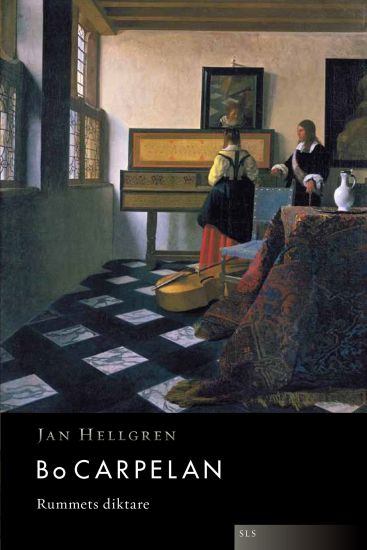
”Det är inte tiden som förändrar oss, det är rummet”, inleder Bo Carpelan (1926–2011) en av sina dikter från 1970-talet. Jan Hellgren visar i sin bok hur denna syn gradvis tar form i Carpelans poesi från 1950-talet och framåt för att nå sitt främsta uttryck i romanen Urwind (1993). Vid sidan av diktsamlingar och romaner utgår Hellgren från ett rikt material av artiklar, essäer och opublicerade anteckningar där Carpelan belyser sin poetik och sin syn på det egna författarskapet. Hans diktning sätts in i sitt litteratur- och idéhistoriska sammanhang, samtidigt som viktiga inspirationskällor inom bildkonst och arkitektur lyfts fram.
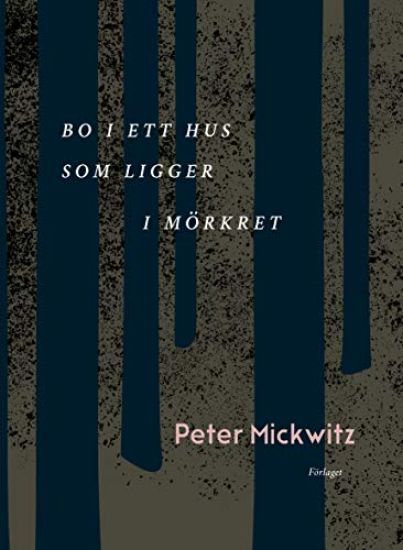
"Jag har börjat tro, nu tror jag, att jag har insett att det som känns bäst i mig, det som är tryggast, är det som är det värsta, det farligaste; att just där i mig bor det mest onda i mig; där, här, i den blindaste fläck som finns i mig: längst inne i mig."Bo i ett hus som ligger i mörkret är en diktsamling om det farliga i att söka trygghet, i att bygga ett bo att bo i. Boken inleds med en lång självransakande dikt som utspelar sig dagarna efter att det högerradikala partiet Sannfinländarna i riksdagsvalet våren 2019 nästan fick 20 procent av rösterna. Frågor som ställs är bland annat ”vad är det att höra hemma” och ”vem hör hemma här”? Och kan det vara så att ju större trygghet vi söker för oss själva desto större otrygghet skapar vi för andra? I slutet av boken finns en personlig och vindlande essä i vilken bland annat Kafkas novell Boet har en framträdande roll.Peter Mickwitz övertygelse är att litteraturens uppgift är att riva, skaka, söndra - ”vara yxan för det frusna havet inom oss” - inte att bygga bon, inte vara en trygg plats.
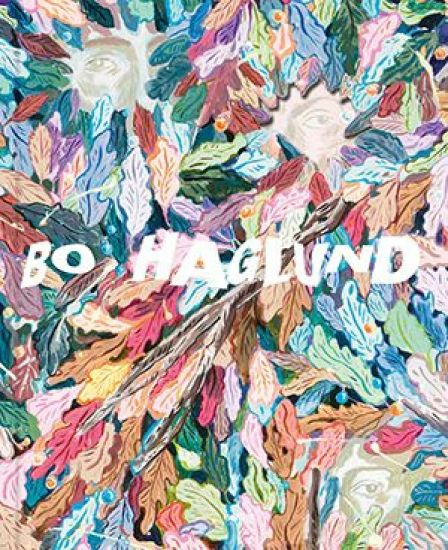
Sarjakuvataidetta, graafista suunnittelua ja näyttämötaidetta kuvataiteeseen yhdistävä Bo Haglund (s. 1963) aloitti uransa 1980-luvulla lavastajana teatteri- ja elokuvaproduktioissa. Myös tekstiilisuunnittelua Marimekolle tehnyt ja Ny Tid -lehdelle pilapiirustuksia laatinut Haglund siirtyi myöhemmin lavastuksen ja graafisen suunnittelun maailmasta sarjakuvan kautta kuvataiteeseen. Haglundin monipuolinen tausta näkyy hänen teoksissaan, joissa yhdistyvät hahmojen moniulotteinen tunnemaisema, tarinallisuus, nykymaailman havainnointi ja yksityiskohdiltaan elävä ilmaisu. Visuaaliselta kieleltään kutsuvien ja avoimen lähestyttävien teosten lähtökohtina voivat olla sosiaalisen median esitysluonne, taidehistoriaa kommentoiva sarjakuva tai pohjoismainen melankolia. Haglundin uusimmissa töissä nähdään näyttämömäisiin ympäristöihin ja kasvillisuuden sekaan piiloutuneita ihmishahmoja, jotka saattavat olla paossa, välitilassa, tarkkailijoita tai vain hämmentyneitä. Kirjassa käydään dialogia Haglundin viimeaikaisen tuotannon ja monipuolisen taiteilijauran kanssa.Bo Haglund (f. 1963) skapar bildkonst med inslag av seriekonst, grafisk design och scenkonst. Han inledde sin karriär som teater- och filmscenograf på 1980-talet, och har senare också formgett textilier för Marimekko och gjort skämtteckningar för tidningen Ny Tid. Serietecknandet ledde honom från scenografin och den grafiska formgivningen till bildkonsten. Haglunds mångsidiga bakgrund syns i hans verk som förenar gestalternas nyanserade känslolandskap med berättelser, observationer av samtiden och ett uttryck med levande detaljer. Utgångspunkten för de lättillgängliga och visuellt lockande verken kan till exempel vara likheten mellan teaterscener och sociala medier, nordisk melankoli eller serieteckningar som kommenterar konsthistorien. I Haglunds senaste verk gömmer sig människogestalterna bland växtligheten i de scenliknande miljöerna. De kan vara på flykt, mellan olika platser, betraktare eller bara förvirrade. I boken förs en dialog med Haglunds senaste produktion och mångsidiga konstnärskarriär. Bo Haglund (b. 1963) weaves together comics, graphic design and set design in his artistic practice. He started out as a set designer in film and theatre in the 1980s, later branching out as a textile designer for Marimekko and cartoonist for Ny Tid magazine. Through comics, he migrated to visual art. His art mirrors his diverse professional background in its emotional breadth of characterization, narrativity, critical observation of contemporary reality, and vividly detailed expression. His style is approachable and visually engaging, and his thematic content can be anything from a critique of social media's performativity to a comic-strip commentary on art history or a meditation on Nordic melancholy. His latest works portray human figures peeking from stage sets or hiding among vegetation, leaving us uncertain whether they are fugitives, observers, suspended in limbo, or just plain confused. This book is a dialogic introduction to Haglund's recent works and his wide-ranging earlier artistic output.
A giant tsunami hit the staid Ann Arbor campus of the University of Michigan in 1969 when it was announced that Glenn Edward “Bo” Schembechler was to be the new head football coach, replacing the beloved Bump Elliott. Efforts to pronounce the last name correctly came in response to thousands of questioners asking “Bo who?” but it didn’t take long before his name and the Wolverines’ resurrected football fortunes were the talk not only of the town, but of the hundreds of thousands of Michigan alumni across the country and around the world. Bo’s Warriors is the story of that man and the moribund football program he revived. Bo won a school record 194 games while losing only 48 and never had a losing season. His Michigan teams won or shared the Big Ten title 13 times and made 10 Rose Bowl appearances. In 1968 under Elliott, archrival Ohio State had pounded the Wolverines 50-14, and to add insult to injury, Buckeye coach Woody Hayes went for a two point conversion late in the game rather than kicking the extra point. When asked why he went for two, Hayes is said to have replied, “because I couldn’t go for three.” The next year, Bo’s first as coach, the defending national champion Buckeyes were 17 point favorites, but the 7-2 Wolverines dominated Ohio State and beat them 24-12. In a single afternoon, Schembechler had resurrected Michigan’s proud football tradition and returned the program to the country’s elite. Bo’s Warriors is the story of Bo’s first year as coach, seen through the eyes of several players and one assistant coach, and making the excitement of that historic season come alive.
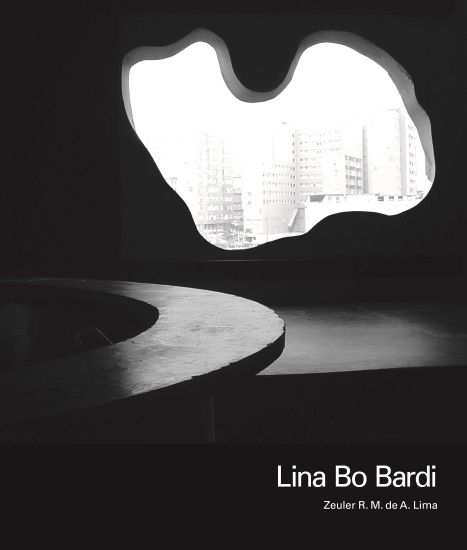
The first major retrospective of the Brazilian modernist architect's life and work One of the most important architects of the twentieth century, Lina Bo Bardi (1914–1992) was remarkably prolific and intriguingly idiosyncratic. A participant in the efforts to reshape Italian culture in her youth, Bo Bardi immigrated to Brazil in 1946, where her practice evolved within the social and cultural realities of her adopted country. While she continued to work with industrial materials, she added simple building techniques and naturalistic forms to her designs, striving to create large, multiuse spaces that promoted public life.Lina Bo Bardi is the first comprehensive study of the architect’s life and work. Author Zeuler Lima, the leading authority on Bo Bardi, presents her activities on two continents, examining how ethical and social considerations influenced her intellectual engagement with modern architecture and providing an indispensable guide to her writings and her experimental, iconic designs.
The architect, Lina Bo Bardi (1914–1992), has long been considered one of the major modern architects of the twentieth century in Brazil. Her iconic Museum of Art of São Paulo (1968), and the bold, Social Service for Commerce Building-Pompéia, São Paulo (1986), have gained recognition in recent years and her reputation is beginning to be acknowledged internationally. Bo Bardi’s major writings on architecture, however, have not been translated, and are not well known. This book contains the first English-language translation of Propeadeutic Contribution to the Teaching of Architecture Theory, (Habitat, Ltd. São Paulo, 1957), a seminal text, published in Portuguese by the Italo-Brazilian Bo Bardi. It is arguably the first published writing on architecture theory by a practicing woman architect. Accompanying the translation is an introductory essay that interprets Bo Bardi’s text as a critical and constructive theory of architecture built from a collection of textual and visual artifacts. This translation clearly renders Bo Bardi’s work in English, and contextualizes it theoretically, taking into account the specific historical sources and contemporaneous discourses from which it draws. With comparisons to other important architectural pedagogies and theoretical texts of the period, it is also an inquiry into the nature of architecture history and theory, its role in education and its relation to practice.
The architect, Lina Bo Bardi (1914–1992), has long been considered one of the major modern architects of the twentieth century in Brazil. Her iconic Museum of Art of São Paulo (1968), and the bold, Social Service for Commerce Building-Pompéia, São Paulo (1986), have gained recognition in recent years and her reputation is beginning to be acknowledged internationally. Bo Bardi’s major writings on architecture, however, have not been translated, and are not well known. This book contains the first English-language translation of Propeadeutic Contribution to the Teaching of Architecture Theory, (Habitat, Ltd. São Paulo, 1957), a seminal text, published in Portuguese by the Italo-Brazilian Bo Bardi. It is arguably the first published writing on architecture theory by a practicing woman architect. Accompanying the translation is an introductory essay that interprets Bo Bardi’s text as a critical and constructive theory of architecture built from a collection of textual and visual artifacts. This translation clearly renders Bo Bardi’s work in English, and contextualizes it theoretically, taking into account the specific historical sources and contemporaneous discourses from which it draws. With comparisons to other important architectural pedagogies and theoretical texts of the period, it is also an inquiry into the nature of architecture history and theory, its role in education and its relation to practice.
Little Bo-Peep looks after Fanny Fairacre's flock of sheep on Fairacre Farm. The malevolent Lady Sneering is jealous of her relationship with Fanny's son Freddie, so she instructs evil magician Mefisto - from Cindy Sparkle's travelling show - to make the pretty shepherdess disappear. Meanwhile Fanny's gormless farmhand Wally has fallen for glamorous Cindy. Soon they all find themselves banished to the nightmarish "Place of the Disappeared", with no apparent hope of return. Paul Reakes' riotous retelling of the well-known nursery rhyme features all the traditional pantomime elements as well as a travelling show, magic, dancers, and a highly talented cow.