

Kirjahaku
Etsi kirjoja tekijän nimen, kirjan nimen tai ISBN:n perusteella.
1000 tulosta hakusanalla Boris Levin
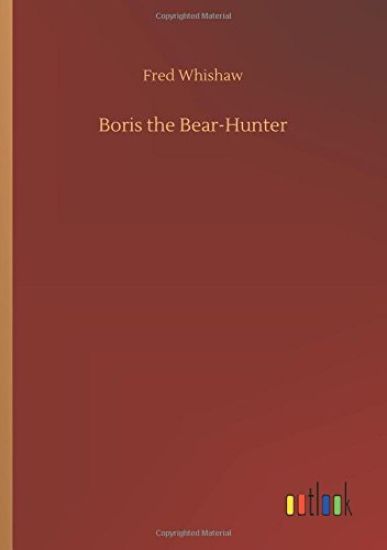
Reproduction of the original: Boris the Bear-Hunter by Fred Whishaw
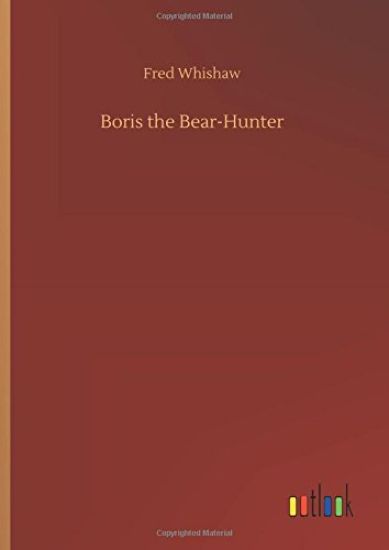
Reproduction of the original: Boris the Bear-Hunter by Fred Whishaw
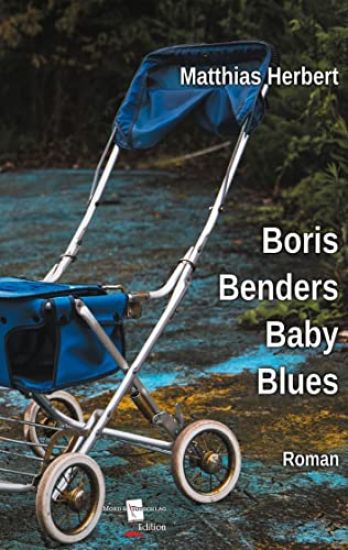
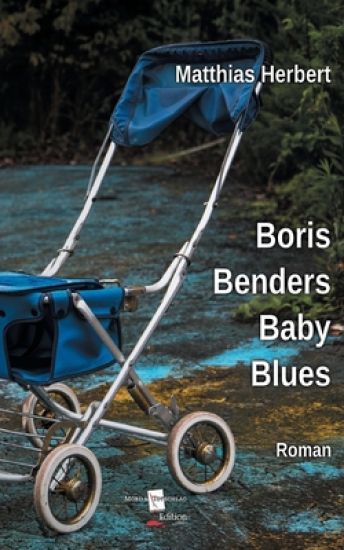
"Auf einmal sah er berall Kinder. Kleine, schrumpelige, rote Gesichter, dick eingepackt in weich gefederte Wagen, die Daunendecken dar ber, trotz der W rme des Sommers, und manchmal war ein heiseres Kr hen zu h ren, das ruhiggeschaukelt wurde. Er versuchte, Blicke in die wiegenden Wagen zu erhaschen, die von jungen Frauen geschoben wurden, die langsam gingen, mit kurzen, vorsichtigen Schritten." Frankfurt in den Achtzigerjahren. Der Lokaljournalist Boris Bender (Redaktionsk rzel bb) hat sich gerade von seiner Elke getrennt und will jetzt das Solo-Dasein genie en. Doch schon landet er im n chsten Bett und in der n chsten, fordernden Beziehung. Boris bekommt nicht nur eine alternativ angehauchte Goldschmiedin, sondern gleich deren anderthalbj hrige Tochter Anna-Maria dazu. Familie war in seiner Zukunftsplanung aber bislang gar nicht vorgesehen. Kann er es schaffen, Stadt und Land, Frau und Kind, Pils und Tofu, Job und Vatersein in seinem Leben gleichzeitig unterzubringen? Ein Roman aus der Zeit, als die Frauenversteher der 80er zu den Kinderverstehern der 90er werden durften.
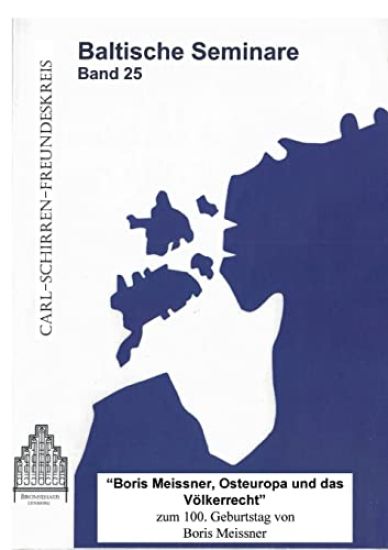
Die aktuelle Situation in der Ukraine hat die Wichtigkeit v lkerrechtlicher Normen f r das Zusammenleben von Staaten und V lkern wieder deutlich gemacht. Anl sslich des 100. Geburtstags des ber hmten Ostwissenschaftlers Prof. Boris Meissner (1915-2003) beleuchten V lkerrechtler aus sieben L ndern die Probleme Osteuropas.
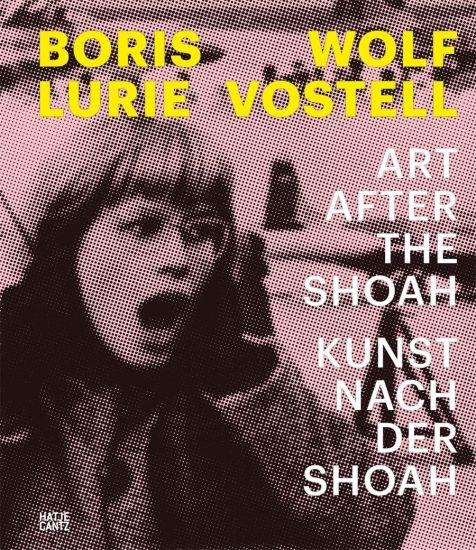
Boris Lurie and Wolf Vostell (Bilingual edition)
HATJE CANTZ
2022
nidottu
The art of Boris Lurie (* 1924, Leningrad) and Wolf Vostell (* 1932, Leverkusen) is determined by the break in civilization in Germany in 1933, which made the German genocide of German and European Jews (the Shoah) possible. Both artists make the Shoah the subject of their work in a radical way. They work - initially independently of one another - with the means of painting and during the 1950s they resort to the stylistic devices of the first avant-garde: Cubism, Dadaism, Surrealism. They strategically employ collage and assembly techniques. Vostell later develops the subject further in the media of happening and video art while Lurie takes up writing. In 1964 the artists met in New York and entertained a lifelong friendship.
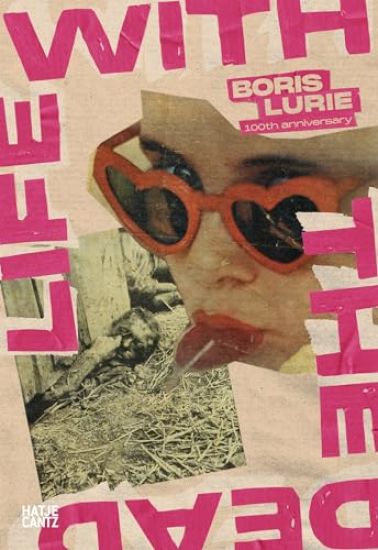
BORIS LURIE: 100th Anniversary (Multilingual edition)
HATJE CANTZ
2024
sidottu
Confronting the Trauma with Art On the occasion of the 100th anniversary of Boris Lurie’s birthday the catalogue Life with the Dead presents more than fifty works from 1950 to 1970 that illustrate his active commitment to social justice and the memory of the Holocaust. The Jewish artist bore witness in many ways to the horrors of the Holocaust in the German concentration camps. However, his works of art are not only expressions of suffering, but also symbols of hope for the integration of someone who would henceforth belong to the minority of survivors. Friends and companions describe Lurie’s development from his beginnings in the 1950s, through the NO! art movement, to his renaissance as one of the main representatives of Holocaust art. Tom Wolfe published his text on an exhibition at Gertrude Stein’s gallery, New York in 1964. René Block exhibited Lurie in Berlin, and Achille Bonito Oliva met Boris Lurie’s art in 1962 on the occasion of the exhibition Doom Show Boris Lurie and Sam Goodman at the Galeria Arturo Schwarz in Milan. Rafael Vostell and Jurgen Kaumkotter provide the contextual framework for the book, which is complemented by words of greeting from Gertrude Stein, Boris Lurie's lifelong friend and Jurgen Wilhelm from the Landschaftsverband Rheinland.
This volume offers an overview of the career of the Ukrainian photographer Boris Mikhailov. The work of Mikhailov is seen through the eyes of filmmaker David Teboul who completed a documentary about the artist in 2010 - Boris Mikhailov: I've Been Here Once Before.
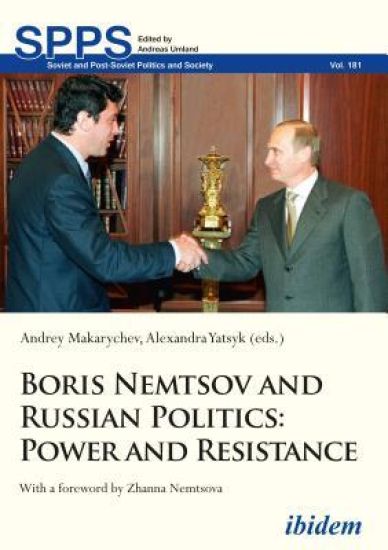
Boris Nemtsov and Russian Politics
Andrey Makarychev; Alexandra Yatsyk; Zhanna Nemtsova
ibidem-Verlag, Jessica Haunschild u Christian Schon
2018
nidottu
In post-Soviet Russian politics, Boris Nemtsov is one of the most tragic figuresand not only because he was shot dead, at the age of 56, in close vicinity to the Kremlin, the locus of Russias power. The transparency of evil in this specific case was shocking: Nemtsovs murder was filmed by a surveillance camera. The video tape confirms the demonstrative and insolent character of the assassination. His death illuminated a core feature of the current regime that tolerates, if not incites, extra-legal actions against those it considers to be foes, traitors, or members of the Fifth Column. In this volume Boris Nemtsov is commemorated from different perspectives. In addition to academic papers, it includes personal notes and reflections. The articles represent a range of assessments of Nemtsovs personality by people for whom he was one of the leading figures in post-Soviet politics and a major protagonist in Russias transformation. Some authors had direct experiences of either living in, or travelling to, Nizhny Novgorod when Nemtsov was governor there. The plurality of opinions collected in this volume matches the diversity and multiplicity of Nemtsovs political legacy. The volumes contributors include: David J. Kramer, Senior Director at the McCain Institute for International Leadership in Washington, DC; Miguel Vázquez Liñán, Associate Professor at Seville University; Yulia Kurnyshova, Research Fellow at the National Institute for Strategic Studies in Kyiv; Ekaterina Smagly, Director of the Kennan Institute in Kyiv; Henry E. Hale, Professor at The George Washington University in Washington, DC; Howard J. Wiarda (?2015), Professor at the University of Georgia; Sharon Werning Rivera, Associate Professor at Hamilton College; Tomila Lankina, Associate Professor at the London School of Economics and Political Science; Andre Mommen (?2017), Professor at the University of Amsterdam; Stefan Meister, Director at the German Council on Foreign Relations in Berlin; Vladimir Gelman, Professor at the University of Helsinki; Vladimir V. Kara-Murza, coordinator of the Open Russia movement and deputy leader of the Peoples Freedom Party of Russia.

Boris Becker zum Ausmalen
Henricus - Edition Deutsche Klassik GmbH, Berlin
2022
nidottu
Boris Iofan is best known as the architect behind the Palace of the Soviets. Yet his style was not limited to the Socialist Clas-sicism that flourished under Stalin. Rath-er, Iofan’s architectural language evolved throughout his lifetime, from his eclecti-cist beginnings in Rome, to the grandeur of the wedding-cake style in the 1930s, to his incorporation of concrete panels under Khrushchev. This book presents a collec-tion of essays that chart the development of the architect’s variegated career that spanned nearly six decades.
Boris Paternak and the Tradition of German Romanticism
Evans-Romaine Karen Evans-Romaine
Peter Lang GmbH, Internationaler Verlag der Wissenschaften
1997
nidottu
This dissertation documents Pasternak's reception of literature from three periods within German Romanticism: the early Romanticism of the Jena School's literary representative, Friedrich von Hardenberg (Novalis), the "second-generation" Romanticism of E.T.A. Hoffmann; and the end and rejection of German Romanticism, represented by Heinrich Heine.
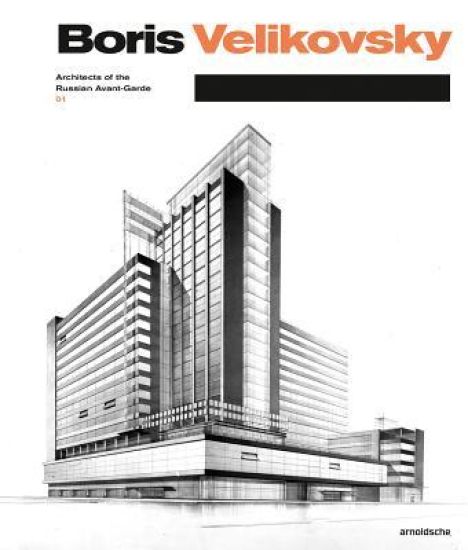
With his residential buildings, office blocks, schools and factories, Boris Velikovsky (1878-1937) made a definitive contribution to Russian avant-garde architecture. His early constructions, such as Gribov House in Moscow, are still very much bound to Russian Neoclassicism, yet since the Revolution of 1917, he increasingly designed Constructivist architecture. One example is his Gostorg Management Building, distinguished by glass facades, the functional division of space and use of state-of-the-art materials. Furthermore in the garden city of Druzhba for instance, Velikovsky intensively engaged with new ideas in town planning. With mostly hitherto unpublished technical plans as well as numerous historical and new colour photographs of his most famous projects, Boris Velikowsky's contribution to Russian avant-garde architecture is appreciated for the first time in book form.
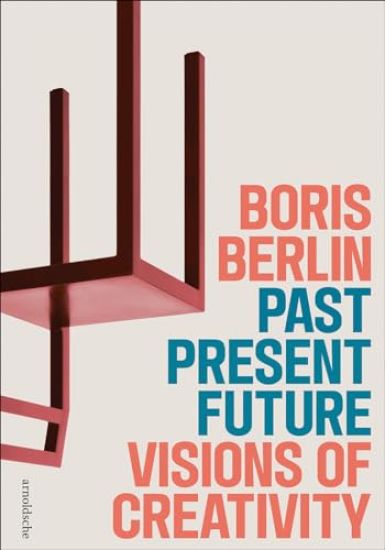
Boris Berlin
Arnoldsche
2025
sidottu
This publication presents a round table discussion between authors within the field of design and art history about the Russian-Danish designer Boris Berlin’s works, his challenges and innovative solutions, and development of materials and production methods, which all contribute to a future focused on sustainable design. Boris Berlin’s practice is based on a deep understanding of art in a wider cultural context as well as the collaboration between craftsmanship, the intellectual, and the emotional. He thus works in these many different areas alongside architects, academics, artisans, and artists. This overarching perspective seeks to set thoughts in motion and initiate discussions about the actuality of contemporary design issues.
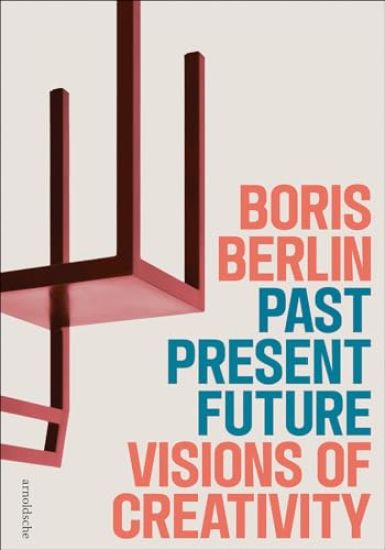
Boris Berlin
Arnoldsche
2025
sidottu
This publication presents a round table discussion between authors within the field of design and art history about the Russian-Danish designer Boris Berlin’s works, his challenges and innovative solutions, and development of materials and production methods, which all contribute to a future focused on sustainable design. Boris Berlin’s practice is based on a deep understanding of art in a wider cultural context as well as the collaboration between craftsmanship, the intellectual, and the emotional. He thus works in these many different areas alongside architects, academics, artisans, and artists. This overarching perspective seeks to set thoughts in motion and initiate discussions about the actuality of contemporary design issues. Text in Danish.