Kirjojen hintavertailu. Mukana 11 342 296 kirjaa ja 12 kauppaa.

Kirjahaku

Etsi kirjoja tekijän nimen, kirjan nimen tai ISBN:n perusteella.

1000 tulosta hakusanalla Brett Mclaughlin

It's Your Bedtime Phie & Boz

It's Your Bedtime Phie & Boz

Brett MacKenzie

TellWell Press
2021
pokkari
It is time to imagine with Phie and Boz in this fun and whimsical picture story book. Perfect for kids aged 3 - 8, this imaginative picture book is one that parents, educators and children will love. An adorable bedtime story, full of rhyme and beautiful colourful illustrations to capture your imagination. A great family read aloud book. Phie and Boz, a girl and boy of school age, are bored and wanting to play. What do you do when you are bored? Imagine of course Join Phie and Boz on a journey of their imagination. Suddenly Phie and Boz both rememberThe game they like to play.It is Phie's turn to imagineAnd pick the animal for today. So Phie and Boz hold hands, Squeeze tight and close their eyes.When they open them up next, They are met with a big surprise. In the first edition of 'It's Your Bedtime Phie and Boz', the two young children are transported by their imagination into a leafy green forest as two bears and then two monkeys, taking turns to guide each other into mischief and fun before being tucked into bed wearing an interesting disguise Can you spot Phie and Boz's pet dog on every page, hiding, watching and joining in the fun?

It's Your Bedtime Phie & Boz

It's Your Bedtime Phie & Boz

Brett MacKenzie

TellWell Press
2021
sidottu
It is time to imagine with Phie and Boz in this fun and whimsical picture story book. Perfect for kids aged 3 - 8, this imaginative picture book is one that parents, educators and children will love. An adorable bedtime story, full of rhyme and beautiful colourful illustrations to capture your imagination. A great family read aloud book. Phie and Boz, a girl and boy of school age, are bored and wanting to play. What do you do when you are bored? Imagine of course Join Phie and Boz on a journey of their imagination. Suddenly Phie and Boz both rememberThe game they like to play.It is Phie's turn to imagineAnd pick the animal for today. So Phie and Boz hold hands, Squeeze tight and close their eyes.When they open them up next, They are met with a big surprise. In the first edition of 'It's Your Bedtime Phie and Boz', the two young children are transported by their imagination into a leafy green forest as two bears and then two monkeys, taking turns to guide each other into mischief and fun before being tucked into bed wearing an interesting disguise Can you spot Phie and Boz's pet dog on every page, hiding, watching and joining in the fun?

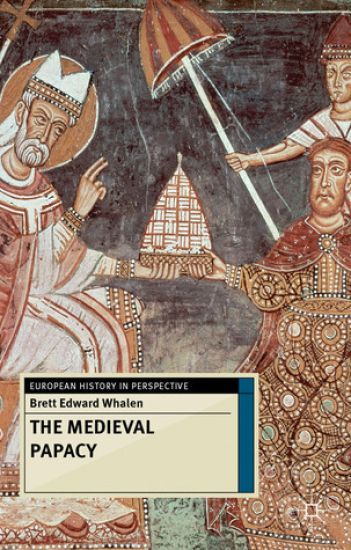
The Medieval Papacy

The Medieval Papacy

Brett Whalen

Red Globe Press
2013
sidottu
During the Middle Ages, the popes of Rome claimed both spiritual authority and worldly powers, vying with emperors for supremacy, ruling over the Papal States, and legislating the norms of Christian society. They also faced profound challenges to their proclaimed primacy over Christendom.The Medieval Papacy explores the unique role that the Roman Church and its papal leadership played in the historical development of medieval Europe. Brett Edward Whalen pays special attention to the religious, intellectual and political significance of the papacy from the first century through to the Reformation in the sixteenth century.Ideal for students, scholars and general readers alike, this approachable survey helps us to understand the origins of an idea and institution that continue to shape our modern world.
The Medieval Papacy

The Medieval Papacy

Brett Whalen

Red Globe Press
2013
nidottu
During the Middle Ages, the popes of Rome claimed both spiritual authority and worldly powers, vying with emperors for supremacy, ruling over the Papal States, and legislating the norms of Christian society. They also faced profound challenges to their proclaimed primacy over Christendom.The Medieval Papacy explores the unique role that the Roman Church and its papal leadership played in the historical development of medieval Europe. Brett Edward Whalen pays special attention to the religious, intellectual and political significance of the papacy from the first century through to the Reformation in the sixteenth century.Ideal for students, scholars and general readers alike, this approachable survey helps us to understand the origins of an idea and institution that continue to shape our modern world.
The Nervous Liberals

The Nervous Liberals

Brett Gary

Columbia University Press
1999
pokkari
Today few political analysts use the term "propaganda." However, in the wake of World War I, fear of propaganda haunted the liberal conscience. Citizens and critics blamed the war on campaigns of mass manipulation engaged in by all belligerents. Beginning with these "propaganda anxieties," Brett Gary traces the history of American fears of and attempts to combat propaganda through World War II and up to the Cold War. The Nervous Liberals explores how following World War I the social sciences-especially political science and the new field of mass communications-identified propaganda as the object of urgent "scientific" study. From there his narrative moves to the eve of WWII as mainstream journalists, clerics, and activists demanded greater government action against fascist propaganda, in response to which Congress and the Justice Department sought to create a prophylaxis against foreign or antidemocratic communications. Finally, Gary explores how free speech liberalism was further challenged by the national security culture, whose mobilization before World War II to fight the propaganda threat lead to much of the Cold War anxiety about propaganda. Gary's account sheds considerable light not only on the history of propaganda, but also on the central dilemmas of liberalism in the first half of the century-the delicate balance between protecting national security and protecting civil liberties, including freedom of speech; the tension between public-centered versus expert-centered theories of democracy; and the conflict between social reform and public opinion control as the legitimate aim of social knowledge.
Science of Swimming

Science of Swimming

Brett Hawke

DORLING KINDERSLEY LTD
2024
nidottu
Learn the science needed to perfect your stroke, swim faster, and endure for longer.Science of Swimming dives deeper than any other book to examine the muscle groups and bodily systems involved in being an effective swimmer; how they interact with the hydrodynamics of water resistance; and how you can apply this knowledge to streamline your technique and achieve your training goals.- Each swim stroke is anatomised so you can analyse and adapt your stroke to swim smarter.- Full-spectrum training programmes - for all abilities and goals - combine drills, speed work, and endurance with dry land conditioning routines targeting muscle strength, flexibility, and aerobic intensity.- All the latest scientific insights explained, including optimum nutrition, the importance of sleep hygiene, and techniques for mental resilience, to questions around wetsuits and open water swimming.Whether you're swimming simply for relaxation, competing for a club, training for a distance badge or triathlon, or planning to explore the oceans, Science of Swimming will support you both in and out of the water.
Richhill - A Portrait of an Ulster Village
Richhill is a village in Co Armagh, Northern Ireland. This book tells the story of the village from earliest times and describes the impact of major events in Irish history. The Plantation, Famine, Partition and the Great War are seen through the eyes of those who lived through them. Published by the Richhill Buildings Preservation Trust with the support of the Heritage Lottery Fund. Black and white photographs and illustrations.
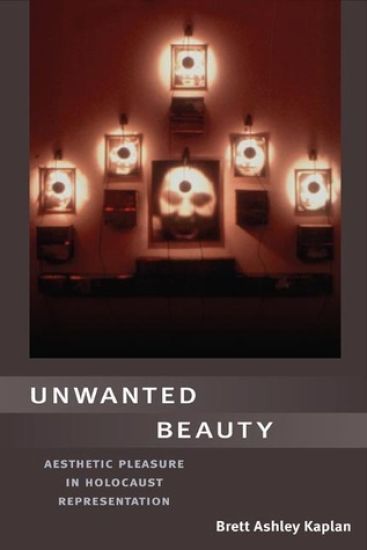
Unwanted Beauty

Unwanted Beauty

Brett Kaplan

University of Illinois Press
2007
sidottu
Portrayals of the Holocaust in literature, paintings, and architecture have aroused many ethical debates. How can we admire, much less enjoy, art that deals with such a horrificevent? Does finding beauty in the Holocaust amount to a betrayal of its victims? Brett Kaplan’s Unwanted Beauty meets these difficult questions head on, analyzing a wide range of Holocaust representations in order to argue that a more careful understanding of aesthetics and its relation to history can best address the anxieties raised by beauty in Holocaust art. Building on the work of Marianne Hirsch, Leo Spitzer, and other scholars, Kaplan approaches this art from multiple perspectives, including the works created within the concentration camps and by Holocaust survivors. She analyzes how art contributes to survival and how it functions within memory and history. Addressing the literary work of Paul Celan, Charlotte Delbo, Jorge Semprun, and Edmond Jabès; the visual art of Christian Boltanski and Anselm Kiefer; and the monuments and museums of Peter Eisenman, Jochen Gerz, Esther Shalev-Gerz, and James Ingo Freed, Unwanted Beauty finds that the aesthetic pleasures in these complex and multivalent texts can transform memory in enlivening ways and open these traumatic historical events to deeper understanding.
Flawed Light

Flawed Light

Brett C. Millier

University of Illinois Press
2009
sidottu
The relationship between alcoholism and the poetic process has been well established, but the history of heavy-drinking poets in the twentieth century tilts disproportionately toward male writers such as John Berryman, Robert Lowell, or Theodore Roethke. Women poets, however, were just as susceptible to alcohol, and they very often wrote about its effects on their bodies, minds, and lives. In this study, Brett C. Millier looks at the role of drinking in the lives and poetry of American women poets in the first half of the twentieth century. Millier reads the poems of Dorothy Parker, Louise Bogan, Edna St. Vincent Millay, Elinor Wylie, Léonie Adams, Isabella Gardner, and Elizabeth Bishop--and in counterpoint, the poems of Jean Garrigue--to see how they negotiated their alcoholism with their art.Despite the shame and isolation these writers suffered as a result of their heavy drinking and despite the oppressive restrictions on subject matter placed on women poets by the critical establishment in this era, these female poets nevertheless wrote about alcohol. Millier looks at figures for alcohol and inebriation that these writers used in their work in defiance of the masculine Modernist code of impersonality in art. As women in a remarkable tradition of female lyric poets, their subjects and voices were circumscribed by their sex, but their lasting poems artfully record these painful struggles.
Making Michigan Home

Making Michigan Home

Brett Olmsted

UNIVERSITY OF ILLINOIS PRESS
2025
sidottu
Shaping a distinctive Midwestern form of Mexicano identity Mexicanos in Michigan and across the Midwest share a common experience: living as largely invisible outsiders as they struggled to build vibrant communities in places that wanted their labor but not their presence. Brett Olmsted ranges from the 1920s to the 1970s as he analyzes how Mexicanos sought to transcend social, cultural, economic, and political exclusion. Never numerous in any one area, Mexican Americans pursued inclusion via leisure spaces and labor unionism. Activities like celebrations, sports, movies, and music encouraged Mexicanos to claim physical and social space, connect with Michigan's other Mexicano communities, and construct their own sense of identity. Mexicano workers, meanwhile, embraced interethnic union activism to address racism in job placement and promotion. Olmsted also examines how the state's Mexicanos adapted to Michigan's dual economy and found advantages in moving back-and-forth between rural and urban areas. In-depth and innovative, Making Michigan Home spotlights the state's overlooked Mexicanos and their distinctive experiences within the Latina/o/x Studies Midwest.
Making Michigan Home

Making Michigan Home

Brett Olmsted

UNIVERSITY OF ILLINOIS PRESS
2025
nidottu
Shaping a distinctive Midwestern form of Mexicano identity Mexicanos in Michigan and across the Midwest share a common experience: living as largely invisible outsiders as they struggled to build vibrant communities in places that wanted their labor but not their presence. Brett Olmsted ranges from the 1920s to the 1970s as he analyzes how Mexicanos sought to transcend social, cultural, economic, and political exclusion. Never numerous in any one area, Mexican Americans pursued inclusion via leisure spaces and labor unionism. Activities like celebrations, sports, movies, and music encouraged Mexicanos to claim physical and social space, connect with Michigan's other Mexicano communities, and construct their own sense of identity. Mexicano workers, meanwhile, embraced interethnic union activism to address racism in job placement and promotion. Olmsted also examines how the state's Mexicanos adapted to Michigan's dual economy and found advantages in moving back-and-forth between rural and urban areas. In-depth and innovative, Making Michigan Home spotlights the state's overlooked Mexicanos and their distinctive experiences within the Latina/o/x Studies Midwest.
Chasing the Big Leagues

Chasing the Big Leagues

Brett Baker

Indiana University Press
2019
pokkari
Three years after earning a full-ride baseball scholarship to Ohio State, "Golden" Jake Standen has burned out. Working as a furniture mover and bouncing between meaningless relationships, he's convinced that his baseball dreams are over. But after the 1994 Major League Baseball strike prematurely ends the season, the playoffs, and even the World Series, Jake is about to get his lucky break. Strike be damned, the owners will have a team for the '95 season, even if they have to open tryouts and spring training to anyone who can hit or throw the ball.After scoring contracts for the Toronto Blue Jays, Jake, his best friend Brian Sloan, and an unlikely cast of new teammates have just six weeks to learn how to play like never before, amid a slowly building crescendo of public curiosity, media scrutiny, and a labor dispute that could put them on the field come Opening Day—or dash their dreams at any minute. Based on the true stories of the 1994–95 replacement players, Chasing the Big Leagues is an exciting novel about shared dreams and competing interests, best friends and second chances, growing up and finding love.
Divine Apology

Divine Apology

Brett Miller

Praeger Publishers Inc
2002
sidottu
While the defense of public image in political, corporate, and celebrity rhetoric has been widely studied, religious image repair has been largely ignored. Divine Apology considers the unique circumstances facing religious figures in need of restoring their reputations by examining a blend of historical and contemporary defenses offered by various figures and groups. The author covers apologia as advanced by the Apostle Paul, Justin Martyr, Martin Luther, Jimmy Swaggart, evangelical opponents of the Jesus Seminar, and conservative leaders of the Southern Baptist Convention. He concludes that strategies used for religious image repair often differ significantly from those employed by politicians, corporations, and other public figures.In this unique volume, Miller demonstrates that religious groups and individuals are as motivated as anyone else to purify their public images. The issues prompting defenses, however, are more likely to focus on epistemological conflicts and clashes of worldviews than on inappropriate behaviors. As a consequence, religious apologists are more likely to associate attacks against their beliefs as assaults against their characters. This causes religious image restoration discourse to manifest itself as more transcendent than defenses in traditional situations involving laypeople. Miller posits that the presence of God and religious antecedents as salient audiences, as well as other factors concerning audience and context, work to shape a form of apology that is characteristically religious.
German Multiculturalism

German Multiculturalism

Brett Klopp

Praeger Publishers Inc
2002
sidottu
Migration, asylum, and citizenship have become unavoidable topics in contemporary European politics. Klopp examines the issues of immigration, integration, and multiculturalism in Germany, Europe's premier immigration country, through the perspectives of both immigrants and local institutions (unions, employers, schools, neighborhoods, and city government). Klopp addresses the potential for immigration patterns and increasing heterogeneity to produce the conditions for social transformation, and specifically he shows how these factors are challenging and gradually transforming the boundaries of citizenship and the nation in Germany. Theoretically he argues against recent models of postnational and transnational membership that claim that the nationstate model of citizenship has been superseded by a new type of membership, one that guarantees individual rights via international human rights norms. Given the claims of these models, we should expect that long-term resident aliens will be satisfied with the partial citizenshp rights (civil and social) extended to them by liberal European welfare states, and that they will not identify with, or seek political rights from, their state of residence. On the contrary, Klopps suggests that national-state citizenship remains the essential form of formal social and political inclusion for the majority of immigrants. In the past Germany has represented an extreme case of ethnocultural exclusion, and it is therefore something of a natural laboratory in which to examine the reciprocal measures and mechanisms of political and social change currently underway in Europe. Lessons learned from qualitative empirical examination of immigration and integration processes in Germany could prove instructive when compared to similar processes of transformation underway in the other tranditonal nation-states of Western Europe and in the efforts to define a common European identity. Provocative reading for scholars, students, and other researchers as well as policy makers involved with migration issues, comparative politics and citizenship, and contemporary German studies.
A Family History of Illness

A Family History of Illness

Brett L. Walker

University of Washington Press
2018
sidottu
While in the ICU with a near-fatal case of pneumonia, Brett Walker was asked, "Do you have a family history of illness?"—a standard and deceptively simple question that for Walker, a professional historian, took on additional meaning and spurred him to investigate his family's medical past. In this deeply personal narrative, he constructs a history of his body to understand his diagnosis with a serious immunological disorder, weaving together his dying grandfather's sneaking a cigarette in a shed on the family's Montana farm, blood fractionation experiments in Europe during World War II, and nineteenth-century cholera outbreaks that ravaged small American towns as his ancestors were making their way west.A Family History of Illness is a gritty historical memoir that examines the body's immune system and microbial composition as well as the biological and cultural origins of memory and history, offering a startling, fresh way to view the role of history in understanding our physical selves. In his own search, Walker soon realizes that this broader scope is more valuable than a strictly medical family history. He finds that family legacies shape us both physically and symbolically, forming the root of our identity and values, and he urges us to renew our interest in the past or risk misunderstanding ourselves and the world around us.
The Lost Wolves of Japan

The Lost Wolves of Japan

Brett L. Walker; William Cronon

University of Washington Press
2005
sidottu
Many Japanese once revered the wolf as Oguchi no Magami, or Large-Mouthed Pure God, but as Japan began its modern transformation wolves lost their otherworldly status and became noxious animals that needed to be killed. By 1905 they had disappeared from the country. In this spirited and absorbing narrative, Brett Walker takes a deep look at the scientific, cultural, and environmental dimensions of wolf extinction in Japan and tracks changing attitudes toward nature through Japan's long history.Grain farmers once worshiped wolves at shrines and left food offerings near their dens, beseeching the elusive canine to protect their crops from the sharp hooves and voracious appetites of wild boars and deer. Talismans and charms adorned with images of wolves protected against fire, disease, and other calamities and brought fertility to agrarian communities and to couples hoping to have children. The Ainu people believed that they were born from the union of a wolflike creature and a goddess.In the eighteenth century, wolves were seen as rabid man-killers in many parts of Japan. Highly ritualized wolf hunts were instigated to cleanse the landscape of what many considered as demons. By the nineteenth century, however, the destruction of wolves had become decidedly unceremonious, as seen on the island of Hokkaido. Through poisoning, hired hunters, and a bounty system, one of the archipelago's largest carnivores was systematically erased.The story of wolf extinction exposes the underside of Japan's modernization. Certain wolf scientists still camp out in Japan to listen for any trace of the elusive canines. The quiet they experience reminds us of the profound silence that awaits all humanity when, as the Japanese priest Kenko taught almost seven centuries ago, we "look on fellow sentient creatures without feeling compassion."
The Lost Wolves of Japan

The Lost Wolves of Japan

Brett L. Walker; William Cronon

University of Washington Press
2008
pokkari
Many Japanese once revered the wolf as Oguchi no Magami, or Large-Mouthed Pure God, but as Japan began its modern transformation wolves lost their otherworldly status and became noxious animals that needed to be killed. By 1905 they had disappeared from the country. In this spirited and absorbing narrative, Brett Walker takes a deep look at the scientific, cultural, and environmental dimensions of wolf extinction in Japan and tracks changing attitudes toward nature through Japan's long history.Grain farmers once worshiped wolves at shrines and left food offerings near their dens, beseeching the elusive canine to protect their crops from the sharp hooves and voracious appetites of wild boars and deer. Talismans and charms adorned with images of wolves protected against fire, disease, and other calamities and brought fertility to agrarian communities and to couples hoping to have children. The Ainu people believed that they were born from the union of a wolflike creature and a goddess.In the eighteenth century, wolves were seen as rabid man-killers in many parts of Japan. Highly ritualized wolf hunts were instigated to cleanse the landscape of what many considered as demons. By the nineteenth century, however, the destruction of wolves had become decidedly unceremonious, as seen on the island of Hokkaido. Through poisoning, hired hunters, and a bounty system, one of the archipelago's largest carnivores was systematically erased.The story of wolf extinction exposes the underside of Japan's modernization. Certain wolf scientists still camp out in Japan to listen for any trace of the elusive canines. The quiet they experience reminds us of the profound silence that awaits all humanity when, as the Japanese priest Kenko taught almost seven centuries ago, we "look on fellow sentient creatures without feeling compassion."