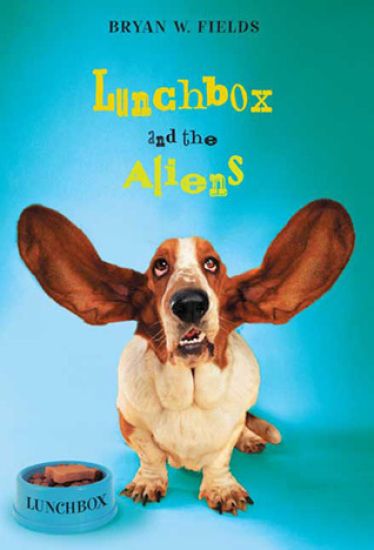
"Lunchbox felt odd. He wondered how he had known how to open the place where all the yummy stuff was kept. He wondered why he seemed to know so much about these strange animals he was with. He wondered how he knew he was wondering."Lunchbox is your average basset hound: round, floppy, and not too bright . . . until he's abducted by aliens. Then he suddenly becomes a lean, mean, garbage-machine-making, uh, machine. Frazz and Grunfloz, the hapless aliens who abducted Lunchbox, have set him the task of converting Earth's trash into froonga, a food adored by aliens and dogs alike. Will Lunchbox and his boy, Nate, solve the world's garbage crisis and form the first interplanetary alliance? Or will the fate of the whole solar system come to rest on whether Lunchbox can ever learn to catch a Frisbee?
This open access LNCS volume 15515 constitutes the refereed proceedings of the First MICCAI Challenge on Low Field Pediatric Brain Magnetic Resonance Image Segmentation and Quality Assurance, LISA 2024, Held in Conjunction with MICCAI 2024, in Marrakesh, Morocco, in October 2024. The 6 full papers presented were carefully reviewed and selected from 8 submissions. This MICCAI Challenge focuses on the development and evaluation of automatic image analysis and machine learning algorithms and Ultra-low-field brain imaging has the potential to become a transformative tool for both clinical and research applications.
The extraterrestrial intelligence is a magnetotactic archaeal colony network. It arises on porphyrins which are generated sui generis on the quantal form. The porphyrin networks can self-replicate &can form a template for the formation of viroids &prions. The magnetotactic archaeal colony networks are extremophilic networks &can survive in the environment of extreme climates of Mars and Venus as well as in interstellar gas. The extremophilic archaeal extraterrestrial network can secrete RNA viroids which form RNA viroidal quasi-species consortia. The RNA viroidal quasi-species consortia can be edited by archaeal digoxin giving identity &specialization to the network. The magnetotactic archaeal extraterrestrial intelligence impacts on earth by meteoritic showers which give new cosmic genes to the earth. This is the form of cosmic gene transfer. The earth is populated by homo sapiens &the transfer of archaeal &RNA viroidal genes generates the Homo neanderthalis &their brain. Thus there is an interacting quantal computing archaeal colonies in the brain &the intergalactic magnetic field. These are generated by transfer of cosmic genes by archaeal networks mediated by meteoritic impacts
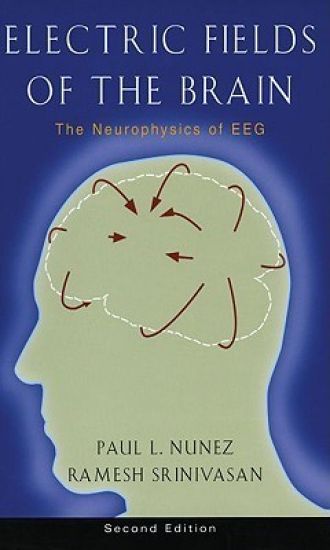
Electroencephalography (EEG) is practiced by neurologists, cognitive neuroscientists, and others interested in functional brain imaging. Whether for clinical or experimental purposes, all studies share a common purpose-to relate scalp potentials to the underlying neurophysiology. Electrical potentials on the scalp exhibit spatial and temporal patterns that depend on the nature and location of the sources and the way that currents and fields spread through tissue. Because these dynamic patterns are correlated with behavior and cognition, EEG provides a "window on the mind," correlating physiology and psychology. This classic and widely acclaimed text, originally published in 1981, filled the large gap between EEG and the physical sciences. It has now been brought completely up to date and will again serve as an invaluable resource for understanding the principles of electric fields in living tissue and for using hard science to study human consciousness and cognition. No comparable volume exists for it is no easy task to explain the problems of EEG in clear language, with mathematics presented mainly in appendices. Among the many topics covered by the Second Edition are micro and meso (intermediate scale) synaptic sources, electrode placement, choice of reference, volume conduction, power and coherence measures, projection of scalp potentials to dura surface, dynamic signatures of conscious experience, neural networks immersed in global fields of synaptic action, and physiological bases for brain source dynamics. The Second Edition is an invaluable resource for neurologists, neuroscientists (especially cognitive neuroscientists), biomedical engineers, and their students and trainees. It will also appeal to physicists, mathematicians, computer scientists, psychiatrists, and industrial engineers interested in EEG.
This is the first ever field guide from best selling author Bryan Peterson, featuring material from previous titles plus new examples. It covers a broad list of topics & features Peterson's breathtaking imagery that never fails to inspire. Best-selling author Bryan Peterson revises the best material from his previous books, with the addition of exciting new photographic examples, in his first ever field guide. For the beginning photographer to the serious amateur, including students, aspiring professionals and the multitude of existing Peterson fans, this is the perfect pocket guide to take along while shooting for on-location reference. It covers a broad list of topics useful to photographers, from composition and lighting to shutter speed and much more. It is the perfect size for taking on-location and as always, Peterson keeps his readers inspired with his breathtaking imagery.
Brain Fitness Boot Camp is a fun and energetic range of puzzle books designed to wake up your brain and get it into peak condition. It's like having your own personal fitness instructor - without the shouting! TOUGH puzzles are not for the faint hearted - you'll need to muster all your powers of observation, logic, lateral thinking and arithmetic to get through this series of hardcore mental challenges.
Follow-up to bestselling Bryan Peterson's Understanding Photography Field Guide. Bryan Peterson is able to explain complex concepts in understandable and even humorous language. It includes stunning and colourful images that will wow the reader. Beginning photographers and serious amateurs alike, including students, aspiring professionals and the multitude of existing Bryan Peterson fans, will love this pocket guide to on-location tips for composing images with impact. Bestselling author Bryan Peterson offers a follow-up to his top-selling Bryan Peterson's Understanding Photography Field Guide, this time offering tips, techniques and exercises to help amateurs in the field compose stronger, more compelling photographs.
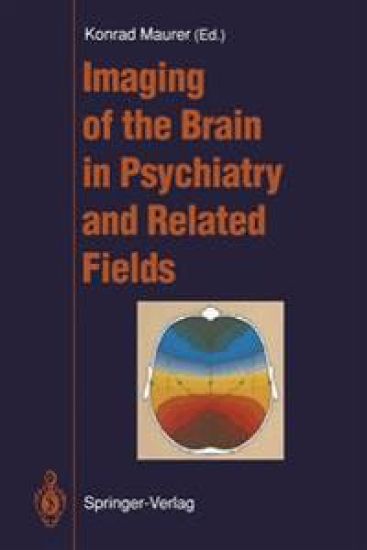
In the last two decades imaging of the brain, or neuroimaging, has become an integral part of clinical and research psychiatry. This is due to recent advances in computer technology, which has made it relatively easy to generate brain images representing structure and function of the central nervous system. Currently used clinical diagnostic imaging modalities, such as X-ray computed tomography (CT) and magnetic resonance imaging (MRI) , provide predominantly anatomic information. CT images reflect X-ray attenuation distribution within the brain, whereas MRI signals depend primarily on proton sensitivity and tissue relaxivity. The chapter "Structural Imaging Methods" reviews CT and MRI studies on schizophrenic and affective disorders and degenera tive central nervous system diseases. The impact of fast three dimensional (3-0) imaging and the automatic transfer from 3-D elements in the brain to artificial diagrams based on this information is considered. Since the original report of the findings of Ingvar and Franzen in 1974 and the introduction of regional cerebral blood flow (rCBF) measurements, single photon emission computed tomography (SPECT) has been gaining acceptance as one of the major imaging techniques, and it is available in most nuclear medicine depart ments. The section "Functional Imaging Methods (Cerebral Blood Flow - CBF, Single Photon Emission Computerized Tomography - SPECT)" describes rCBF studies with the 133Xe inhalation method utilizing a 254 detector system and rCBF images measured by SPECT using the tracer 99mTc-HMPAO.