Kirjojen hintavertailu. Mukana 12 016 292 kirjaa ja 12 kauppaa.

Kirjahaku

Etsi kirjoja tekijän nimen, kirjan nimen tai ISBN:n perusteella.

1000 tulosta hakusanalla Bryan R. Simms

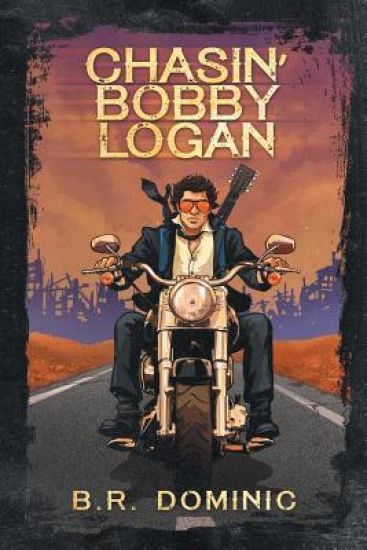
Chasin' Bobby Logan

Chasin' Bobby Logan

Brian R. Dominic

Dom Books
2019
nidottu
When Jane Meadows is jilted on her wedding day, watching the love of her life, Bobby Logan, speed away on his motorcycle to pursue a musical career in New York City, she refuses her mother's good advice, who tells her to let him be. Instead, she enlists Joann Dertz, a.k.a Jo Dert, her pistol-packing best friend from Moundsville, to join her on a manhunt to Manhattan Isle.They weren't alone on the chase. Logan's notorious uncle, Earnest Kitchi, a Native American video producer with his own tribal motivations for the wedding, assembles a posse to bring him back to West Virginia, dead or alive.Jane's widowed mother, Claire, afraid of losing her only daughter and grandchild, also joins the road trip with the irrepressible Right Reverend Pete.The well-armed Mountaineers break badly into the Big Apple, encountering explosive detours, yet their insane sideshows turn them into media darlings among the curiously entertained New Yorkers.But, with renewed motivation and the feds on their tails, Jane and her troupe track down Logan in the Lehigh Valley of Pennsylvania, where he's performing at a music festival that is pointedly in the path of one of the great East Coast floods of 2011, spawned by Hurricane Irene.Jane and Jo find redemption on a wild riverboat ride during the flood in this tale of rectification, where valor is not limited to one gender, creed, or race.
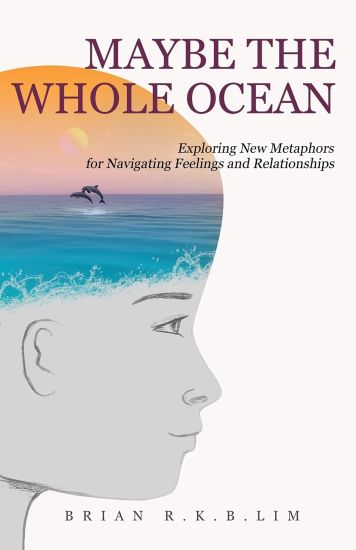
Maybe the Whole Ocean

Maybe the Whole Ocean

Brian R K B Lim

Paradigm Hawaii Publishing
2021
pokkari
Just as the ocean covers most of the planet, relationships compromise the majority of life. Strategic navigation of relationships occurs as people consider a cognitive understanding of emotions, e.g., that feelings are more governed by thinking than by circumstances. This is foundational for explaining how most interpersonal problems can be minimized and how new levels of freedom and joy in relationships with others can be experienced. Using additional metaphors, fourteen topics related to relationships are explored: emotion, freedom, human nature, competition and cooperation, motivation, grace, communication, anger, sadness, happiness, fear, connection, forgiveness, and virtue. Each topic is discussed with an emphasis on a cognitive model of emotions as well as reflections on various relevant Bible passages. Overall, this book attempts to show, through various principles, acronyms, analogies, and examples, that a simple idea (thoughts determine emotions) can make a significant difference. This idea is essential to understanding how people can be more emotionally responsive than reactive, which in turn will result in interpersonal dynamics that are characterized more by opportunity than obligation, cooperation rather than competition, and thriving rather than just surviving.
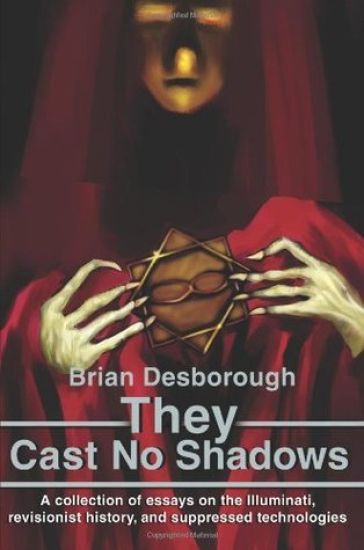
They Cast No Shadows

They Cast No Shadows

Brian R Desborough

iUniverse
2002
pokkari
In this explosive and compelling book, author Brian Desborough explores the activities of the thirteen interconnected family bloodlines that collectively comprise the secret group known as the Illuminati. His years spent aiding survivors of Satanic ritual abuse and mind control has provided the author with an in-depth knowledge of Illuminati history and their future plans for the human race. The culmination of three decades of intensive research, this provocative book is designed to take readers out of their comfort zone and examine the historical and archaeological data, which reveal that: · Israel was created not by illiterate pastoralists, as is claimed by biblical scholars, but by skilled Kenite copper smelters. · The Dead Sea Scrolls were not written at Khirbat Qumran. · The Temple Mount is not the site of the Temples of Solomon and Herod. Applying a synthesis of history, politics, science and covert intelligence sources, the author explores such diverse subjects as mind control, advanced energy systems, terrestrially constructed flying saucers, extraterrestrials, and the planned double-cross of the western Illuminati factions by China and Russia. Oriented toward both the scholar and layperson, this revealing book is a "must read" for those interested in history, politics or high technology.
What to Do When You're Totally Screwed

What to Do When You're Totally Screwed

Brian R King Lcsw

iUniverse
2004
pokkari
Discover Brian R. King's revolutionary "Life Team StrategyTM" in this groundbreaking book, "What to Do When You're Totally Screwed." By categorizing the people around you as Starters, Sitters, Sneezers, Shovers and Shouters, King provides fast and effective strategies to help you determine if these people are holding you up or holding you back. You will learn a simple and effective system for balancing the relationships in your life as well as the thoughts in your head to make sure your life becomes precisely what you need, when you need it in order to be as happy, healthy and as effective as you can possibly be.
What to Do When You're Totally Screwed

What to Do When You're Totally Screwed

Brian R King Lcsw

iUniverse
2004
sidottu
Discover Brian R. King's revolutionary "Life Team StrategyTM" in this groundbreaking book, "What to Do When You're Totally Screwed." By categorizing the people around you as Starters, Sitters, Sneezers, Shovers and Shouters, King provides fast and effective strategies to help you determine if these people are holding you up or holding you back. You will learn a simple and effective system for balancing the relationships in your life as well as the thoughts in your head to make sure your life becomes precisely what you need, when you need it in order to be as happy, healthy and as effective as you can possibly be.
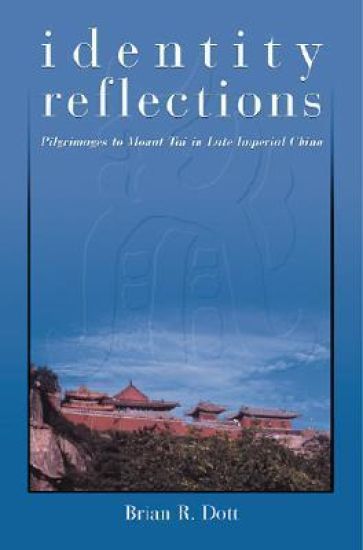
Identity Reflections

Identity Reflections

Brian R. Dott

Harvard University Press
2005
sidottu
Mount Tai in northeastern China has long been a sacred site. Indeed, it epitomizes China’s religious and social diversity. Throughout history, it has been a magnet for both women and men from all classes—emperors, aristocrats, officials, literati, and villagers. For much of the past millennium, however, the vast majority of pilgrims were illiterate peasants who came to pray for their deceased ancestors, as well as for sons, good fortune, and health.Each of these social groups approached Mount Tai with different expectations. Each group’s or individual’s view of the world, interpersonal relationships, and ultimate goals or dreams—in a word, its identity—was reflected in its interactions with this sacred site. This book examines the behavior of those who made the pilgrimage to Mount Tai and their interpretations of its sacrality and history, as a means of better understanding their identities and mentalities. It is the first to trace the social landscape of Mount Tai, to examine the mindsets not just of prosperous, male literati but also of women and illiterate pilgrims, and to combine evidence from fiction, poetry, travel literature, and official records with the findings of studies of material culture and anthropology.
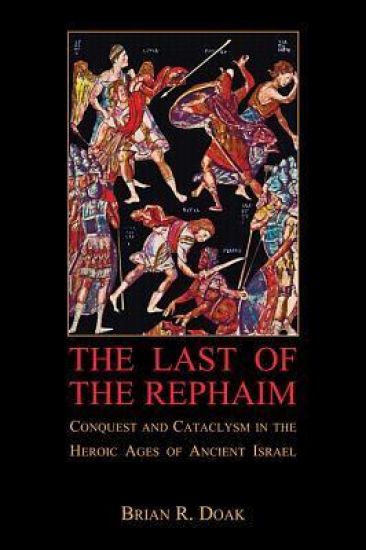
The Last of the Rephaim

The Last of the Rephaim

Brian R. Doak

Harvard University Press
2013
nidottu
The figure of the giant has haunted the literatures of the ancient Mediterranean world, from the Greek Gigantomachy and other Aegean epic literatures to the biblical contexts of the ancient Near East. In The Last of the Rephaim, Brian Doak argues that the giants of the Hebrew Bible are a politically, theologically, and historiographically generative group, and through their oversized bodies, readers gain insight into central aspects of Israel’s symbolic universe. All that is overgrown or physically monstrous represents a connection to primeval chaos, and stands as a barrier to creation and right rule. Giants thus represent chaos-fear, and their eradication is a form of chaos maintenance by both human and divine agents. Doak argues that these biblical traditions participate in a broader Mediterranean conversation regarding giants and the end of the heroic age—a conversation that inevitably draws the biblical corpus into a discussion of the function of myth and epic in the ancient world, with profound implications for the politics of monotheism and monarchy in ancient Israel.
Trade and the Environment

Trade and the Environment

Brian R. Copeland; M. Scott Taylor

Princeton University Press
2005
pokkari
Nowhere has the divide between advocates and critics of globalization been more striking than in debates over free trade and the environment. And yet the literature on the subject is high on rhetoric and low on results. This book is the first to systematically investigate the subject using both economic theory and empirical analysis. Brian Copeland and Scott Taylor establish a powerful theoretical framework for examining the impact of international trade on local pollution levels, and use it to offer a uniquely integrated treatment of the links between economic growth, liberalized trade, and the environment. The results will surprise many. The authors set out the two leading theories linking international trade to environmental outcomes, develop the empirical implications, and examine their validity using data on measured sulfur dioxide concentrations from over 100 cities worldwide during the period from 1971 to 1986. The empirical results are provocative. For an average country in the sample, free trade is good for the environment. There is little evidence that developing countries will specialize in pollution-intensive products with further trade. In fact, the results suggest just the opposite: free trade will shift pollution-intensive goods production from poor countries with lax regulation to rich countries with tight regulation, thereby lowering world pollution. The results also suggest that pollution declines amid economic growth fueled by economy-wide technological progress but rises when growth is fueled by capital accumulation alone. Lucidly argued and authoritatively written, this book will provide students and researchers of international trade and environmental economics a more reliable way of thinking about this contentious issue, and the methodological tools with which to do so.
Honey Bee Biology

Honey Bee Biology

Brian R. Johnson; Thomas D. Seeley

PRINCETON UNIVERSITY PRESS
2023
sidottu
The most comprehensive and up-to-date general reference book on honey bee biologyHoney bees are marvelously charismatic organisms with a long history of interaction with humans. They are vital to agriculture and serve as a model system for many basic questions in biology. This authoritative book provides an essential overview of honey bee biology, bringing established topics up to date while incorporating emerging areas of inquiry.Honey Bee Biology covers everything from molecular genetics, development, and physiology to neurobiology, behavior, and pollination biology. Placing special attention on the important role of bees as pollinators in agricultural ecosystems, it incorporates the latest findings on pesticides, parasites, and pathogens. This incisive and wide-ranging book also sheds vital light on the possible causes of colony collapse disorder and the devastating honey bee losses we are witnessing today.The study of honey bees has greatly expanded in recent years and there is more interest in these marvelous creatures than ever before. Honey Bee Biology is the first up-to-date general reference of its kind published in decades. It is a must-have resource for social insect biologists, scientifically savvy beekeepers, and any scientist interested in bees as a model system.
Operator Techniques in Atomic Spectroscopy

Operator Techniques in Atomic Spectroscopy

Brian R. Judd

Princeton University Press
2014
pokkari
In the 1920s, when quantum mechanics was in its infancy, chemists and solid state physicists had little choice but to manipulate unwieldy equations to determine the properties of even the simplest molecules. When mathematicians turned their attention to the equations of quantum mechanics, they discovered that these could be expressed in terms of group theory, and from group theory it was a short step to operator methods. This important development lay largely dormant until this book was originally published in 1963. In this pathbreaking publication, Brian Judd made the operator techniques of mathematicians comprehensible to physicists and chemists. He extended the existing methods so that they could handle heavier, more complex molecules and calculate their energy levels, and from there, it was another short step to the mathematical analysis of spectra. This book provides a first-class introduction to continuous groups for physicists and chemists. Although first written from the perspective of atomic spectroscopy, its major topics and methods will appeal to anyone who has an interest in understanding particle theories of nuclear physics. Originally published in 1998. The Princeton Legacy Library uses the latest print-on-demand technology to again make available previously out-of-print books from the distinguished backlist of Princeton University Press. These editions preserve the original texts of these important books while presenting them in durable paperback and hardcover editions. The goal of the Princeton Legacy Library is to vastly increase access to the rich scholarly heritage found in the thousands of books published by Princeton University Press since its founding in 1905.
Operator Techniques in Atomic Spectroscopy

Operator Techniques in Atomic Spectroscopy

Brian R. Judd

Princeton University Press
2016
sidottu
In the 1920s, when quantum mechanics was in its infancy, chemists and solid state physicists had little choice but to manipulate unwieldy equations to determine the properties of even the simplest molecules. When mathematicians turned their attention to the equations of quantum mechanics, they discovered that these could be expressed in terms of group theory, and from group theory it was a short step to operator methods. This important development lay largely dormant until this book was originally published in 1963. In this pathbreaking publication, Brian Judd made the operator techniques of mathematicians comprehensible to physicists and chemists. He extended the existing methods so that they could handle heavier, more complex molecules and calculate their energy levels, and from there, it was another short step to the mathematical analysis of spectra. This book provides a first-class introduction to continuous groups for physicists and chemists. Although first written from the perspective of atomic spectroscopy, its major topics and methods will appeal to anyone who has an interest in understanding particle theories of nuclear physics. Originally published in 1998. The Princeton Legacy Library uses the latest print-on-demand technology to again make available previously out-of-print books from the distinguished backlist of Princeton University Press. These editions preserve the original texts of these important books while presenting them in durable paperback and hardcover editions. The goal of the Princeton Legacy Library is to vastly increase access to the rich scholarly heritage found in the thousands of books published by Princeton University Press since its founding in 1905.
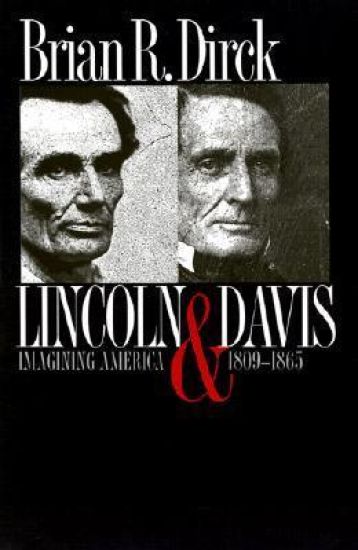
Lincoln and Davis

Lincoln and Davis

Brian R. Dirck

University Press of Kansas
2001
sidottu
Both Abraham Lincoln and Jefferson Davis are locked in the American psyche as iconic symbols of victory and defeat. The author contests that these images tend to obscure the larger visions that compelled both men to pursue their policies and actions, resulting in the American civil war.
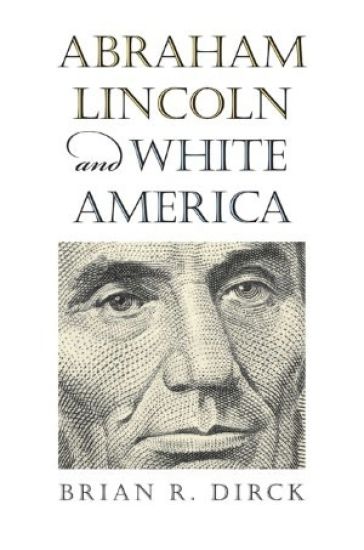
Abraham Lincoln and White America

Abraham Lincoln and White America

Brian R. Dirck

University Press of Kansas
2012
sidottu
As “Savior of the Union” and the “Great Emancipator,” Abraham Lincoln has been lauded for his courage, wisdom, and moral fibre. Yet Frederick Douglass’s assertion that Lincoln was the “white man’s president” has been used by some detractors as proof of his fundamentally racist character. Viewed objectively, Lincoln was a white man’s president by virtue of his own whiteness and that of the culture that produced him. Until now, however, historians have rarely explored just what this means for our understanding of the man and his actions. Writing at the vanguard of “whiteness studies,” Brian Dirck considers Lincoln as a typical American white man of his time who bore the multiple assumptions, prejudices, and limitations of his own racial identity. He shows us a Lincoln less willing or able to transcend those limitations than his more heroic persona might suggest but also contends that Lincoln’s understanding and approach to racial bigotry was more enlightened than those of most of his white contemporaries. Blazing a new trail in Lincoln studies, Dirck reveals that Lincoln was well aware of and sympathetic to white fears, especially that of descending into “white trash,” a notion that gnawed at a man eager to distance himself from his own coarse origins. But he also shows that after Lincoln crossed the Rubicon of black emancipation, he continued to grow beyond such cultural constraints, as seen in his seven recorded encounters with non-whites. Dirck probes more deeply into what “white” meant in Lincoln’s time and what it meant to Lincoln himself, and from this perspective he proposes a new understanding of how Lincoln viewed whiteness as a distinct racial category that influenced his policies. As Dirck ably demonstrates, Lincoln rose far enough above the confines of his culture to accomplish deeds still worthy of our admiration, and he calls for a more critically informed admiration of Lincoln that allows us to celebrate his considerable accomplishments while simultaneously recognising his limitations. When Douglass observed that Lincoln was the white man’s president, he may not have intended it as a serious analytical category. But, as Dirck shows, perhaps we should do so—the better to understand not just the Lincoln presidency, but the man himself.
Abraham Lincoln and White America

Abraham Lincoln and White America

Brian R. Dirck

University Press of Kansas
2015
nidottu
As ""Savior of the Union"" and the ""Great Emancipator,"" Abraham Lincoln has been lauded for his courage, wisdom, and moral fiber. Yet Frederick Douglass's assertion that Lincoln was the ""white man's president"" has been used by some detractors as proof of his fundamentally racist character. Viewed objectively, Lincoln was a white man's president by virtue of his own whiteness and that of the culture that produced him. Until now, however, historians have rarely explored just what this means for our understanding of the man and his actions. Writing at the vanguard of ""whiteness studies,"" Brian Dirck considers Lincoln as a typical American white man of his time who bore the multiple assumptions, prejudices, and limitations of his own racial identity. He shows us a Lincoln less willing or able to transcend those limitations than his more heroic persona might suggest but also contends that Lincoln's understanding and approach to racial bigotry was more enlightened than those of most of his white contemporaries. Blazing a new trail in Lincoln studies, Dirck reveals that Lincoln was well aware of and sympathetic to white fears, especially that of descending into ""white trash,"" a notion that gnawed at a man eager to distance himself from his own coarse origins. But he also shows that after Lincoln crossed the Rubicon of black emancipation, he continued to grow beyond such cultural constraints, as seen in his seven recorded encounters with nonwhites. Dirck probes more deeply into what ""white"" meant in Lincoln's time and what it meant to Lincoln himself, and from this perspective he proposes a new understanding of how Lincoln viewed whiteness as a distinct racial category that influenced his policies. As Dirck ably demonstrates, Lincoln rose far enough above the confines of his culture to accomplish deeds still worthy of our admiration, and he calls for a more critically informed admiration of Lincoln that allows us to celebrate his considerable accomplishments while simultaneously recognizing his limitations. When Douglass observed that Lincoln was the white man's president, he may not have intended it as a serious analytical category. But, as Dirck shows, perhaps we should do so—the better to understand not just the Lincoln presidency, but the man himself.
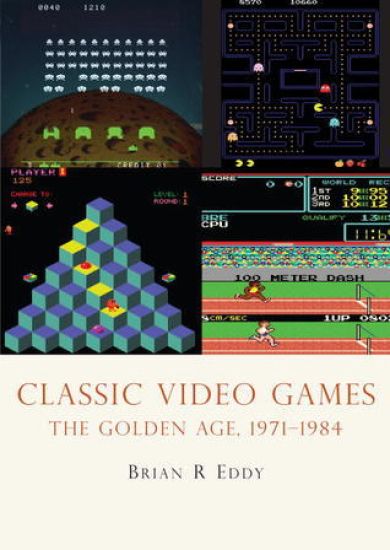
Classic Video Games

Classic Video Games

Brian R. Eddy

Shire Publications
2012
nidottu
In the early 1970s, video arcade games sprung to life in the form of Pong, Space Invaders, Asteroids, and Pac-Man, and if you were lucky enough to have an Atari system you could play Frogger or Galaga at home. By the 1980s, arcade and video games were entrenched as a pop culture phenomenon and were ubiquitous. But as quickly as the form took flight it began to change with the advent of hand-held games and more sophisticated home-gaming. Brian Eddy here traces the evolution of arcade video games, giving readers an inside look at the stratospheric rise—and transformation—of the industry.
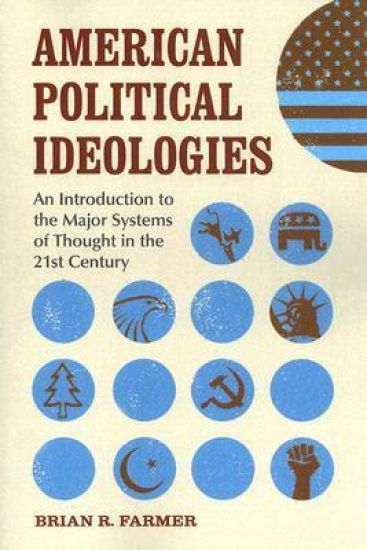
American Political Ideologies

American Political Ideologies

Brian R. Farmer

McFarland Co Inc
2006
pokkari
For many people, the world of politics is defined by ideologies. The average voter rarely takes time to research a policy issue, thoroughly relying instead on a set of beliefs set forth by his or her chosen political organization to make important decisions. These publicly promoted ideologies play an important role in international as well as domestic political development, yet many adherents to a particular belief may have a poor understanding of competing ideologies. From right wing to the far left, this text dissects eight prominent political ideologies: traditional conservatism, classic liberalism, libertarianism, conservative extremism, contemporary liberalism, communism, dependency theory and Islamism. In plain terms it describes the basic doctrine and inherent contradictions of each creed along with its particular relevance to today's political landscape. An in-depth discussion of the political socialization processes that form and perpetuate ideologies is also included. Instructors considering this book for use in a course may request an examination copy here.