A Vanishing West in the Middle East covers the history of Western cooperation in the Middle East and North Africa since the end of the Cold War. Based on more than fifty interviews with diplomats and experts as well as consultations of the academic literature, it describes the operational and political frameworks through which the United States and European countries have intervened in the Arab world, and how their relations with the region have changed. Practitioner testimonies and detailed case studies illuminate U.S. successes and failures in enlisting allies for campaigns in Iraq, Syria, and Libya.This analysis goes to the heart of the American debate on “endless wars” but also questions the very concept of Western intervention in a region where the Arab Spring and subsequent uprisings have profoundly changed the geopolitical landscape. Today, whereas the United States wishes to pull back from the region, Europe understands it must become more involved. Whatever their particular motivations, both must adapt to an increasingly fragmented Middle East, influenced specifically by more assertive Chinese, Russian, Iranian, Emirati, and Turkish foreign policies.
A Vanishing West in the Middle East covers the history of Western cooperation in the Middle East and North Africa since the end of the Cold War. Based on more than fifty interviews with diplomats and experts as well as consultations of the academic literature, it describes the operational and political frameworks through which the United States and European countries have intervened in the Arab world, and how their relations with the region have changed. Practitioner testimonies and detailed case studies illuminate U.S. successes and failures in enlisting allies for campaigns in Iraq, Syria, and Libya.This analysis goes to the heart of the American debate on “endless wars” but also questions the very concept of Western intervention in a region where the Arab Spring and subsequent uprisings have profoundly changed the geopolitical landscape. Today, whereas the United States wishes to pull back from the region, Europe understands it must become more involved. Whatever their particular motivations, both must adapt to an increasingly fragmented Middle East, influenced specifically by more assertive Chinese, Russian, Iranian, Emirati, and Turkish foreign policies.
Without humor, the American West would be a vast territory of arid clichés — stolid cowboys and fearless lawmen, or, in more modern visions, dastardly land developers and fanatical environmentalists — all of them as lifeless as an alkalai flat. In The Laughing West, Professor C. L. Sonnichsen presents a generous selection of humorous western writing and shows how the humorous perspective comes closer to the truth about the west than either the romance of the "old West" or the sometimes bitter anti-romanticism of the new west. As Leslie Fiedler has observed, "to understand the West as somehow a joke comes a little closer to getter it straight." The Laughing West consists of twenty-one pieces of humorous western writing, along with a general introduction, section introductions and an afterword. Throughout the book, the humor is based on character, and on how our perception of the familiar character types has evolved over the years. The reader is treated to a gallery of western originals: from the practical joker Slewfoot Samuels in Bill Gulick's "The Marriage of Moon Wind," to Eddie Bud Boyd, the fast-talking cattle broker in Glendon Swarthout's The Cadillac Cowboys; from the Texas A&M-educated Sheriff "Freight Train" Flowers in Peeper by William Brinkley, to the brilliantly devious Governor Cullie Blanton in The One-Eyed Man by Larry L. King. In addition to the traditional cowboys, Indians, and Mexicans, The Laughing West shows some contemporary western faces: the new breed of lawman, the rootless pilgrim, and the new urban westerner, typified by "Slick," in Dan Jenkins' Baja Oklahoma complaining about the "Chateau-le-44.50" in the poshest restaurant in a Dallas shopping mall.
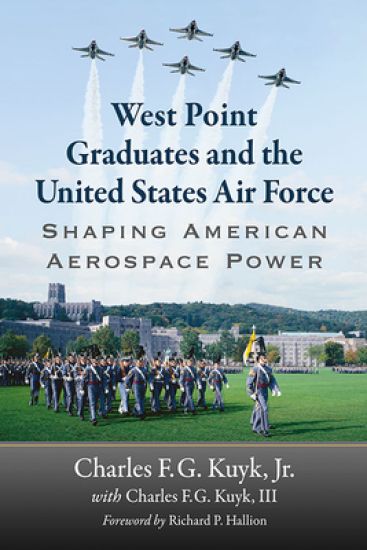
West Point graduates played a central role in developing U.S. military air and space power from the earliest days of mechanized flight through the establishment of the U.S. Air Force in 1947, and continuing through the Persian Gulf War. These graduates served at a time when the world's greatest wave of technological advancement occurred: in aviation, nuclear weapons, rocketry, ICBMs, computers, satellite systems in inner space and man in outer space. This history traces the advancement of weapons and space technology that became the hallmark of the U.S. Air Force, and the pivotal role that West Point graduates played in integrating them into a wide variety of Air Force systems and programs. Many became aircraft commanders, test pilots, astronauts and, later in their careers, general officers who helped shape and implement technologies still in use today.
*Weaves Pickett and Custer's lives into one entertaining and educational narrative. *Includes accounts of Pickett's Charge by some of the soldiers who made it. *Includes excerpts of letters Pickett wrote about Gettysburg to his wife Sallie. *Discusses controversies surrounding Pickett's Charge and the Battle of Little Bighorn *Includes pictures of important people, places, and events. *Includes maps of important battles. *Includes a Bibliography of each man for further reading. Before July 3, 1863, George Pickett was best known among his comrades for finishing last in his class at West Point, being a jocular but courageous soldier, and his carefully perfumed locks. As part of West Point's most famous Class of 1846, Pickett was classmates with men like Stonewall Jackson and George McClellan, and despite his poor class standing he distinguished himself fresh out of school during the Mexican-American War. After proving himself a capable brigadier during the Peninsula Campaign, during which he was wounded and forced to recuperate, Pickett was given command of a division in Longstreet's corps of the Confederate Army of Northern Virginia, putting him in position for a rendez-vous with destiny. Today Pickett is best remembered for the charge that has taken his name and is now remembered as the most famous assault of the Civil War. Having failed to dislodge the Union Army of the Potomac on either flank during the first two days at Gettysburg, Lee ordered a charge of nearly 15,000 at the center of the lines. The attack is now considered the high water mark of the Confederacy, spelling the South's doom with the failed charge and the loss at Gettysburg. Pickett's division was so decimated by the charge that when Lee asked him to reform his division in case of a Union counterattack, Pickett is alleged to have responded, "I have no division " Since the Battle of Little Bighorn, George Armstrong Custer (1839-1876) has possessed one of the most unique places in American history. Although he was a capable cavalry officer who served honorably during the Civil War, he remains one of the most instantly identifiable and famous military men in American history due to the fact he was killed during one of the country's most well known and ignominious defeats, the Battle of Little Bighorn. And yet, this one relatively insignificant battle during America's Indian Wars has become one of the country's most mythologized events and continues to fascinate Americans nearly 140 years later. Despite being in his early 20s when the Civil War started, Custer rose through the ranks so quickly that he famously commanded a brigade of Michigan cavalrymen at Gettysburg, fighting the vaunted JEB Stuart and his horsemen to a standstill on the climactic 3rd day of that battle. Custer's success continued through until the end of the war, with his men playing an integral role during the Appomattox Campaign that forced the surrender of Robert E. Lee's Army of Northern Virginia. Had Custer's career ended there, he would have been both successful and largely forgotten. Instead, the last 10 years of his life were full of political and military intrigue, as he attempted to position himself both in politics and the Army while making himself one of the best known fighters of the Indian Wars. Those actions, along with the Battle of Little Bighorn, made him controversial even in his day, but with his death coming to be widely viewed as a sacrifice for his country, his legend and legacy grew throughout the nation. No matter what critics or supporters thought of him, George Armstrong Custer was unquestionably relevant. Last at West Point, Legends at War chronicles the historic lives and careers of the two men who finished last in their class at West Point before becoming legends in war, and it discusses the controversial legacies of each man. Along with pictures, you will learn about Custer and Pickett like you never have
*Weaves together each general's life and career into one chronological and entertaining narrative. *Includes pictures of the generals and important people, places, and events in their lives. *Includes an original introduction for each general. *Includes maps of some of the generals' most important battles. *Includes an analysis of each general's legacy. *Includes bibliographies on each general for further reading. Despite the fact that the Civil War began over 150 years ago, Americans continue to be fascinated by the Civil War icons who made the difference between victory and defeat in the war's great battles. Although much attention has been fixed on the East, the Civil War was essentially won in the West, where the Union was primarily led by Ulysses S. Grant, William Tecumseh Sherman and George H. Thomas. While all eyes were fixed on the Eastern theater at places like Manassas, Richmond, the Shenandoah Valley and Antietam, Grant went about a steady rise up the ranks through a series of successes in the West. His victory at Fort Donelson, in which his terms to the doomed Confederate garrison earned him the nickname "Unconditional Surrender" Grant, could be considered the first major Union victory of the war, and Grant's fame and rank only grew after that at battlefields like Shiloh and Vicksburg. Along the way, Grant nearly fell prey to military politics and the belief that he was at fault for the near defeat at Shiloh, but President Lincoln famously defended him, remarking, "I can't spare this man. He fights." Lincoln's steadfastness ensured that Grant's victories out West continued to pile up, and after Vicksburg and Chattanooga, Grant had effectively ensured Union control of the states of Kentucky and Tennessee, as well as the entire Mississippi River. William Tecumseh Sherman (February 8, 1820 - February 14, 1891) holds a unique position in American history. Synonymous with barbarity in the South, Sherman is lauded as a war hero in the North, and modern historians consider him the harbinger of total war. As a General in the Union Army during the American Civil War (1861-65), Sherman was recognized for his outstanding command of military strategy but criticized for the harshness of the "scorched earth" policies that he implemented in conducting total war against the Confederate States, especially in 1864 and 1865. Military historian B. H. Liddell Hart famously declared that Sherman was "the first modern general." One of the most unique and effective generals of the Civil War also happens to be one of the most overlooked. While there is a never ending stream of acclaim going to generals like Grant, Lee, and Sherman, General George H. Thomas has managed to fly under the radar, despite having an unusual background as a Southerner fighting for the Union and scoring almost inconceivable successes at Missionary Ridge, Franklin, and Nashville. Thomas also skillfully fought at Perryville, Stones River, and in Sherman's Atlanta Campaign, but he's best remembered as "The Rock of Chickamauga". On September 19, 1863, after a Confederate attack drove a third of the Union army from the field, including commanding general William Rosecrans, Thomas rallied the remaining parts of the army and formed an impromptu defensive stand on Horseshoe Ridge, holding off a series of well-executed (albeit costly) assaults until nightfall. Thomas's heroics prevented the destruction of the Union army and allowed it to successfully retreat to Chattanooga. Winning the West chronicles the lives of the three men primarily responsible for the Union's success in that theater during the Civil War. With pictures, maps, and more, you will learn about Grant, Sherman, and Thomas like you never have before.
EnvironmentCharles Wilkinson views the history of the American West as being divided into three periods. The First West existed when only the American Indians occupied the land. The Second West began with the California Gold Rush and the rapid settlement of the region. The Third West began at the end of World War II when the American West experienced explosive growth that transformed the region from a largely rural environment to an urban environment. In this lecture, Wilkinson explores the question of whether the region is about to enter a new period, the Fourth West, when we finally do know what we have and what we have to lose. "
*Includes pictures*Includes a bibliography for further readingIn today's modern world every political regime, even the most authoritarian or repressive, describes itself as democracy or a Democratic People's Republic. The concept of rule by the people, on behalf of the people, has come to be accepted as the norm, and very few would overtly espouse the cause of dictatorship, absolute monarchy or oligarchy as the most desirable political system upon which to base the government of any country. It is also generally accepted that democracy, as a political ideology, began in Greece, specifically in Athens, in the 7th century BCE and reached its zenith in the 5th century under the leadership of Pericles. Dating an exact starting point is impossible, but at the beginning of the 7th century BCE, Solon inaugurated a series of reforms that began the movement away from rule by individuals, or tyrants, and by the end of that century the reforms of Cleisthenes provided the basis of the Athenian democratic system that culminated in the radical institutions introduced by Ephialtes and Pericles in the 5th century. The result was the first, and possibly only, truly participative democratic state.Of course, not every inhabitant of Athens enjoyed the right to vote. Only full citizens could do that, and they represented approximately 30% of Athens's male population, numbering between 30,000 and 60,000 during Athens' Golden Age and declining rapidly throughout the Peoloponnesian War. The remainder was made up of metics and slaves, who vastly outnumbered free citizens and, indeed, almost all other slave populations in Hellas, a fact which the Athenians often conveniently chose to forget when singing the praises of their democracy. There is a very strong indication that foreign chattel slaves were an utter necessity to Athens' economy, and though they did not serve as fleet rowers as they would have done in Rome, they still carried out the myriad of unpleasant and demeaning jobs which allowed Athenian citizens the free time to actively participate in the city's politics. In many ways, without slaves, there would have been no democracy in Athens. The Greeks and Romans would not have recognized, or accepted, any of today's modern versions of democracy as being truly "democratic." A rejection of dictatorships masquerading as democracies would be understandable, but the ancients would have been equally scathing of Western-style representative democracies that they would undoubtedly have seen as anti-democratic. The key to democracy, as far as the Greeks and Romans were concerned, was active participation by the citizen body in all political aspects of life.While the French Revolution tried and ultimately failed to bring about an almost fully democratic system, the fledgling United States of America managed to bring about one of the most enduring forms of democratic government in the 1780s. The Constitution of the United States was not the first written expression of the democratic ideal, but it certainly was the most perfect in the context of the times. In the entire history of the British Empire, only two territories would attempt a unilateral declaration of independence. The first was the United States, and the second, 189 years later, was the rebel territory of Southern Rhodesia in the constellation of British African territories. The sheer audacity, in 1776, of a subject territory of the British Crown declaring itself independent sent shockwaves through the imperial establishment, setting into motion a reevaluation of British overseas policy and beginning the boldest experiment in democracy to date.The seeds of the American Revolution could be found in the fundamental distrust of distant government held by a local population of an independent character confronting a continent almost infinite in its scope.
*Includes pictures*Includes a bibliography for further readingIn today's modern world every political regime, even the most authoritarian or repressive, describes itself as democracy or a Democratic People's Republic. The concept of rule by the people, on behalf of the people, has come to be accepted as the norm, and very few would overtly espouse the cause of dictatorship, absolute monarchy or oligarchy as the most desirable political system upon which to base the government of any country. It is also generally accepted that democracy, as a political ideology, began in Greece, specifically in Athens, in the 7th century BCE and reached its zenith in the 5th century under the leadership of Pericles. Dating an exact starting point is impossible, but at the beginning of the 7th century BCE, Solon inaugurated a series of reforms that began the movement away from rule by individuals, or tyrants, and by the end of that century the reforms of Cleisthenes provided the basis of the Athenian democratic system that culminated in the radical institutions introduced by Ephialtes and Pericles in the 5th century. The result was the first, and possibly only, truly participative democratic state.Of course, not every inhabitant of Athens enjoyed the right to vote. Only full citizens could do that, and they represented approximately 30% of Athens's male population, numbering between 30,000 and 60,000 during Athens' Golden Age and declining rapidly throughout the Peoloponnesian War. The remainder was made up of metics and slaves, who vastly outnumbered free citizens and, indeed, almost all other slave populations in Hellas, a fact which the Athenians often conveniently chose to forget when singing the praises of their democracy. There is a very strong indication that foreign chattel slaves were an utter necessity to Athens' economy, and though they did not serve as fleet rowers as they would have done in Rome, they still carried out the myriad of unpleasant and demeaning jobs which allowed Athenian citizens the free time to actively participate in the city's politics. In many ways, without slaves, there would have been no democracy in Athens. The Greeks and Romans would not have recognized, or accepted, any of today's modern versions of democracy as being truly "democratic." A rejection of dictatorships masquerading as democracies would be understandable, but the ancients would have been equally scathing of Western-style representative democracies that they would undoubtedly have seen as anti-democratic. The key to democracy, as far as the Greeks and Romans were concerned, was active participation by the citizen body in all political aspects of life.While the French Revolution tried and ultimately failed to bring about an almost fully democratic system, the fledgling United States of America managed to bring about one of the most enduring forms of democratic government in the 1780s. The Constitution of the United States was not the first written expression of the democratic ideal, but it certainly was the most perfect in the context of the times. In the entire history of the British Empire, only two territories would attempt a unilateral declaration of independence. The first was the United States, and the second, 189 years later, was the rebel territory of Southern Rhodesia in the constellation of British African territories. The sheer audacity, in 1776, of a subject territory of the British Crown declaring itself independent sent shockwaves through the imperial establishment, setting into motion a reevaluation of British overseas policy and beginning the boldest experiment in democracy to date.The seeds of the American Revolution could be found in the fundamental distrust of distant government held by a local population of an independent character confronting a continent almost infinite in its scope.