Kirjojen hintavertailu. Mukana 12 390 323 kirjaa ja 12 kauppaa.

Kirjahaku

Etsi kirjoja tekijän nimen, kirjan nimen tai ISBN:n perusteella.

1000 tulosta hakusanalla Carter

Elliott Carter Speaks

Elliott Carter Speaks

Elliott Carter

University of Illinois Press
2022
sidottu
These previously unpublished lectures by Elliott Carter date to the summer of 1967, when the acclaimed composer taught at the Contemporary Music Workshop held by the University of Minnesota. Leading an introductory course on orchestra repertoire, Carter gave nine hours of lectures covering principal topics like how to live with the musical present and whether the symphony orchestra was a relic of the past or a possible active force for new music. But Carter's observations and prompts by audience questions broadened the discussion into areas ranging from electronic music to analyses of works by other artists and himself. Laura Emmery presents the complete text from each session alongside introductions, commentary, and annotated examples that provide valuable context for readers. Expansive and essential, Elliott Carter Speaks opens up the artist's teaching and introspection to new contemporary perspectives on his thought and art.Please note that the order and arrangement of materials in this book differs from that of Elliott Carter’s original lectures.
Elliott Carter

Elliott Carter

James Wierzbicki

University of Illinois Press
2011
nidottu
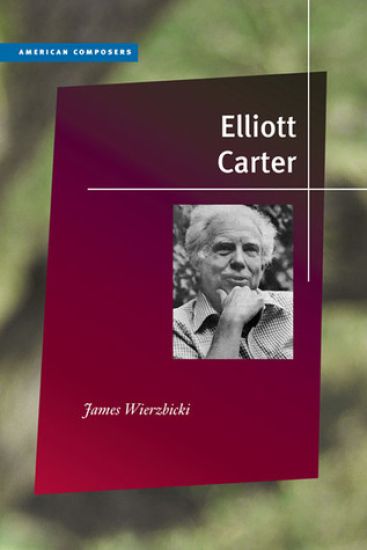
This compact introduction to the life and works of composer Elliott Carter provides a fresh perspective on one of the most significant American composers of the twentieth and twenty-first centuries. A leading voice of the American classical music tradition and a two-time winner of the Pulitzer Prize for Music, Carter was initially encouraged to become a composer by Charles Ives, and he went on to learn from Walter Piston at Harvard University and Nadia Boulanger in Paris. Drawing on Carter's voluminous writings and compositions, James Wierzbicki provides a clear discussion of Carter's evolving understanding of musical time and the influence of film on his work. Celebrating his 100th birthday in 2008 by premiering a number of new compositions, Carter has been a powerful presence on the American new music scene, an important connection to American music's foundational figures, and a dynamic force in its continuing evolution.
The Carter Implosion

The Carter Implosion

Donald S. Spencer

Praeger Publishers Inc
1988
sidottu
The Carter Implosion critically examines the consequences of a U.S. President -- instead of confronting problems outside the narrow context of partisan rhetoric--adopting a self-consciously amateur style of diplomacy and leadership. In particular, Spencer focuses on the enormous gulf between the Carter administration's professed objectives and the tools it was willing to employ to achieve them. The author posits that the problem was not that President Carter proved too liberal or too conservative, but that he and his closest advisors lacked a sophisticated understanding of how nations behave. Because of his naivete, Carter's promise of inaugurating a new age of American greatness disintegrated by 1980.
Jimmy Carter as Peacemaker

Jimmy Carter as Peacemaker

Rodney L Troester

Praeger Publishers Inc
1996
sidottu
Jimmy Carter left the White House in January of 1981 in the wake of the Iranian hostage crisis, a faltering economy, and a stunning defeat at the polls. At the relatively young age of 56, Carter joined the elite fraternity of former presidents. When contemporary U.S. presidents have left office, they have generally written their memoirs, established their presidential libraries, served on corporate boards, or assumed elder statesman roles. Jimmy Carter has taken a different path, and this study demonstrates how the Carter post-presidency has redefined the role of former president and refurbished Carter's image. The author argues that Carter has shown that through active involvement in world affairs and humanitarian causes, and through the careful investment of post-presidential credibility and political capital, a former president can make significant contributions to a more peaceful world.
Through the Year with Jimmy Carter
In Through the Year with Jimmy Carter, the thirty-ninth President of the United States takes you on a unique journey into the heart of the Christian faith. Based on more than three decades of practical Bible teaching, these readings draw from the riches of God's Word and the compelling experiences of Mr. Carter's own life. Whether through fascinating glimpses into behind-the-scenes activity at the White House, or insightful remembrances of his career in the U.S. Navy, Mr. Carter never ceases to connect the wisdom of Scripture with your own crucial place on the stage of life. Frank, honest, sometimes funny, sometimes heartbreaking, and always relevant, Through the Year with Jimmy Carter challenges readers to be more Christ-like every day of their lives.
Elliott Carter

Elliott Carter

William Doering

Greenwood Press
1993
sidottu
Internationally recognized American composer Elliott Cook Carter, Jr. has composed over three dozen substantial pieces, ranging from stage and choral works to ballets, symphonies, and chamber music. Even at age 85, he continues to pioneer trails into new territory in modern American music. Carter has been the recipient of two Guggenheim Fellowships, two Pulitzer Prizes for Music, and numerous other awards and honors. This book contains a listing of all compositions by Carter with detailed information on premiere performances, a complete discography, and annotated citations of Carter's writings and writings about Carter and his music.
Jimmy Carter

Jimmy Carter

Praeger Publishers Inc
1993
sidottu
President Jimmy Carter, like all his predecessors since World War II, experienced the blurring of lines between foreign and domestic politics while, paradoxically, the contrasts between those lines became more pronounced. In nearly every arena of domestic and foreign policy, he had to deal with the intrusion of the politics of both spheres.The major concerns of the Carter foreign policy experience and, consequently, of the papers included in the volume were staffing the foreign policy apparatus, shifting human rights to the forefront of basic policy considerations, attempting to create peaceful conditions in the Middle East, contributing to the emergence of underdeveloped countries, lessening Cold War tensions, ending the negotiations over the Panama Canal, and working to free the hostages in Iran. While the bulk of the volume focuses on these concerns, the remainder addresses President Carter's career after leaving the White House. These essays will be of concern to all involved with the study of the twentieth-century American presidency and modern diplomacy.
Angela Carter

Angela Carter

S. Gamble

Palgrave Macmillan
2005
sidottu
By the time of her death in 1992, Angela Carter had come to be regarded as one of the most successful and original British authors of the twentieth-century, and her writing has subsequently become the focus of a burgeoning body of criticism. This book disentangles the cult of Angela Carter as 'the fairy godmother of magical realism' from her own claims to be a materialist and a 'demythologiser' by placing her within the social, political and theoretical context within which she wrote. Drawing on Carter's own autobiographical articles as well as her novels and short stories, this study examines her engagement with topical issues such as national (particularly English) identity, class, politics and feminism, assessing the relationship between her life, her times and her art.
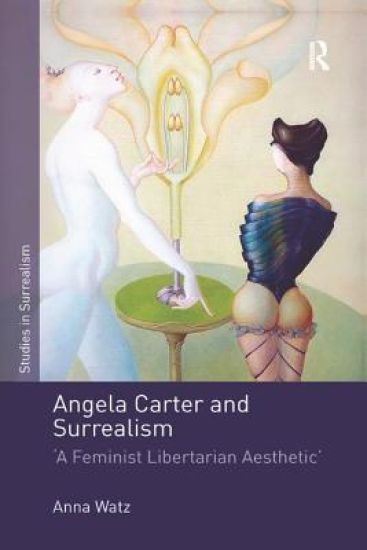
Angela Carter and Surrealism

Angela Carter and Surrealism

Anna Watz

Routledge
2019
nidottu
In 1972, Angela Carter translated Xavière Gauthier’s ground-breaking feminist critique of the surrealist movement, Surréalisme et sexualité (1971). Although the translation was never published, the project at once confirmed and consolidated Carter’s previous interest in surrealism, representation, gender and desire and aided her formulation of a new surrealist-feminist aesthetic. Carter’s sustained engagement with surrealist aesthetics and politics as well as surrealist scholarship aptly demonstrates what is at stake for feminism at the intersection of avant-garde aesthetics and the representation of women and female desire. Drawing on previously unexplored archival material, such as typescripts, journals, and letters, Anna Watz’s study is the first to trace the full extent to which Carter’s writing was influenced by the surrealist movement and its critical heritage. Watz’s book is an important contribution to scholarship on Angela Carter as well as to contemporary feminist debates on surrealism, and will appeal to scholars across the fields of contemporary British fiction, feminism, and literary and visual surrealism.
Angela Carter: Surrealist, Psychologist, Moral Pornographer
Contributing to the conversation regarding Angela Carter's problematic relationship with what she viewed as the interrelated traditions of surrealism and psychoanalysis, Scott Dimovitz explores the intricate connections between Carter's private life and her public writing. He begins with Carter's assertion that it was through her "sexual and emotional life" that she was radicalized, drawing extensively on the British Library's recently archived collection of Carter's private papers, journals, and letters to show how that radicalization happened and what it meant both for her worldview and for her writings. Through close textual analysis and a detailed study of her papers, Dimovitz analyzes the ways in which this second-wave feminist's explorations of sexuality merged with her investigations into surrealism and psychoanalysis, an engagement that ultimately led to the explosively surreal allegories of Carter's later, more complex, and more accomplished work. His study not only offers a new way to view Carter's oeuvre, but also makes the case for the importance of Angela Carter's vision in understanding the transformations in feminist thinking from the postwar to the postfeminist generation.
Angela Carter's Nights at the Circus
A highly original and influential work of modern British literature, Angela Carter’s Nights at the Circus combines a fantastically creative plot with a strong political undertone. The result is an emotive and provocative novel, which has attracted much critical attention from a range of perspectives including poststructuralism, gender studies, postmodernism and psychoanalysis.This guide to Angela Carter’s complex novel, presents:an accessible introduction to the text and contexts of Nights at the Circus a critical history, surveying the many interpretations of the text from publication to the present a selection of new critical essays on the Nights at the Circus, by Heather Johnson, Jeannette Baxter, Sarah Sceats and Helen Stoddart, providing a variety of perspectives on the novel and extending the coverage of key critical approaches identified in the survey section cross-references between sections of the guide, in order to suggest links between texts, contexts and criticism suggestions for further reading. Part of the Routledge Guides to Literature series, this volume is essential reading for all those beginning detailed study of Nights at the Circus and seeking not only a guide to the novel, but a way through the wealth of contextual and critical material that surrounds Carter’s text.
Angela Carter's Nights at the Circus
A highly original and influential work of modern British literature, Angela Carter’s Nights at the Circus combines a fantastically creative plot with a strong political undertone. The result is an emotive and provocative novel, which has attracted much critical attention from a range of perspectives including poststructuralism, gender studies, postmodernism and psychoanalysis.This guide to Angela Carter’s complex novel, presents:an accessible introduction to the text and contexts of Nights at the Circus a critical history, surveying the many interpretations of the text from publication to the present a selection of new critical essays on the Nights at the Circus, by Heather Johnson, Jeannette Baxter, Sarah Sceats and Helen Stoddart, providing a variety of perspectives on the novel and extending the coverage of key critical approaches identified in the survey section cross-references between sections of the guide, in order to suggest links between texts, contexts and criticism suggestions for further reading. Part of the Routledge Guides to Literature series, this volume is essential reading for all those beginning detailed study of Nights at the Circus and seeking not only a guide to the novel, but a way through the wealth of contextual and critical material that surrounds Carter’s text.
Elliott Carter Studies

Elliott Carter Studies

Cambridge University Press
2012
sidottu
Over the course of an astonishingly long career, Elliott Carter has engaged with many musical developments of the twentieth and now twenty-first centuries - from his early neo-classic music of the interwar period, to his modernist works of conflict and opposition in the 1960s and 1970s, to the reshaping of a modernist aesthetic in his latest compositions. Elliott Carter Studies throws new light on these many facets of Carter's extensive musical oeuvre. This collection of essays presents historic, philosophic, philological and theoretical points of departure for in-depth investigations of individual compositions, stylistic periods in Carter's output and his contributions to a variety of genres, including vocal music, the string quartet and the concerto. The first multi-authored book to appear on Carter's music, it brings together research from a distinguished team of leading international Carter scholars, providing the reader with a wide range of perspectives on an extraordinary musical life.
Elliott Carter's Late Music

Elliott Carter's Late Music

John Link

Cambridge University Press
2022
sidottu
The first comprehensive study of the late music of one of the most influential composers of the last half century, this book places Elliott Carter's music from 1995 to 2012 in the broader context of post-war contemporary concert music, including his own earlier work. It addresses Carter's reception history, his aesthetics, and his harmonic and rhythmic practice, and includes detailed essays on all of Carter's major works after 1995. Special emphasis is placed on Carter's settings of contemporary modernist poetry from John Ashbery to Louis Zukofsky. In readable and engaging prose, Elliott Carter's Late Music illuminates a body of late work that stands at the forefront of the composer's achievements.