Kirjojen hintavertailu. Mukana 12 390 323 kirjaa ja 12 kauppaa.

Kirjahaku

Etsi kirjoja tekijän nimen, kirjan nimen tai ISBN:n perusteella.

1000 tulosta hakusanalla Chang

Changing Visions

Changing Visions

Ervin Laszlo; R. Artigiani; A. Combs

Praeger Publishers Inc
1996
sidottu
The four authors of this book recognize that no one on the common human journey to the 21st century can pick the best route without consulting a map—that is to say, an interconnected set of understandings about what in a given situation is important, what demands action and attention, and what does not. The problem, they contend, is that the picture of the world we each carry in our mind may not be a true mapping of the reality that surrounds us. This picture, the cognitive map, could always be sharper. The authors prompt us to become more conscious of our own cognitive map, and explain how it can be adapted to the exigencies of our changing world so that it can be better-used to guide our steps toward the 21st century.We all carry a picture of the world in our mind, but is that map an assuredly true layout of the reality that surrounds us? If not, how can we use it to guide our steps toward the 21st century and beyond without creating shocks and surprises that impair our well-being and threaten our survival?We shall not survive, either as individuals or as a species, if our maps fail to reflect accurately the nature of the world that surrounds us. The authors attempt, through reviewing the origins, development, and current changes in individual and social cognitive maps, to prompt readers to become more conscious of their own map, and hence be better able to adapt it to the exigencies of our changing world. The book ends with a vision of the global bio- and socio-sphere: the unified cognitive map which is emerging in laboratories and workshops of the new physics, the new biology, the new ecology, and the avant-garde branches of the social and historical sciences. But Changing Visions recognizes that these sciences alone cannot promote the formation of faithful maps of lived reality, and that religion, common sense, and even art can fill in and sharpen one's world-picture.
Changing Visions

Changing Visions

Ervin Laszlo; R. Artigiani; A. Combs

Praeger Publishers Inc
1996
nidottu
The four authors of this book recognize that no one on the common human journey to the 21st century can pick the best route without consulting a map—that is to say, an interconnected set of understandings about what in a given situation is important, what demands action and attention, and what does not. The problem, they contend, is that the picture of the world we each carry in our mind may not be a true mapping of the reality that surrounds us. This picture, the cognitive map, could always be sharper. The authors prompt us to become more conscious of our own cognitive map, and explain how it can be adapted to the exigencies of our changing world so that it can be better-used to guide our steps toward the 21st century. We all carry a picture of the world in our mind, but is that map an assuredly true layout of the reality that surrounds us? If not, how can we use it to guide our steps toward the 21st century and beyond without creating shocks and surprises that impair our well-being and threaten our survival? We shall not survive, either as individuals or as a species, if our maps fail to reflect accurately the nature of the world that surrounds us. The authors attempt, through reviewing the origins, development, and current changes in individual and social cognitive maps, to prompt readers to become more conscious of their own map, and hence be better able to adapt it to the exigencies of our changing world. The book ends with a vision of the global bio- and socio-sphere: the unified cognitive map which is emerging in laboratories and workshops of the new physics, the new biology, the new ecology, and the avant-garde branches of the social and historical sciences. But Changing Visions recognizes that these sciences alone cannot promote the formation of faithful maps of lived reality, and that religion, common sense, and even art can fill in and sharpen one's world-picture.

Changing Military Doctrine

Changing Military Doctrine

Sten Rynning

Praeger Publishers Inc
2001
sidottu
As Rynning shows, armed forces have a natural interest in shaping military doctrine according to their resources, doctrinal traditions, as well as their assessment of the international environment. However, armed forces are also the instrument of policy-makers who are in charge of national security. Using civil-military relations in France from 1958 to the present as a case study, he shows when policy-makers are capable of controlling military doctrine as well as the means armed forces rely on to influence doctrine.Some scholars argue that policy-makers can control military doctrine only when the international environment is threatening--a situation granting them added decision-making authority. Others argue that such control ultimately depends on the degree of domestic political disagreement/consensus. With access to most of the leading military personnel and policy-makers of the era, Rynning provides an analysis that will be instructive to scholars as well as policy-makers and military leaders concerned with contemporary civil-military relations.
Changing Attitudes Toward Economic Reform During the Yeltsin Era

Changing Attitudes Toward Economic Reform During the Yeltsin Era

Terry D. Clark; Ernest Goss; Larisa Kosova

Praeger Publishers Inc
2003
sidottu
On December 31, 1999, Boris Yeltsin stepped down as president of the Russian Federation, marking the end of an era. While scholars and observers alike continue to debate the degree to which Russia succeeded in establishing democracy or a free market economy, the enormity of the social transformation that occurred during the Yeltsin era is far less disputable. For the social stratification that emerged changed the very face of Russian society.Much criticism has been leveled at the political corruption that marred the Yeltsin era. However, the economic and political reforms enacted under Yeltsin also permitted the opening of new channels of social mobility, particularly in the larger cities. Those who benefited most from the reforms became its strongest supporters, allowing the creation of a nascent middle class. The book's focus on this socioeconomic group is unique, as most analyses of the Yeltsin era largely ignore it.
Change and Renewal in Children's Literature

Change and Renewal in Children's Literature

Thomas van der Walt

Praeger Publishers Inc
2004
sidottu
In the growing field of children's literature theory in criticism, this volume presents critical international perspectives on changes and innovation in this discipline. The recent new status of children's literature, and the growth in children's literature research internationally have led to exciting advances in both form and content. This collection comprises a selection of papers given by prominent experts. Reflecting on past decades, contributors trace and analyze important developments in children's literature as the dawn of a new millennium offers its readers a multitude of representations and responses to a changing world. Each of the book's eighteen chapters represents a unique aspect of children's literature theory. Topics range from an analysis of the children's literature as creative act, changing interpretations of different genres, and the impact of shifting race relations and socio-political developments on children's literature. This presentation of international perspectives on children's literature theory and criticism by leading authorities will be a valuable resource for scholars of children's and comparative literature.
Change or Die

Change or Die

Milton D. Dealy; Andrew R. Thomas

Praeger Publishers Inc
2005
sidottu
For every business, the choice is stark: Change—or die. At any moment, fully two-thirds of America's companies claim to be in the midst of some type of organizational revamping, though most of these initiatives will fail. What many companies neglect to recognize is that organizational change needs to come from within, no matter how profound the external forces. Positive change requires change agents throughout the organization—those individuals who can translate the strategic vision of leaders into pragmatic behavior. This book identifies the qualities of great change agents and how these skills can be mastered to serve as a catalyst for change throughout the organization. Illustrating these principles through examples from world-class organizations, Dealy and Thomas highlight the five key qualities of great change agents; they: * challenge the status quo; * stoke the fire of creativity; * embrace the necessity of conflict; * manage risk rather than avoid it; and * develop new change agents. Bringing the process of change out of the realm of the analysts and consultants and to the front lines, the authors show you how to thrive in a world that demands nothing less than continuous change.For every business, the choice is stark: Change—or die. At any moment, fully two-thirds of America's companies claim to be in the midst of some type of organizational revamping. We don't need research from the Harvard Business School (even though it has been conducted) to tell us that most of these initiatives will fail. The business landscape is littered with the carcasses of giants who were unable to adapt to change—Digital, Prime, Wang, and Polaroid, to name a few. What many companies fail to recognize is that organizational change needs to come from within, no matter how profound the external forces. Positive change requires change agents throughout the organization—those individuals who can translate the strategic vision of leaders into pragmatic behavior. They will be the early adopters of the new values, actions, and skills required by the company.This book identifies the qualities of great change agents and how these skills can be mastered to serve as a catalyst for change throughout the organization. Illustrating these principles through examples from world-class organizations, Dealy and Thomas demonstrate the techniques for acquiring and executing those skills-and how corporate leaders can encourage and reward this behavior, creating a culture of risk-taking, innovation, and a focus on the future. From seasoned executives to entry-level employees, readers will learn that great change agents: * challenge the status quo; * stoke the fire of creativity; * embrace the necessity of conflict; * manage risk rather than avoid it; and * develop new change agents. Bringing the process of change out of the realm of the analysts and consultants and to the front lines, the authors show you how to thrive in a world that demands nothing less than continuous change.
Change Within Tradition Among Jewish Women in Libya

Change Within Tradition Among Jewish Women in Libya

Rachel Simon

University of Washington Press
1992
sidottu
In the first major study of women in an Arab country's Jewish community, Rachel Simon examines the changing status of Jewish women in Libya from the second half of the nineteenth century until 1967, when most Jews left the country. Simon shows how social, economic, and political changes in Libyan society as a whole affected its Jewish minority and analyzes the developments in women's social position, family life, work, education, and participation in public life.Jews lived in Libya for more than two thousand years. As a result of their isolation from other Jewish centers and their extended coexistence with Berber and Arab Muslims, the Jews of Libya were strongly influenced by the manners, customs, regulations, and beliefs of the Muslim majority. The late nineteenth century witnessed a growing European cultural and economic penetration of Ottoman Liibya, which increased after the Italian occupation of Libya in 1911. Italian rule continued until a British Military Administration was established in 1942-43. Libya became independent in late 1951. The changing political regimes presented the Jewish minority with different models of social and cultural behavior. These changes in the foci of inspiration and imitation had significant implications for the position of Jewish women, as Jewish traditional society was exposed to modernizing and Westernizing influences.Economic factors had a strong impact on the position of women. Because of recurring economic crises in the late nineteenth century, Jewish families became willing to allow women to work outside the home. Some families also allowed their daughters to pursue vocational training and thus exposed them also to academic studies, especially at schools operated by representatives of European Jewish organizations.Although economic and educational opportunities for women increased, the Jewish community as a whole remained traditional in its social structure, worldview, and approach to interpersonal relations. The principles upon which the community operated did not change drastically, and the male power structure did not alter in either the private or the public domain. Thus the position of women changed little within these spheres, despite the expansion of opportunities for women in education and economic life. Change was slow, evolutionary, and within the framework of traditional society.
Change and Continuity in Seventeenth-Century England, Revised Edition
In this book, one of England’s most distinguished historians explores the causes and consequences of the English Revolution, the years from 1640 to 1660 when the triumph of Protestantism encouraged a questioning of authority in English political, economic, social, religious, and intellectual life. This was a decisive period in the evolution of the modern world, an essential precondition of England’s becoming the first industrial nation.Hill considers both material and intellectual aspects of the Revolution, discussing, for example, the relationship between Protestantism and the rise of capitalism; the ideological attacks on divinity, law, and medicine; and the entry of the "many-headed monster"—the masses—into politics. First published in 1974 and now available in paper for the first time, the book has been revised by the author to take into account recent scholarship in the field."Like all [Hill’s] work, this . . . volume is not only distinguished and accomplished, but deeply humane."—John Kenyon, The Observer"Hill’s contribution to seventeenth-century English history has been enormous. This book, like his others, is informative, stimulating . . . provocative, and most welcome."—John Miller, Times Higher Education Supplement
Changing the Odds

Changing the Odds

Lavin David E.; Hyllegard David

YALE UNIVERSITY PRESS
1996
sidottu
The open-admissions experiment at the City University of New York was the most ambitious effort ever made to promote equality of opportunity in American higher education. Initiated in 1970, during the heyday of the "great society," it defined college as a right for all who had completed high school, and it especially aimed to create educational opportunities for disadvantaged minority students. This book evaluates that controversial experiment.Although critics predicted that the open-admissions policy would sweep away academic standards and result in watered-down degrees of little value, David Lavin and David Hyllegard present data to show that students who graduated were able not only to earn postgraduate degrees at non-CUNY institutions but also to obtain good jobs--far better than the jobs they could have expected without the opportunity open admissions gave them. Indeed, in one year in the 1980s, say the authors, open-admissions students earned $67 million more than they would have if they had not gone to college. Notwithstanding the successes of open admissions, attacks on it have continued, and, as the book shows, minority access to college has been cut back significantly at CUNY and elsewhere. This book provides ammunition for those who want to challenge emerging policies that narrow educational opportunities for minority students and poor people.
Changing Your Mind

Changing Your Mind

E. Allan Farnsworth

Yale University Press
2000
pokkari
When does the law permit you to change your mind and reverse a decision you have made? In this masterful book, one of the foremost authorities on American contract law considers the general principles and legal rules that bear on this question. Drawing on many fields—contracts, torts, property, trusts, wills, agency, and even family law and procedure—E. Allan Farnsworth identifies and discusses six such principles.Using real legal cases as well as an array of nonlegal sources ranging from Rousseau and Martin Luther to Shirley MacLaine and Willie Nelson, Farnsworth illustrates the importance of the principles that govern the irrevocability of a commitment (as by a promise) and the irreversibility of a relinquishment (as by a gift) or preclusion (as by prescription). He discusses deficiencies in the law—such as the preoccupation with the reliance principle, the neglect of other principles, the propensity to find promise, and the tendency toward legal paternalism—and offers suggestions to eliminate anomalies, correct shortcomings, and further the rationalization of the legal concepts that pertain to regretted decisions.
Change the Wallpaper

Change the Wallpaper

Nilanjana Dasgupta

YALE UNIVERSITY PRESS
2025
sidottu
A social psychologist reveals how to nudge local cultures toward positive structural change by moving people from individual action to collective action How can ordinary people fight for social justice? Can individual actions change structural inequality? In this book, social psychologist Nilanjana Dasgupta offers a science-driven approach to achieving social change, arguing that small changes to the “wallpaper”—the local cultures around us—are far more effective in producing structural change locally than seeking change through bias awareness training, symbolic acts, or relying solely on good intentions. By integrating knowledge across diverse fields—including psychology, neuroscience, education, sociology, economics, public health, urban studies, cultural geography, and landscape architecture—Dasgupta shows how attitudes and beliefs take root in our mind based on what we see and hear every day. This wallpaper nudges our behavior to create or reinforce small inequalities that go unnoticed and accumulate over time. Disrupting these patterns and habits requires creating opportunities for social mixing across lines of difference, allowing new relationships to form, and promoting a better understanding of unfamiliar others’ experiences, followed by organizing and collective action. Together, these types of experiences and actions bring real change within our reach—in workplaces, in neighborhoods, in cities and towns. Dasgupta provides fresh, actionable approaches for everyone interested in working toward justice for all.
Change the Wallpaper: Transforming Cultural Patterns to Build More Just Communities
A social psychologist reveals how to nudge local cultures toward positive structural change by moving people from individual action to collective action How can ordinary people fight for social justice? Can individual actions change structural inequality? In this book, social psychologist Nilanjana Dasgupta offers a science-driven approach to achieving social change, arguing that small changes to the "wallpaper"--the local cultures around us--are far more effective in producing structural change locally than seeking change through bias awareness training, symbolic acts, or relying solely on good intentions. By integrating knowledge across diverse fields--including psychology, neuroscience, education, sociology, economics, public health, urban studies, cultural geography, and landscape architecture--Dasgupta shows how attitudes and beliefs take root in our mind based on what we see and hear every day. This wallpaper nudges our behavior to create or reinforce small inequalities that go unnoticed and accumulate over time. Disrupting these patterns and habits requires creating opportunities for social mixing across lines of difference, allowing new relationships to form, and promoting a better understanding of unfamiliar others' experiences, followed by organizing and collective action. Together, these types of experiences and actions bring real change within our reach--in workplaces, in neighborhoods, in cities and towns. Dasgupta provides fresh, actionable approaches for everyone interested in working toward justice for all.
Changing Teachers, Changing Times

Changing Teachers, Changing Times

Andy Hargreaves

Continuum International Publishing Group Ltd.
2001
nidottu
The rules of the world are changing. It is time for the rules of teaching and teachers' work to change with them.' This is the challenge which Andy Hargreaves sets out in his book on teachers' work and culture in the postmodern world.Drawing on his current research with teachers at all levels, Hargreaves shows through their own vivid words what teaching is really like, how it is already changing, and why. He argues that the structures and cultures of teaching need to change even more if teachers are not to be trapped by guilt, pressed by time and overburdened by decisions imposed upon them.Provocative yet practical, this book is written for teachers and those who work with teachers, and for researchers who want to understand teaching better in the postmodern age.
Changing Health Care Systems from Ethical, Economic, and Cross Cultural Perspectives
This volume is the result of a conference sponsored by the Medical Alumni Association of the University of California, Davis and held in Sacramento, California, in January, 2000, The purpose of this conference was to examine the impact ofvarious health care structures on the ability of health care professionals to practice in an ethically acceptable manner. One of the ground assumptions made is that ethical practice in medicine and its related fields is difficult in a setting that pays only lip service to ethical principles. The limits of ethical possibility are created by the system within which health care professionals must practice. When, for example, ethical practice necessitates—as it generally does—that health care professionals spend sufficient time to come to know and understand their patients’ goals and values but the system mandates that only a short time be spent with each patient, ethical practice is made virtually impossible. One of our chief frustrations in teaching health care ethics at medical colleges is that we essentially teach students to do something they are most likely to find impossible to do: that is, get to know and appreciate their patients’ goals and values. There are other ways in which systems alter ethical possibilities. In a system in which patients have a different physician outside the hospital than they will inside, ethical problems have a different shape than if the treating physician is the same person.
Changing Substance Abuse Through Health and Social Systems
In both developed nations and the developing world, there is a clear trend towards addressing alcohol, tobacco, and other drug problems through health and social services. There are several persuasive arguments for this shift beyond pure economics, which include comorbidity, cost effectiveness, coordination of care and effectiveness. This is the first volume to pull together effective methods that can be used for addressing substance abuse through health and social service systems. It also integrates interventions for a range of drugs of abuse, rather than focusing on only one (such as alcohol). The book's international perspective also makes this a unique contribution to the existing literature.
Changing Welfare

Changing Welfare

Kluwer Academic/Plenum Publishers
2003
sidottu
Changing Welfare is concerned with the sweeping changes that took place in public assistance programs at the end of the 20th century and the way in which the original and reformed versions of these programs relate to the well-being of children and their families. The authors critically review the original conceptualizations and the new directions of programs offering cash assistance, food assistance, health insurance, and child protection services to low-income and disabled children and their families - thus, changes in the welfare programs themselves. And throughout, their concern is with whether and how these programs alter the opportunities for the development of the children targeted by these programs - thus, changes in the welfare of children and their families. The objective of each chapter of the book is to rigorously highlight key theoretical and research issues, including the identification of major empirical findings and unanswered questions. Wherever relevant, the chapters connect theory and research to policy and practice, pointing to recommendations and challenges for the future including alternative approaches for research, policy and practice.
Change We Can Believe In

Change We Can Believe In

Barack Obama

Random House Inc
2008
nidottu
The election of Barack Obama as President of the United States is a defining moment in American history. After years of failed policies and failed politics from Washington, this is our chance to reclaim the American dream. Barack Obama has proven to be a new kind of leader one who can bring people together, be honest about the challenges we face, and move this nation forward. Change We Can Believe In outlines his vision for America. In these pages you will find bold and specific ideas about how to fix our ailing economy and strengthen the middle class, make health care affordable for all, achieve energy independence, and keep America safe in a dangerous world. Change We Can Believe In asks us not just to believe in Barack Obama s ability to bring change to Washington, it asks us to believe in our ability to change the world."
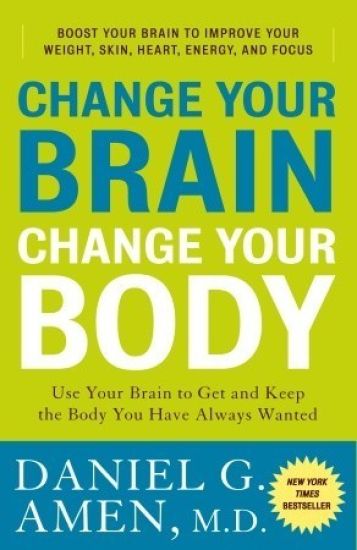
Change Your Brain, Change Your Body: Use Your Brain to Get and Keep the Body You Have Always Wanted
THE KEY TO A BETTER BODY--in shape, energized, and youthful--is a healthy brain. With fifteen practical, easy-to-implement solutions involving nutritious foods, natural supplements and vitamins, positive-thinking habits, and, when neces­sary, highly targeted medications, Dr. Amen shows you how to: * Reach and maintain your ideal weight* Soothe and smooth your skin at any age * Reduce the stress that can impair your immune system* Sharpen your memory* Increase willpower and eliminate the crav­ings that keep you from achieving your exercise and diet goals* Enhance sexual desire and performance* Lower your blood pressure without medication* Avoid depression and elevate the enjoyment you take in life's pleasures. Based on the latest medical research, as well as on Dr. Amen's two decades of clinical practice at the re­nowned Amen Clinics, where Dr. Amen and his as­sociates pioneered the use of the most advanced brain imaging technology, Change Your Brain, Change Your Body shows you how to take the very best care of your brain. Whether you're just coming to realize that it's time to get your body into shape, or are already fit and want to take it to the next level, Change Your Brain, Change Your Body is all you need to start putting the power of the brain-body connection to work for you today.
Change Your Brain, Change Your Life Flashcards
Our brains can produce negative thoughts, but you can "reprogram the way you think." This collection of methods from neuropsychiatrist and bestselling author, Daniel G Amen, M.D., teaches you how. Use the easy techniques described in this deck to: - Stop obsessive worrying- Curb your anger- Fight automatic negative thoughts- Enhance your people skills- Sharpen your focus- Become a more flexible thinker
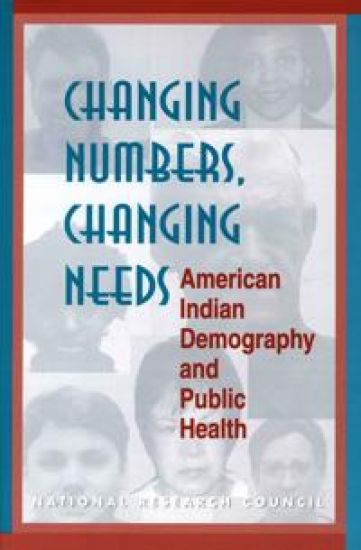
Changing Numbers, Changing Needs

Changing Numbers, Changing Needs

National Academies Press
1996
nidottu
The reported population of American Indians and Alaska Natives has grown rapidly over the past 20 years. These changes raise questions for the Indian Health Service and other agencies responsible for serving the American Indian population. How big is the population? What are its health care and insurance needs? This volume presents an up-to-date summary of what is known about the demography of American Indian and Alaska Native population—their age and geographic distributions, household structure, employment, and disability and disease patterns. This information is critical for health care planners who must determine the eligible population for Indian health services and the costs of providing them. The volume will also be of interest to researchers and policymakers concerned about the future characteristics and needs of the American Indian population. Table of Contents Front matter 1 Introduction I Overview of Demographic and Health Conditions 2 The Size and Distribution of the American Indian Population: Fertility, Mortality, Residence, and Migration 3 Recent Health Trends in the Native American Population II Indentification: Indications and Consequences 4 The Growing American Indian Population, 1960-1990: Beyond Demography 5 Tribal Membership Requirements and the Demography of 6 Problems in Sampling the Native American and Alaska Native Populations III Social and Economic Conditions 7 The Individual Economic Well-Being of Native American Men and Women During the 1980s: A Decade of Moving Backwards 8 American Indian Poverty on Reservations, 1969-1989 9 The Demography of American Indian Families 10 Demography of American Indian Elders: Social, Economic, and Health Status IV Health Issues and Health Care Access and Utilization 11 Overview of Alcohol Abuse Epidemiology for American Indian Populations 12 Diabetes Mellitus in Native Americans: The Problem and Its Implications 13 Health Care Utilization, Expenditures, and Insurance Coverage for American Indians and Alaska Natives Eligible for the Indian Health Service