Kirjojen hintavertailu. Mukana 11 244 527 kirjaa ja 12 kauppaa.

Kirjahaku

Etsi kirjoja tekijän nimen, kirjan nimen tai ISBN:n perusteella.

747 tulosta hakusanalla Cherokee Hatcher

The Cherokee Nation

The Cherokee Nation

Charles Royce

AldineTransaction
2007
nidottu
This volume, presents the succession of treaties between 1785 and 1868 that reduced the holdings of the Cherokee Nation east of the Mississippi and culminated in their removal to Indian territory. Each document is accompanied by a detailed description of its antecedent conditions, the negotiations that led up to it, and its consequences. The events described here ended more than a century ago, but the motives and actions of the participants and the effects of the compromises and decisions they made are sadly familiar. The story presented here needs to be understood by everyone concerned with the survival of diverse ways of life and the quality of the relationships among peoples.The impersonal style of Royce's presentation enhances the poignancy of the Cherokee experience. Repeated declarations of peace and perpetual friendship contrast with repeated violations of treaties approved by Congress and the impotence of a people to defend their ancestral lands. The Cherokee "trail of broken treaties" has left us with a heritage of guilt and frustration that we have yet to overcome.The Native American Library, in which this volume appears, has been initiated by the National Anthropological Archives of the National Museum of Natural History, Smithsonian Institution, to publish original works by Indians and reprints selected by the tribes involved. Royce's work, which was included in the Fifth Annual Report of the Bureau of American Ethnology, is republished at the request of the Governing Body of the Cherokee Nation. The original text is prefaced by an evaluation of Royce and his work by Richard Mack Bettis and contains several illustrations not included in the earlier edition.
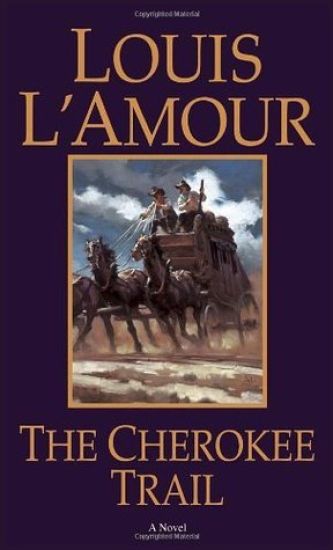
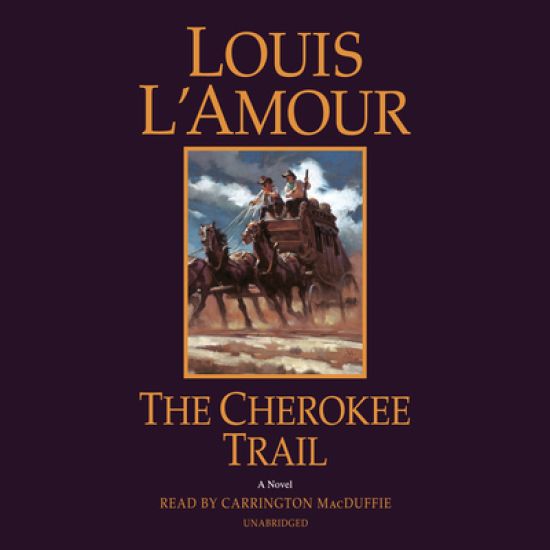
The Cherokee Trail

The Cherokee Trail

Louis L'amour

Bantam Dell Publishing Group, Div of Random House, Inc
1996
pokkari
Mary Breydon knew how to get things done. Raised on a Virginia plantation, she learned how to care for livestock, respect her workers, and keep good books. But after her husband is killed, she must make a living running a stagecoach station on the Cherokee Trail. Mary faces challenges that even the men eagerly anticipating her failure would have a difficult time overcoming. After being forced to fire the previous station manager with the aid of a bullwhip, Mary must track down stolen horses, defend against Indians, care for a wayward boy, and protect herself and her daughter from Jason Flandrau, a man determined to become governor of the Colorado Territory but who is also the ruthless war criminal who murdered Mary's husband.
Western Cherokee Nation of Arkansas and Missouri - A History - A Heritage
For over 150 years the History of the Western Cherokee Nation of Arkansas and Missouri has been verbally handed down from generation to generation. Now, in this definitive work, combined by Doyne "Two Wolves" Cantrell our Heritage, culture, religious beliefs and traditions are now immortalized forever. The trials that our ancestors experienced and the hardships they endured have formed the basis for our lives today. This work tells it all and will be a cherished and prized possession for any tribal member of the Western Cherokee Nation of Arkansas and Missouri and for anyone interested in Native America culture and tradition.
Western Cherokee Nation of Arkansas and Missouri - A History - A Heritage
For over 150 years the History of the Western Cherokee Nation of Arkansas and Missouri has been verbally handed down from generation to generation. Now, in this definitive work, combined by Doyne "Two Wolves" Cantrell our Heritage, culture, religious beliefs and traditions are now immortalized forever. The trials that our ancestors experienced and the hardships they endured have formed the basis for our lives today. This work tells it all and will be a cherished and prized possession for any tribal member of the Western Cherokee Nation of Arkansas and Missouri and for anyone interested in Native America culture and tradition.
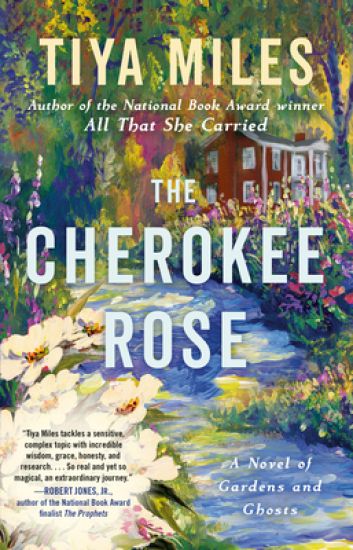
The Cherokee Rose: A Novel of Gardens and Ghosts
Three women uncover the secrets of a Georgia plantation that embodies the intertwined histories of Indigenous and enslaved Black communities--the fascinating debut novel, inspired by a true story, of the National Book Award-winning and New York Times bestselling author of All That She Carried, now featuring a new introduction and discussion guide. "The Cherokee Rose is a mic drop--an instant classic. An invitation to listen to the urgent, sweet choruses of past and present."--Honor e Fanonne Jeffers, author of The Love Songs of W.E.B. Du Bois LAMBDA LITERARY AWARD FINALIST Conducting research for her weekly history column, Jinx, a free-spirited Muscogee (Creek) historian, travels to Hold House, a Georgia plantation originally owned by Cherokee chief James Hold, to uncover the mystery of what happened to a tribal member who stayed behind after Indian removal, when Native Americans were forcibly displaced from their ancestral homelands in the nineteenth century. At Hold House, she meets Ruth, a magazine writer visiting on assignment, and Cheyenne, a Southern Black debutante seeking to purchase the estate. Hovering above them all is the spirit of Mary Ann Battis, the young Indigenous woman who remained in Georgia more than a century earlier. When they discover a diary left on the property that reveals even more about the house's dark history, the three women's connections to the place grow deeper. Over a long holiday weekend, Cheyenne is forced to reconsider the property's rightful ownership, Jinx reexamines assumptions about her tribe's racial history, and Ruth confronts her own family's past traumas before surprising herself by falling into a new romance. Imbued with a nuanced understanding of history, The Cherokee Rose brings the past to life as Jinx, Ruth, and Cheyenne unravel mysteries with powerful consequences for them all.
The Cherokee Trail

The Cherokee Trail

Louis L'Amour

RANDOM HOUSE USA INC
2022
cd
A woman ahead of her time, Mary Breydon knew how to get things done. Raised on a Virginia plantation, she learned how to care for livestock, respect her workers, and keep good books. But after her husband is killed, Mary must provide for her young daughter by running a stage coach station on the Cherokee Trail. With the help of an Irish maid and a mysterious stranger, Mary faces challenges that even the men eagerly anticipating her failure would have a difficult time overcoming. After firing the previous station manager with the aid of a bullwhip, she must track down stolen horses, care for a wayward boy, and defend against Indians. If that wasn't enough, she also has to protect herself from the man who murdered her husband--and is coming for Mary next.
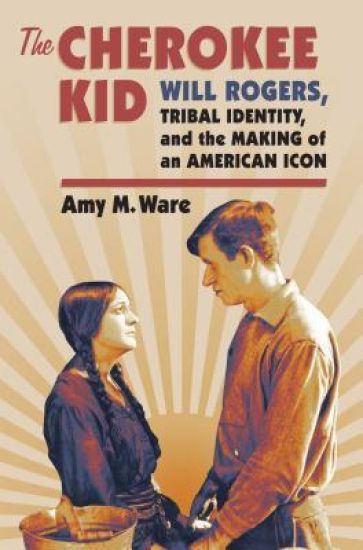
The Cherokee Kid

The Cherokee Kid

Amy M. Ware

University Press of Kansas
2015
sidottu
Early in the twentieth century, the political humorist Will Rogers was arguably the most famous cowboy in America. And though most in his vast audience didn’t know it, he was also the most famous Indian of his time. Those who know of Rogers’s Cherokee heritage and upbringing tend to minimize its importance, or to imagine that Rogers himself did so—notwithstanding his avowal in interviews: “I’m a Cherokee and they’re the finest Indians in the World.” The truth is, throughout his adult life and his work the Oklahoma cowboy made much of his American Indian background. And in doing so, as Amy Ware suggests in this book, he made Cherokee artistry a fundamental part of American popular culture.Rogers, whose father was a prominent and wealthy Cherokee politician and former Confederate slaveholder, was born into the Paint Clan in the town of Oolagah in 1879 and raised in the Cooweescoowee District of the Cherokee Nation. Ware maps out this milieu, illuminating the familial and social networks, as well as the Cherokee ranching practices, educational institutions, popular publications and heated political debates that so firmly grounded Rogers in the culture of the Cherokees. Through his early career, from Wild West and vaudeville performer to Ziegfeld Follies headliner in the late 1910s, she reveals how Rogers embodied the seemingly conflicting roles of cowboy and Indian, in effect enacting the blending of these identities in his art. Rogers’s work in the film industry also reflected complex notions of American Indian identity and history, as Ware demonstrates in her reading of the clearest examples, including Laughing Billy Hyde, in which Rogers, an Indian, portrayed a white prospector married to an Indian woman— who was played by a white actress.In his work as a columnist for the New York Times, and in his radio performances, Ware continues to trace the Cherokee influence on Rogers’s material—and in turn its impact on his audiences. It is in these largely uncensored performances that we see another side of Rogers’ Cherokee persona—a tribal elitism that elevated the Cherokee above other Indian nations. Ware’s exploration of this distinction exposes still-common assumptions regarding Native authenticity in the history of American culture, even as her in-depth look at Will Rogers’s heritage and legacy reshapes our perspective on the Native presence in that history, and in the life and work of a true American icon.
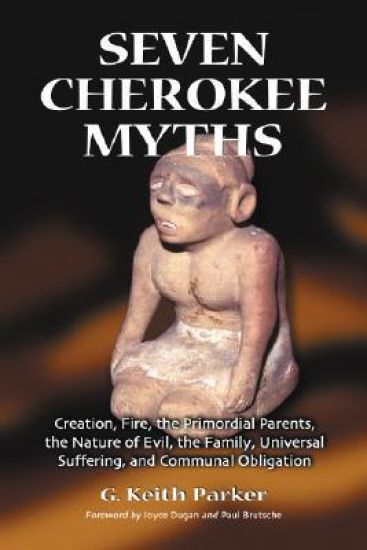
Seven Cherokee Myths

Seven Cherokee Myths

G. Keith Parker

McFarland Co Inc
2005
pokkari
Like ancient peoples the world over, the Cherokees of the southern Appalachian Mountains passed along their traditions and beliefs through stories, songs, dances, and religious and healing rituals. With the creation of Cherokee writing by Sequoyah, some of the traditions were also recorded in books. While evoking local geography and natural phenomena, the stories were also enhanced by powerful psychological and spiritual dynamics. This work examines seven myths that grew out of Cherokee culture, looking at how they emerged to explain archetypal issues. Each of the seven stories is told in full and is followed by a detailed history and analysis that provides its background, its associated rituals, and its psychological basis. One quickly discovers that while the myths are ancient, they are strikingly modern in their understanding of human personality development, family dynamics, community solidarity, and the reality of religion or spirituality. Grounded in the experience of this American Indian people and the land they inhabited, the myths tell universal truths. Instructors considering this book for use in a course may request an examination copy here.
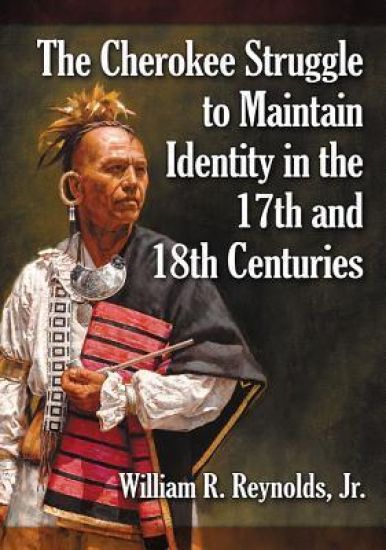
The Cherokee Struggle to Maintain Identity in the 17th and 18th Centuries
With the arrival of Europeans in North America, the Cherokee were profoundly affected. This book thoroughly discusses their history during the Colonial and Revolutionary War eras. Starting with the French and Indian War, the Cherokee were allied with the British, relying on them for goods like poorly made muskets. The alliance proved unequal, with the British refusing aid--even as settlers made incursions into Cherokee lands--while requiring them to fight on the British side against the French and rebellious Americans. At the same time, the Cherokee were moving away from their traditions, and leadership disagreements caused their nation to become fragmented. All of this resulted in the loss of Cherokee ancestral lands.
1880 Cherokee Nation Census, Indian Territory (Oklahoma), Volume 2 of 2
VOLUME 2 ONLYThis book is a transcription of the 1880 Cherokee Nation census, complete with census card numbers, which were added in 1900. The Dawes Commission used these census cards for tribal enrollment, and each tribe had their own census cards. Some persons may appear on multiple cards if they were adopted by an associated tribe, as in the case of the Shawnee and Delaware who often appear on Cherokee census cards. There are also separate cards for the Freedmen of the tribe.Entries are grouped by districts-Canadian, Cooweescoowee, Delaware, Flint, Goingsnake, Illinois, Saline, Sequoyah, Tahlequah and Orphans. Transcribed entries include names, race, age and sex, with additional remarks by the original census takers transcribed when legible. A census column notes the 1900 Dawes census card numbers with some 1883 and 1894 entries, and indicates dead for persons that died between 1880 and 1900. Marital status is noted with yes or no. A fullname index, with surnames corrected or unified wheneverpossible, enhances this work.
Beginning Cherokee

Beginning Cherokee

Ruth Bradley Holmes; Betty Sharp Smith

University of Oklahoma Press
1978
nidottu
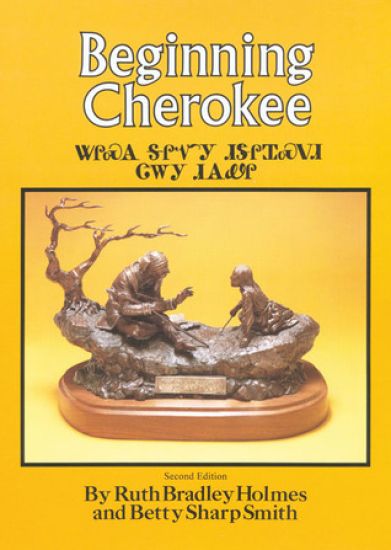
This book, the first of its kind, teaches the rudiments of Cherokee, which is the native tongue of about 20,000 Americans, although most of those who speak it use it only as a second language. Cherokee has had several recognized dialects in the past. The two main dialects today are the North Carolina, spoken on the Qualla Reservation by about 3,000 persons, and the Oklahoma, or Western, which is a consensus of the different ways of speech among the Cherokees mingled there after their removal from the East in the 1830's. This book uses the Oklahoma dialect.Recent increased interest has created a demand for Amerindian language courses. Many Cherokees who ignored past opportunities to learn the language from their families are now regretting the loss. Parents who once believed that such knowledge would only be a disadvantage to their children have changed their minds. Youths who have now concluded that their ancestors had much to offer are anxious to investigate the language for themselves. Those who do not have time to spare for organized study would often like to have a convenient source book on the Cherokee language and its syllabary. Beginning Cherokee was written to fill these needs. It will help everyone who uses this book, whether Cherokee or not, to understand that Indian tribes are contemporary people with an enduring heritage. The Cherokee language frames an outlook and an intellect that can contribute much to civilization in the future, as it has in the past.
The Cherokee Night and Other Plays

The Cherokee Night and Other Plays

Lynn Riggs; Jace Weaver

University of Oklahoma Press
2003
sidottu
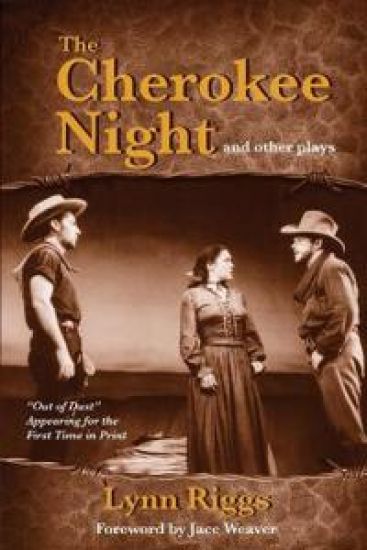
Special Limited Edition leatherbound hardcoverThe author of numerous plays and film scripts, including Green Grow the Lilacs, later made into the hit musical Oklahoma!, Lynn Riggs (18991954) is recognized as one of America's most engaging dramatists and was the only active American Indian dramatist during the first half of the twentieth century. An elegant leatherbound collector's edition, The Cherokee Night and Other Plays, features his never-before-published play Out of Dust, as well as The Cherokee Night and Green Grow the Lilacs.A mixed-blood Cherokee, Riggs wrote about the people, places, and events of the Oklahoma he knew so well. A cattle rancher's son, Riggs was born in the Verdigris Valley south of Claremore in Indian Territory. He first gained recognition as a poet in the early 1920s while attending the University of Oklahoma and later moved to New York, where he worked on and around Broadway. In 1927 Riggs was awarded the Guggenheim Fellowship, and while in France on that fellowship, he began writing Green Grow the Lilacs, which Rodgers and Hammerstein made into the Broadway musical Oklahoma! in 1943. By the end of his life, Riggs had written some thirty plays and scripts for fourteen films produced between 1930 and 1955.In their 1939 Handbook of Oklahoma Writers, Mary Hays Marable and Elaine Boylan observe: ""Lynn Riggs hitched his wagon to Pegasus and rode into the theatre with an output of poetic and regional plays that has brought him outstanding success.""
The Cherokee Night and Other Plays

The Cherokee Night and Other Plays

Lynn Riggs; Jace Weaver

University of Oklahoma Press
2003
nidottu
Special Limited Edition leatherbound hardcoverThe author of numerous plays and film scripts, including Green Grow the Lilacs, later made into the hit musical Oklahoma!, Lynn Riggs (18991954) is recognized as one of America's most engaging dramatists and was the only active American Indian dramatist during the first half of the twentieth century. An elegant leatherbound collector's edition, The Cherokee Night and Other Plays, features his never-before-published play Out of Dust, as well as The Cherokee Night and Green Grow the Lilacs.A mixed-blood Cherokee, Riggs wrote about the people, places, and events of the Oklahoma he knew so well. A cattle rancher's son, Riggs was born in the Verdigris Valley south of Claremore in Indian Territory. He first gained recognition as a poet in the early 1920s while attending the University of Oklahoma and later moved to New York, where he worked on and around Broadway. In 1927 Riggs was awarded the Guggenheim Fellowship, and while in France on that fellowship, he began writing Green Grow the Lilacs, which Rodgers and Hammerstein made into the Broadway musical Oklahoma! in 1943. By the end of his life, Riggs had written some thirty plays and scripts for fourteen films produced between 1930 and 1955.In their 1939 Handbook of Oklahoma Writers, Mary Hays Marable and Elaine Boylan observe: ""Lynn Riggs hitched his wagon to Pegasus and rode into the theatre with an output of poetic and regional plays that has brought him outstanding success.""