Kirjojen hintavertailu. Mukana 11 241 044 kirjaa ja 12 kauppaa.

Kirjahaku

Etsi kirjoja tekijän nimen, kirjan nimen tai ISBN:n perusteella.

1000 tulosta hakusanalla Claud Harding

Cloud Computing Law

Cloud Computing Law

Oxford University Press
2021
nidottu
Cloud computing continues to expand dramatically and the 'as a Service' model is now both mainstream and ubiquitous. Cloud now encompasses everything from the remote provision of essential computer processing and storage resources, through to delivery of complex business and government services, logistics, healthcare, education, and entertainment. The Covid-19 pandemic provided a striking demonstration of cloud computing's global scalability and resilience, as billions of workers and students switched in a matter of weeks to working and studying 'from home'. This book delivers an accessible analysis of the key legal and regulatory issues that surround cloud computing. Topics covered include contracts for cloud services, information ownership and licensing, privacy and data protection, standards and competition law, law enforcement access to data, and international tax models for cloud and other digital services. The book is organised in four parts. Part I explains what cloud computing is, why it matters, and what non-technical readers need to know about how it works. Part II includes a detailed review of standard contracts for 40 cloud services and highlights key legal and commercial issues that arise in negotiated transactions for cloud services. Ownership of, and access to, 'digital assets' are also explored. Part III focusses on the application of data protection and cybersecurity rules, including an in-depth assessment of the impact of the EU's General Data Protection Regulation (GDPR) on providers and users of cloud services. Finally, Part IV addresses governance issues relating to public sector use of cloud, access to cloud data by law enforcement authorities, competition rules and standards, and the disruption to global taxation models caused by the rapid shift to cloud services.
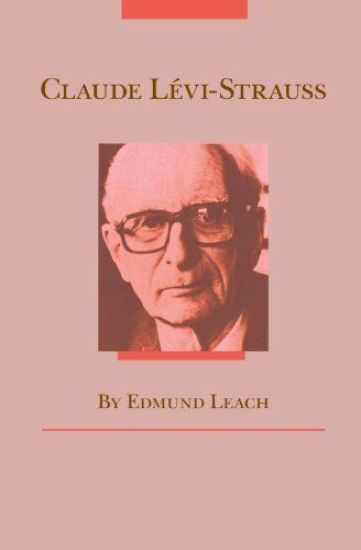
Claude Levi-Strauss

Claude Levi-Strauss

Edmund Ronald Leach

University of Chicago Press
1989
pokkari
In this lucide guide to the often abstruse works of Claude Levi-Strauss, Edmund Leach synthesizes the thought of one of the twentieth century's greatest anthropologists and provides a thoughtful introduction to the theory and practice of structuralism. Leach organizes his work not by chronology but by theme, exploring three important topics in Levi-Strauss's work: human beings and their symbols, the structure of myth, and kinship theory. Written concisely and with great care and penetration, this brief book is both a fine introduction for the uninitiated reader of Levi-Strauss and a critical analysis that will prove valuable to those more familiar with the anthropologist's work."
Cloud FINE!

Cloud FINE!

Andrea Zame

Tellwell Talent
2018
pokkari
An exciting and interactive approach to emotional regulation for young children, lead by parents and educators. "Cloud Fine " is simple and fun, personalizing and connecting with feelings that many kids experience, without understanding the cause. This book contains basic emotions, simple instructions; along with an activity that is meant to be created together with a trusted adult. Its a bonding experience in an enjoyable and relaxing way. Let's connect, Let's talk, Let's relate and let's have some "Cloud FINE " fun
Claude Lefort

Claude Lefort

Palgrave Macmillan
2013
sidottu
This is the first English language volume to offer such a wide-ranging scholarly and intellectual perspective on Claude Lefort. It constitutes the most comprehensive attempt to reconstruct Lefort's engagement with his theoretical interlocutors as well as his influence on today's democratic thought and contemporary continental political philosophy.
Claude McKay

Claude McKay

Winston James

Columbia University Press
2022
sidottu
Finalist, Pauli Murray Book Prize in Black Intellectual History, African American Intellectual History SocietyShortlisted, 2023 Historical Nonfiction Legacy Award, Hurston / Wright FoundationOne of the foremost Black writers and intellectuals of his era, Claude McKay (1889–1948) was a central figure in Caribbean literature, the Harlem Renaissance, and the Black radical tradition. McKay’s life and writing were defined by his class consciousness and anticolonialism, shaped by his experiences growing up in colonial Jamaica as well as his early career as a writer in Harlem and then London. Dedicated to confronting both racism and capitalist exploitation, he was a critical observer of the Black condition throughout the African diaspora and became a committed Bolshevik.Winston James offers a revelatory account of McKay’s political and intellectual trajectory from his upbringing in Jamaica through the early years of his literary career and radical activism. In 1912, McKay left Jamaica to study in the United States, never to return. James follows McKay’s time at the Tuskegee Institute and Kansas State University, as he discovered the harshness of American racism, and his move to Harlem, where he encountered the ferment of Black cultural and political movements and figures such as Hubert Harrison and Marcus Garvey. McKay left New York for London, where his commitment to revolutionary socialism deepened, culminating in his transformation from Fabian socialist to Bolshevik.Drawing on a wide variety of sources, James offers a rich and detailed chronicle of McKay’s life, political evolution, and the historical, political, and intellectual contexts that shaped him.
Claude McKay

Claude McKay

Winston James

Columbia University Press
2022
pokkari
Finalist, Pauli Murray Book Prize in Black Intellectual History, African American Intellectual History SocietyShortlisted, 2023 Historical Nonfiction Legacy Award, Hurston / Wright FoundationOne of the foremost Black writers and intellectuals of his era, Claude McKay (1889–1948) was a central figure in Caribbean literature, the Harlem Renaissance, and the Black radical tradition. McKay’s life and writing were defined by his class consciousness and anticolonialism, shaped by his experiences growing up in colonial Jamaica as well as his early career as a writer in Harlem and then London. Dedicated to confronting both racism and capitalist exploitation, he was a critical observer of the Black condition throughout the African diaspora and became a committed Bolshevik.Winston James offers a revelatory account of McKay’s political and intellectual trajectory from his upbringing in Jamaica through the early years of his literary career and radical activism. In 1912, McKay left Jamaica to study in the United States, never to return. James follows McKay’s time at the Tuskegee Institute and Kansas State University, as he discovered the harshness of American racism, and his move to Harlem, where he encountered the ferment of Black cultural and political movements and figures such as Hubert Harrison and Marcus Garvey. McKay left New York for London, where his commitment to revolutionary socialism deepened, culminating in his transformation from Fabian socialist to Bolshevik.Drawing on a wide variety of sources, James offers a rich and detailed chronicle of McKay’s life, political evolution, and the historical, political, and intellectual contexts that shaped him.
Cloud of the Impossible

Cloud of the Impossible

Catherine Keller

Columbia University Press
2014
sidottu
The experience of the impossible churns up in our epoch whenever a collective dream turns to trauma: politically, sexually, economically, and with a certain ultimacy, ecologically. Out of an ancient theological lineage, the figure of the cloud comes to convey possibility in the face of the impossible. An old mystical nonknowing of God now hosts a current knowledge of uncertainty, of indeterminate and interdependent outcomes, possibly catastrophic. Yet the connectivity and collectivity of social movements, of the fragile, unlikely webs of an alternative notion of existence, keep materializing--a haunting hope, densely entangled, suggesting a more convivial, relational world. Catherine Keller brings process, feminist, and ecopolitical theologies into transdisciplinary conversation with continental philosophy, the quantum entanglements of a "participatory universe," and the writings of Nicholas of Cusa, Walt Whitman, A. N. Whitehead, Gilles Deleuze, and Judith Butler, to develop a "theopoetics of nonseparable difference." Global movements, personal embroilments, religious diversity, the inextricable relations of humans and nonhumans--these phenomena, in their unsettling togetherness, are exceeding our capacity to know and manage. By staging a series of encounters between the nonseparable and the nonknowable, Keller shows what can be born from our cloudiest entanglement.
Cloud of the Impossible

Cloud of the Impossible

Catherine Keller

Columbia University Press
2014
pokkari
The experience of the impossible churns up in our epoch whenever a collective dream turns to trauma: politically, sexually, economically, and with a certain ultimacy, ecologically. Out of an ancient theological lineage, the figure of the cloud comes to convey possibility in the face of the impossible. An old mystical nonknowing of God now hosts a current knowledge of uncertainty, of indeterminate and interdependent outcomes, possibly catastrophic. Yet the connectivity and collectivity of social movements, of the fragile, unlikely webs of an alternative notion of existence, keep materializing--a haunting hope, densely entangled, suggesting a more convivial, relational world. Catherine Keller brings process, feminist, and ecopolitical theologies into transdisciplinary conversation with continental philosophy, the quantum entanglements of a "participatory universe," and the writings of Nicholas of Cusa, Walt Whitman, A. N. Whitehead, Gilles Deleuze, and Judith Butler, to develop a "theopoetics of nonseparable difference." Global movements, personal embroilments, religious diversity, the inextricable relations of humans and nonhumans--these phenomena, in their unsettling togetherness, are exceeding our capacity to know and manage. By staging a series of encounters between the nonseparable and the nonknowable, Keller shows what can be born from our cloudiest entanglement.
Cloud Computing for Machine Learning and Cognitive Applications
The first textbook to teach students how to build data analytic solutions on large data sets using cloud-based technologies.This is the first textbook to teach students how to build data analytic solutions on large data sets (specifically in Internet of Things applications) using cloud-based technologies for data storage, transmission and mashup, and AI techniques to analyze this data. This textbook is designed to train college students to master modern cloud computing systems in operating principles, architecture design, machine learning algorithms, programming models and software tools for big data mining, analytics, and cognitive applications. The book will be suitable for use in one-semester computer science or electrical engineering courses on cloud computing, machine learning, cloud programming, cognitive computing, or big data science. The book will also be very useful as a reference for professionals who want to work in cloud computing and data science.Cloud and Cognitive Computing begins with two introductory chapters on fundamentals of cloud computing, data science, and adaptive computing that lay the foundation for the rest of the book. Subsequent chapters cover topics including cloud architecture, mashup services, virtual machines, Docker containers, mobile clouds, IoT and AI, inter-cloud mashups, and cloud performance and benchmarks, with a focus on Google's Brain Project, DeepMind, and X-Lab programs, IBKai HwangM SyNapse, Bluemix programs, cognitive initiatives, and neurocomputers. The book then covers machine learning algorithms and cloud programming software tools and application development, applying the tools in machine learning, social media, deep learning, and cognitive applications. All cloud systems are illustrated with big data and cognitive application examples.
Cloud Computing for Science and Engineering

Cloud Computing for Science and Engineering

Ian Foster; Dennis B. Gannon

MIT Press
2017
sidottu
A guide to cloud computing for students, scientists, and engineers, with advice and many hands-on examples.The emergence of powerful, always-on cloud utilities has transformed how consumers interact with information technology, enabling video streaming, intelligent personal assistants, and the sharing of content. Businesses, too, have benefited from the cloud, outsourcing much of their information technology to cloud services. Science, however, has not fully exploited the advantages of the cloud. Could scientific discovery be accelerated if mundane chores were automated and outsourced to the cloud? Leading computer scientists Ian Foster and Dennis Gannon argue that it can, and in this book offer a guide to cloud computing for students, scientists, and engineers, with advice and many hands-on examples. The book surveys the technology that underpins the cloud, new approaches to technical problems enabled by the cloud, and the concepts required to integrate cloud services into scientific work. It covers managing data in the cloud, and how to program these services; computing in the cloud, from deploying single virtual machines or containers to supporting basic interactive science experiments to gathering clusters of machines to do data analytics; using the cloud as a platform for automating analysis procedures, machine learning, and analyzing streaming data; building your own cloud with open source software; and cloud security.The book is accompanied by a website, Cloud4SciEng.org, that provides a variety of supplementary material, including exercises, lecture slides, and other resources helpful to readers and instructors.
Cloud Empires

Cloud Empires

Vili Lehdonvirta

MIT PRESS LTD
2022
sidottu
The rise of the platform economy into statelike dominance over the lives of entrepreneurs, users, and workers.The early Internet was a lawless place, populated by scam artists who made buying or selling anything online risky business. Then Amazon, eBay, Upwork, and Apple established secure digital platforms for selling physical goods, crowdsourcing labor, and downloading apps. These tech giants have gone on to rule the Internet like autocrats. How did this happen? How did users and workers become the hapless subjects of online economic empires? The Internet was supposed to liberate us from powerful institutions. In Cloud Empires, digital economy expert Vili Lehdonvirta explores the rise of the platform economy into statelike dominance over our lives and proposes a new way forward. Digital platforms create new marketplaces and prosperity on the Internet, Lehdonvirta explains, but they are ruled by Silicon Valley despots with little or no accountability. Neither workers nor users can “vote with their feet” and find another platform because in most cases there isn’t one. And yet using antitrust law and decentralization to rein in the big tech companies has proven difficult. Lehdonvirta tells the stories of pioneers who helped create—or resist—the new social order established by digital platform companies. The protagonists include the usual suspects—Amazon founder Jeff Bezos, Travis Kalanick of Uber, and Bitcoin’s inventor Satoshi Nakamoto—as well as Kristy Milland, labor organizer of Amazon’s Mechanical Turk, and GoFundMe, a crowdfunding platform that has emerged as an ersatz stand-in for the welfare state. Only if we understand digital platforms for what they are—institutions as powerful as the state—can we begin the work of democratizing them.
Cloud Computing

Cloud Computing

Nayan B. Ruparelia

MIT Press
2016
pokkari
Why cloud computing represents a paradigm shift for business, and how business users can best take advantage of cloud services.Most of the information available on cloud computing is either highly technical, with details that are irrelevant to non-technologists, or pure marketing hype, in which the cloud is simply a selling point. This book, however, explains the cloud from the user's viewpoint-the business user's in particular. Nayan Ruparelia explains what the cloud is, when to use it (and when not to), how to select a cloud service, how to integrate it with other technologies, and what the best practices are for using cloud computing. Cutting through the hype, Ruparelia cites the simple and basic definition of cloud computing from the National Institute of Science and Technology: a model enabling ubiquitous, convenient, on-demand network access to a shared pool of configurable computing resources. Thus with cloud computing, businesses can harness information technology resources usually available only to large enterprises. And this, Ruparelia demonstrates, represents a paradigm shift for business. It will ease funding for startups, alter business plans, and allow big businesses greater agility. Ruparelia discusses the key issues for any organization considering cloud computing: service level agreements, business service delivery and consumption, finance, legal jurisdiction, security, and social responsibility. He introduces novel concepts made possible by cloud computing: cloud cells, or specialist clouds for specific uses; the personal cloud; the cloud of things; and cloud service exchanges. He examines use case patterns in terms of infrastructure and platform, software information, and business process; and he explains how to transition to a cloud service. Current and future users will find this book an indispensable guide to the cloud.
Cloud Computing, revised and updated edition

Cloud Computing, revised and updated edition

Nayan B. Ruparelia

MIT PRESS LTD
2023
nidottu
An updated, revised, and comprehensive overview of the concepts related to cloud computing, including recent applications, innovations, and its future evolution.In this Essential Knowledge volume, Nayan B. Ruparelia provides an updated and revised version of Cloud Computing, first published in 2016, to address not only the fact that cloud computing has become a ubiquitous part of mainstream computing since then but also has made strides in other key aspects of the technology’s development, including:cloud computing’s history,updated security fundamentals that provide examples of Identity and Access Management (IAM) use that illustrate the difference between on-premise (i.e., conventional) security and cloud-based security implementation and Security Information and Event Management SIEM),an updated discussion of data migration to the cloud,a new chapter on data integrity,cloud native computing,the use of microservice design patterns,cloud automation using orchestrators and tools such as Kubernetes,a comparison of common public clouds (Microsoft Azure, Google Cloud Platform, and Amazon AWS),and a future outlook for cloud computing.An indispensable guide to cloud computing for the layperson, Cloud Computing cuts through the technical jargon and details that are irrelevant to nontechnologists, as well as the marketing hype, and explains clearly what cloud computing is, when to use it (and when not to), how to select a cloud service, how to integrate it with other technologies, and what the best practices are for its adoption.
Cloud Policy

Cloud Policy

Jennifer Holt

MIT PRESS LTD
2024
nidottu
How the United States' regulation of broadband pipelines, digital platforms, and data--together understood as "the cloud"--has eroded civil liberties, democratic principles, and the foundation of the public interest over the past century. Cloud Policy is a policy history that chronicles how the past century of regulating media infrastructure in the U.S. has eroded global civil liberties as well as democratic principles and the foundation of the public interest. Jennifer Holt explores the long arc of regulating broadband pipelines, digital platforms, and the data centers that serve as the cloud's storage facilities--an evolution that is connected to the development of nineteenth- and twentieth-century media and networks, including railroads, highways, telephony, radio, and television. In the process, Cloud Policy unearths the lasting inscriptions of policy written for an analog era and markets that no longer exist on the contemporary governance of digital cloud infrastructure. Cloud Policy brings together numerous perspectives that have thus far remained largely siloed in their respective fields of law, policy, economics, and media studies. The resulting interdisciplinary argument reveals a properly scaled view of the massive challenge facing policymakers today. Holt also addresses the evolving role of the state in the regulation of global cloud infrastructure, and the growing influence of corporate gatekeepers and private sector self-governance. Cloud policy's trajectory, as Holt explains, has enacted a transformation in the cultural valuation of infrastructure as civic good, turning it into a tool of commercial profit generation. Despite these current predicaments, the book's historical lens ultimately helps the reader to envision restorative interventions and new forms of activism to create a more equitable future for infrastructure policy.
Cloud Empires

Cloud Empires

Vili Lehdonvirta

MIT PRESS LTD
2024
nidottu
The rise of the platform economy into statelike dominance over the lives of entrepreneurs, users, and workers.The early Internet was a lawless place, populated by scam artists who made buying or selling anything online risky business. Then Amazon, eBay, Upwork, and Apple established secure digital platforms for selling physical goods, crowdsourcing labor, and downloading apps. These tech giants have gone on to rule the Internet like autocrats. How did this happen? How did users and workers become the hapless subjects of online economic empires? The Internet was supposed to liberate us from powerful institutions. In Cloud Empires, digital economy expert Vili Lehdonvirta explores the rise of the platform economy into statelike dominance over our lives and proposes a new way forward.Digital platforms create new marketplaces and prosperity on the Internet, Lehdonvirta explains, but they are ruled by Silicon Valley despots with little or no accountability. Neither workers nor users can “vote with their feet” and find another platform because in most cases there isn’t one. And yet using antitrust law and decentralization to rein in the big tech companies has proven difficult. Lehdonvirta tells the stories of pioneers who helped create—or resist—the new social order established by digital platform companies. The protagonists include the usual suspects—Amazon founder Jeff Bezos, Travis Kalanick of Uber, and Bitcoin’s inventor Satoshi Nakamoto—as well as Kristy Milland, labor organizer of Amazon’s Mechanical Turk, and GoFundMe, a crowdfunding platform that has emerged as an ersatz stand-in for the welfare state. Only if we understand digital platforms for what they are—institutions as powerful as the state—can we begin the work of democratizing them.
Cloud: Between Paris and Tehran

Cloud: Between Paris and Tehran

Joan Copjec

MIT PRESS LTD
2025
nidottu
A theoretical examination of veiling, shame, and modesty in the films of the Iranian director Abbas Kiarostami through the lenses of Islamic philosophy and Lacanian psychoanalysis. In Cloud: Between Paris and Tehran, Joan Copjec examines the films of the Iranian director Abbas Kiarostami. The key to these films, she argues, lies in the image of a fragile yet sheltering tree that appears in several of his films. This simple image depicts a central concept of Islamic philosophy, which is known as the "Cloud" or the "Imaginal World." It designates the place out of which all the things of this world manifest themselves and "covers," or veils, that which must remain hidden. The concept of the Cloud plays a significant role in defining: 1) the unique nature of the Islamic God, who is not a creator or father; 2) the nature of the image, which assumes a priority and a greater power than it is elsewhere accorded; and 3) the nature of modesty, shame, and sexuality. Copjec walks her readers through the thicket of Islamic philosophy while demonstrating how its abstract concepts produce what audiences see on screen. The most ambitious aspect of the book lies in its attempt to demonstrate the inheritance by psychoanalysis of a new notion of knowledge, or gnosis, formulated by Muslim thinkers, who radically redefined the relation between body and thought.
Claude and Francois-Xavier Lalanne

Claude and Francois-Xavier Lalanne

Kathleen M. Morris

Yale University Press
2021
pokkari
A beautifully illustrated, concise critical analysis of the art, careers, and reception of the husband-wife team of artists known as Les Lalanne François-Xavier (1927–2008) and Claude (1925–2019) Lalanne were a husband-wife team of artists who created inventive and often surprising works that have been widely admired and collected since the 1960s. This book presents a carefully selected group of sculptures that focus on a shared preoccupation of the artists: the transformation of natural forms to serve new purposes, such as François-Xavier’s giant grasshopper sculpture that opens into a bar and Claude’s bench made of galvanized metal branches and vines such that it remains as much a forest as a place to sit. Critical analysis explores the full breadth of the artists’ careers; considers the complex issues of reception and categorization of their work; and prompts a reevaluation of the place their art occupies in the context of art museums, all while encouraging readers to consider relationships among nature, art, and their own encounters with both.Distributed for the Clark Art InstituteExhibition Schedule:Clark Art Institute, Williamstown, MA (May 8–October 31, 2021)
Claude & Camille: A Novel of Monet

Claude & Camille: A Novel of Monet

Stephanie Cowell

Crown Publishing Group (NY)
2011
nidottu
A vividly-rendered portrait of both the rise of Impressionism and of the artist at the center of the movement, Claude and Camille is above all a love story of the highest romantic order. In the mid-nineteenth century, a young man named Claude Monet decided that he would rather endure a difficult life painting landscapes than take over his father's nautical supplies business in a French seaside town. Against his father's will, and with nothing but a dream and an insatiable urge to create a new style of art that repudiated the Classical Realism of the time, he set off for Paris. But once there he is confronted with obstacles: an art world that refused to validate his style, extreme poverty, and a war that led him away from his home and friends. But there were bright spots as well: his deep, enduring friendships with men named Renoir, C zanne, Pissarro, Manet--a group that together would come to be known as the Impressionists, and that supported each other through the difficult years. Even more illuminating was his lifelong love, Camille Doncieux, a beautiful, upper-class Parisian girl who threw away her privileged life to be by the side of the defiant painter and embrace the lively Bohemian life of their time. His muse, his best friend, his passionate lover, and the mother to his two children, Camille stayed with Monet--and believed in his work--even as they lived in wretched rooms and often suffered the indignities of destitution. But Camille had her own demons--secrets that Monet could never penetrate--including one that when eventually revealed would pain him so deeply that he would never fully recover from its impact.