Kirjojen hintavertailu. Mukana 11 342 296 kirjaa ja 12 kauppaa.

Kirjahaku

Etsi kirjoja tekijän nimen, kirjan nimen tai ISBN:n perusteella.

1000 tulosta hakusanalla Color Therapy Coloring Books

Color

Color

Kenneth A. McClane

University of Notre Dame Press
2009
nidottu
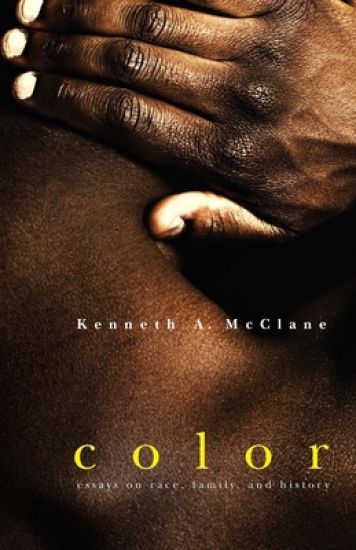
In 1991, acclaimed poet Kenneth A. McClane published Walls: Essays, 1985-1990, a volume of essays dealing with life in Harlem, the death of his alcoholic brother, and the complexities of being black and middle-class in America. Now, in Color: Essays on Race, Family, and History, McClane contributes further to his self-described "autobiographical sojourn" with a second collection of interconnected essays. In McClane's words, "All concern race, although they, like the human spirit, wildly sweep and yaw." A timely installment in our national narrative, Color is a chronicle of the black middle class, a group rarely written about with sensitivity and charity. In evocative, trenchant, and poetic prose, McClane employs the art of the memoirist to explore the political and the personal. He details the poignant narrative of racial progress as witnessed by his family during the 1950s, '60s, and '70s. We learn of his parents' difficult upbringing in Boston, where they confronted much racism; of the struggles they and McClane encountered as they became the first blacks to enter previously all-white institutions, including the oldest independent school in the United States; and of the part his parents played in the civil rights movement, working with Dr. King and others. The book ends with a tender account of his parents in the throes of Alzheimer's disease, which claimed both their lives.
Color

Color

Kenneth A. McClane

UNIVERSITY OF NOTRE DAME PRESS
2022
sidottu
In 1991, acclaimed poet Kenneth A. McClane published Walls: Essays, 1985-1990, a volume of essays dealing with life in Harlem, the death of his alcoholic brother, and the complexities of being black and middle-class in America. Now, in Color: Essays on Race, Family, and History, McClane contributes further to his self-described "autobiographical sojourn" with a second collection of interconnected essays. In McClane's words, "All concern race, although they, like the human spirit, wildly sweep and yaw." A timely installment in our national narrative, Color is a chronicle of the black middle class, a group rarely written about with sensitivity and charity. In evocative, trenchant, and poetic prose, McClane employs the art of the memoirist to explore the political and the personal. He details the poignant narrative of racial progress as witnessed by his family during the 1950s, '60s, and '70s. We learn of his parents' difficult upbringing in Boston, where they confronted much racism; of the struggles they and McClane encountered as they became the first blacks to enter previously all-white institutions, including the oldest independent school in the United States; and of the part his parents played in the civil rights movement, working with Dr. King and others. The book ends with a tender account of his parents in the throes of Alzheimer's disease, which claimed both their lives.
Color

Color

John Rohrbach; Sylvie Pénichon

University of Texas Press
2013
sidottu
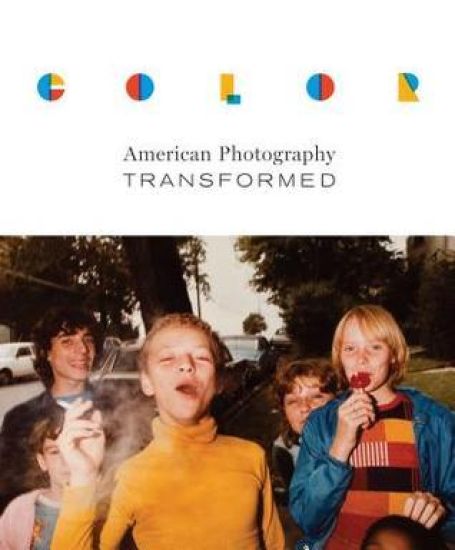
Capturing the world in color was one of photography’s greatest aspirations from the very beginnings of the medium. When color photography became a reality with the introduction of the Autochrome in 1907, prominent photographers such as Alfred Stieglitz were overjoyed. But they quickly came to reject color photography as too aligned with human sight. It took decades for artists to come to understand the creative potential of color, and only in 1976, when John Szarkowski showed William Eggleston’s photographs at the Museum of Modern Art, did the art world embrace color. By accepting color’s flexibility and emotional transcendence, Szarkowski and Eggleston transformed photography, giving the medium equal artistic stature with painting, but also initiating its demise as an independent art.The catalogue of a major exhibition at the Amon Carter Museum of American Art, which holds one of the premier collections of American photography, Color tells, for the first time, the fascinating story of color’s integration into American fine art photography and how its acceptance revolutionized the practice of art. Tracing the development of color photography from the first color photograph in 1851 to digital photography, John Rohrbach describes photographers’ initial rejection of color, their decades-long debates over what color brings to photography, and how their gradual acceptance of color released photography from its status as a second-tier art form. He shows how this absorption of color instigated wide acceptance of a fundamentally new definition of photography, one that blends photography’s documentary foundations with the creative flexibility of painting. Sylvie Pénichon offers a succinct survey of the technological advances that made color in photography a reality and have since marked its multifaceted development. These texts, illuminated by seventy-five full-page plates and more than eighty illustrations, make this book a groundbreaking contribution to photographic studies.
Color

Color

Carla D Sunberg; Daniel A K L Gomis

Foundry Publishing
2021
pokkari
When we talk about color in the church, we are talking about so much more than race and ethnicity--yet at the same time we cannot leave race and ethnicity out of the conversation altogether. As a white woman and a black man, Carla Sunberg and Dany Gomis have coauthored a harmoniously blended collection of reflections comparing a bride adorned in luxurious colors for her groom to the bride of Christ. Explore what it would look like for the bride of Christ to discover and use a full array of hues, both biblically and culturally. More than a book about skin tone, Color challenges the church to rise above a monochromatic perspective to see the fresh beauty of interweaving threads to complete the church bride's adornment for her bridegroom. With a friendly, collaborative style and questions for reflection at the end of each chapter, Sunberg and Gomis encourage us to celebrate the vibrancy and intensity of the Christian life the way God designed us to live it--as filled with Color. Watch as authors Dr. Carla Sunberg and Dr. Daniel Gomis sat down with moderator Stuart Williams to discuss the themes and topics in Color: God's Intention for Diversity. Watch Now
Color

Color

Lorane A. West

Washington State University Press
2004
pokkari
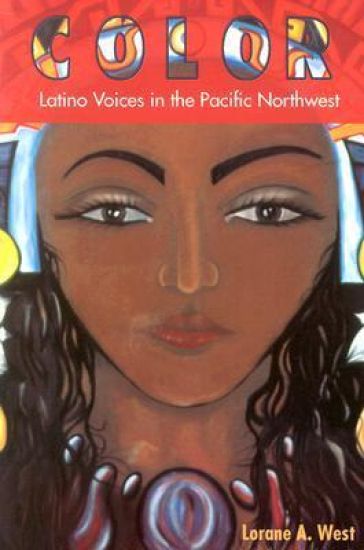
Color presents poignant conversations with people who have come from a variety of Central and South American cultures and backgrounds. The author based her writing on exchanges she witnessed through her work as an interpreter and advocate for Spanish-speaking immigrants. Her narratives give voice to their hopes, dreams, and life experiences--from the ordinary to the overwhelmingly difficult.In Color, a mother tells how as a little girl, she swept a dirt floor, cooked over a wood fire, and washed clothes in a muddy river. "Can you imagine being here, in a nice apartment, how fun it is for me to keep house?" A man is unable to comprehend the poor work ethic of his fellow employees. "Minimum wage is more per hour than I would make at home by a long shot. So I work as hard as I can…but my citizen coworkers are always complaining. They even tell me not to work so hard because I make them look bad!" A father speaks of the intense hunger he experienced as a child, and then recalls, "The first time my son said, 'I don't like this food,' I burst out crying. My wife thought I was upset at his bad manners, but I was just so glad my son had the luxury of not liking food…that my children have never known hunger."Whether about love, work, play, finances, or family, these accounts illuminate cultural differences in attitudes, rights, and values, and also pose intriguing questions about the effects of prosperity. Lorane A. West paints a very real picture of life for immigrants in the United States, and through her portraits, gives Americans a glimpse of themselves that may both surprise and challenge.
Color

Color

Rolf G. Kuehni

John Wiley Sons Inc
2012
sidottu
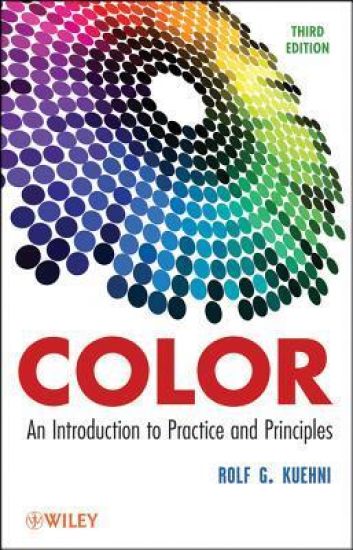
The one-stop reference to the essentials of color science and technology—now fully updated and revised The fully updated Third Edition of Color: An Introduction to Practice and Principles continues to provide a truly comprehensive, non-mathematical introduction to color science, complete with historical, philosophical, and art-related topics. Geared to non-specialists and experts alike, Color clearly explains key technical concepts concerning light, human vision, and color perception phenomena. It covers color order systems in depth, examines color reproduction technologies, and reviews the history of color science as well as its relationship to art and color harmony. Revised throughout to reflect the latest developments in the field, the Third Edition: Features many new color illustrations, now fully incorporated into the textOffers new perspectives on what color is all about, diverging from conventional thinkingIncludes new information on perception phenomena, color order, and technological advancesUpdates material on such topics as the CIE colorimetric system and optimal object colorsExtends coverage of color reproduction to display systems, photography, and color managementContains a unique timetable of color in science and art, plus a glossary of important terms Praise for the previous editions: “A nice bridge to areas usually not covered in academic visual science programs … outstanding.” —Joel Pokorny, visual scientist at The University of Chicago “A good addition to any library, this should be useful for the color interests of artists, designers, craftsmen, philosophers, psychologists, color technologies, and students in related fields.” —CHOICE
Color

Color

Rudolf Steiner; Marie Steiner

Literary Licensing, LLC
2011
sidottu
""Color"" by Rudolf Steiner is a comprehensive guide to understanding the spiritual significance of color. Steiner, a philosopher, and spiritual teacher, believed that color was more than just a visual experience but had deeper meanings and connections to the human soul. In this book, he explores the different aspects of color, including its relationship to music, the human aura, and the natural world. Steiner also discusses the use of color in art and architecture and how it can be used to create a harmonious environment. He provides practical exercises and meditations for readers to deepen their understanding and experience of color. This book is an essential read for anyone interested in the spiritual significance of color and its impact on our lives.This scarce antiquarian book is a facsimile reprint of the old original and may contain some imperfections such as library marks and notations. Because we believe this work is culturally important, we have made it available as part of our commitment for protecting, preserving, and promoting the world's literature in affordable, high quality, modern editions, that are true to their original work.
Color

Color

Countee Cullen

West Margin Press
2022
nidottu
"What is Africa to me?" In Color, his debut collection, Countee Cullen displays his mastery of traditional English poetry while examining his relationship with Africa, his life in America, and the realities faced by black people living in a hostile nation. His subjects include reflections on childhood, portraits of family, and statements of human and divine love.
Color

Color

Countee Cullen

Mint Editions
2021
sidottu
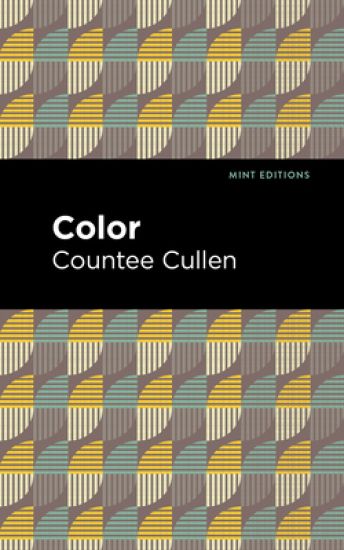
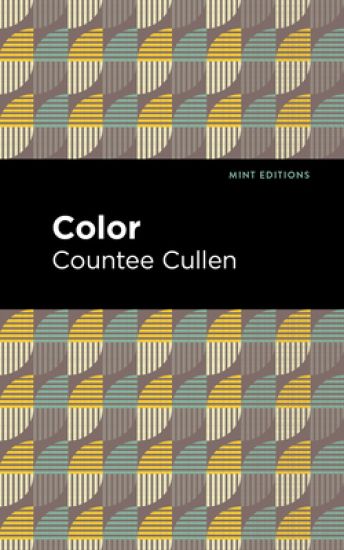
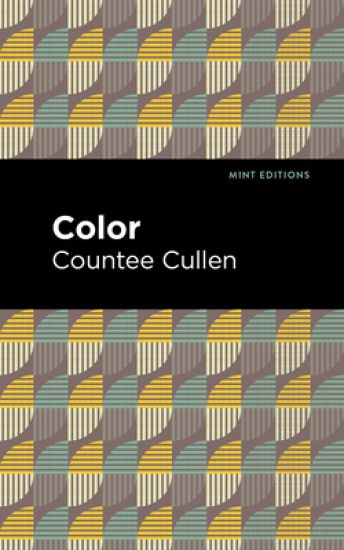
Color (1925) is a collection of poems by Countee Cullen. Published the same year Cullen entered Harvard to pursue a masters in English, Color was a brilliant debut by a poet who had already gained a reputation as a leading young artist of the Harlem Renaissance. Deeply personal and attuned to poetic tradition, Cullen’s verses capture the spirit of creative inquiry that defined a generation of writers, musicians, painters, and intellectuals while changing the course of American history itself. “Over three centuries removed / From the scenes his fathers loved, / Spicy grove, cinnamon tree, / What is Africa to me?” In “Heritage,” Cullen investigates his relationship with the past as a black man raised in a nation his people were forced to build. His question bears a dual sense of genuine wonder and cynical doubt, and ultimately produces no easy answer. For Cullen could have just as easily asked “What is America to me?”, to which his poem “Incident” might respond: “I saw a Baltimorean / Keep looking straight at me. / […] / And so I smiled, but he poked out / His tongue, and called me, ‘Nigger.’ / […] Of all the things that happened there / That’s all I can remember.” In these lines, a single memory serves to define an entire city; an entire childhood, even, is defined by the violent response of a white man consumed with hatred. Cullen’s relationship to place, whether Africa, America, or Baltimore, is inextricably linked to his experience of racial violence. With this knowledge, he navigates the spaces between these places, inhabiting a language and a poetic tradition thrust upon him at birth. For Cullen, poetry is as much a means of survival and self-invention as it is a form of art—without it, where would he be? With a beautifully designed cover and professionally typeset manuscript, this edition of Countee Cullen’s Color is a classic of African American literature reimagined for modern readers.
Color

Color

Countee Cullen

Graphic Arts Books
2021
pokkari
Color (1925) is a collection of poems by Countee Cullen. Published the same year Cullen entered Harvard to pursue a masters in English, Color was a brilliant debut by a poet who had already gained a reputation as a leading young artist of the Harlem Renaissance. Deeply personal and attuned to poetic tradition, Cullen’s verses capture the spirit of creative inquiry that defined a generation of writers, musicians, painters, and intellectuals while changing the course of American history itself. “Over three centuries removed / From the scenes his fathers loved, / Spicy grove, cinnamon tree, / What is Africa to me?” In “Heritage,” Cullen investigates his relationship with the past as a black man raised in a nation his people were forced to build. His question bears a dual sense of genuine wonder and cynical doubt, and ultimately produces no easy answer. For Cullen could have just as easily asked “What is America to me?”, to which his poem “Incident” might respond: “I saw a Baltimorean / Keep looking straight at me. / […] / And so I smiled, but he poked out / His tongue, and called me, ‘Nigger.’ / […] Of all the things that happened there / That’s all I can remember.” In these lines, a single memory serves to define an entire city; an entire childhood, even, is defined by the violent response of a white man consumed with hatred. Cullen’s relationship to place, whether Africa, America, or Baltimore, is inextricably linked to his experience of racial violence. With this knowledge, he navigates the spaces between these places, inhabiting a language and a poetic tradition thrust upon him at birth. For Cullen, poetry is as much a means of survival and self-invention as it is a form of art—without it, where would he be? With a beautifully designed cover and professionally typeset manuscript, this edition of Countee Cullen’s Color is a classic of African American literature reimagined for modern readers.