
Kirjahaku
Etsi kirjoja tekijän nimen, kirjan nimen tai ISBN:n perusteella.
1000 tulosta hakusanalla Content Team Audiolearn
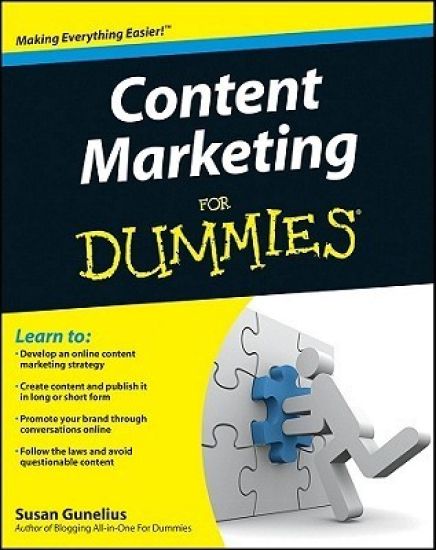
Get the whole picture and learn to create a successful online content marketing program Successful online marketing is about more than creating a Facebook page or writing a corporate blog. Brands need to build lasting connections with the right customers online through an effective online content marketing strategy, and this book shows you how. It explores ways to create a content marketing strategy, identify the content that will keep your customers coming back, create that content, distribute it online, and measure the results, with hands-on, step-by-step guidance. Content marketing is an essential element of successful online marketing and brand-building; this book shows you how to begin creating and distributing content online to market your businessExplains why content marketing is important and how to create an online content marketing strategy, which tools to use, and what to avoidShows how to create content and get it published online in long or short formOffers plenty of tips, case studies, and worksheets to ensure success Online content marketing positions your business and your product for lasting customer interaction; Content Marketing For Dummies gives you the tools to create a program that works.
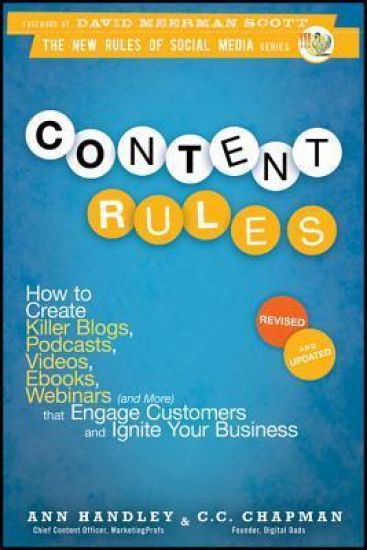
The guide to creating engaging web content and building a loyal following, revised and updated Blogs, YouTube, Facebook, Twitter, Google+, and other platforms are giving everyone a "voice," including organizations and their customers. So how do you create the stories, videos, and blog posts that cultivate fans, arouse passion for your products or services, and ignite your business? Content Rules equips you for online success as a one-stop source on the art and science of developing content that people care about. This coverage is interwoven with case studies of companies successfully spreading their ideas online—and using them to establish credibility and build a loyal customer base. Find an authentic "voice" and craft bold content that will resonate with prospects and buyers and encourage them to share it with othersLeverage social media and social tools to get your content and ideas distributed as widely as possibleUnderstand why you are generating content—getting to the meat of your message in practical, commonsense language, and defining the goals of your content strategyWrite in a way that powerfully communicates your service, product, or message across various Web mediumsBoost your online presence and engage with customers and prospects like never before with Content Rules.
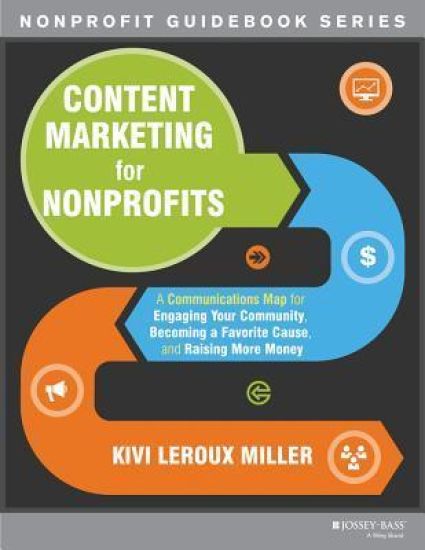
Nonprofits are communicating more often and in more ways than ever before . . .but is anyone paying attention? In her follow-up to The Nonprofit Marketing Guide: High-Impact, Low-Cost Ways to Build Support for Your Good Cause, Kivi Leroux Miller shows you how to design and implement a content marketing strategy that will attract people to your cause, rather than begging for their attention or interrupting them with your communications. Youll learn how to plan, create, share, and manage relevant and valuable content that inspires and motivates people to support your nonprofit in many different ways. Inside: Eye-opening look at how nonprofit marketing and fundraising is changing, and the perils of not quickly adaptingUp-to-date guidance on communicating in a fast-paced, multichannel worldHow to make big-picture strategic decisions about your content, followed by pragmatic and doable tactics on everything from editorial calendars to repurposing contentReal-world examples from 100+ nonprofits of all sizes and missions This book is your must-have guide to communicating so that you keep the supporters you already have, attract new ones, and together, change the world for the better.
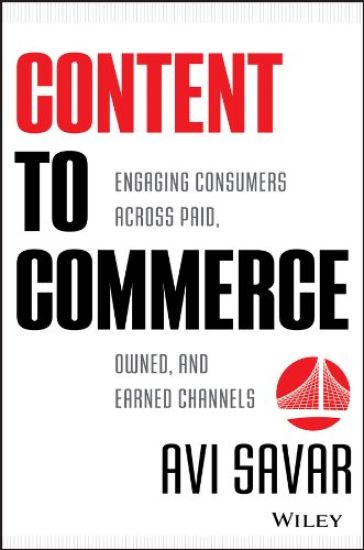
Content to Commerce: Engaging Consumers Across Pai d, Owned, and Earned Channels
Savar
John Wiley Sons Inc
2013
muu
Master the publishing and entertainment world's tools and techniques for content marketing success Over the last decade the convergence of media and technology has turned the marketing world on its head. In order for brands to succeed in today's socially connected world, they must think like publishers and act like media networks. Content to Commerce shows how utilizing publishing- and entertainment-based principles can help brands and marketers use social media effectively ultimately reaching today's hyper-connected and highly fragmented audiences. From big picture strategy to the tactics and tools require to execute, this book offers a clear approach to social media marketing for both big and small brands alike. * Shows how to turn shallow, wide, and short-term projects into deep, narrow, and long-term engagements * Explains how to prioritize with a clear escalation path in order to drive big, significant, and measurable value * Author Avi Savar is a frequent media commentator on social media, branded content and marketing and was recently named the Jury President of the Cannes Lions International Festival of Creativity s new Branded Content & Entertainment category Content to Commerce will show you how to conquer the media world's medium and control your own brand's destiny.

Content Marketing Strategies For Dummies
Stephanie Diamond; Paul D. Clifford
John Wiley Sons Inc
2016
nidottu
Drive your content marketing campaign toward success Blogs and social platforms are all the rage right now—especially for strategists looking to cultivate influence among target audience members through content marketing. Content Marketing Strategies For Dummies explains how you can use content marketing to gain an edge over your competition, even in the most crowded of marketplaces. This timely text introduces you to the Five C Cycle: Company Focus, Customer Experience, Content Creation, Channel Promotion, and Closed-Loop Analysis. The Five C Cycle drives the creation and documentation of a targeted content marketing strategy, and allows you to approach your content marketing campaign with confidence. By helping you determine your company's focus, uncover your customers' experience with data, develop channel promotions across social platforms, create actionable online content, and use closed-loop analysis to build on previous success, this will become your go-to content marketing guide. Content marketing entails creating and curating content online via blog posts, social media platforms, and more. The goal is to acquire and retain customers by creating content that brings value to their lives, and that encourages them to engage with your brand. This easy-to-understand guide will help you do just that. Analyze customer data to better understand your target audience's journeyLeverage social platforms, such as Facebook and Twitter, to develop channel promotionsCreate and curate intelligent, engaging content that leads to actionBuild upon your previous success with closed-loop analysis Whether you work for a large corporation, are part of a small business, are a solo thought leader, or are an educator, Content Marketing Strategies For Dummies tells you how to gain a critical, competitive advantage through targeted content marketing strategies.
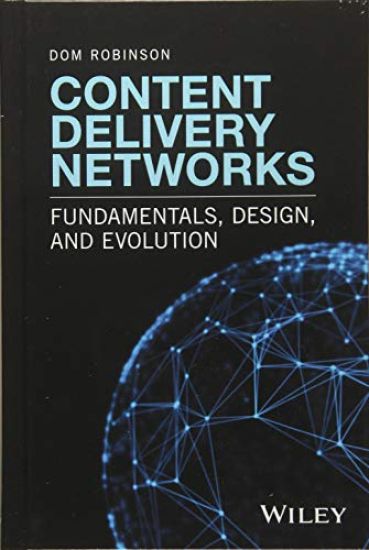
The definitive guide to developing robust content delivery networks This book examines the real-world engineering challenges of developing robust content delivery networks (CDNs) and provides the tools required to overcome those challenges and to ensure high-quality content delivery that fully satisfies operators’ and consumers' commercial objectives. It is informed by the author’s two decades of experience building and delivering large, mission-critical live video, webcasts, and radio streaming, online and over private IP networks. Following an overview of the field, the book cuts to the chase with in-depth discussions—laced with good-natured humor—of a wide range of design considerations for different network topologies. It begins with a description of the author's own requirement filtration processes. From there it moves on to initial sketches, through considerations of stakeholder roles and responsibilities, to the complex challenges of managing change in established teams. Agile versus waterfall considerations within large blue chip companies, security, commercial models, and value chain alignment are explored in detail. Featured throughout the book are numerous "what if" scenarios that help provide a clear picture of the wide spectrum of practical contexts for which readers may be tasked with building and implementing a CDN. In addition, the book: Discusses delivery of live, catch-up, scheduled on-demand, TVOD and SVODOffers insights into the decisions that can to be made when architecting a content distribution system over IP-based networksCovers CDN topologies, including Edge-Caching, Streaming-Splitting, Pure-Play, Operator, Satellite, and HybridExamines computer hosting and orchestration for dedicated appliances and virtualizationIncludes real-world cases covering everything from IETF, regulatory considerations, and policy formation, to coding, hardware vendors, and network operatorsConsiders the future of CDN technologies and the market forces driving its evolution Written by a back-room engineer for back-room engineers, Content Delivery Networks gets readers up to speed on the real-world challenges they can face as well as tried-and-true strategies for addressing those challenges in order to ensure the delivery of the high-quality content delivery networks that clients demand and users expect.
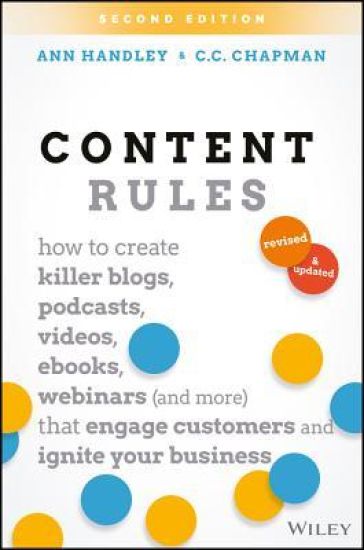
Blogs, YouTube, Facebook, Twitter and other publishing platforms are giving everyone a "voice," including organizations and their customers. To be successful, businesses must speak directly with their customers or prospects through a comprehensive strategy that allows them to reach new customers at every stage of the buying cycle. They must find their voice and create bold and compelling content that people want to consume and which speaks to their needs or wants or desires. Yeah, yeah... so you know all that. But how can you create bold stories, videos, and blog posts that cultivate fans, arouse passion for your products or services, and ignite your business? The second edition of Content Rules is a how-to book of both the art and science of developing marketing content that people care about interwoven with case studies of companies that are successfully spreading their ideas online--and using them to establish credibility and build a loyal customer base. Business owners and marketers who read this book will learn: The art of storytelling and the science of journalismWhat it means to be a "publisher" and why what you publish is the cornerstone of your marketingHow to find an authentic "voice" and craft bold content that will resonate with prospects and buyers and encourage them to share it with othersHow to leverage social media and social tools to get your content and ideas distributed as widely as possible
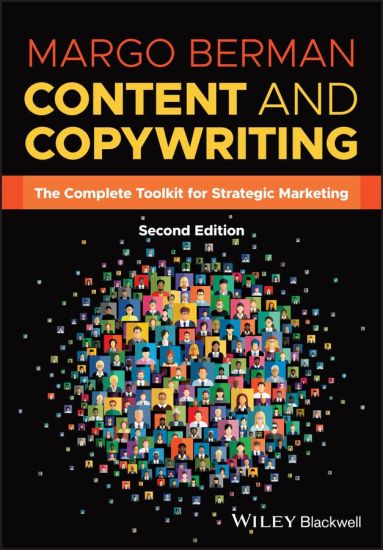
Learn to create powerful, strategic copy for multiple channels, platforms, and storytelling templates Today, just writing strong content or catchy copy isn’t enough. You must also know how to create gripping messages and interactive engagement. Content and Copywriting: The Complete Toolkit for Strategic Marketing is your one-stop resource to sharpen your skills and explore innovative methods to reach your audience. This comprehensive real-world guide helps you create content for any device and consumer touchpoint by seamlessly integrating social media writing and advertising copywriting. As an award-winning copywriter, producer/director, and professor, Margo Berman explains conceptual strategies and writing techniques to develop dynamic copy for a wide range of traditional and emerging media. This step-by-step approach offers specific instructions for writing websites, blogs, social media, direct mail, product packaging, viral marketing, radio, television, and videos. This work also analyzes immersive, experiential, augmented, mixed, and virtual reality content, then presents tips to maximize results. This updated and expanded second edition contains dozens of new TV and radio storyboards and scripts, charts and infographics, templates and writing tips, exercises and examples, terminology lists, plus over 100 new images of innovative marketing campaigns. It also covers shareable content, digital storytelling, headline and slogan techniques, and interactive experiences. In addition, there is a valuable section with skill-building resources, references, and suggested readings. Featuring an extensive collection of innovative visual examples, content writing templates, and teaching and learning resources, Content and Copywriting: The Complete Toolkit for Strategic Marketing is the ideal textbook for undergraduate courses in advertising, communications, public relations, and integrated marketing, and an invaluable reference for graduate students and professionals alike.

This module explores the content-driven approach to language teaching, or the teaching of nonlinguistic content such as geography, history, or science using the target language. It lays out effective techniques that help facilitate students’ comprehension of curricular content and also discusses how teacher collaboration and students’ L1s affect this approach to language teaching. With an instructional sequence comprising noticing, awareness, and practice activities as well as examples of content-and-language integrated units, the Content-Based Language Teaching module is the ideal main textbook for instructors seeking a clear and practical treatment of the topic for their courses, which can also be taught in conjunction with other modules in the series.
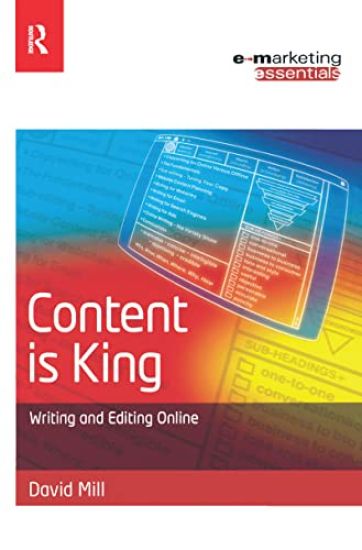
A growing number of information providers are now online, and as a result being able to produce copy that is suitable for an online readership is of increasing importance. In this text the basic principles of copywriting are covered, along with more specific guidance on writing for online sources. The differences between writing for online and offline are highlighted to enable the reader to distinguish between the two and consequently write the best form of copy for the end source. Different sources of online content require different approaches, and therefore the author takes a structured approach, taking each of these channels in turn, for example writing for web sites, writing for email, ezines and newsletters, writing for search engines, and writing for online ads. By approaching each topic individually, specific guidance is provided enabling the reader to be properly equipped with the tools required to write the most appropriate copy for the task in hand.

First published in 2002. In this pioneering book, Daniel Dennett sets out clearly what he believed constituted a genuine analysis of the mind. His work over the last twenty years and more, culminating in his major study, Consciousness Explained, has increased rather than diminished the power of his first book. This edition also includes the 1986 preface which places the book in the context of recent work in the area.
Content-Based College ESL Instruction
Loretta F. Kasper; Marcia Babbitt; Rebecca William Mlynarczyk; Donna M. Brinton; Judith W. Rosenthal
Routledge
2016
sidottu
This book is carefully designed to inform and train readers in the techniques of content-based ESL instruction and to assist them in developing and implementing content-based materials and programs appropriate to their educational institutions and situations. Every chapter presents a balance of theory and practice, focusing on a detailed description, with clear examples of classroom practices including information, suggestions, and instructional tools. Each chapter addresses assessment issues as they apply to the particular methodology described.
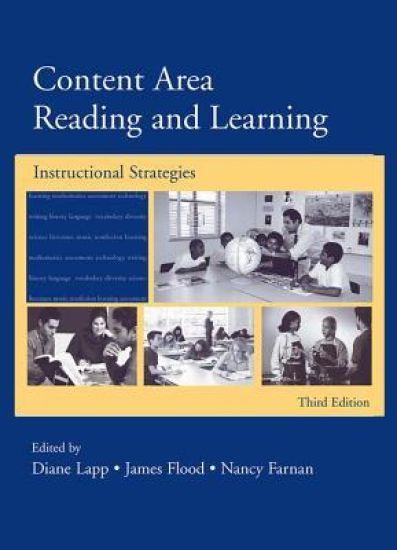
Content Area Reading and Learning
Routledge
2015
sidottu
How can teachers make content-area learning more accessible to their students? This text addresses instructional issues and provides a wealth of classroom strategies to help all middle and secondary teachers effectively enable their students to develop both content concepts and strategies for continued learning. The goal is to help teachers model, through excellent instruction, the importance of lifelong content-area learning. This working textbook provides students maximum interaction with the information, strategies, and examples presented in each chapter. This book is organized around five themes:Content Area Reading: An OverviewThe Teacher and the TextThe StudentsThe Instructional ProgramSchool Culture and Environment in Middle and High School Classrooms.Pedagogical features in each chapter include: a graphic organizer; a chapter overview, Think Before, Think While and Think After Reading Activities - which are designed to integrate students’ previous knowledge and experience with their new learnings about issues related to content area reading, literacy, and learning, and to serve as catalysts for thinking and discussions.This textbook is intended as a primary text for courses on middle and high school content area literacy and learning.
Content and Language Integrated Learning
Routledge
2018
nidottu
This book explores some of the recent research undertaken on Content and Language Integrated Learning (CLIL). It offers an overview of several European contexts, describing experiences that could be extrapolated to many other communities worldwide. Contributions focus on issues related to language policy, moving from high-level policymaking to grassroots decisions, but all of them encompassing the major changes that can be recognized in education, which also evidence the shifts in society and economic life that have taken place in Europe in the last decades. These changes in language policy issues are coupled with changes in CLIL practice in the classroom. These national initiatives are displayed across a wide range of educational perspectives, portraying the diversity that is a distinctive feature of CLIL in the European educational mosaic. By providing new insights into pedagogic, methodological, and language policy issues in CLIL, and by covering some areas which have been insufficiently addressed in the literature, such as the implementation of CLIL in ‘less successful’ contexts, or learner-teacher collaboration in the classroom, this book will be of great value to researchers, stakeholders and professionals interested in CLIL and language education. This book was originally published as a special issue of the International Journal of Bilingual Education and Bilingualism.

Content Management
Routledge
2017
nidottu
This collection of articles is the first attempt by academics and professional writers to delve into the world of content management systems. The knowledge economy's greatest asset and primary problem is information management: finding it, validating it, re-purposing it, keeping it current, and keeping it safe. In the last few years content management software has become as common as word-processing software was five years ago. But unlike word processors, which are designed for single authorization and local storage, content management systems are designed to accommodate large-scale information production, with many authors providing many different pieces of information kept in a web-accessible database, any piece of which might find its way into electronic documents that the author doesn't even know exist. These software systems are complex, to say the least, and their impact on the field of writing will be immense.
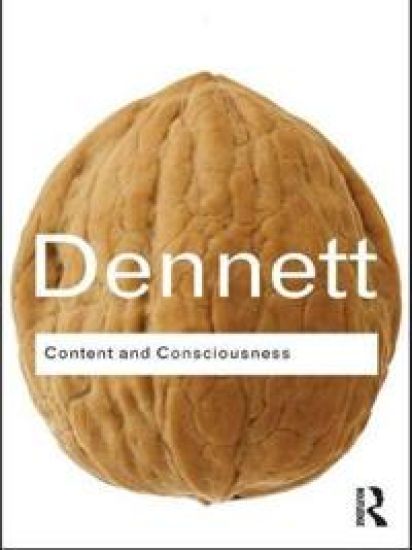
Content and Consciousness is an original and ground-breaking attempt to elucidate a problem integral to the history of Western philosophical thought: the relationship of the mind and body. In this formative work, Dennett sought to develop a theory of the human mind and consciousness based on new and challenging advances in the field that came to be known as cognitive science. This important and illuminating work is widely-regarded as the book from which all of Dennett’s future ideas developed. It is his first explosive rebuttal of Cartesian dualism and one of the founding texts of philosophy of mind.
Content and Language Integrated Learning
Routledge
2015
sidottu
This book explores some of the recent research undertaken on Content and Language Integrated Learning (CLIL). It offers an overview of several European contexts, describing experiences that could be extrapolated to many other communities worldwide. Contributions focus on issues related to language policy, moving from high-level policymaking to grassroots decisions, but all of them encompassing the major changes that can be recognized in education, which also evidence the shifts in society and economic life that have taken place in Europe in the last decades. These changes in language policy issues are coupled with changes in CLIL practice in the classroom. These national initiatives are displayed across a wide range of educational perspectives, portraying the diversity that is a distinctive feature of CLIL in the European educational mosaic. By providing new insights into pedagogic, methodological, and language policy issues in CLIL, and by covering some areas which have been insufficiently addressed in the literature, such as the implementation of CLIL in ‘less successful’ contexts, or learner-teacher collaboration in the classroom, this book will be of great value to researchers, stakeholders and professionals interested in CLIL and language education. This book was originally published as a special issue of the International Journal of Bilingual Education and Bilingualism.
Focusing on language and the assessment of its meaning, this volume concentrates on a method of content analysis developed by the author and Goldine Gleser. Applicable to transcripts of speech or verbal texts, this method uses the grammatical clause as its smallest unit of communication, considers whether or not a verb is transitive and involves an object, or is intransitive and describes a state of being. It derives scores on many scales that have been tested for reliability of scoring and for construct validity with concurrently administered measures, such as rating and self-report scales as well as biochemical and pharmacological criteria. Finally, this volume provides detailed descriptions of the clinical and basic research establishing the validity of these scales, so that a reader can locate studies that have pertinence to any special interest area. A major achievement described in this book is the development of computer software that understands grammar and syntax, can parse natural language, knows most of the words in the Merriam-Webster dictionary, has been taught to identify idioms and slang, and is capable of continuing to learn. The program can score all the scales, report whether the scores obtained from a verbal sample are one to three standard deviations from the norms, and suggest APA DSM-IIIR diagnostic classifications the clinician might consider in assessing the patient.
Content and Process Specificity in the Effects of Prior Experiences
Psychology Press Ltd
2016
nidottu
In Volume 3, Eliot R. Smith of Purdue University proposes that social cognition theorists have placed excessive emphasis on the role of schemata, prototypes, and various other types of abstractions. This has affected both the methodologies they use and the type of theories they construct. What has not been adequately appreciated is the storage and retrieval of specific episodes, especially those with idiosyncratic features. This volume s designed as a required text for those studying personality, experimental and consumer psychology, cognitive science, and communications.