
Kirjahaku
Etsi kirjoja tekijän nimen, kirjan nimen tai ISBN:n perusteella.
1000 tulosta hakusanalla Cyril Methodius Jansky
Publisher's Note: Products purchased from Third Party sellers are not guaranteed by the publisher for quality, authenticity, or access to any online entitlements included with the product. A classic since 1975, the Dictionary of Architecture and Construction is one of the most trusted resources in the AEC community. The Fourth Edition features nearly 25,000 definitions and 2,500 illustrations, making it the most comprehensive dictionary in the industryUpdated and expanded, this Fourth Edition of the most trusted reference in architecture offers the most comprehensive coverage of architectural and construction terms available. This classic dictionary now features nearly 25,000 definitions (including 2,800 new terms), 2,500 illustrations (including 200 new illustrations), and maintains its extraordinary visual appeal and easy-to-read page design.Prepared by a renowned architectural editor in association with expert contributors and incorporating the work of many standards groups, the book presents clear, concise definitions of terms in nearly 80 working areas.The Fourth Edition covers new industry terms which have emerged due to changes in engineering and building technologies, organizations, materials, and legal developments, and has been expanded to include more historic architectural styles. New terms include: Legal Architectural Barriers Act Wheelchair Accessible Materials Fibrous Concrete Latex Mortar Polymer-Based Stucco Concrete Compliance Conformity Refractory Mortar Organizations Building Research Establishment (formerly Building Research Station) of Great Britain ASTM Historic Architectural Styles Anglo-Palladianism French Victorian Isabellino Mudajar Mozarabic Neo-Rococo

Originally published in 1996 and now available in paperback, a historical account of Anglo-Irish history between 1560 and 1602.
A first-hand account of the early days of World War I'..it obeys the formalities of regimental history, while at the same time using powerfully condensed word pictures to convey the paradoxical horror of it all.' (The Irish Times)
An examination of the origins of the Irish Question, first published in 1936, which considers Queen Elizabeth I's disastrous attempts to annexe and subdue Ulster, and the political confusion that followed.
Critical and autobiographical essays by a noted British reviewer and literary journalist. " Connolly] has the wonderful capacity for enthusiasm, for exciting in us his own unflagging joy in the presence of genius"(New Yorker). Index.

This collection of Chinese stories begins with the great legends of how Earth and Heaven came into being, and of how the archer Yi rid the Emperor Yao of the menace of the ten suns. There are folk-tales too, about ghosts and rain-makers, poor students and magicians, and the man who was nearly made into fishpaste. Throughout all these stories the author has kept the subtle oriental flavour of the originals and brings to life all the magic and mystery of China.
For more than a century the piano occupied a dominant place in music and society. Professor Ehrlich follows its fascinating history from the fortepiano of Mozart's time, through the Victorians' `household orchestra and god', to the most sophisticated modern products of the Japanese manufacturers. His protagonists include barnstorming virtuosi, fashionable ladies and aspiring clerks, the great makers and the back-street `garrett-masters', distinguished musicians, and hire-purchase touts. Originally published in 1976 by Dent, this book has now been updated and revised by the author in the light of developments of recent years.
Established by musicians in 1813, the Philharmonic is the world's second oldest concert society; only Leipzig is senior. Weber and Mendelssohn were active honorary members; Joachim and Clara Schumann lifelong friends. The list of gold medalists runs from Elgar and Beecham to Sibelius, Rachmaninov, and Tippett. Most instrumentalists and many singers of international repute mounted its platforms. Berlioz, Wagner, Tchaikovsky, Grieg, Dvorak and Strauss came to preside over their music. Celebrating a venerable institution, this history, based upon exhaustive research in the Society's archives, also addresses wider themes, which continue to bear upon concert life: the evolution of repertoire and performance, audience, agent and conductor; networks of recruitment; patronage and the market place; the collective biography and proliferation of London orchestras; the economics of fees and rehearsals. Shaw once claimed that the Philharmonic's generosity towards Beethoven was the only creditable incident in English history, and never mentioned by historians. A leading authority on the economic and social history of music now attempts to repair that omission.

Selected Letters
"Whom the gods wish to destroy," writes Cyril Connolly, "they first call promising." First published in 1938 and long out of print, Enemies of Promise, an "inquiry into the problem of how to write a book that lasts ten years," tests the boundaries of criticism, journalism, and autobiography with the blistering prose that became Connolly's trademark. Connolly here confronts the evils of domesticity, politics, drink, and advertising as well as novelists such as Joyce, Proust, Hemingway, and Faulkner in essays that remain fresh and penetrating to this day. "A fine critic, compulsive traveler, and candid autobiographer. . . . Connolly] lays down the law for all writers who wanted to count. . . . He had imagination and decisive images flashed with the speed of wit in his mind."-V. S. Pritchett, New York Review of Books "Anyone who writes, or wants to write, will find something on just about every single page that either endorses a long-held prejudice or outrages, and that makes it a pretty compelling read. . . . You end up muttering back at just about every ornately constructed pens e that Connolly utters, but that's one of the joys of this book."-Nick Hornby, The Believer "A remarkable book."-Anthony Powell
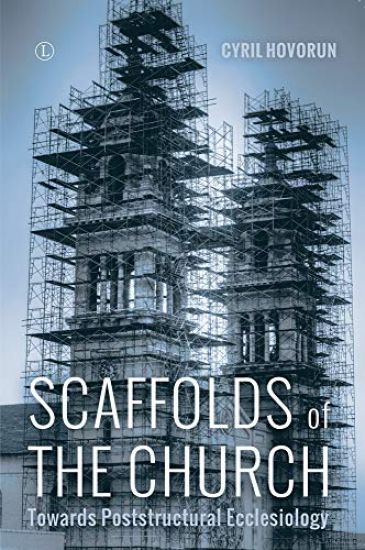
Unity is the categorical imperative of the Church. It is not just the Church's bene esse, but its esse. In addition to being a theological concept, unity has become a raison d'être of various structures that the Church has established and developed. All of these structures are supposed to serve the end of unity. However, from time to time some of them deviate from their initial purpose and contribute to disunity. This happens because the structures of the Church are not a part of its nature and can therefore turn against it. They are like scaffolding, which facilitates the construction and maintenance of a building without actually being part of it. Likewise, ecclesial structures help the Church function in accordance with its nature but should not be identified with the Church proper. Scaffolds of the Church considers the evolution of some of these structures and evaluates their correspondence to their initial rationale. It focusses on particular structures that have developed in the eastern part of the Christian oecumene, such as patriarchates, canonical territory, and autocephaly, all of which are explored in the more general frame of hierarchy and primacy. They were selected because they are most neuralgic in the life of the Orthodox Churches today and bear in them the greatest potential to divide.
-- Asian Thought and Society

The Christianity of Ignatius of Antioch
Cyril Charles Richardson
Columbia University Press
2020
sidottu

LE CHEMIN QUE VOUS M'AVEZ EMPRUNTE decrit l'impact des resistances postcoloniale Africaine dans la vie quotidienne du jeune Franky, le heros du roman. Ne dans une famille de fermiers avant les independances dans la zone cotiere du Moungo au Cameroun autrefois secouee par une petite guerilla, le petit serait au c ur d'un theatre orchestre par la France et ses allies. Eleve par son oncle l'epicier Pripa, frere de son papa Ouka ancien tirailleur des armees de l'independance, le petit apprit vite a se prendre en charge avant d'avoir son diplome d'etudes superieures. Pris au piege par la guerilla a son retour au village , le petit abandonna son cursus scolaire pour diriger la resistance au cote de son papa et de sa belle-mere Madame Duvier. Apres de nombreuses batailles, Il quitta sa terre sous promesse d'un retour triomphant et s'exila apres avoir rallie a sa cause l'homme pieux, le cure de la paroisse du village. Il meurt quelque temps plus tard sur le chemin de l'exil en laissant ainsi sa bien-aimee Clorante.
La collection de livres "LLL," (les livres Laffitau) est une serie de livres d'ecriture a couverture humoristique.
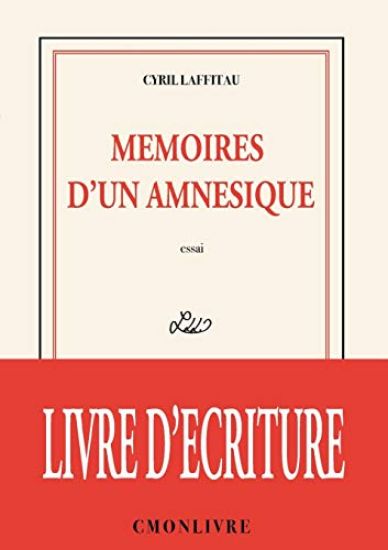
La collection de livres "LLL," (les livres Laffitau) est une serie de livres d'ecriture a couverture humoristique.
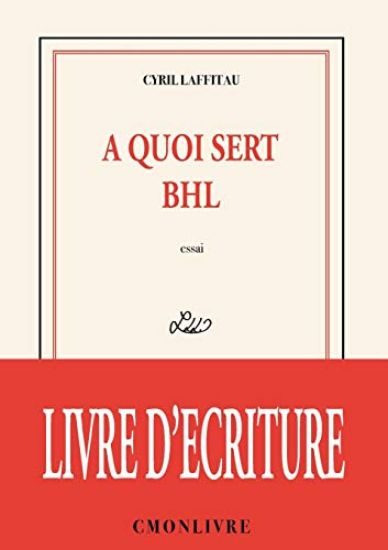
La collection de livres "LLL," (les livres Laffitau) est une serie de livres d'ecriture a couverture humoristique.

A History of the Social Sciences in 101 Books
Cyril Lemieux; Laurent Berger
MIT PRESS LTD
2023
sidottu