
Kirjahaku
Etsi kirjoja tekijän nimen, kirjan nimen tai ISBN:n perusteella.
1000 tulosta hakusanalla Cyrus F. Rea
The Education of Cyrus
Cornell University Press
2001
sidottu
Xenophon's masterpiece The Education of Cyrus—a work admired by Machiavelli for its lessons on leadership—is at last available in a new English translation for a new century. Also known as the Cyropaedia, this philosophical novel is loosely based on the accomplishments of Cyrus the Great, founder of the vast Persian Empire that later became the archrival of the Greeks in the classical age. It offers an extraordinary portrait of political ambition, talent, and their ultimate limits.The writings of Xenophon are increasingly recognized as important works of political philosophy. In The Education of Cyrus, Xenophon confronts the vexing problem of political instability by exploring the character and behavior of the ruler. Impressive though his successes are, however, Cyrus is also examined in the larger human context, in which love, honor, greed, revenge, folly, piety, and the search for wisdom all have important parts to play. Wayne Ambler's prose captures the charm and drama of the work while also achieving great accuracy. His introduction, annotations, and glossary help the reader to appreciate both the engaging story itself and the volume's contributions to philosophy.
The Anabasis of Cyrus
Cornell University Press
2008
sidottu
One of the foundational works of military history and political philosophy, and an inspiration for Alexander the Great, The Anabasis of Cyrus recounts the epic story of the Ten Thousand, a band of Greek mercenaries hired by Cyrus the Younger to overthrow his brother, Artaxerxes, king of Persia and the most powerful man on earth. It shows how Cyrus' army was assembled covertly and led from the coast of Asia Minor all the way to Babylon; how the Greeks held the field against a superior Persian force; how Cyrus was killed, leaving the Greeks stranded deep within enemy territory; and how many of them overcame countless dangers and found their way back to Greece. Their remarkable success was due especially to the wily and decisive leadership of Xenophon himself, a student of Socrates who had joined the Ten Thousand and, after most of the Greek generals had been murdered, rallied the despondent Greeks, won a position of leadership, and guided them wisely through myriad obstacles.In this new translation of the Anabasis of Cyrus, Wayne Ambler achieves a masterful combination of liveliness and a fidelity to the original uncommon in other versions. Accompanying Ambler's translation is a penetrating interpretive essay by Eric Buzzetti, one that shows Xenophon to be an author who wove a philosophic narrative into his dramatic tale. The translation and interpretive essay encourage renewed study of the Anabasis of Cyrus as a work of political philosophy. They also celebrate its high adventure and its hero's adroit decision-making under the most pressing circumstances.
"The Education of Cyrus is a major work of classical political philosophy that provides a portrait of extraordinary political ambition.... Ambler's precise translation makes it possible to engage in a close textual reading that establishes Xenophon as an important political thinker."-Translation Review Xenophon's masterpiece, The Education of Cyrus, is a work that was admired by Machiavelli for its lessons on leadership. Also known as the Cyropaedia, this philosophical novel is loosely based on the accomplishments of Cyrus the Great, founder of the vast Persian Empire that later became the archrival of the Greeks in the classical age. It offers an extraordinary portrait of political ambition, talent, and their ultimate limits. The writings of Xenophon are increasingly recognized as important works of political philosophy. In The Education of Cyrus, Xenophon confronts the vexing problem of political instability by exploring the character and behavior of the ruler. Impressive though his successes are, however, Cyrus is also examined in the larger human context, in which love, honor, greed, revenge, folly, piety, and the search for wisdom all have important parts to play. Wayne Ambler's translation captures the charm and drama of the work while also achieving great accuracy. His introduction, annotations, and glossary help the reader to appreciate both the engaging story itself and the volume's contributions to philosophy.
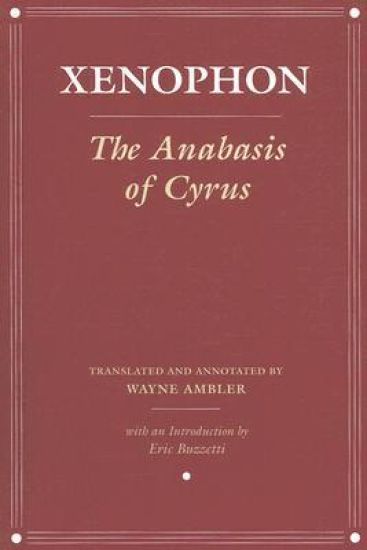
An excellent book for anyone interested in Ancient Greek warfare, or just a rattling good tale.- The NYMAS Review One of the foundational works of military history and political philosophy, and an inspiration for Alexander the Great, the Anabasis of Cyrus recounts the epic story of the Ten Thousand, a band of Greek mercenaries hired by Cyrus the Younger to overthrow his brother, Artaxerxes, king of Persia and the most powerful man on earth. It shows how Cyrus' army was assembled covertly and led from the coast of Asia Minor all the way to Babylon; how the Greeks held the field against a superior Persian force; how Cyrus was killed, leaving the Greeks stranded deep within enemy territory; and how many of them overcame countless dangers and found their way back to Greece. Their remarkable success was due especially to the wily and decisive leadership of Xenophon himself, a student of Socrates who had joined the Ten Thousand and, after most of the Greek generals had been murdered, rallied the despondent Greeks, won a position of leadership, and guided them wisely through myriad obstacles. In this new translation of the Anabasis, Wayne Ambler achieves a masterful combination of liveliness and a fidelity to the original uncommon in other versions. Accompanying Ambler's translation is a penetrating interpretive essay by Eric Buzzetti, one that shows Xenophon to be an author who wove a philosophic narrative into his dramatic tale. The translation and interpretive essay encourage renewed study of the Anabasis as a work of political philosophy. They also celebrate its high adventure and its hero's adroit decision-making under the most pressing circumstances.
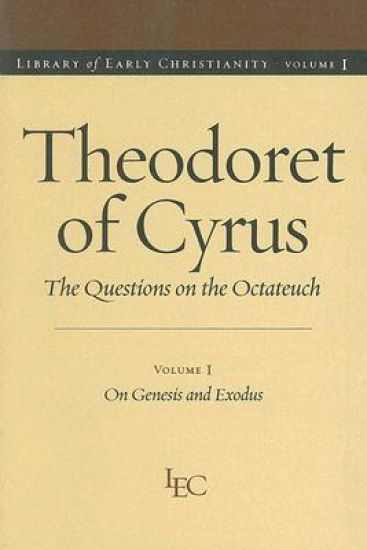
Theodoret of Cyrus v. 1; On Genesis and Exodus
Theodoret of Cyrus
The Catholic University of America Press
2008
nidottu
The Library of Early Christianity will be a permanent enterprise that publishes one new volume approximately every other year. The Library will publish texts in the original ancient languages of both East and West - Greek, Latin, Arabic, Syriac, Coptic, Ethiopic, Armenian, and Georgian - accompanied by contemporary English translations printed on the facing pages. In order to make the texts more accessible to the nonspecialist and to aid readers in comprehending the thought of the influential thinkers of the early church, each volume will include an introduction, notes, and a bibliography. Shortly before his death (ca. 460), as his health was failing, Theodoret decided to undertake a monumental project of exegesis. In the more than two decades of his episcopacy, he had commented on both the prophets and the sapiential literature of the ""Hebrew Scriptures"". Now he would expound the historical books. For his commentary on the Octateuch, he adopted the format of question and answer. This device allowed the expositor to focus attention on particularly challenging passages that could give rise to misunderstanding. Long experience had taught him that ""careless reading of holy Scripture is the cause of error among ordinary people."" Intimately acquainted with every detail of the text, well-informed about contemporary Judaism, and steeped in the works of previous interpreters, he makes his way through a massive body of text with concision, a sure sense for the significant and the controversial, and a thoughtful moderation respectful of the accomplishments of Alexandrian, as well as Antiochene, biblical scholarship.
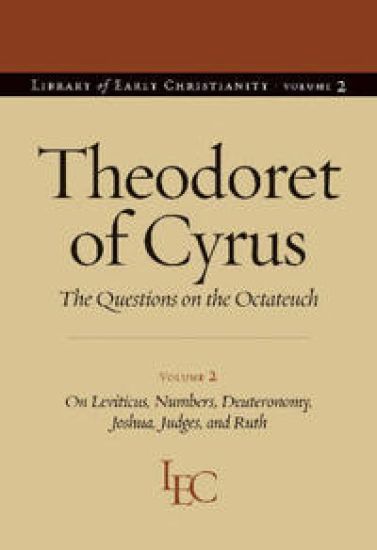
Theodoret of Cyrus v. 2; On Leviticus, Numbers, Deuteronomy, Joshua, Judges, and Ruth
Theodoret of Cyrus
The Catholic University of America Press
2008
nidottu
The Library of Early Christianity will be a permanent enterprise that publishes one new volume approximately every other year. The Library will publish texts in the original ancient languages of both East and West - Greek, Latin, Arabic, Syriac, Coptic, Ethiopic, Armenian, and Georgian - accompanied by contemporary English translations printed on the facing pages. In order to make the texts more accessible to the nonspecialist and to aid readers in comprehending the thought of the influential thinkers of the early church, each volume will include an introduction, notes, and a bibliography. Shortly before his death (ca. 460), as his health was failing, Theodoret decided to undertake a monumental project of exegesis. In the more than two decades of his episcopacy, he had commented on both the prophets and the sapiential literature of the ""Hebrew Scriptures"". Now he would expound the historical books. For his commentary on the Octateuch, he adopted the format of question and answer. This device allowed the expositor to focus attention on particularly challenging passages that could give rise to misunderstanding. Long experience had taught him that ""careless reading of holy Scripture is the cause of error among ordinary people."" Intimately acquainted with every detail of the text, well-informed about contemporary Judaism, and steeped in the works of previous interpreters, he makes his way through a massive body of text with concision, a sure sense for the significant and the controversial, and a thoughtful moderation respectful of the accomplishments of Alexandrian, as well as Antiochene, biblical scholarship.
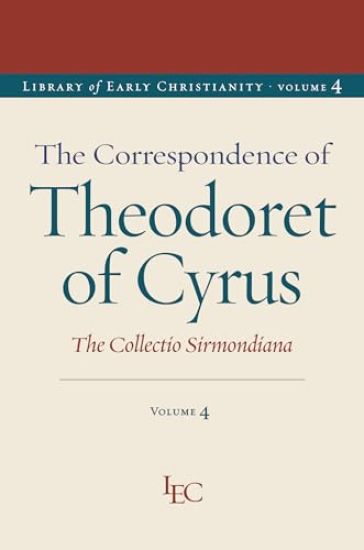
The Correspondence of Theodoret of Cyrus (Volume 4)
Theodoret of Cyrus
THE CATHOLIC UNIVERSITY OF AMERICA PRESS
2025
nidottu
Volumes 4 and 5 of the Library of Early Christianity, The Correspondence of Theodoret of Cyrus: The Collectio Sirmondiana, present a text and translation of the largest of three collections of Theodoret's letters that have come down to us (first edited by the Jesuit father Jacques Sirmond, Paris 1642). Though pastor of the remote see of Cyrus in Syria, Theodoret was one of the major teachers of the eastern Christian church of the late fourth and early fifth century.These 147 letters place before us the myriad concerns, both spiritual and secular, of a late-antique bishop: Theodoret expounds theological and moral issues for fellow churchmen, begs imperial officials for tax relief for local landowners, provides for the sustenance and safety of refugees from the Vandal war in Africa, thanks a friend for a gift of wine. The edition of the Greek text is the work of John Petruccione. A textual introduction explains the relationships among the manuscripts, and the critical notes the choices made where the text is uncertain. The historical / theological introduction is the work of István Pásztori-Kupán, one of the foremost expositors of the thought of Theodoret and of his Antiochene predecessors and contemporaries. Two maps locate for the reader the place names mentioned in the letters, and three indices (a Scriptural Index, General Index, and Index of Modern Authors) complement the notes attached to the text and translation.
The Correspondence of Theodoret of Cyrus (Volume 5)
Theodoret of Cyrus
THE CATHOLIC UNIVERSITY OF AMERICA PRESS
2025
nidottu
Volumes 4 and 5 of the Library of Early Christianity, The Correspondence of Theodoret of Cyrus: The Collectio Sirmondiana, present a text and translation of the largest of three collections of Theodoret's letters that have come down to us (first edited by the Jesuit father Jacques Sirmond, Paris 1642). Though pastor of the remote see of Cyrus in Syria, Theodoret was one of the major teachers of the eastern Christian church of the late fourth and early fifth century.These 147 letters place before us the myriad concerns, both spiritual and secular, of a late-antique bishop: Theodoret expounds theological and moral issues for fellow churchmen, begs imperial officials for tax relief for local landowners, provides for the sustenance and safety of refugees from the Vandal war in Africa, thanks a friend for a gift of wine. The edition of the Greek text is the work of John Petruccione. A textual introduction explains the relationships among the manuscripts, and the critical notes the choices made where the text is uncertain. The historical / theological introduction is the work of István Pásztori-Kupán, one of the foremost expositors of the thought of Theodoret and of his Antiochene predecessors and contemporaries. Two maps locate for the reader the place names mentioned in the letters, and three indices (a Scriptural Index, General Index, and Index of Modern Authors) complement the notes attached to the text and translation.
The Correspondence of Theodoret of Cyrus
Theodoret of Cyrus
THE CATHOLIC UNIVERSITY OF AMERICA PRESS
2025
sidottu
Volumes 4 and 5 of the Library of Early Christianity, The Correspondence of Theodoret of Cyrus: The Collectio Sirmondiana, present a text and translation of the largest of three collections of Theodoret's letters that have come down to us (first edited by the Jesuit father Jacques Sirmond, Paris 1642). Though pastor of the remote see of Cyrus in Syria, Theodoret was one of the major teachers of the eastern Christian church of the late fourth and early fifth century.These 147 letters place before us the myriad concerns, both spiritual and secular, of a late-antique bishop: Theodoret expounds theological and moral issues for fellow churchmen, begs imperial officials for tax relief for local landowners, provides for the sustenance and safety of refugees from the Vandal war in Africa, thanks a friend for a gift of wine. The edition of the Greek text is the work of John Petruccione. A textual introduction explains the relationships among the manuscripts, and the critical notes the choices made where the text is uncertain. The historical / theological introduction is the work of István Pásztori-Kupán, one of the foremost expositors of the thought of Theodoret and of his Antiochene predecessors and contemporaries. Two maps locate for the reader the place names mentioned in the letters, and three indices (a Scriptural Index, General Index, and Index of Modern Authors) complement the notes attached to the text and translation.
The Correspondence of Theodoret of Cyrus
Theodoret of Cyrus
THE CATHOLIC UNIVERSITY OF AMERICA PRESS
2025
sidottu
Volumes 4 and 5 of the Library of Early Christianity, The Correspondence of Theodoret of Cyrus: The Collectio Sirmondiana, present a text and translation of the largest of three collections of Theodoret's letters that have come down to us (first edited by the Jesuit father Jacques Sirmond, Paris 1642). Though pastor of the remote see of Cyrus in Syria, Theodoret was one of the major teachers of the eastern Christian church of the late fourth and early fifth century.These 147 letters place before us the myriad concerns, both spiritual and secular, of a late-antique bishop: Theodoret expounds theological and moral issues for fellow churchmen, begs imperial officials for tax relief for local landowners, provides for the sustenance and safety of refugees from the Vandal war in Africa, thanks a friend for a gift of wine. The edition of the Greek text is the work of John Petruccione. A textual introduction explains the relationships among the manuscripts, and the critical notes the choices made where the text is uncertain. The historical / theological introduction is the work of István Pásztori-Kupán, one of the foremost expositors of the thought of Theodoret and of his Antiochene predecessors and contemporaries. Two maps locate for the reader the place names mentioned in the letters, and three indices (a Scriptural Index, General Index, and Index of Modern Authors) complement the notes attached to the text and translation.
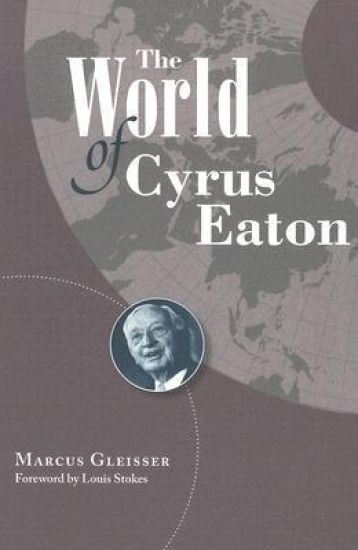
The World of Cyrus Eaton
Kent State University Press
2005
nidottu
Cyrus S. Eaton was born on December 27, 1883, in the quiet Nova Scotian village of Pugwash. He often visited Cleveland, Ohio, spending summer vacations from college with his uncle and was employed in 1905 by his first teacher, John D. Rockefeller Sr., as a clerk and troubleshooter for the East Ohio Gas company, one of the Midwest's major utilities in which Rockefeller had an interest. Eaton became a U.S. citizen in 1913 and passed away at age ninety-five on May 9, 1979. An unpredictable financier and industrialist, Cyrus Eaton invested widely, earned millions, lost it all during the Depression, and then regained his fortune after World War II. He earned a reputation as a ""steel-tough man of finance"" and was the target of abuse from those who claimed his manipulations had caused them financial damage. Marcus Gleisser's updated biography of Eaton brings into focus many events in the life of this controversial figure: his strong support of labor; his friendships with John L. Lewis, Fidel Castro, Nikita Khrushchev, and other leaders of the former USSR; and his interest and participation in the American political arena, especially his campaign for peace that culminated in the Nobel Prize-winning Pugwash Conference. The World of Cyrus Eaton addresses the man and the part he played in some of the controversial events and issues of the twentieth century. It includes a new Foreword, Preface, and final chapter.

How do you want the galaxy to remember you? Cyrus left his home and his son to protect them. The rest of his family is gone, his world destroyed. His people are decimated, scattered and hunted.And he's changing, in ways that he can't control. He needs to piece together his past to preserve the future and find out who he really is, before his second life runs out.
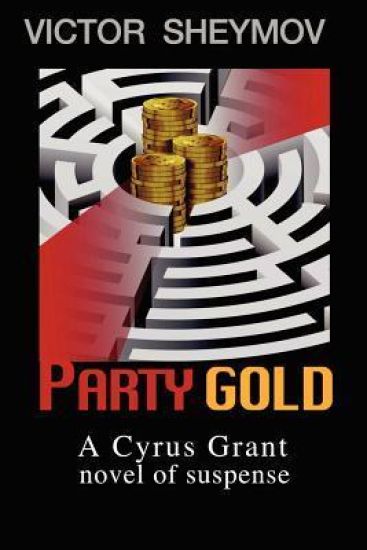

When test subjects participating in secret experiments begin to mysteriously die, Cyrus Cooper, the youngest recruit of the 'Coalition'-a secret law enforcement organization-is assigned to prevent the program's lead researcher from being the next victim. But there's a catch: The seventy-four-year-old neuroscientist, Gertrude Waterford, has flatly refused any type of protective detail. Cyrus goes undercover, taking a position as a personal assistant in order to enter the life of the brash, elderly scientist. When multiple attempts are made on her life, however, not only must Cyrus protect the headstrong lady, but he must also uncover the perpetrator of the attacks before it's too late.His job might've been easier if he'd been fully briefed on the nature of Waterford's research. After working for decades to genetically trigger different paranormal gifts in her patients, she's made some unusually powerful and extremely dangerous enemies.Cyrus Cooper's efforts take him from high-rise apartments to secret underground research facilities, with stops at forgotten rendition sites and forsaken mental institutions along the way. And as the threats grow in force and number, Cyrus faces a race against time, and a war where all the players on the battlefield are anything but trustworthy.

"Regret is what stands in the way of happiness," she said then turned and walked away... From award-winning USA TODAY Bestselling Author BETTE LEE CROSBY, comes an early twentieth century family saga of two Southern men who come up against one another. Both are prideful, iron-willed and stubborn. One will lose his farm, the other will lose his family. In a tale that delves into the heart of a small town West Virginia community two men discover that being right is not the same as being happy. Believing he has lost everything, Cyrus Dodd has no choice but to start over. He and wife Ruth leave their farm and travel to Wyattsville. As they settle down to a life far different than what he'd planned, Cyrus is forced to deal with one challenge after another, and the regrets trail behind him like a row of ducklings. He told Ruth they were leaving trouble behind and swore this time it would be better; but now he's wondering if that's a promise he can keep. Readers View says, "An engrossing story of ordinary people...a tale richly told." Indie Book Awards, Historical Fiction Finalist, FAPA President's Book Award Medalist
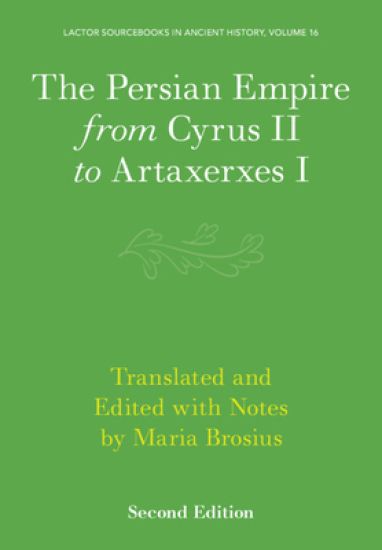
The Persian Empire from Cyrus II to Artaxerxes I
Cambridge University Press
2023
pokkari
This volume in the LACTOR Sourcebooks in Ancient History series offers a generous selection of texts on the Persian Empire from Cyrus II to Artaxerxes I (c.600-424 BC), with accompanying map, illustrations, glossary and introductory notes giving crucial background information. It provides for the needs of students at schools and universities who are studying ancient history in English translation and has been written and reviewed by experienced teachers. The texts selected include extracts from the important literary sources but also numerous inscriptions, many of these otherwise being difficult for students to access.
"Cyropaedia" by Xenophon offers a fascinating glimpse into ancient political philosophy and the art of leadership. This work of historical fiction explores the education and character of Cyrus the Great, founder of the Persian Empire. While presented as a biographical narrative, "Cyropaedia" delves into timeless questions of governance, ethics, and the qualities of an ideal ruler. Xenophon's exploration of Cyrus provides insights into strategies for building and maintaining power, managing relationships, and inspiring loyalty. Readers interested in ancient history and the dynamics of political leadership will find this work both engaging and thought-provoking. "Cyropaedia" remains a valuable resource for understanding historical perspectives on political science and the enduring challenges of leadership.This work has been selected by scholars as being culturally important, and is part of the knowledge base of civilization as we know it.This work is in the public domain in the United States of America, and possibly other nations. Within the United States, you may freely copy and distribute this work, as no entity (individual or corporate) has a copyright on the body of the work.Scholars believe, and we concur, that this work is important enough to be preserved, reproduced, and made generally available to the public. We appreciate your support of the preservation process, and thank you for being an important part of keeping this knowledge alive and relevant.
"Cyropaedia" by Xenophon offers a fascinating glimpse into ancient political philosophy and the art of leadership. This work of historical fiction explores the education and character of Cyrus the Great, founder of the Persian Empire. While presented as a biographical narrative, "Cyropaedia" delves into timeless questions of governance, ethics, and the qualities of an ideal ruler. Xenophon's exploration of Cyrus provides insights into strategies for building and maintaining power, managing relationships, and inspiring loyalty. Readers interested in ancient history and the dynamics of political leadership will find this work both engaging and thought-provoking. "Cyropaedia" remains a valuable resource for understanding historical perspectives on political science and the enduring challenges of leadership.This work has been selected by scholars as being culturally important, and is part of the knowledge base of civilization as we know it.This work is in the public domain in the United States of America, and possibly other nations. Within the United States, you may freely copy and distribute this work, as no entity (individual or corporate) has a copyright on the body of the work.Scholars believe, and we concur, that this work is important enough to be preserved, reproduced, and made generally available to the public. We appreciate your support of the preservation process, and thank you for being an important part of keeping this knowledge alive and relevant.
Les voyages de Cyrus, avec un discours sur la mythologie. Par M. Ramsay. ... of 2
Chevalier Ramsay
Hutson Street Press
2025
sidottu