Kirjojen hintavertailu. Mukana 11 342 296 kirjaa ja 12 kauppaa.

Kirjahaku

Etsi kirjoja tekijän nimen, kirjan nimen tai ISBN:n perusteella.

1000 tulosta hakusanalla D Castleton

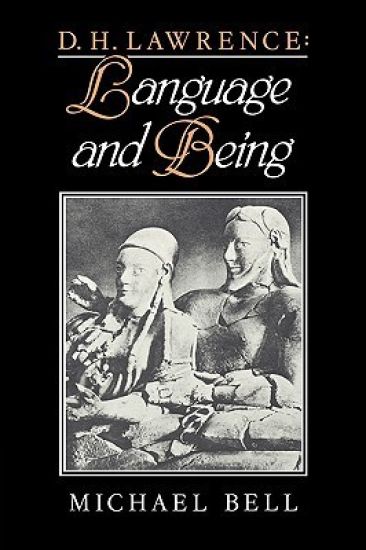
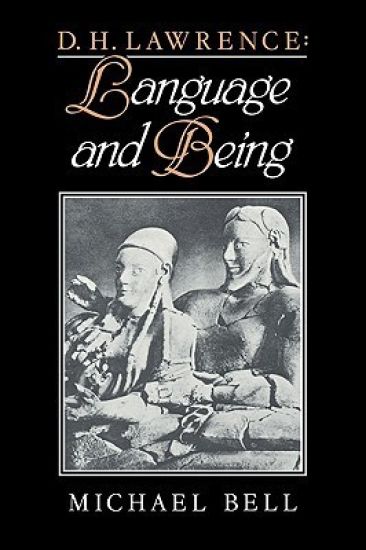
D. H. Lawrence: Language and Being

D. H. Lawrence: Language and Being

Michael Bell

Cambridge University Press
2008
pokkari
D. H. Lawrence once wrote that 'we have no language for the feelings'. The remark testifies to the struggle in his novels to express his sophisticated understanding of the nature of being through the intransigent medium of language. Michael Bell argues that Lawrence's unfashionable status stems from a failure to perceive within his informal expression the nature and complexity of his ontological vision. He traces the evolution of the struggle for its articulation through the novels, and looks at the way in which Lawrence himself made it a conscious theme in his writing. Embracing in this argument Lawrence's failures as a writer, his rhetorical stridency and also his primitivist extremism, Michael Bell creates a powerful and fresh sense of his true importance as a novelist.
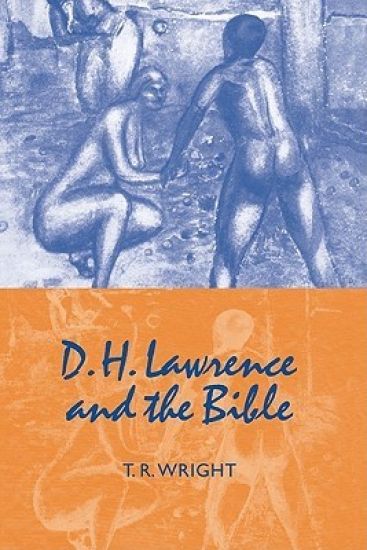
D. H. Lawrence and the Bible

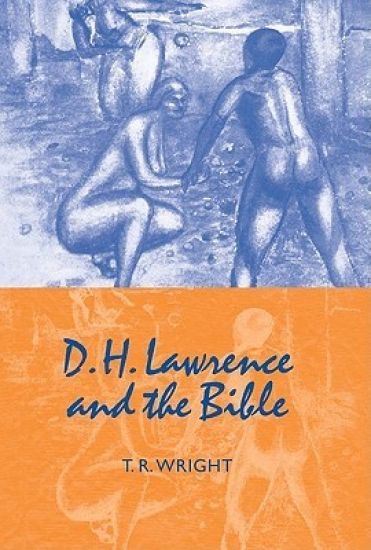
D. H. Lawrence and the Bible

T. R. Wright

Cambridge University Press
2009
pokkari
The Bible, as this book demonstrates, plays a key role in nearly all D. H. Lawrence's work. It supplies not only the inspiration but on occasion the target for his parody. In D. H. Lawrence and The Bible, Terry Wright establishes that Lawrence was familiar with the modernist critique of the Bible by higher critics and by anthropologists of religion. He also argues, however, that Lawrence's playful reworking of the Bible, like that of Nietzsche, anticipates postmodernism. After considering the extraordinary range of Lawrence's reading and the inter texts between the Bible and Lawrence's own writing, Wright engages in a theoretically informed but clear exploration of the textual dynamics of his writing. Lawrence's writing is seen to reveal a prolonged struggle to read the Bible in a much broader spirit than that encouraged by orthodox Christianity. Wright's study sheds light not only on his work but on the Bible on the creative process itself.
D. H. Lawrence's Non-Fiction

D. H. Lawrence's Non-Fiction

David Ellis; Mills Howard

Cambridge University Press
2009
pokkari
This is the first book devoted entirely to Lawrence's nonfictional writings. It focuses on a selection of representative texts, each of which is placed in an appropriate literary or historical context. These include the 'Study of Thomas Hardy', the two books about the Unconscious, the travel-writing - primarily Twilight in Italy and Sea and Sardinia - the largely autobiographical 'Introduction to Memoirs of the Foreign Legion by M. M' and the late 'thoughts in verse' called Pansies. David Ellis and Howard Mills challenge the automatic relegation to secondary status suffered by these works in the past and suggest a radical reassessment of Lawrence's literary profile of how his writings relate to one another and of where his greatest power and originality lie.
D. J. Enright

D. J. Enright

William Walsh

Cambridge University Press
2010
pokkari
Originally published in 1974, this was the first study by a well-known critic, of the poetry and prose of D. J. Enright, a poet whose work is informed by a deep and attractive humanism. His poetry traces the contours of everyday speech, and has a strongly autobiographical character. It is engagingly spry and amusing but also serious and moving. It expresses the sensibility of a man who has spent much of his career abroad, and this international experience seems to have peculiar relevance to modern life. In addition, the book demonstrates that Enright is one of the most remarkable of recent critics in range, perception and wit.
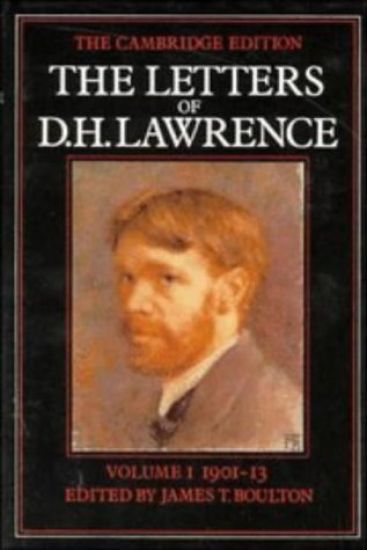
The Letters of D. H. Lawrence: Volume 1, September 1901–May 1913
Volume I of the Letters, edited by James T. Boulton, gives the first 580 letters in the series, covering the period September 1901 to May 1913. This is the time of Lawrence's youth in Eastwood, his first year out of England - in Italy with Frieda - to the publication of Sons and Lovers. There are letters to his early loves, Jessie Chambers, Louie Burrows and Helen Corke. He writes The White Peacock, The Trespasser, Sons and Lovers, the early stories and poems. He is welcomed into the literary world by editors such as Ford and Garnett; he meets Pound and other writers; he reads widely. His mother dies; he grows away from the younger women; he meets Frieda and elopes with her. Professor Boulton's discreet annotation conceals an enormous labour of patient detection. There are over thirty photographs of his friends and correspondents and a newly discovered portrait miniature of Lawrence.
The Letters of D. H. Lawrence: Volume 5, March 1924–March 1927
This volume, covering three years from March 1924 to March 1927, comprises over 890 letters, of which about 350 are previously unpublished. In 1924 Lawrence is again in the USA. He and Frieda, with his disciple the Honourable Dorothy Brett, return to Taos, New Mexico where Frieda soon becomes the owner of a ranch, Kiowa. The tensions among them contribute to Lawrence's falling dangerously ill. He recovers at Kiowa; he and Frieda go to England and Germany in Autumn 1925; they then settle in Italy, where - except for his final visit the next summer to the Midlands - they remain. After leaving the USA he writes short and long stories with European settings, book reviews, and the first two versions of Lady Chatterley's Lover. It is a productive period, but Lawrence's health becomes a serious concern. The volume provides annotation identifying persons and allusions, and includes a biographical introduction.
The Letters of D. H. Lawrence: Volume 8, Previously Unpublished Letters and General Index
This final volume of The Letters of D. H. Lawrence has a threefold purpose. The first is to publish 148 letters to or from Lawrence, and two from Frieda Lawrence, which came to light too late to be entered in their correct chronological positions in earlier volumes. The second is to correct errors in the first seven volumes and offer additional annotation which clarifies some obscurities as well as enhancing our response to the letters. And the third is to provide a comprehensive critical index to the entire edition. The index includes not only specific persons and places but also general topics from Animals and Architecture to War and Youth, via such subjects as Insects, Literary Agents, Religion and Sexuality. The Cambridge Edition of Lawrence’s letters has been described by one reviewer as creating itself ‘a major new literary work’. This volume brings that work to a fitting conclusion.
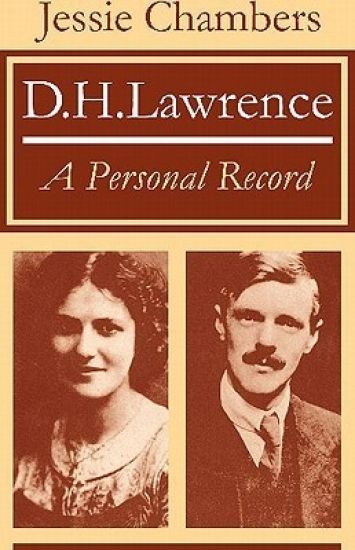
D. H. Lawrence

D. H. Lawrence

Jessie Chambers

Cambridge University Press
1980
pokkari
This is the classic account of D. H. Lawrence's childhood and youth, written by Jessie Chambers, the girl who was the model for Miriam Leivers in Sons and Lovers. It was written and published after Lawrence's death, partly in reaction to Middleton Murry's Son of Woman. Jessie Chambers wanted to present her direct and very clear understanding of Lawrence's nature, both against Murry's second-hand psychologising and against Lawrence's own account in Sons and Lovers. Chambers effectively launched Lawrence's literary career by sending his work to the English Review. Though her rejection and what she saw as his misrepresentation of her in Sons and Lovers wounded her deeply, she was large-minded enough to write this profoundly understanding account. She had written a novel under the pseudonym Eunice Temple. The name was reduced to its initials for this book, which shows a clear firm mind and a natural gift for writing.
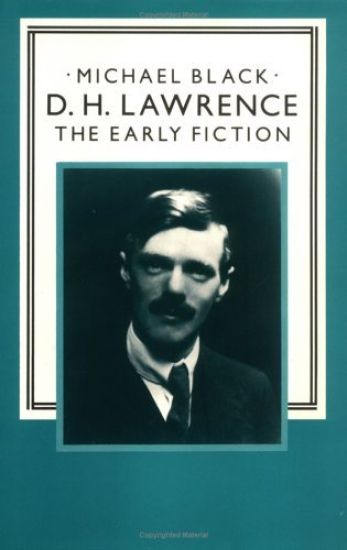
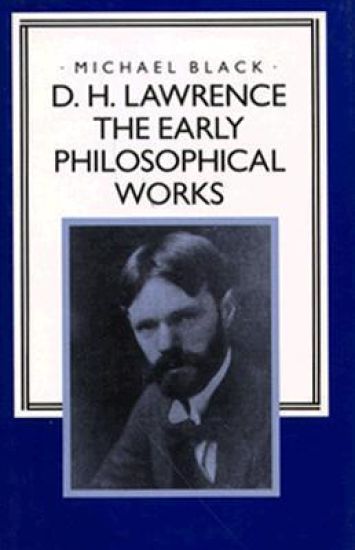
D.H. Lawrence

D.H. Lawrence

Michael Black

Cambridge University Press
1986
sidottu
The recent publication of Lawrence's early letters, and corrected texts of his fiction have prompted a new assessment of him. This systematic study accordingly concentrates on the neglected early novels and short stories and reveals a new relationship between his art and thought.
D.H. Lawrence's Non-Fiction Art, Thought, and Genre

D.H. Lawrence's Non-Fiction Art, Thought, and Genre

David Ellis; Howard Mills

Cambridge University Press
1988
sidottu
This is the first book devoted entirely to Lawrence's nonfictional writings. It focuses on a selection of representative texts, each of which is placed in an appropriate literary or historical context. These include the 'Study of Thomas Hardy', the two books about the Unconscious, the travel-writing - primarily Twilight in Italy and Sea and Sardinia - the largely autobiographical 'Introduction to Memoirs of the Foreign Legion by M. M' and the late 'thoughts in verse' called Pansies. David Ellis and Howard Mills challenge the automatic relegation to secondary status suffered by these works in the past and suggest a radical reassessment of Lawrence's literary profile of how his writings relate to one another and of where his greatest power and originality lie.
D. H. Lawrence: Language and Being

D. H. Lawrence: Language and Being

Michael Bell

Cambridge University Press
1992
sidottu
D. H. Lawrence once wrote that ‘we have no language for the feelings’. The remark testifies to the struggle in his novels to express his sophisticated understanding of the nature of being through the intransigent medium of language. Michael Bell argues that Lawrence’s currently unfashionable status stems from a failure to perceive within his informal expression the nature and complexity of his ontological vision. He traces the evolution of the struggle for its articulation through the novels, and looks at the way in which Lawrence himself made it a conscious theme in his writing. Embracing in this argument Lawrence’s failures as a writer, his rhetorical stridency and also his primitivist extremism, Michael Bell creates a powerful and fresh sense of his true importance as a novelist.
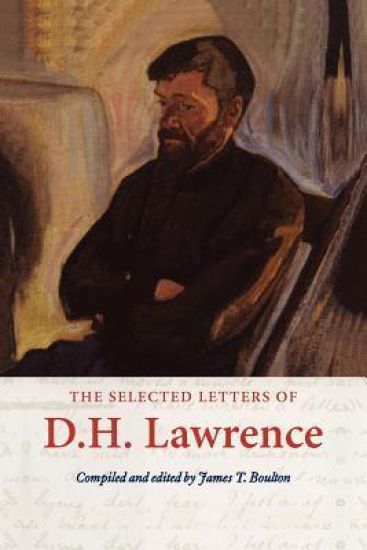
The Selected Letters of D. H. Lawrence

The Selected Letters of D. H. Lawrence

D. H. Lawrence

Cambridge University Press
1997
sidottu
An authoritative selection of letters by one of the great English letter-writers is here published for the first time in paperback. ‘James T. Boulton, the chief editor of [the] definitive collection [of Lawrence’s letters] has now condensed from it an admirable 500-pages worth of The Selected Letters of D. H. Lawrence. Section by section introductions, summary biographies of correspondents, and illuminating explanatory footnotes equip the reader to follow the contours of Lawrence’s adult life as he progresses from teacher in Croydon to suspected German spy in Cornwall during the Great War, to wanderer in self-imposed exile in Australia, the US and Mexico, and finally consumptive, dying in Provence.’ Jonathan Bate, Sunday Telegraph ‘Five thousand letters cram the eight-volume Cambridge edition of Lawrence’s correspondence. So this selection, representing the full range of Lawrence’s influential acquaintance, is welcome. Angry, combative, scurrilous, the letters are also sometimes uniquely lyrical.’ Independent on Sunday
D.H. Lawrence

D.H. Lawrence

Michael Black

Cambridge University Press
1992
sidottu
This second volume of Michael Black’s commentary on Lawrence’s prose works concentrates on the extraordinary sequence of nonfiction texts written between 1913 and 1917: The ‘Foreword’ to Sons and Lovers, Study of Thomas Hardy, Twilight in Italy, ‘The Crown’ and ‘The Reality of Peace’. In all of them Lawrence was compulsively rewriting what he called ‘my philosophy’. They are difficult works: highly metaphorical, in places prophetically expressionist, even surreal. This extended commentary makes sense of them, treating them as a succession of experimental writings that support each other, develop non-discursive modes of writing, and are linked by shared metaphors that reveal shared preoccupations. Black’s highly useful analysis is like the close reading of poetry.
D. H. Lawrence: The Early Years 1885–1912

D. H. Lawrence: The Early Years 1885–1912

Worthen John

Cambridge University Press
1992
pokkari
The first volume of the three-volume Cambridge Biography of D. H. Lawrence draws on a wide range of documentary and oral sources, many of them hitherto unpublished, to reveal a complex portrait of an extraordinary man. It describes his upbringing in a small colliery town in Nottinghamshire, his years spent as a teacher and his disastrous sexual experiments with Jessie Chambers, Helen Corke and Alice Dax; provides a radical new account of his early relationship with Frieda Weekley, Lawrence’s ‘woman of a life-time’; and ends with the completion of his great autobiographical novel Sons and Lovers. This volume has already established itself as the most complete and authoritative account available.
D. H. Lawrence: Late Essays and Articles

D. H. Lawrence: Late Essays and Articles

D. H. Lawrence

Cambridge University Press
2004
sidottu
In his last years D. H. Lawrence often wrote for newspapers; he needed the money, and clearly enjoyed the work. He also wrote several substantial essays during the same period. This meticulously-edited collection brings together major essays such as Pornography and Obscenity and Lawrence's spirited Introduction to the volume of his Paintings; a group of autobiographical pieces, two of which are published here for the first time; and the articles Lawrence wrote at the invitation of newspaper and magazine editors. There are thirty-nine items in total, thirty-five of them deriving from original manuscripts; all were written between 1926 and Lawrence's death in March 1930. They are ordered chronologically according to the date of composition; each is preceded by an account of the circumstances in which it came to be published. The volume is introduced by a substantial survey of Lawrence's career as a writer responding directly to public interests and concerns.
D. H. Lawrence and the Bible

D. H. Lawrence and the Bible

T. R. Wright

Cambridge University Press
2000
sidottu
The Bible, as this book demonstrates, plays a key role in nearly all D. H. Lawrence's work. It supplies not only the inspiration but on occasion the target for his parody. In D. H. Lawrence and The Bible, Terry Wright establishes that Lawrence was familiar with the modernist critique of the Bible by higher critics and by anthropologists of religion. He also argues, however, that Lawrence's playful reworking of the Bible, like that of Nietzsche, anticipates postmodernism. After considering the extraordinary range of Lawrence's reading and the inter texts between the Bible and Lawrence's own writing, Wright engages in a theoretically informed but clear exploration of the textual dynamics of his writing. Lawrence's writing is seen to reveal a prolonged struggle to read the Bible in a much broader spirit than that encouraged by orthodox Christianity. Wright's study sheds light not only on his work but on the Bible on the creative process itself.