Kirjojen hintavertailu. Mukana 11 342 296 kirjaa ja 12 kauppaa.

Kirjahaku

Etsi kirjoja tekijän nimen, kirjan nimen tai ISBN:n perusteella.

1000 tulosta hakusanalla DEVIN MADSON

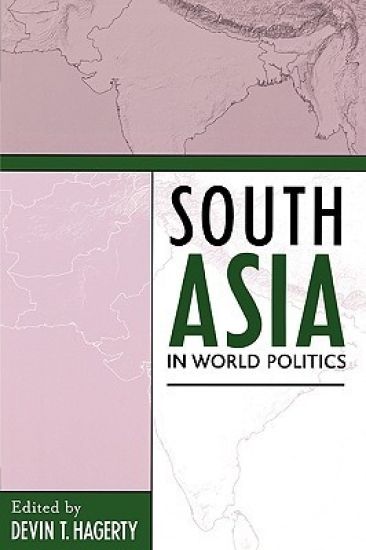
South Asia in World Politics

South Asia in World Politics

Devin T. Hagerty

Rowman Littlefield Publishers
2005
sidottu
South Asia in World Politics offers a comprehensive introduction to the politics and international relations of South Asia, a key area encompassing the states of Afghanistan, Bangladesh, Bhutan, India, the Maldives, Nepal, Pakistan, and Sri Lanka. While U.S. interest has long been sporadic and reactive, 9/11 alerted Washington that paying only fitful attention to one of the world's most volatile and populous regions was a recipe for everyday instability, repeated international crises, major and minor wars, and conditions so chronically unsettled that they continue to provide a fertile breeding ground for transnational Islamic terrorism. Exploring the many facets of this dynamic region, the book also assesses U.S. policy toward Afghanistan and explains the importance of Bangladesh and Pakistan, two of only a handful of Islamic states with significant track records as democracies.
South Asia in World Politics

South Asia in World Politics

Devin T. Hagerty

Rowman Littlefield Publishers
2005
nidottu
South Asia in World Politics offers a comprehensive introduction to the politics and international relations of South Asia, a key area encompassing the states of Afghanistan, Bangladesh, Bhutan, India, the Maldives, Nepal, Pakistan, and Sri Lanka. While U.S. interest has long been sporadic and reactive, 9/11 alerted Washington that paying only fitful attention to one of the world's most volatile and populous regions was a recipe for everyday instability, repeated international crises, major and minor wars, and conditions so chronically unsettled that they continue to provide a fertile breeding ground for transnational Islamic terrorism. Exploring the many facets of this dynamic region, the book also assesses U.S. policy toward Afghanistan and explains the importance of Bangladesh and Pakistan, two of only a handful of Islamic states with significant track records as democracies.
Rocks and Minerals Ultimate Handbook: The Need-To-Know Facts and STATS on More Than 200 Rocks and Minerals
Unearth the wonderful world of marvelous minerals, spectacular stones, and glistening gems in this complete guide to Earth's rocks and minerals.Introducing Rocks and Minerals Ultimate Handbook, the latest title in DK's Ultimate Handbook series which takes you on the journey to discover some of the world's most fascinating rocks, minerals and gemstones of the natural world. This geology book for kids includes must-know facts and stats about more than 200 rocks, minerals, and gems, teaching all about where these objects come from, what they are made of, their uses, and their unique characteristics. With stats about each featured rock or mineral, including its colors, crystal shapes, and the materials it's made of, this book is ideal for budding geologists This fascinating geology book for kids offers: - Thematic pages introducing different topics, including: the rock cycle, fossils, space rocks, birthstones, living gems, and more. - Bold photographs showing more than 200 rocks and minerals in great detail, including natural sites and buildings like Mount Rushmore, the Atacama Desert, and the Taj Mahal.-Each double page feature includes stat boxes, annotations, and mind-boggling facts to help children become true rockhounds. With this highly engaging geology book, children can identify different colors, crystal shapes and the materials different rocks are made of. The handbook style format allows children to be introduced to the topic of rocks and minerals in a way that is detailed, without being overwhelming or talking down to them. About the seriesDK's Ultimate Handbook series will spark curiosity and amaze children aged 6+ interested in the world around them. If you liked Rocks and Minerals Ultimate Handbook, then you'll love Animal Ultimate Handbook and learning about the Earth's wildlife, or Dinosaur Ultimate Handbook and exploring the prehistoric world.
Rethinking the Spectacle

Rethinking the Spectacle

Devin Penner

University of British Columbia Press
2019
sidottu
Spectacle is usually considered a superficial form of politics, which tries to distract and deceive a passive audience. It is difficult to see how this type of politics could be reconciled with the democratic requirement of active and informed agency. Rethinking the Spectacle re-examines the tension between spectacle and political agency in our hyper-mediated digital society. Devin Penner uses the theories and practices of Guy Debord and the Situationist International as a point of departure, offering both a critical review of Situationist ideas and a way to develop their radical democratic potential in the current political climate. Emphasizing the importance of thinking about the connection between spectacle and broader democratic processes, Rethinking the Spectacle also looks at various models of social and political organization and includes an in-depth assessment of the 2011 Occupy movement. Ultimately, Rethinking the Spectacle concludes that properly conceived spectacle can in fact mobilize the public for egalitarian purposes.
Rethinking the Spectacle

Rethinking the Spectacle

Devin Penner

University of British Columbia Press
2020
pokkari
Spectacle is usually considered a superficial form of politics, which tries to distract and deceive a passive audience. It is difficult to see how this type of politics could be reconciled with the democratic requirement of active and informed agency. Rethinking the Spectacle re-examines the tension between spectacle and political agency in our hyper-mediated digital society. Devin Penner uses the theories and practices of Guy Debord and the Situationist International as a point of departure, offering both a critical review of Situationist ideas and a way to develop their radical democratic potential in the current political climate. Emphasizing the importance of thinking about the connection between spectacle and broader democratic processes, Rethinking the Spectacle also looks at various models of social and political organization and includes an in-depth assessment of the 2011 Occupy movement. Ultimately, Rethinking the Spectacle concludes that properly conceived spectacle can in fact mobilize the public for egalitarian purposes.
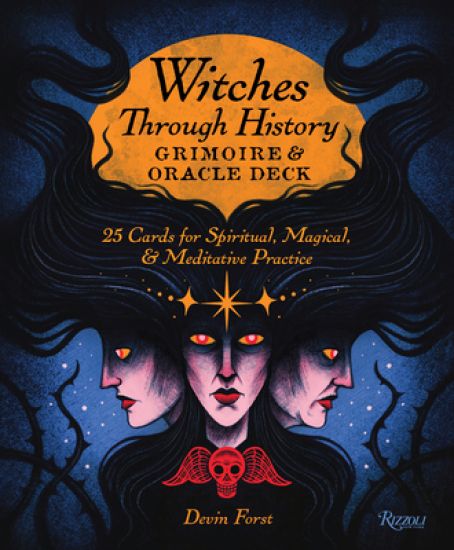
Witches Through History: Grimoire and Oracle Deck
This beautifully designed, boxed oracle is ideal for anyone seeking guidance and inspiration from some of history s most powerful witches and their craft. Written and illustrated by a practicing witch, this dramatic oracle set features a book and card deck inspired by the magical and mysterious tales of the witches, familiars, deities, and items within the pages of this striking guide. Witches through History includes archetypes, profiles, and true accounts of women who were thought to have spoken with spirits or made bargains with the Devil and how they used their midnight powers to help or harm members of their community the instruments and methods of the craft, the use of familiar spirits, and various methods of witch-finding and hunting. Popular tropes and folklore dealing with witches offer readers a deeper understanding of this mysterious, magical, and sometimes tragic part of history. The twenty-five oracle cards feature iconic characters, deities, and items from the history of witchcraft, complemented by the five elements of the pentagram (water, earth, fire, air, and spirit). Illustrated with a modern gothic sensibility inspired by historical art and text, the set offers witches and those who admire them a vital daily tool for spiritual, magical, or meditative practice or simply to use for fun.
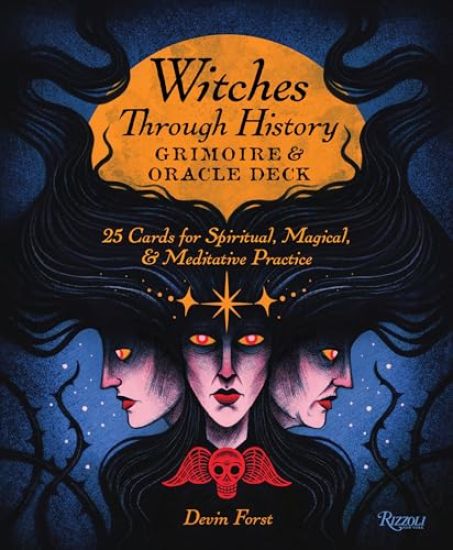
Witches Through History: Grimoire and Oracle Deck

Witches Through History: Grimoire and Oracle Deck

Devin Forst

RIZZOLI INTERNATIONAL PUBLICATIONS
2026
nidottu
Written and illustrated by a practicing witch, this dramatic oracle set features a beautifully illustrated book and card deck inspired by the magical and mysterious tales of the witches, familiars, deities, and items within the pages of this striking guide. Witches through History includes archetypes, profiles, and true accounts of women who were thought to have spoken with spirits or made bargains with the Devil and how they used their midnight powers to help or harm members of their community the instruments and methods of the craft, the use of familiar spirits, and various methods of witch-finding and hunting. Popular tropes and folklore dealing with witches offer readers a deeper understanding of this mysterious, magical, and sometimes tragic part of history. The twenty-five oracle cards feature iconic characters, deities, and items from the history of witchcraft, complemented by the five elements of the pentagram (water, earth, fire, air, and spirit). Illustrated with a modern gothic sensibility inspired by historical art and text, the set offers witches and those who admire them a vital daily tool for spiritual, magical, or meditative practice or simply to use for fun.
Seasons of the Witch 2026 Wall Calendar (Includes Stickers)
Written and illustrated by a practicing witch, Seasons of the Witch 2026 Wall Calendar features 12 vivid portrayals of powerful magical practices tuned to each of the four seasons—from divination and poisons to weather manipulation and counter-magic. It also includes magical-themed stickers to personalize your celebrations and monthly magical correspondences, such as zodiac, crystals, plants, colors, and special moons, sure to enrich your craft. Features informative captions alongside 12 spectacular images Features monthly magical correspondences Includes magical-themed stickers Generous grids for adding appointments and reminders Includes major official world holidays Opens to 12 x 24 inches
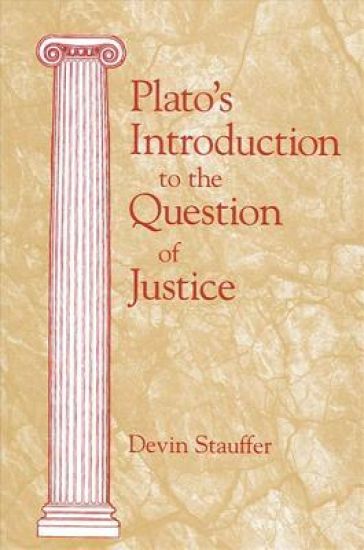
Plato's Introduction to the Question of Justice

Plato's Introduction to the Question of Justice

Devin Stauffer

State University of New York Press
2000
pokkari
An in-depth investigation of the views of justice present in the opening sections of Plato's Republic.Plato's Introduction to the Question of Justice uncovers the heart of the Platonic analysis of justice by focusing on the crucial opening sections of the Republic. Stauffer argues that the dialectical confrontations with ordinary opinion presented in these sections provide the basis for Plato's view of justice, and that they also help to show how Plato's thought remains relevant today, especially as a rival to Kantianism.
Jewish Salonica

Jewish Salonica

Devin E. Naar

Stanford University Press
2016
sidottu
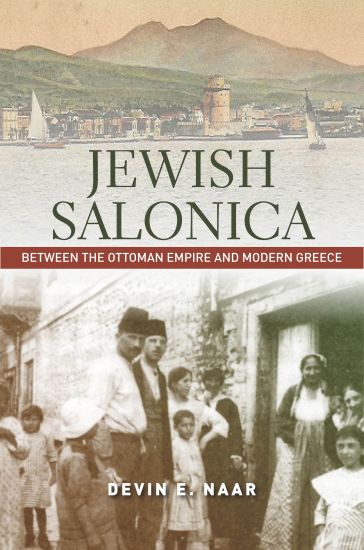
Touted as the "Jerusalem of the Balkans," the Mediterranean port city of Salonica (Thessaloniki) was once home to the largest Sephardic Jewish community in the world. The collapse of the Ottoman Empire and the city's incorporation into Greece in 1912 provoked a major upheaval that compelled Salonica's Jews to reimagine their community and status as citizens of a nation-state. Jewish Salonica is the first book to tell the story of this tumultuous transition through the voices and perspectives of Salonican Jews as they forged a new place for themselves in Greek society. Devin E. Naar traveled the globe, from New York to Salonica, Jerusalem, and Moscow, to excavate archives once confiscated by the Nazis. Written in Ladino, Greek, French, and Hebrew, these archives, combined with local newspapers, reveal how Salonica's Jews fashioned a new hybrid identity as Hellenic Jews during a period marked by rising nationalism and economic crisis as well as unprecedented Jewish cultural and political vibrancy. Salonica's Jews—Zionists, assimilationists, and socialists—reinvigorated their connection to the city and claimed it as their own until the Holocaust. Through the case of Salonica's Jews, Naar recovers the diverse experiences of a lost religious, linguistic, and national minority at the crossroads of Europe and the Middle East.
Tactical Fly Fishing

Tactical Fly Fishing

Devin Olsen

Stackpole Books
2019
sidottu
Devin Olsen explains how the techniques he has used to become a repeat medalist in fly fishing competitions around the world can be adapted to everyday fly fishing situations. He covers strategies, tactics, and flies for rivers, small streams, and still waters, allowing anyone to fish more successfully by applying the approaches taken by competitive anglers.
Stillwater Fly Fishing

Stillwater Fly Fishing

Devin Olsen

STACKPOLE BOOKS
2024
sidottu
Stillwaters not only provide fishing opportunities for some of the largest trout in the United States, but they often provide the only dependable fishing (save some tailwaters in Colorado and New Mexico) in the early season (from ice-out to after runoff) for anglers in New Mexico, Nevada, Utah, Colorado, Wyoming, Montana, California, Oregon, and Washington. Many anglers prefer to continue to fish lakes after the rivers drop to experience epic hatches of midges, Callibaetis mayflies, and damselflies, which all provide exceptional fly fishing for large trout. This is the definitive guide to fly fishing lakes and reservoirs fishing (written by the author of the best-selling book, Tactical Fly Fishing) and the only book on the market that covers competition and loch-style techniques used around the world.
The Color of Equality

The Color of Equality

Devin J. Vartija

University of Pennsylvania Press
2021
sidottu
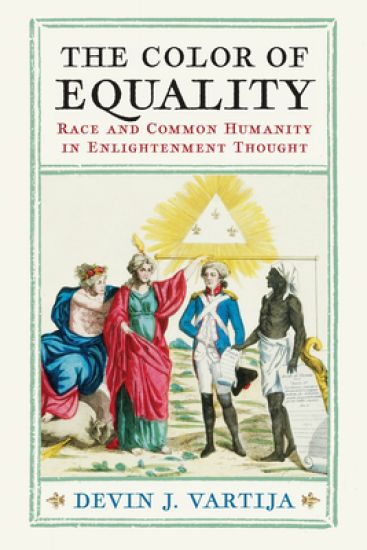
The Enlightenment is often either praised as the wellspring of modern egalitarianism or condemned as the cradle of scientific racism. How should we make sense of this paradox? The Color of Equality is the first book to investigate both the inclusive language of common humanity and the hierarchical language of race in Enlightenment thought, seeking to understand how eighteenth-century thinkers themselves made sense of these tensions. Using three major Enlightenment encyclopedias from England, France, and Switzerland, the book provides a rich contextualization of the conflicting ideas of equality and race in eighteenth-century thought. Enlightenment thinkers used physical features to categorize humanity into novel "racial" groups in a discourse that was imbued with Eurocentric aesthetic and moral judgments. Simultaneously, however, these very same thinkers politicized equality by putting it to new uses, such as a vitriolic denunciation of slavery and inhumane treatment that was grounded in the nascent philosophy of human rights. Vartija contends that the tension between Enlightenment ideas of race and equality can best be explained by these thinkers' attempt to provide a naturalistic account of humanity, including both our physical and moral attributes. Enlightenment racial classification fits into the novel inclusion of humanity in histories of nature, while the search for the origins of morality in social experience alone lent equality a normative authority it had not previously possessed. Eschewing straightforward approbation or blame of the Enlightenment, The Color of Equality demonstrates that our present-day thinking about human physical and cultural diversity continues to be deeply informed by an eighteenth-century European intellectual revolution with global ramifications.
A Language of Things

A Language of Things

Devin P. Zuber

University of Virginia Press
2020
sidottu
Long overlooked, the natural philosophy and theosophy of the Scandinavian scientist-turned-mystic Emanuel Swedenborg (1688–1772) made a surprising impact in America. Thomas Jefferson, while president, was so impressed with the message of a Baltimore Swedenborgian minister that he invited him to address both houses of Congress. But Swedenborgian thought also made its contribution to nineteenth-century American literature, particularly within the aesthetics of American Transcendentalism. Although various scholars have addressed how American Romanticism was affected by different currents of Continental thought and religious ideology, surprisingly no book has yet described the specific ways that American Romantics made persistent recourse to Swedenborg for their respective projects to re-enchant nature. In A Language of Things, Devin Zuber offers a critical attempt to restore the fundamental role that religious experience could play in shaping nineteenth-century American approaches to natural space. By tracing the ways that Ralph Waldo Emerson, John Muir, Sarah Orne Jewett, and Vachel Lindsay all variously responded to Swedenborgian thought, Zuber illuminates the complex dynamic that came to unfold between the religious, the literary, and the ecological.
A Language of Things

A Language of Things

Devin P. Zuber

University of Virginia Press
2020
pokkari
Long overlooked, the natural philosophy and theosophy of the Scandinavian scientist-turned-mystic Emanuel Swedenborg (1688–1772) made a surprising impact in America. Thomas Jefferson, while president, was so impressed with the message of a Baltimore Swedenborgian minister that he invited him to address both houses of Congress. But Swedenborgian thought also made its contribution to nineteenth-century American literature, particularly within the aesthetics of American Transcendentalism. Although various scholars have addressed how American Romanticism was affected by different currents of Continental thought and religious ideology, surprisingly no book has yet described the specific ways that American Romantics made persistent recourse to Swedenborg for their respective projects to re-enchant nature.In A Language of Things, Devin Zuber offers a critical attempt to restore the fundamental role that religious experience could play in shaping nineteenth-century American approaches to natural space. By tracing the ways that Ralph Waldo Emerson, John Muir, Sarah Orne Jewett, and Vachel Lindsay all variously responded to Swedenborgian thought, Zuber illuminates the complex dynamic that came to unfold between the religious, the literary, and the ecological.
Liberalism, Black Power, and the Making of American Politics, 1965–1980
In this pioneering exploration of the interplay between liberalism and black nationalism, Devin Fergus returns to the tumultuous era of Johnson, Nixon, Carter, and Helms and challenges us to see familiar political developments through a new lens. What if the liberal coalition, instead of being torn apart by the demands of Black Power, actually engaged in a productive relationship with radical upstarts, absorbing black separatists into the political mainstream and keeping them from a more violent path? What if the New Right arose not only in response to Great Society Democrats but, as significantly, in reaction to Republican moderates who sought compromise with black nationalists through conduits like the Blacks for Nixon movement?Focusing especially on North Carolina, a progressive southern state and a national center of Black Power activism, Fergus reveals how liberal engagement helped to bring a radical civic ideology back from the brink of political violence and social nihilism. He covers Malcolm X Liberation University and Soul City, two largely forgotten, federally funded black nationalist experiments; the political scene in Winston-Salem, where Black Panthers were elected to office in surprising numbers; and the liberal-nationalist coalition that formed in 1974 to defend Joan Little, a black prisoner who killed a guard she accused of raping her. Throughout, Fergus charts new territory in the study of America's recent past, taking up largely unexplored topics such as the expanding political role of institutions like the ACLU and the Ford Foundation and the emergence of sexual violence as a political issue. He also urges American historians to think globally by drawing comparisons between black nationalism in the United States and other separatist movements around the world.By 1980, Fergus writes, black radicals and their offspring were "more likely to petition Congress than blow it up." That liberals engaged black radicalism at all, however, was enough for New Right insurgents to paint liberalism as an effete, anti-American ideology—a sentiment that has had lasting appeal to significant numbers of voters.
Liberalism, Black Power, and the Making of American Politics, 1965–1980
In this pioneering exploration of the interplay between liberalism and black nationalism, Devin Fergus returns to the tumultuous era of Johnson, Nixon, Carter, and Helms and challenges us to see familiar political developments through a new lens. What if the liberal coalition, instead of being torn apart by the demands of Black Power, actually engaged in a productive relationship with radical upstarts, absorbing black separatists into the political mainstream and keeping them from a more violent path? What if the New Right arose not only in response to Great Society Democrats but, as significantly, in reaction to Republican moderates who sought compromise with black nationalists through conduits like the Blacks for Nixon movement?Focusing especially on North Carolina, a progressive southern state and a national center of Black Power activism, Fergus reveals how liberal engagement helped to bring a radical civic ideology back from the brink of political violence and social nihilism. He covers Malcolm X Liberation University and Soul City, two largely forgotten, federally funded black nationalist experiments; the political scene in Winston-Salem, where Black Panthers were elected to office in surprising numbers; and the liberal-nationalist coalition that formed in 1974 to defend Joan Little, a black prisoner who killed a guard she accused of raping her. Throughout, Fergus charts new territory in the study of America's recent past, taking up largely unexplored topics such as the expanding political role of institutions like the ACLU and the Ford Foundation and the emergence of sexual violence as a political issue. He also urges American historians to think globally by drawing comparisons between black nationalism in the United States and other separatist movements around the world.By 1980, Fergus writes, black radicals and their offspring were "more likely to petition Congress than blow it up." That liberals engaged black radicalism at all, however, was enough for New Right insurgents to paint liberalism as an effete, anti-American ideology—a sentiment that has had lasting appeal to significant numbers of voters.
Preparing the Modern Meal

Preparing the Modern Meal

Devin Smart

OHIO UNIVERSITY PRESS
2025
sidottu
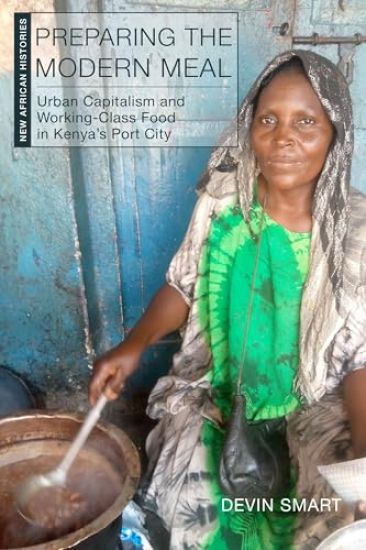
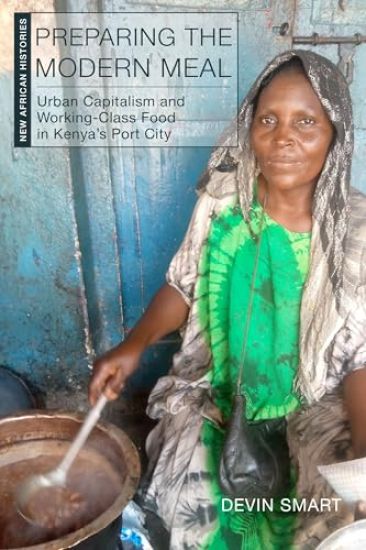
A case study on how urban capitalism created a new working-class food system in the port city of Mombasa during the twentieth century Preparing the Modern Meal is an urban history that connects town and country. Devin Smart examines how labor migrants who left subsistence food systems in Kenya’s rural communities acquired their daily meals when they arrived in the Indian Ocean city of Mombasa, a place where cash mediated access to daily necessities. In their rural homes, people grew their own food and created mealtimes and cuisines that fit into the environments and workday routines of their agrarian societies. However, in the city, migrants earned cash that they converted into food through commercial exchange, developing foodways within the spatial dynamics of urban capitalism. Thus, Smart considers how working-class formation and urbanization, central themes of modern world history, changed East Africa’s food systems. Smart explores how these processes transformed domestic labor within migrant households, as demographic change and daily life in a capitalist city shaped the gendered dynamics of food provisioning and cooking. He also examines how urban capitalism in Mombasa, as elsewhere in the world, drove the expansion of eateries for working-class consumers. It focuses especially on street-food vendors who kept their overhead and prices low by operating on sidewalks, in alleyways, and along other open spaces in makeshift structures, where they fried, boiled, and grilled the meals that sustained working-class people in Kenya’s port city. The history of street food also provides insights on the political economy of colonial and decolonizing African cities. Despite the services and income provided by street food, Mombasa officials also regularly pursued “modernization” campaigns to remove such informal businesses from the city’s landscape, fining and arresting vendors and demolishing their structures. Preparing the Modern Meal reveals the contradictions of such urban political economies from the colonial period to the more recent neoliberal era.
Preparing the Modern Meal

Preparing the Modern Meal

Devin Smart

OHIO UNIVERSITY PRESS
2025
pokkari
A case study on how urban capitalism created a new working-class food system in the port city of Mombasa during the twentieth century Preparing the Modern Meal is an urban history that connects town and country. Devin Smart examines how labor migrants who left subsistence food systems in Kenya’s rural communities acquired their daily meals when they arrived in the Indian Ocean city of Mombasa, a place where cash mediated access to daily necessities. In their rural homes, people grew their own food and created mealtimes and cuisines that fit into the environments and workday routines of their agrarian societies. However, in the city, migrants earned cash that they converted into food through commercial exchange, developing foodways within the spatial dynamics of urban capitalism. Thus, Smart considers how working-class formation and urbanization, central themes of modern world history, changed East Africa’s food systems. Smart explores how these processes transformed domestic labor within migrant households, as demographic change and daily life in a capitalist city shaped the gendered dynamics of food provisioning and cooking. He also examines how urban capitalism in Mombasa, as elsewhere in the world, drove the expansion of eateries for working-class consumers. It focuses especially on street-food vendors who kept their overhead and prices low by operating on sidewalks, in alleyways, and along other open spaces in makeshift structures, where they fried, boiled, and grilled the meals that sustained working-class people in Kenya’s port city. The history of street food also provides insights on the political economy of colonial and decolonizing African cities. Despite the services and income provided by street food, Mombasa officials also regularly pursued “modernization” campaigns to remove such informal businesses from the city’s landscape, fining and arresting vendors and demolishing their structures. Preparing the Modern Meal reveals the contradictions of such urban political economies from the colonial period to the more recent neoliberal era.