Kirjojen hintavertailu. Mukana 11 342 296 kirjaa ja 12 kauppaa.

Kirjahaku

Etsi kirjoja tekijän nimen, kirjan nimen tai ISBN:n perusteella.

1000 tulosta hakusanalla Daniel A. Strachman

The Spirit of Cities

The Spirit of Cities

Daniel A. Bell; Avner de-Shalit

Princeton University Press
2013
pokkari
Cities shape the lives and outlooks of billions of people, yet they have been overshadowed in contemporary political thought by nation-states, identity groups, and concepts like justice and freedom. The Spirit of Cities revives the classical idea that a city expresses its own distinctive ethos or values. In the ancient world, Athens was synonymous with democracy and Sparta represented military discipline. In this original and engaging book, Daniel Bell and Avner de-Shalit explore how this classical idea can be applied to today's cities, and they explain why philosophy and the social sciences need to rediscover the spirit of cities. Bell and de-Shalit look at nine modern cities and the prevailing ethos that distinguishes each one. The cities are Jerusalem (religion), Montreal (language), Singapore (nation building), Hong Kong (materialism), Beijing (political power), Oxford (learning), Berlin (tolerance and intolerance), Paris (romance), and New York (ambition). Bell and de-Shalit draw upon the richly varied histories of each city, as well as novels, poems, biographies, tourist guides, architectural landmarks, and the authors' own personal reflections and insights. They show how the ethos of each city is expressed in political, cultural, and economic life, and also how pride in a city's ethos can oppose the homogenizing tendencies of globalization and curb the excesses of nationalism. The Spirit of Cities is unreservedly impressionistic. Combining strolling and storytelling with cutting-edge theory, the book encourages debate and opens up new avenues of inquiry in philosophy and the social sciences. It is a must-read for lovers of cities everywhere. In a new preface, Bell and de-Shalit further develop their idea of "civicism," the pride city dwellers feel for their city and its ethos over that of others.
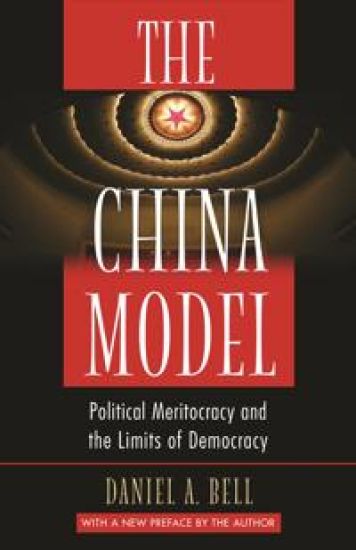
The China Model

The China Model

Daniel A. Bell

PRINCETON UNIVERSITY PRESS
2015
sidottu
Westerners tend to divide the political world into "good" democracies and "bad" authoritarian regimes. But the Chinese political model does not fit neatly in either category. Over the past three decades, China has evolved a political system that can best be described as "political meritocracy." The China Model seeks to understand the ideals and the reality of this unique political system. How do the ideals of political meritocracy set the standard for evaluating political progress (and regress) in China? How can China avoid the disadvantages of political meritocracy? And how can political meritocracy best be combined with democracy? Daniel Bell answers these questions and more. Opening with a critique of "one person, one vote" as a way of choosing top leaders, Bell argues that Chinese-style political meritocracy can help to remedy the key flaws of electoral democracy. He discusses the advantages and pitfalls of political meritocracy, distinguishes between different ways of combining meritocracy and democracy, and argues that China has evolved a model of democratic meritocracy that is morally desirable and politically stable. Bell summarizes and evaluates the "China model"--meritocracy at the top, experimentation in the middle, and democracy at the bottom--and its implications for the rest of the world. A timely and original book that will stir up interest and debate, The China Model looks at a political system that not only has had a long history in China, but could prove to be the most important political development of the twenty-first century.
Modern Architecture and Climate

Modern Architecture and Climate

Daniel A. Barber

PRINCETON UNIVERSITY PRESS
2020
sidottu
How climate influenced the design strategies of modernist architectsModern Architecture and Climate explores how leading architects of the twentieth century incorporated climate-mediating strategies into their designs, and shows how regional approaches to climate adaptability were essential to the development of modern architecture. Focusing on the period surrounding World War II—before fossil-fuel powered air-conditioning became widely available—Daniel Barber brings to light a vibrant and dynamic architectural discussion involving design, materials, and shading systems as means of interior climate control. He looks at projects by well-known architects such as Richard Neutra, Le Corbusier, Lúcio Costa, Mies van der Rohe, and Skidmore, Owings, and Merrill, and the work of climate-focused architects such as MMM Roberto, Olgyay and Olgyay, and Cliff May. Drawing on the editorial projects of James Marston Fitch, Elizabeth Gordon, and others, he demonstrates how images and diagrams produced by architects helped conceptualize climate knowledge, alongside the work of meteorologists, physicists, engineers, and social scientists. Barber describes how this novel type of environmental media catalyzed new ways of thinking about climate and architectural design.Extensively illustrated with archival material, Modern Architecture and Climate provides global perspectives on modern architecture and its evolving relationship with a changing climate, showcasing designs from Latin America, Europe, the United States, the Middle East, and Africa. This timely and important book reconciles the cultural dynamism of architecture with the material realities of ever-increasing carbon emissions from the mechanical cooling systems of buildings and offers a historical foundation for today’s zero-carbon design.
The China Model

The China Model

Daniel A. Bell

Princeton University Press
2016
pokkari
Westerners tend to divide the political world into "good" democracies and "bad" authoritarian regimes. But the Chinese political model does not fit neatly in either category. Over the past three decades, China has evolved a political system that can best be described as "political meritocracy." The China Model seeks to understand the ideals and the reality of this unique political system. How do the ideals of political meritocracy set the standard for evaluating political progress (and regress) in China? How can China avoid the disadvantages of political meritocracy? And how can political meritocracy best be combined with democracy? Daniel Bell answers these questions and more. Opening with a critique of "one person, one vote" as a way of choosing top leaders, Bell argues that Chinese-style political meritocracy can help to remedy the key flaws of electoral democracy. He discusses the advantages and pitfalls of political meritocracy, distinguishes between different ways of combining meritocracy and democracy, and argues that China has evolved a model of democratic meritocracy that is morally desirable and politically stable. Bell summarizes and evaluates the "China model"--meritocracy at the top, experimentation in the middle, and democracy at the bottom--and its implications for the rest of the world. A timely and original book that will stir up interest and debate, The China Model looks at a political system that not only has had a long history in China, but could prove to be the most important political development of the twenty-first century.
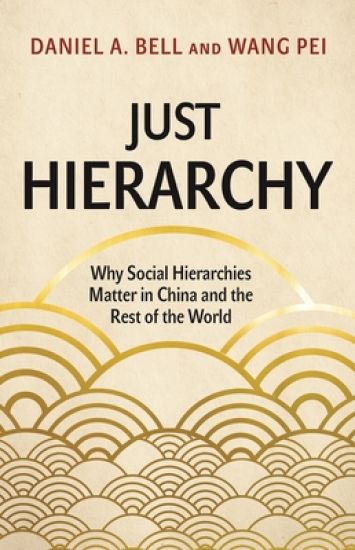
Just Hierarchy

Just Hierarchy

Daniel A. Bell; Wang Pei

PRINCETON UNIVERSITY PRESS
2020
sidottu
A trenchant defense of hierarchy in different spheres of our lives, from the personal to the politicalAll complex and large-scale societies are organized along certain hierarchies, but the concept of hierarchy has become almost taboo in the modern world. Just Hierarchy contends that this stigma is a mistake. In fact, as Daniel Bell and Wang Pei show, it is neither possible nor advisable to do away with social hierarchies. Drawing their arguments from Chinese thought and culture as well as other philosophies and traditions, Bell and Wang ask which forms of hierarchy are justified and how these can serve morally desirable goals. They look at ways of promoting just forms of hierarchy while minimizing the influence of unjust ones, such as those based on race, sex, or caste.Which hierarchical relations are morally justified and why? Bell and Wang argue that it depends on the nature of the social relation and context. Different hierarchical principles ought to govern different kinds of social relations: what justifies hierarchy among intimates is different from what justifies hierarchy among citizens, countries, humans and animals, and humans and intelligent machines. Morally justified hierarchies can and should govern different spheres of our social lives, though these will be very different from the unjust hierarchies that have governed us in the past.A vigorous, systematic defense of hierarchy in the modern world, Just Hierarchy examines how hierarchical social relations can have a useful purpose, not only in personal domains but also in larger political realms.
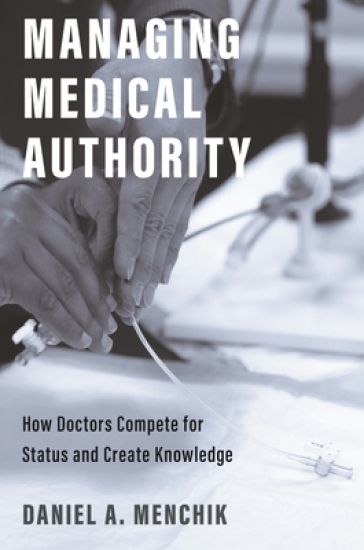
Managing Medical Authority

Managing Medical Authority

Daniel A. Menchik

Princeton University Press
2021
pokkari
How the authority of medicine is continuously shaped by relationships among physicians, industry, colleagues, and organizations Exploring how the authority of medicine is controlled, negotiated, and organized, Managing Medical Authority asks: How is knowledge shared throughout the profession? Who makes decisions when your heart malfunctions—physicians, hospital administrators, or private companies who sell pacemakers? How do physicians gain and keep their influence? Arguing that medicine’s authority is managed in collegial competition across venues, Daniel Menchik examines the full range of stakeholders driving the direction of the field: medical trainees, clinicians, researchers, administrators, and even the corporations that develop groundbreaking technologies enabling longer and better lives.Menchik takes us into Superior Hospital to witness surgeries and executive negotiations. He moves outside the hospital to watch professional committees craft standards for treatments, case management, and professional ethics. At industry-sponsored meetings, he observes company representatives who train some experienced doctors on their technologies, while deterring others who they think might injure patients. Using an innovative ethnographic approach tying individual actions and their collective consequences, he considers how stakeholders ally across the various venues of medicine, even as they are sometimes pressed into competition within those venues. Menchik finds that these alliances and rivalries strengthen the authority of medicine as a whole. From place to place, and group to group, we see how a medical specialty renews and reinvigorates itself.Beginning within the walls of the hospital, and moving to the professional and commercial venues that shape it, Managing Medical Authority offers an agenda-setting take on the social organization of medical authority.
Managing Medical Authority

Managing Medical Authority

Daniel A. Menchik

PRINCETON UNIVERSITY PRESS
2021
sidottu
How the authority of medicine is continuously shaped by relationships among physicians, industry, colleagues, and organizations Exploring how the authority of medicine is controlled, negotiated, and organized, Managing Medical Authority asks: How is knowledge shared throughout the profession? Who makes decisions when your heart malfunctions—physicians, hospital administrators, or private companies who sell pacemakers? How do physicians gain and keep their influence? Arguing that medicine’s authority is managed in collegial competition across venues, Daniel Menchik examines the full range of stakeholders driving the direction of the field: medical trainees, clinicians, researchers, administrators, and even the corporations that develop groundbreaking technologies enabling longer and better lives.Menchik takes us into Superior Hospital to witness surgeries and executive negotiations. He moves outside the hospital to watch professional committees craft standards for treatments, case management, and professional ethics. At industry-sponsored meetings, he observes company representatives who train some experienced doctors on their technologies, while deterring others who they think might injure patients. Using an innovative ethnographic approach tying individual actions and their collective consequences, he considers how stakeholders ally across the various venues of medicine, even as they are sometimes pressed into competition within those venues. Menchik finds that these alliances and rivalries strengthen the authority of medicine as a whole. From place to place, and group to group, we see how a medical specialty renews and reinvigorates itself.Beginning within the walls of the hospital, and moving to the professional and commercial venues that shape it, Managing Medical Authority offers an agenda-setting take on the social organization of medical authority.
Just Hierarchy

Just Hierarchy

Daniel A. Bell; Wang Pei

PRINCETON UNIVERSITY PRESS
2022
pokkari
A trenchant defense of hierarchy in different spheres of our lives, from the personal to the politicalAll complex and large-scale societies are organized along certain hierarchies, but the concept of hierarchy has become almost taboo in the modern world. Just Hierarchy contends that this stigma is a mistake. In fact, as Daniel Bell and Wang Pei show, it is neither possible nor advisable to do away with social hierarchies. Drawing their arguments from Chinese thought and culture as well as other philosophies and traditions, Bell and Wang ask which forms of hierarchy are justified and how these can serve morally desirable goals. They look at ways of promoting just forms of hierarchy while minimizing the influence of unjust ones, such as those based on race, sex, or caste.Which hierarchical relations are morally justified and why? Bell and Wang argue that it depends on the nature of the social relation and context. Different hierarchical principles ought to govern different kinds of social relations: what justifies hierarchy among intimates is different from what justifies hierarchy among citizens, countries, humans and animals, and humans and intelligent machines. Morally justified hierarchies can and should govern different spheres of our social lives, though these will be very different from the unjust hierarchies that have governed us in the past.A vigorous, systematic defense of hierarchy in the modern world, Just Hierarchy examines how hierarchical social relations can have a useful purpose, not only in personal domains but also in larger political realms.
The Dean of Shandong

The Dean of Shandong

Daniel A. Bell

PRINCETON UNIVERSITY PRESS
2023
sidottu
A Financial Times Best Book of the YearAn inside view of Chinese academia and what it reveals about China’s political systemOn January 1, 2017, Daniel Bell was appointed dean of the School of Political Science and Public Administration at Shandong University—the first foreign dean of a political science faculty in mainland China’s history. In The Dean of Shandong, Bell chronicles his experiences as what he calls “a minor bureaucrat,” offering an inside account of the workings of Chinese academia and what they reveal about China’s political system. It wasn’t all smooth sailing—Bell wryly recounts sporadic bungles and misunderstandings—but Bell’s post as dean provides a unique vantage point on China today.Bell, neither a Chinese citizen nor a member of the Chinese Communist Party, was appointed as dean because of his scholarly work on Confucianism—but soon found himself coping with a variety of issues having little to do with scholarship or Confucius. These include the importance of hair color and the prevalence of hair-dyeing among university administrators, both male and female; Shandong’s drinking culture, with endless toasts at every shared meal; and some unintended consequences of an intensely competitive academic meritocracy. As dean, he also confronts weightier matters: the role at the university of the Party secretary, the national anticorruption campaign and its effect on academia (Bell asks provocatively, “What’s wrong with corruption?”), and formal and informal modes of censorship. Considering both the revival of Confucianism in China over the last three decades and what he calls “the Communist comeback” since 2008, Bell predicts that China’s political future is likely to be determined by both Confucianism and Communism.
The Dean of Shandong

The Dean of Shandong

Daniel A. Bell

PRINCETON UNIVERSITY PRESS
2025
pokkari
A Financial Times Best Book of the YearAn inside view of Chinese academia and what it reveals about China’s political systemOn January 1, 2017, Daniel Bell was appointed dean of the School of Political Science and Public Administration at Shandong University—the first foreign dean of a political science faculty in mainland China’s history. In The Dean of Shandong, Bell chronicles his experiences as what he calls “a minor bureaucrat,” offering an inside account of the workings of Chinese academia and what they reveal about China’s political system. It wasn’t all smooth sailing—Bell wryly recounts sporadic bungles and misunderstandings—but Bell’s post as dean provides a unique vantage point on China today.Bell, neither a Chinese citizen nor a member of the Chinese Communist Party, was appointed as dean because of his scholarly work on Confucianism—but soon found himself coping with a variety of issues having little to do with scholarship or Confucius. These include the importance of hair color and the prevalence of hair-dyeing among university administrators, both male and female; Shandong’s drinking culture, with endless toasts at every shared meal; and some unintended consequences of an intensely competitive academic meritocracy. As dean, he also confronts weightier matters: the role at the university of the Party secretary, the national anticorruption campaign and its effect on academia (Bell asks provocatively, “What’s wrong with corruption?”), and formal and informal modes of censorship. Considering both the revival of Confucianism in China over the last three decades and what he calls “the Communist comeback” since 2008, Bell predicts that China’s political future is likely to be determined by both Confucianism and Communism.
Modern Architecture and Climate

Modern Architecture and Climate

Daniel A. Barber

PRINCETON UNIVERSITY PRESS
2023
pokkari
How climate influenced the design strategies of modernist architectsModern Architecture and Climate explores how leading architects of the twentieth century incorporated climate-mediating strategies into their designs, and shows how regional approaches to climate adaptability were essential to the development of modern architecture. Focusing on the period surrounding World War II—before fossil-fuel powered air-conditioning became widely available—Daniel Barber brings to light a vibrant and dynamic architectural discussion involving design, materials, and shading systems as means of interior climate control. He looks at projects by well-known architects such as Richard Neutra, Le Corbusier, Lúcio Costa, Mies van der Rohe, and Skidmore, Owings, and Merrill, and the work of climate-focused architects such as MMM Roberto, Olgyay and Olgyay, and Cliff May. Drawing on the editorial projects of James Marston Fitch, Elizabeth Gordon, and others, he demonstrates how images and diagrams produced by architects helped conceptualize climate knowledge, alongside the work of meteorologists, physicists, engineers, and social scientists. Barber describes how this novel type of environmental media catalyzed new ways of thinking about climate and architectural design.Extensively illustrated with archival material, Modern Architecture and Climate provides global perspectives on modern architecture and its evolving relationship with a changing climate, showcasing designs from Latin America, Europe, the United States, the Middle East, and Africa. This timely and important book reconciles the cultural dynamism of architecture with the material realities of ever-increasing carbon emissions from the mechanical cooling systems of buildings and offers a historical foundation for today’s zero-carbon design.
Why Ancient Chinese Political Thought Matters

Why Ancient Chinese Political Thought Matters

Daniel A. Bell

PRINCETON UNIVERSITY PRESS
2026
sidottu
An entertaining introduction to ancient Chinese thinkers—and what they can teach us about today’s most pressing political questions in China and beyondChina’s most original, diverse, and fascinating political debates took place more than two millennia ago, but they have profoundly shaped Chinese political thinking and practice ever since and, remarkably, their influence on the country’s leaders is only growing today. Yet these timeless debates—which are very likely to influence the answers to such questions as whether China should use military force to take control of Taiwan—are still far too little understood in the West. In this enlightening and entertaining book, Daniel Bell, a leading expert on Chinese political thought, takes the greatest thinkers from China’s past—Confucius, Mencius, Xunzi, Shang Yang, Han Feizi, Zhuangzi, and Mozi—and puts them in dialogue with each other in modern settings. The result is a creative and engaging introduction to ancient Chinese political thought that reveals its relevance to the future of China and the rest of the world.Before China’s unification in 221 BCE, the brilliant political thinkers who founded Confucianism, Daoism, Legalism, and Mohism roamed from state to state, argued with each other, and tried to persuade rulers to follow their ideas. Bell draws on their debates—about such perennial issues as war, corruption, government involvement in family life, and whether the state should subsidize culture—to create vivid imaginative dialogues about important contemporary social and political controversies.China’s political thinking is rooted in its past. Understanding what ancient Chinese political thought can teach us about today’s critical debates is essential to understanding the future of China and the world.
British Naval Administration in the Age of Walpole

British Naval Administration in the Age of Walpole

Daniel A. Baugh

Princeton University Press
2015
pokkari
This historical analysis of the problems faced by the British navy during the War of 1739-1748 also sheds light on the character, limitations, and potentialities of eighteenth-century British administration. Originally published in 1965. The Princeton Legacy Library uses the latest print-on-demand technology to again make available previously out-of-print books from the distinguished backlist of Princeton University Press. These editions preserve the original texts of these important books while presenting them in durable paperback and hardcover editions. The goal of the Princeton Legacy Library is to vastly increase access to the rich scholarly heritage found in the thousands of books published by Princeton University Press since its founding in 1905.
British Naval Administration in the Age of Walpole

British Naval Administration in the Age of Walpole

Daniel A. Baugh

Princeton University Press
2016
sidottu
This historical analysis of the problems faced by the British navy during the War of 1739-1748 also sheds light on the character, limitations, and potentialities of eighteenth-century British administration. Originally published in 1965. The Princeton Legacy Library uses the latest print-on-demand technology to again make available previously out-of-print books from the distinguished backlist of Princeton University Press. These editions preserve the original texts of these important books while presenting them in durable paperback and hardcover editions. The goal of the Princeton Legacy Library is to vastly increase access to the rich scholarly heritage found in the thousands of books published by Princeton University Press since its founding in 1905.
MYSTiFIED BY STEPHANIE

MYSTiFIED BY STEPHANIE

Daniel A. Shea

Daniel A. Shea
2018
nidottu
A half deaf teenager (Deaf Bastard) wants to enlist in the United States Marine Corps (his dream job). After all, his Dad and Uncle served and now all his friends are all enlisting. The recruiters are trying to get him and his girlfriend Stephanie is trying keep him out.
Rhythmical improvisation and the blues: for piano and keyboard

Rhythmical improvisation and the blues: for piano and keyboard

Daniel a. Spiegelberg

Daniel A. Spiegelberg
2017
nidottu
This is an intermediate level book on how to play, improvise, and write blues songs on the piano. Over 50 example songs are provided in two different stylistic sounds - blues and pop/jazz. Suggested fingerings are provided for all songs. To simplify learning of the material the book is written in the key of C. Chapter sixteen then explores three new keys.The book is divided in to two parts - chapters one thru seven deal with left hand rhythmical comping and creating your own blues songs using rhythms (riffs). The remainder of the book provides more than fifty twelve bar blues song examples. Utilizing the major and minor blues scales and left hand vs right hand rhythmical independence are key focal points in the book.Double-stops, grace notes, trills, approach tones, passing tones, enclosures, and harmonizing the melodic line are also covered.
True Faith

True Faith

Daniel A Gerber

Daniel Gerber
2017
pokkari
True Faith delves into the spiritual journey many of us take to discover for ourselves what we truly believe. Pulling from religious sources throughout the world, including Taoist, Christian, Hindu and other philosophies both religious and non-religious, this book brings reason and insight into common threads found in religion and faith to bring the reader a greater sense of understanding as well as a different way of looking at the world.Combining reasoning, common sense, poetry and humor into a conversation about the state of the world through the lens of faith and spiritual belief, this book breathes fresh air into the conversation on different beliefs, the nature of religious intolerance and the search for spiritual truth.