

Kirjahaku
Etsi kirjoja tekijän nimen, kirjan nimen tai ISBN:n perusteella.
1000 tulosta hakusanalla Daniela Pintus
Economic and social difficulties at the beginning of the 20th century caused many Japanese to emigrate to Brazil. The situation was reversed in the 1980s as a result of economic downturn in Brazil and labour shortages in Japan. This book examines the construction and reconstruction of the ethnic identities of people of Japanese descent, firstly in the process of emigration to Brazil up to the 1980s, and secondly in the process of return migration to Japan in the 1990s. The closed nature of Japan's social history means that the effect of return migration' can clearly be seen. Japan is to some extent a unique sociological specimen owing to the absence of any tradition of receiving immigrants. This book is first of all about migration, but also covers the important related issues of ethnic identity and the construction of ethnic communities. It addresses the issues from the dual perspective of Japan and Brazil. The findings suggest that mutual contact has led neither to a state of conflict nor to one of peaceful coexistence, but rather to an assertion of difference. It is argued that the Nikkeijin consent strategically to the social definitions imposed upon their identities and that the issue of the Nikkeijin presence is closely related to the emerging diversity of Japanese society.
This book is a representative history of East German film culture from 1946 to the present, examining both DEFA's celebrated classics and the most acclaimed post-unification feature films by East German directors.'Hollywood behind the wall' demonstrates that East German cinema occupies an ambivalent position between German national cinema on the one hand and East European and Soviet cinema on the other. It includes a wide-ranging exploration of post-unification cinema from East Germany, including cult films such as 'Sun Alley' and 'Goodbye, Lenin!' and provides contextualised, close readings of twenty significant films, referencing one hundred and ninety East German films in total, along with numerous West German and East European classics.The book's scope and its critical consideration of archival materials and scholarly literature make it an authoritative compendium for students and scholars of film studies, German studies and modern European history.
Beckett's Dantes: Intertextuality in the fiction and criticism is the first study in English on the literary relationship between Beckett and Dante. It is an innovative reading of Samuel Beckett and Dante's works and a critical engagement with contemporary theories of intertextuality. The volume interprets Dante in the original Italian (as it appears in Beckett), translating into English all Italian quotations. It benefits from a multilingual approach based on Beckett's published works in English and French, and on manuscripts (which use English, French, German and Italian).The book is aimed at the scholarly communities interested in literatures in English, literary and critical theory, comparative literature and theory, French literature and theory and Italian studies. Its jargon-free style will also attract third-year or advanced undergraduate students, and postgraduate students, as well as those readers interested in the unusual relationship between one of the greatest writers of the twentieth century and the medieval author who stands for the very idea of the Western canon.
Beckett's Dantes: Intertextuality in the Fiction and Criticism is the first study in English on the literary relation between Beckett and Dante. It is an innovative reading of Samuel Beckett and Dante's works and a critical engagement with contemporary theories of intertextuality. It is an informative intertextual reading of Beckett's work, detecting previously unknown quotations, allusions to, and parodies of Dante in Beckett's fiction and criticism. The volume interprets Dante in the original Italian (as it appears in Beckett), translating into English all Italian quotations. It benefits from a multilingual approach based on Beckett's published works in English and French, and on manuscripts (which use English, French, German and Italian). Through a close reading of Beckett's fiction and criticism, the book will argue that Dante is both assumed as an external source of literary and cultural authority in Beckett's work, and also participates in Beckett's texts' sceptical undermining of authority. Moreover, the book demonstrates that the many references to various 'Dantes' produce 'Mr Beckett' as the figure of the author responsible for such a remarkably interconnected oeuvre. The book is aimed at the scholarly communities interested in literatures in English, literary and critical theory, comparative literature and theory, French literature and theory and Italian studies. Its jargon-free style will also attract third-year or advanced undergraduate students, and postgraduate students, as well as those readers interested in the unusual relationship between one of the greatest writers of the twentieth century and the medieval author who stands for the very idea of the Western canon.

In the age of globalisation, diasporic and other types of transnational family are increasingly represented across the film spectrum in works such as Bend It Like Beckham, The Namesake, Boys 'n the Hood, Dilwale Dulhania Le Jayenge (The Brave Heart Will Take the Bride) and My Big Fat Greek Wedding. While there is a significant body of scholarship on the representation of the family in Hollywood cinema, an analysis of the depiction of the diasporic family in cinema from a comparative transnational angle has yet to be attempted. This book fills this gap and provides an essential resource for academics and researchers with an interest in cinematic representations of the family and transnational cinema.The work will answer the following key questions: 1. Why is diasporic cinema characterised by a preponderance of family narratives?2. How does the diasporic family as constructed in cinema relate to or differ from models of family life in dominant social groups?3. What role does authorship play in the depiction of the diasporic family?4. How does diasporic cinema negotiate the aesthetic and generic conventions of film genres commonly associated with the representation of the family?Key featureso In-depth thematic study in the field of transnational film studieso Truly international coverage, including traditions of non-Western film cultureso Interdisciplinary approach offering an original and innovative model to encourage further researcho Planned companion website with a searchable database of relevant films, bibliographical references and an interactive discussion forum on key issues and themes (if AHRC funding application is successful, the website will also include podcasts of interviews with a number of filmmakers and other industry professionals).
This title analyses Deleuze's notion of transcendental and genetic Ideas as conditions of creative thought. From his early work in Nietzsche and Philosophy to Difference and Repetition, Deleuze develops a unique notion of transcendental philosophy. It comprises a radical critique of the illusions of representation and a genetic model of thought. Engaging with questions of representation, Ideas and the transcendental, Daniela Voss offers a sophisticated treatment of the Kantian aspects of Deleuze's thought, taking account of Leibniz, Maimon, Lautman and Nietzsche along the way. It demonstrates that Deleuze's early philosophy is transcendental. It puts forward a new understanding of the transcendental conditions of thought. It gives insight into how Deleuze's thought developed along the lines of thinkers such as Leibniz, Kant, Maimon, Bergson, Nietzsche and Klossowski.

This is an in-depth critical exploration of cinematic representations of the family in transnational cinema. In the age of globalisation, diasporic and other types of transnational family are increasingly represented across the film spectrum in works such as Bend It Like Beckham, The Namesake, Boys 'n the Hood, Dilwale Dulhania Le Jayenge (The Brave Heart Will Take the Bride) and My Big Fat Greek Wedding. While there is a significant body of scholarship on the representation of the family in Hollywood cinema, an analysis of the depiction of the diasporic family in cinema from a comparative transnational angle has yet to be attempted. Far-Flung Families in Film fills this gap and provides an essential resource for academics and researchers with an interest in cinematic representations of the family and transnational cinema. The work will answer the following key questions: Why is diasporic cinema characterised by a preponderance of family narratives?; How does the diasporic family as constructed in cinema relate to or differ from models of family life in dominant social groups?; What role does authorship play in the depiction of the diasporic family?; How does diasporic cinema negotiate the aesthetic and generic conventions of film genres commonly associated with the representation of the family?. It takes a theme-centred approach, examining journeys of migration, family memories, gender identities, romance and weddings. It includes 15 detailed case studies of diasporic family films.
This is a significant exploration of some of Deleuze's key concepts and an excellent introduction to Deleuze's Cinema books. Presented as part of this special issue of Deleuze Studies is the complete text of Daniela Angelucci's book Deleuze e i concetti del cinema. Translated by Sarin Marchetti, Deleuze and the Concepts of Cinema takes up Deleuze's idea that the true objects of the theory of cinema are the concepts that cinema generates when understood as a practice of images. In this sense, philosophy alone is able, as Deleuze argued, to 'constitute the concepts of cinema itself'. Deleuze and the Concepts of Cinema is both a significant exploration of some of Deleuze's key concepts, as well as an excellent introduction to Deleuze's Cinema books, aiming to avoid, as Deleuze himself once claimed, a double reproach: namely, both excessive erudition - which makes the reading complicated and tedious - and exaggerated familiarity.
Women, Sex and Marriage in Early Modern Venice
Daniela Hacke
Ashgate Publishing Limited
2004
sidottu
Women, Sex, and Marriage in Early Modern Venice is the first study to investigate systematically the moral policies of both Church and State in the age of Counter-Reformation confessionalisation in Venice. Examining ecclesiastical and civil lawsuits related to illicit sex, broken marriage promises and disrupted marriages of artisan and ordinary women and men, Daniela Hacke can convincingly show how central sexual morality was to the patriarchal society of sixteenth and seventeenth century Venice. Drawing on a wide range of archival sources, the author skilfully reconstructs what gender difference meant in daily life, in courtship rituals, marital disputes, and in sexual relations. In the streets and in the courts, women and men fought not only over proper gender behaviour within and outside marriage, but also about the meaning of conjugality and of domestic patriarchy. Neighbours played an active role in mediating between distressed partners and between children and parents. Their interventions and perceptions reveal much about the moral values and the networks of support within a fascinatingly heterogeneous community such as early modern Venice. The study makes important contributions to the fields of gender history, social history and the history of crime and sexuality.
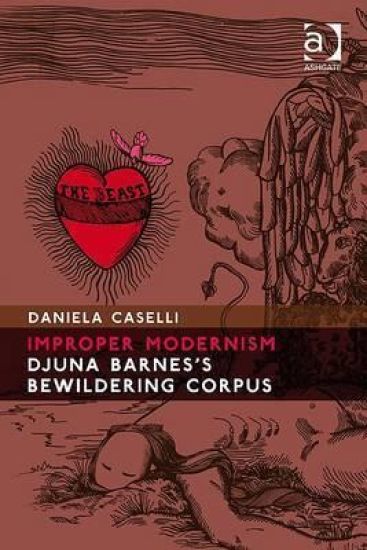
In her compelling reexamination of Djuna Barnes's work, Daniela Caselli raises timely questions about Barnes, biography and feminist criticism, identity and authority, and modernist canon formation. Through close readings of Barnes's manuscripts, correspondence, critically acclaimed and little-known texts, Caselli tackles one of the central unacknowledged issues in Barnes: intertextuality. She shows how throughout Barnes's corpus the repetition of texts, by other authors (from Blake to Middleton) and by Barnes herself, forces us to rethink the relationship between authority and gender and the reasons for her marginal place within modernism. All her texts, linked as they are by correspondences and permutations, wage a war against the common sense of the straight mind. Caselli begins by analyzing how literary criticism has shaped our perceptions of Barnes, showing how the various personae assigned to Barnes are challenged when the right questions are posed: Why is Barnes such a famous author when many of her texts remain unread, even by critics? Why has criticism reduced Barnes's work to biographical speculations? How can Barnes's hybrid, eccentric, and unconventional corpus be read as part of literary modernism when it often seems to sever itself from it? How can an oeuvre reject the labels of feminist and lesbian literature, whilst nevertheless holding at its centre the relationships between language, sexuality, and the real? How can Barnes's work help us to rethink the relation between simplicity and difficulty within literary modernism? Caselli concludes by arguing that Barnes's complex and bewildering work is committed to a high modernist notion of art as a supremely difficult undertaking whilst refusing to conform to standards of modernist acceptability.

This volume focuses on a highly challenging aspect of all European democracies, namely the issue of combining guarantees of judicial independence and mechanisms of judicial accountability. It does so by filling the gap in European scholarship between the two policy sectors of enlargement and judicial cooperation and by taking full stock of an interdisciplinary literature, spanning from comparative politics, socio-legal studies and European studies. Judicial Accountabilities in New Europe presents an insightful account of the judicial reforms adopted by new member States to embed the principle of the rule of law in their democratic institutions, along with the guidelines of quality of justice promoted by European institutions in all member States.
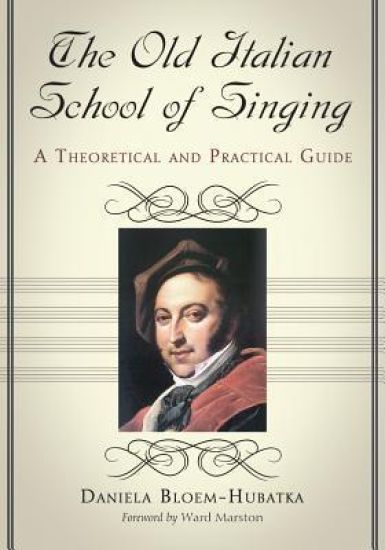
This work describes in accessible language the technical foundations of the Old Italian School of Singing. It enables the reader to grasp the teachings of the old masters theoretically and practically. The research for this book used not only the old treatises from the 1700's onwards but also firsthand testimonies, biographies and recordings from historical singers. The author systematically takes us through the basic elements of historical singing with practical hints and exercises tested by extensive teaching experience.
The Bodily Dimension in Thinking
Daniela Vallega-Neu
State University of New York Press
2005
sidottu
An ontology of bodily being featuring Plato, Nietzsche, Scheler, Merleau-Ponty, Heidegger, and Foucault.Daniela Vallega-Neu questions the ontological meaning of body and thinking by carefully taking into account how we come to experience thought bodily. She engages six prominent figures of the Western philosophical tradition-Plato, Nietzsche, Scheler, Merleau-Ponty, Heidegger, and Foucault-and considers how they understand thinking to occur in relation to the body as well as how their thinking is itself bodily. Through a deconstructive and performative reading, she explores how their thinking reveals a bodily dimension that is prior to what classical metaphysics comes to conceive as mind-body duality. Thus, Vallega-Neu uncovers the bodily dimension that sustains their thought and their work. As she contends, the trace of the body in our thought not only exposes the strangers we are to ourselves, but may also lead to a new understanding of how we come to be who we are in relation to the world we live in.
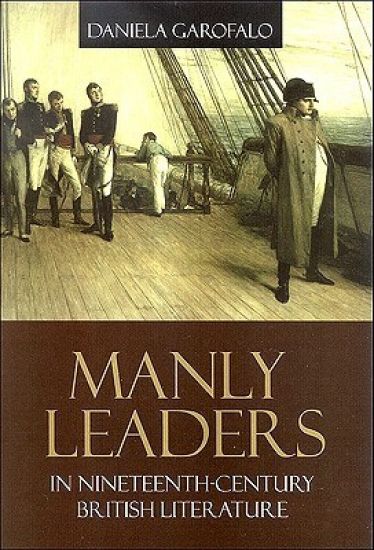
Manly Leaders in Nineteenth-Century British Literature
Daniela Garofalo
State University of New York Press
2009
pokkari
Examines fantasies of charismatic, virile leaders in British literature from the 1790s to the 1840s.From the 1790s to the 1840s, the fear that Britain had become too effeminate to protect itself against the anarchic forces unleashed by the French Revolution produced in many British writers of the period a desire to portray strong leaders who could control the democratic and commercial forces of modernization. While it is commonplace in Romantic studies to emphasize that Romantic writers are interested in the solitary genius or hero who separates himself from the community to pursue his own creative visions, Daniela Garofalo argues instead that Romantic and early Victorian writers are interested in charismatic males-military heroes, tyrants, kings, and captains of industry-who organize modern political and economic communities, sometimes by example, and sometimes by direct engagement. Reading works by William Godwin, William Wordsworth, Jane Austen, Lord Byron, William Hazlitt, Thomas Carlyle, and Charlotte Brontë, Garofalo shows how these leaders, endowed with an inherent virility rather than simply inherited rank, legitimize hierarchy anew for an age suffering from a crisis of authority.
An unhappily married woman waits in vain for a call from a potential lover, and a foul-mouthed mother of seven accuses a war hero of conning her out of her life savings. This work portrays the lives of people so used to hardship, that it never occurs to them to surrender.
An unhappily married woman waits in vain for a call from a potential lover, and a foul-mouthed mother of seven accuses a war hero of conning her out of her life savings. This work portrays the lives of people so used to hardship, that it never occurs to them to surrender.
This study examines the later plays of Luigi Pirandello - those he wrote for his actress and muse Marta Abba - in light of the publication of their correspondence. It traces his entire creative process, revealing how his perception of women shaped his philosophy of art and life.
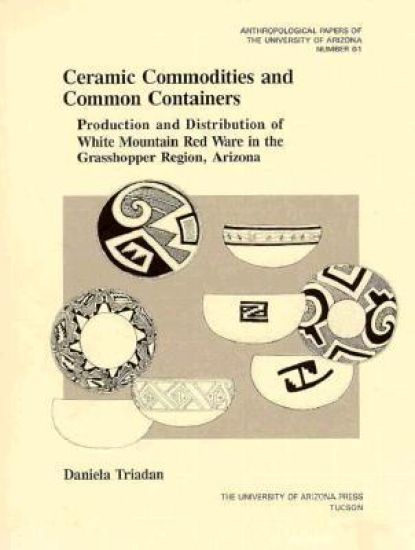
For more than a century, the study of ceramics has been a fundamental base for archaeological research and anthropological interpretaion in the American Southwest. The widely distributed White Mountain Red Ware has frequently been used by archaeologists to reconstruct late 13th and 14th century Western Pueblo sociopolitical and socioeconomic organization. Relying primarily on stylistic analyses and the relative abundance of this ceramic ware in site assemblages, most scholars have assumed that it was manufactured within a restricted area on the southeastern edge of the Colorado Plateau and distributed via trade and exchange networks that may have involved controlled access to these ceramics. This monograph critically evaluates these traditional interpretations, utilizing large-scale compositional and petrographic analyses that established multiple production zones for White Mountain Red Ware including one in the Grasshopper region during Pueblo IV times. The compositional data combined with settlement data and an analysis of archaeological contexts demonstrates that White Mountain Red Ware vessels were readily accessible and widely used household goods, and that migration and subsequent local production in the destinaton areas were important factors in their wide distribution during the 14th century. Ceramic Commodities and Common Containers provides new insights into the organization of ceramic production and distribution in the northern Southwest and into the processes of social reorganization that characterized the late 13th and 14th century Western Pueblo world. As one of the few studies that integrate materials analysis into archaeological research, Triadan's monograph marks a crucial contribution to the reconstruction of these prehistoric societies.