In this study the in vitro culture of a range of Daphne species was studied in order to determine whether a genotype-independent micropropagation regime could be identified. Daphnes are ornamental plants and include a range of medicinal compounds of great importance; novel problems such as appearance of Daphne mosaic virus (DapMV) could potentially be eliminated via tissue culture. Six species were successfully established in basal medium. A single micropropagation protocol with some modifications for each species has been developed.
Study of three North American women novelists combining the standpoints of gender studies and narratology. By analyzing the works of Thomas, Marlatt, and Erdrich through the lenses of subjectivity, gender studies, and narratology, Caroline Rosenthal brings to light new perspectives on their writings. Although all three authors write metafictions that challenge literary realism and dominant views of gender, the forms of their counter-narratives vary. In her novel Intertidal Life, Thomas traces the disintegration of an identity through narrative devices that unearth ruptures and contradictions in stories of gender. In contrast, Marlatt, in Ana Historic, challenges the regulatory fiction of heterosexuality. She offers her protagonist a way out into a new order that breaks with the law of the father, creating a "monstrous" text that explores the possibilities of a lesbian identity. In her tetralogy of novels made up of Love Medicine, Tracks, The Beet Queen, and The Bingo Palace, Erdrichresists definite readings of femininity altogether. By drawing on trickster narratives, she creates an open system of gendered identities that is dynamic and unfinalizable, positing the most fragmented worldview as the most enduring. By applying gender and narrative theory to nuanced analysis of the texts, Rosenthal's study elucidates the correlation between gender identity formation and narrative. Caroline Rosenthal is Professor and Chair of American Literature at the Friedrich-Schiller University in Jena, Germany. Her book Narrative Deconstructions of Gender was published by Camden House in 2003.
The 18th century was a wealth of knowledge, exploration and rapidly growing technology and expanding record-keeping made possible by advances in the printing press. In its determination to preserve the century of revolution, Gale initiated a revolution of its own: digitization of epic proportions to preserve these invaluable works in the largest archive of its kind. Now for the first time these high-quality digital copies of original 18th century manuscripts are available in print, making them highly accessible to libraries, undergraduate students, and independent scholars.Western literary study flows out of eighteenth-century works by Alexander Pope, Daniel Defoe, Henry Fielding, Frances Burney, Denis Diderot, Johann Gottfried Herder, Johann Wolfgang von Goethe, and others. Experience the birth of the modern novel, or compare the development of language using dictionaries and grammar discourses. ++++The below data was compiled from various identification fields in the bibliographic record of this title. This data is provided as an additional tool in helping to insure edition identification: ++++British LibraryT121195London: printed by Bunney and Gold, 1800]. iv, 2],99, 1]p.; 8
Robert Louis Stevenson, Wilkie Collins and Daphne du Maurier are authors of particular importance to the literature of the double, having produced, among other works, The Strange Case of Dr. Jekyll and Mr. Hyde, The Woman in White and Rebecca. Each also rejected the prevailing social order of his or her time, a factor that plays an important role in determining how the double is represented and treated. The literary theory of romance narrative structure follows the hero's journey through a dark 'descent' to a happier 'ascent', but this journey is shown to apply to a largely masculine identity. On the other hand, the rise of the female persona and her relation to the double is a progression that is clearly charted through the works of Stevenson, Collins and du Maurier. It shows an extraordinary alteration in the structure of traditional romance narrative, and leads to an exploration of new ways in which the imprisoned female character may be able to free herself and become whole.
Follow Daphne's clear, step-by-step explanations and in no time not only will you be hobnobbing with Dragons and Winds, but you'll be playing Mahjong confidently. You'll be making friends, and amazed by the fun you're having. To learn Mahjong's intricacies you need to concentrate so it's good for exercising the grey matter. Then with every session, your brain expands as you understand fascinating refinements. The more expert you become the greater the enjoyment you derive from Mahjong. The spreadsheet presentation of Special Hands is unique to this book and is very easily used. You can photocopy the sheets so that each member of your group has his/her own set. An easy way of scoring without using Tally Sticks simplifies life; and the Score Sheet, which can also be copied, makes score-keeping simple. This book is an invaluable aid to enjoying Mahjong, both for beginners and for addicts.
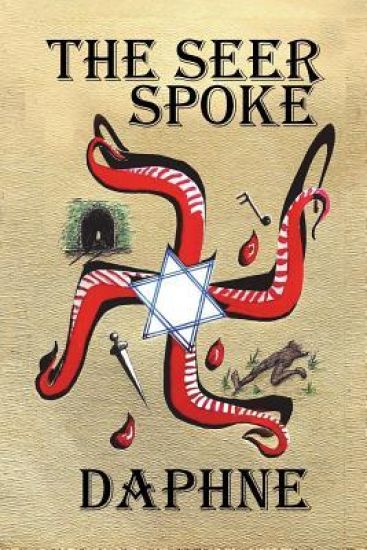
Craig, a dentist, and Laura, an art teacher haunted by her experiences in Africa, have arrived independently to live and work in Flauville on the coast of Southern France. Why is Laura afraid? What made Craig flee Britain? What are they trying to escape? AIDS? Bigamy? Murder? - Worse? Who is the terrifying Grey Man? The answers are dramatic. In a trance, Laura's friend Fiameta, a breathtakingly beautiful Ethiopian fashion designer and clairvoyant, utters mysterious predictions about Laura and Craig. It spins a spell that enmeshes weird, increasing tensions between the three of them and the Seer's partner - The Druid. While members of The Music Society prepare and put on a Show, they and Flauville residents enjoy traditional local events eg: the arrival of the Three Kings; and experience ups and downs of normal life. There is an accident on an island Game Park;; Mediterranean scenery is evoked when people march off on mountain hikes; a tragedy; an A & E mix-up; a visit to an historical site... but people also discover that drama happens in real life just as much as on stage. There are swastika-sprinkled sub plots and undercurrents. Young Jewish women are being found gruesomely murdered. Who is committing the horrific serial killings? Why does Jacob, an elderly Austrian Jew, wear Gestapo emblems? Tattooed onto his forearm he has an Auschwitz number that he did not acquire in any concentration camp. He manipulates tall, handsome, but slow-witted Stefan, who looks unmistakably Teutonic. Why can Stefan speak only Arabic? We cannot help smiling at some of the antics that the story describes, yet there is pathos when fishermen catch a dying seal. Helping to gradually rehabilitate the wounded creature Craig becomes a town hero but the police suspect him of murder. Good-natured Mario, the Italian restaurateur, who knows everything about everybody is also suspected of being the serial killer. The gendarmes are also watching Jacob, Stefan and Laura's Greek friend, Aleksei. French C line is large, strong and nasty. A visit to Casablanca is romantic in every sense of the word. Meanwhile the sinister presence of a terrifying Grey Man is drawing ever nearer to Flauville. What will happen when he arrives? The gripping end unravels full of action and excitement.
Collins Primary Science fully meets the requirements of the Cambridge Assessment International Education Primary Science Curriculum Framework and the material has been carefully developed to meet the needs of primary science students and teachers in a range of international contexts. Content is organised according to the three main strands: Biology, Chemistry and Physics and the skills detailed under the Scientific Enquiry strand are introduced and taught in the context of those areas. For each of Stages 1 to 6 as detailed in the Cambridge Primary Science Framework, we offer: A full colour, highly illustrated and photograph rich Student’s Book A write-in Workbook linked to the Student’s Book This comprehensive Teacher’s Guide with clear suggestions for using the materials, including the electronic components of the course A DVD-ROM which contains slideshows, video clips, additional photographs and interactive activities for use in the classroom. Provides support as part of a set of resources for the Cambridge Primary curriculum framework from 2011. This title is endorsed by Cambridge Assessment International Education.