

Kirjahaku
Etsi kirjoja tekijän nimen, kirjan nimen tai ISBN:n perusteella.
1000 tulosta hakusanalla David M Pack
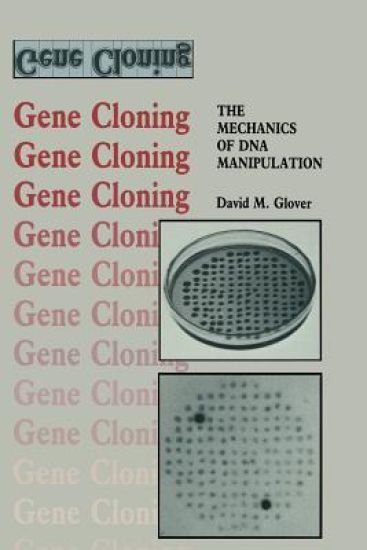
This book was originallyconceived in the form ofa second edition ofa volume published in 1980 in Chapman and Hall's 'OutllneStudies in Biology' series and entitled Genetic Engineering - Cloning DNA.It very rapidly became apparent that with the impact ofrecombinant DNA techniques being feIt in so many areas ofblology, it was going to be difficultifnotimpossible to keepthe bookwithin the space confines of these little monographs. The stays were therefore loosened and the book expanded comfortably to its present size.I hope that this extra space has allowed me to clarify sections ofthe text that were 'heavy going' in the earlierversion.Theextraspace has certainlyallowed me to cover topics that were not mentioned at all in the earlier book. These are primarily to be found in Chapters 7 and 8, which cover the rapid advances that have been recently made in the use ofplantand animal cells as hosts for recombinant DNAmolecules. The develop- ment ofother vectors has certainly not stood still over the past four years.This has necessitated a thorough revision ofChapters 3 and 4, which deal with bacteriophage and bacterial plasmid vectors. Numerous techniques for in vitromutagenesis have now been tried and tested allowing me to givecomprehensive coverage ofthisarea in Chapter 2 along with the biochemical techniques used to construct recombinant DNA molecules. Readers with some background knowledge of the approaches to gene cloning will be able to go straight toapart ofthe book in whichthey are specificallyinterested.

1. What is eutrophication?.- 1.1 Introduction.- 1.2 Definition and origin of the term eutrophication.- 1.3 Links between eutrophication, biological changes and productivity in lakes.- 1.4 Eutrophication as a natural part of lake succession.- 1.5 Extent of artificial eutrophication.- 1.6 Eutrophication in rivers, estuaries and coastal waters.- 1.7 Measurement of eutrophication.- 2. The nutrients causing eutrophication, and their sources.- 2.1 The requirements of living cells for survival and growth.- 2.2 The important limiting nutrients.- 2.3 The supply of nitrogen and phosphorus to lakes.- 2.4 Relative importance of diffuse and point sources in catchments.- 2.5 Global aspects of nutrient runoff.- 2.6 Methods for estimating the magnitude of nutrient losses from catchments.- 3. The biochemical manifestations of eutrophication.- 3.1 The components of nutrient cycles in aquatic systems.- 3.2 The ultimate sinks of inflowing nitrogen and phosphorus.- 3.3 Changes in the cycles which occur as a consequence of enhanced nutrient inputs.- 3.4 The importance of the littoral zone in nutrient cycles.- 3.5 Seasonal patterns of nitrogen and phosphorus cycles in lakes.- 3.6 Important features of nutrient transformations in rivers and estuaries.- 4. The biological effects of eutrophication.- 4.1 Introduction.- 4.2 Production and species changes of algae and rnacrophytes.- 4.3 Effects of eutrophication upon rnacrophytes and attached algae.- 4.4 Production and species changes in zooplankton.- 4.5 Production and species changes of zoobenthos.- 4.6 Effects of eutrophication on fish and other vertebrates.- 4.7 Aquatic food-web considerations.- 4.8 Wider implications for wildlife and conservation.- 5. The engineering, economic and social effects of eutrophication.- 5.1 Introduction.- 5.2 Water supply.- 5.3 Fisheries management.- 5.4 Land drainage and weed control in rivers.- 5.5 Wildlife conservation.- 5.6 Public health hazards and nuisances.- 5.7 Other recreational aspects.- 6. Prediction and modelling of the causes and effects of eutrophication.- 6.1 Introduction.- 6.2 Experimental approaches to measures of eutrophication effects.- 6.3 The application of models in eutrophication assessment and prediction.- 6.4 Caution in the use of regression equations.- 6.5 Lake classification based on correlations and large data sets.- 6.6 Other lake classification indices.- 6.7 Dynamic models of lake ecosystems.- 6.8 Prediction without models.- 7. The reduction of causes and the management of effects of eutrophication.- 7.1 Introduction.- 7.2 Reduction of nutrient inputs to lakes.- 7.3 Evaluation of nutrient control measures.- 7.4 Control of nutrient concentrations within lakes.- 7.5 Management of lakes without nutrient reduction.- 8. A case study in restoration: shallow eutrophic lakes in the Norfolk Broads.- 8.1 Introduction.- 8.2 Historical perspective.- 8.3 Eutrophication of the Broads.- 8.4 Mechanisms of change.- 8.5 Effects of change.- 8.6 Restoration of Broadland.- 8.7 Lake sediment as a source of phosphorus.- 8.8 Changes in the storage of phosphorus in lake sediment following phosphorus control.- 8.9 Biological response to reduced nutrient loading.- 8.10 Nutrient reduction by isolation.- 8.11 Sediment removal and lake isolation.- 8.12 Biomanipulation as a restoration technique.- 8.13 The restoration of Broadland in the context of two stable communities.- References.

The UK construction industry is the sixth largest industry in the UK in terms of turnover. During the last decade, it has undergone an unprecedented period of self-examination, including input from most of the leaders of the major suppliers and clients as well as from leading politicians, civil servants and political advisers. From 1993 to 2003, government and industry collaborated closely to achieve political and structural change in the industry and to bring about nothing less than a re-organization of the way it undertakes its business. This key text is an objective presentation of the critical issues inherent in the construction industry during this time.Providing invaluable source material for students of government/industry relations, industry practitioners and clients, and for economic and social commentators, this valuable resource draws on revealing personal accounts from politicians, civil servants, advisers and industry leaders, as well as factual reportage, archives and official papers of the period. Informative and enlightening, this book objectively details and documents exactly what happened at this time, and the reasons for it, and offers an unbiased interpretation of the successes or failures of the various initiatives that emerged, including the Movement for Innovation, Rethinking Construction and Constructing Excellence.

Published in 1989, Soviet Military Deception in the Second World War is a valuable contribution to the field of Military & Strategic Studies.

In this book, David M. Black asks questions such as 'why do we care?' and 'what gives our values power?' using ideas from psychoanalysis and its adjacent sciences such as neuroscience and evolutionary biology in order to do so. Why Things Matter explores how the comparatively new scientific discipline of consciousness studies requires us to recognize that subjectivity is as irreducible a feature of the world as matter and energy. Necessarily inter-disciplinary, this book draws on science, philosophy and the history of religion to argue that there can be influential values which are not based exclusively on biological need or capricious life-style choices. It suggests that many recent scientific critics of religion, including Freud, have failed to see clearly the issues at stake.This book will be key reading for psychoanalysts and psychotherapists as well as counsellors with an interest in the basis of religious feeling and in moral and aesthetic values. The book will also be of interest to scholars of psychoanalysis, philosophy and religion.
In this book, David M. Black asks questions such as 'why do we care?' and 'what gives our values power?' using ideas from psychoanalysis and its adjacent sciences such as neuroscience and evolutionary biology in order to do so. Why Things Matter explores how the comparatively new scientific discipline of consciousness studies requires us to recognize that subjectivity is as irreducible a feature of the world as matter and energy. Necessarily inter-disciplinary, this book draws on science, philosophy and the history of religion to argue that there can be influential values which are not based exclusively on biological need or capricious life-style choices. It suggests that many recent scientific critics of religion, including Freud, have failed to see clearly the issues at stake.This book will be key reading for psychoanalysts and psychotherapists as well as counsellors with an interest in the basis of religious feeling and in moral and aesthetic values. The book will also be of interest to scholars of psychoanalysis, philosophy and religion.

Deterrence is at the heart of the preventive aspiration of criminal justice. Deterrence, whether through preventive patrol by police officers or stiff prison sentences for violent offenders, is the principal mechanism through which the central feature of criminal justice, the exercise of state authority, works – it is hoped -- to diminish offending and enhance public safety. And however well we think deterrence works, it clearly often does not work nearly as well as we would like – and often at very great cost.Drawing on a wide range of scholarly literatures and real-world experience, Kennedy argues that we should reframe the ways in which we think about and produce deterrence. He argues that many of the ways in which we seek to deter crime in fact facilitate offending; that simple steps such as providing clear information to offenders could transform deterrence; that communities may be far more effective than legal authorities in deterring crime; that apparently minor sanctions can deter more effectively than draconian ones; that groups, rather than individual offenders, should often be the focus of deterrence; that existing legal tools can be used in unusual but greatly more effective ways; that even serious offenders can be reached through deliberate moral engagement; and that authorities, communities, and offenders – no matter how divided – share and can occupy hidden common ground. The result is a sophisticated but ultimately common-sense and profoundly hopeful case that we can and should use new deterrence strategies to address some of our most important crime problems. Drawing on and expanding on the lessons of groundbreaking real-world work like Boston’s Operation Ceasefire – credited with the "Boston Miracle" of the 1990s – "Deterrence and Crime Prevention" is required reading for scholars, law enforcement practitioners, and all with an interest in public safety and the health of communities.

After sweeping environmental legislation passed in the 1970s and 1980s, the 1990s ushered in an era when new legislation and reforms to existing laws were consistently caught up in a gridlock. In response, environmental groups became more specialized and professional, learning how to effect policy change through the courts, states, and federal agencies rather than through grassroots movements. Without a significantly mobilized public and with a generally uncooperative Congress, presidents since the 1990s have been forced to step into a new role of increasing presidential dominance over environmental policies. Rather than working with Congress, presidents instead have employed unilateral actions and administrative strategies to further their environmental goals.Presidential Administration and the Environment offers a detailed examination of the strategies and tools used by U.S. presidents. Using primary sources from presidential libraries such as speeches and staff communications, David M. Shafie analyzes how presidents such as Bill Clinton and George W. Bush have used alternative executive approaches to pass environmental policies. From there, Shafie presents case studies in land management, water policy, toxics, and climate change. He analyzes the role that executive leadership has played in passing policies within these four areas, explains how this role has changed over time, and concludes by investigating how Obama’s policies compare thus far with those of his predecessors.Shafie’s combination of qualitative content analysis and topical case studies offers scholars and researchers alike important insights for understanding the interactions between environmental groups and the executive branch and the implications for future policymaking in the United States.

The UK construction industry is the sixth largest industry in the UK in terms of turnover. During the last decade, it has undergone an unprecedented period of self-examination, including input from most of the leaders of the major suppliers and clients as well as from leading politicians, civil servants and political advisers. From 1993 to 2003, government and industry collaborated closely to achieve political and structural change in the industry and to bring about nothing less than a re-organization of the way it undertakes its business. This key text is an objective presentation of the critical issues inherent in the construction industry during this time.Providing invaluable source material for students of government/industry relations, industry practitioners and clients, and for economic and social commentators, this valuable resource draws on revealing personal accounts from politicians, civil servants, advisers and industry leaders, as well as factual reportage, archives and official papers of the period. Informative and enlightening, this book objectively details and documents exactly what happened at this time, and the reasons for it, and offers an unbiased interpretation of the successes or failures of the various initiatives that emerged, including the Movement for Innovation, Rethinking Construction and Constructing Excellence.

Deterrence is at the heart of the preventive aspiration of criminal justice. Deterrence, whether through preventive patrol by police officers or stiff prison sentences for violent offenders, is the principal mechanism through which the central feature of criminal justice, the exercise of state authority, works – it is hoped -- to diminish offending and enhance public safety. And however well we think deterrence works, it clearly often does not work nearly as well as we would like – and often at very great cost.Drawing on a wide range of scholarly literatures and real-world experience, Kennedy argues that we should reframe the ways in which we think about and produce deterrence. He argues that many of the ways in which we seek to deter crime in fact facilitate offending; that simple steps such as providing clear information to offenders could transform deterrence; that communities may be far more effective than legal authorities in deterring crime; that apparently minor sanctions can deter more effectively than draconian ones; that groups, rather than individual offenders, should often be the focus of deterrence; that existing legal tools can be used in unusual but greatly more effective ways; that even serious offenders can be reached through deliberate moral engagement; and that authorities, communities, and offenders – no matter how divided – share and can occupy hidden common ground. The result is a sophisticated but ultimately common-sense and profoundly hopeful case that we can and should use new deterrence strategies to address some of our most important crime problems. Drawing on and expanding on the lessons of groundbreaking real-world work like Boston’s Operation Ceasefire – credited with the "Boston Miracle" of the 1990s – "Deterrence and Crime Prevention" is required reading for scholars, law enforcement practitioners, and all with an interest in public safety and the health of communities.

Once upon a time the practice of storytelling was about collecting interesting stories about the past, and converting them into soundbite pitches. Now it is more about foretelling the ways the future is approaching the present, prompting a re-storying of the past. Storytelling has progressed and is about a diversity of voices, not just one teller of one past; it is how a group or organization of people negotiates the telling of history and the telling of what future is arriving in the present. With the changes in storytelling practices and theory there is a growing need to look at new and different methodologies. Within this exciting new book, David M. Boje develops new ways to ask questions in interviews and make observations of practice that are about storytelling the future. This, after all, is where management practice concentrates its storytelling, while much of the theory and method work is all about how the past might recur in the future. Storytelling Organizational Practices takes the reader on a journey: from looking at narratives of past experience through looking at living stories of emergence in the present to looking at how the future is arriving in ways that prompts a re-storying of the past.

Once upon a time the practice of storytelling was about collecting interesting stories about the past, and converting them into soundbite pitches. Now it is more about foretelling the ways the future is approaching the present, prompting a re-storying of the past. Storytelling has progressed and is about a diversity of voices, not just one teller of one past; it is how a group or organization of people negotiates the telling of history and the telling of what future is arriving in the present. With the changes in storytelling practices and theory there is a growing need to look at new and different methodologies. Within this exciting new book, David M. Boje develops new ways to ask questions in interviews and make observations of practice that are about storytelling the future. This, after all, is where management practice concentrates its storytelling, while much of the theory and method work is all about how the past might recur in the future. Storytelling Organizational Practices takes the reader on a journey: from looking at narratives of past experience through looking at living stories of emergence in the present to looking at how the future is arriving in ways that prompts a re-storying of the past.

This is the first book-length study of physical disability in eighteenth-century England. It assesses the ways in which meanings of physical difference were formed within different cultural contexts, and examines how disabled men and women used, appropriated, or rejected these representations in making sense of their own experiences. In the process, it asks a series of related questions: what constituted ‘disability’ in eighteenth-century culture and society? How was impairment perceived? How did people with disabilities see themselves and relate to others? What do their stories tell us about the social and cultural contexts of disability, and in what ways were these narratives and experiences shaped by class and gender? In order to answer these questions, the book explores the languages of disability, the relationship between religious and medical discourses of disability, and analyzes depictions of people with disabilities in popular culture, art, and the media. It also uncovers the ‘hidden histories’ of disabled men and women themselves drawing on elite letters and autobiographies, Poor Law documents and criminal court records.The book won the Disability History Association Outstanding Publication Prize in 2012 for the best book published worldwide in disability history and also inspired parts of the Radio 4 series, ‘Disability: A New History’, on which the author was historical adviser. The series gained 2.6 million listeners when it first aired in 2013.

Halperin's subject is the erotics of male culture in ancient Greece. Arguing that the modern concept of "homosexuality" is an inadequate tool for the interpretation of these features of sexual life in antiquity, Halperin offers an alternative account that accords greater prominence to the indigenous terms in which sexual experiences were constituted in the ancient Mediterranean world. Wittily and provocatively written, Halperin's meticulously drawn windows onto ancient sexuality give us a new meaning to the concept of "Greek love."

Crisis Management in Anesthesiology
David M. Gaba; Kevin J. Fish; Steven K. Howard; Amanda Burden
Churchill Livingstone
2014
nidottu
The long-awaited revision to the definitive source for crisis management in anesthesia provides updated insights on the latest theories, principles, and practices in Anesthesia. From anesthesiologists and nurse anesthetists to emergency physicians and residents, Crisis Management in Anesthesiology, 2nd Edition will effectively prepare you to handle a critical incident during anesthesia. Identify and respond to a broad range of life-threatening situations with the updated Catalog of Critical Incidents, which outlines what may happen during surgery and details the steps necessary to respond to and resolve the crisis. React quickly to a range of potential threats with an added emphasis on simulation of managing critical incidents. Useful review for all anesthesia professionals of the core knowledge of diagnosis and management of many critical events. Explore new topics in the ever-expanding anesthesia practice environment with a detailed chapter on debriefing. eBook version included with purchase.
Crisis Management in Anesthesiology
David M. Gaba; Steven K. Howard; Amanda Burden
Elsevier Health Sciences
2026
nidottu
Regarded as the definitive resource in this high-stakes area of anesthesia, Crisis Management in Anesthesiology, 3rd Edition, provides comprehensive, up-to-date guidance, practical protocols, and simulation-based training strategies for handling a broad spectrum of critical incidents in the OR. This unique guide is an outstanding reference for anesthesiologists, nurse anesthetists, emergency physicians, and residents-anyone who needs reliable, state-of-the-art information on how to handle a critical event during anesthesia. Features a Catalog of Critical Incidents that comprehensively outline potential intraoperative emergencies, along with step-by-step guidance for effective response and resolution Contains new and updated content throughout, including new events such as serotonin syndrome and tracheostomy emergencies Presents new guidance on incorporating special OR caps for personnel, clearly indicating names and position Enhances your reaction time and decision-making skills with depictions of sensible solutions for managing critical incidents Reinforces essential knowledge on the diagnosis and management of a wide range of life-threatening events, serving as a valuable review for all members of the anesthesia care team An eBook version is included with purchase. The eBook allows you to access all of the text, figures and references, with the ability to search, customize your content, make notes and highlights, and have content read aloud. Additional digital ancillary content may publish up to 6 weeks following the publication date

FREE Millionaire Fast-Track Program for every reader! ($2,150 Value!) See Appendix for Full Details. Listen to what these successful business leaders have to say about The Maui Millionaires for Business! "Brilliant! David and Diane will help you to not just make money building your business, but more importantly, you'll learn to do it in a way that creates true freedom. Read this book!" --Joseph Guerriero, Publisher, Success magazine "David and Diane have done it again! They share the practical secrets that anyone can follow to build both a successful business and a successful life." --Beverly Sallee, Maui Millionaire and President Premiere Training Concepts LLC "We never dreamed that we'd be able to quit our jobs as Los Angeles police officers and successfully start up our own businesses, let alone succeed on the level we have. The ideas in this book worked for us, and they will work for you. We now get to wake up every day living our dream life!" --Kelly and Ruperto Fabros, Maui Millionaires and founders, Grasslands Investments, LLC "If you are ready to take your business to the next level, then this book is a must-read!" --Elizabeth Kanna, cofounder and CEO, DreamInYou.com "The concepts and strategies I learned from David and Diane gave me that final ingredient I needed to strengthen my business and successfully sell it for a big profit. This book is a must-read for any business owner who wants to build a truly passive business and learn the skills to grow their wealth." --Blake Mitchell, Maui Millionaire and commercial real estate investor and syndicator
From the founder of "layoff survivor sickness" an updated edition of a book for today's downsized workforce Thoroughly revised and updated, David Noer's classic book about downsized organizations has never been more relevant. Reports of the most recent layoffs are making the front pages of our newspapers with frightening regularity. And massive downsizing continues to reshape the face of American business. But what about those who remain behind? Healing the Wounds provides an antidote to the widespread malaise on the American business scene left in the wake of workforce reductions. Drawing on case studies and original research, David M. Noer-an expert frequently quoted in major media such as The Wall Street Journal and Fortune on the topic of layoffs and layoff survivor sickness-provides executives, human resource professionals, managers, and consultants with an original model and clear guidelines for revitalizing downsized organizations and the employees left behind. Offers thoroughly revised edition of a book about layoffs and those who are left behindFilled with relevant case studies and recent researchWritten by David Noer an acclaimed expert on the topicGives employers much-needed guidance for revitalizing downsized companies

Pozar's new edition of Microwave Engineering includes more material on active circuits, noise, nonlinear effects, and wireless systems. Chapters on noise and nonlinear distortion, and active devices have been added along with the coverage of noise and more material on intermodulation distortion and related nonlinear effects. On active devices, there's more updated material on bipolar junction and field effect transistors. New and updated material on wireless communications systems, including link budget, link margin, digital modulation methods, and bit error rates is also part of the new edition. Other new material includes a section on transients on transmission lines, the theory of power waves, a discussion of higher order modes and frequency effects for microstrip line, and a discussion of how to determine unloaded.