Kirjojen hintavertailu. Mukana 11 244 527 kirjaa ja 12 kauppaa.

Kirjahaku

Etsi kirjoja tekijän nimen, kirjan nimen tai ISBN:n perusteella.

1000 tulosta hakusanalla David Morrell

David and Charlotte

David and Charlotte

James F Park

Lulu.com
2018
pokkari
Right in front of us were the bodies of the real Chinese restaurant workers and they weren't a pretty sight but once again Ruby didn't flinch an inch and when we'd eventually made our way back into the sunlight she again took my hand and lead us on an unforgettable journey.
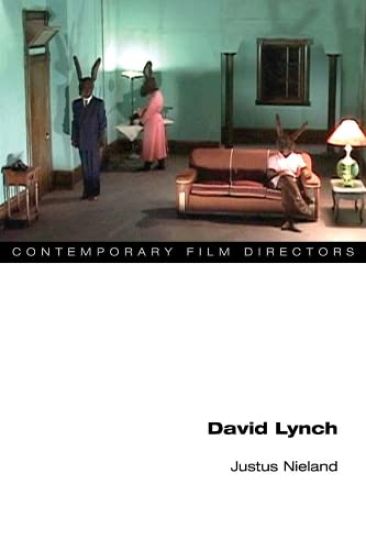
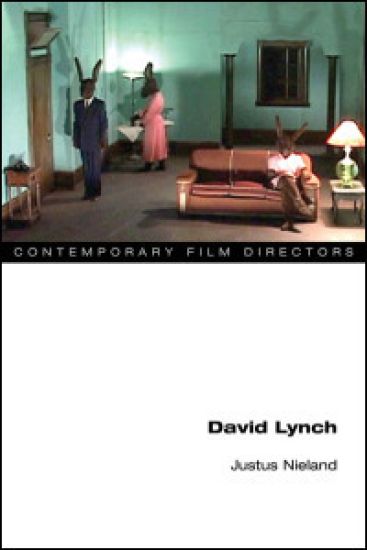
David Lynch

David Lynch

Nieland Justus

University of Illinois Press
2012
sidottu
A key figure in the ongoing legacy of modern cinema, David Lynch designs environments for spectators, transporting them to inner worlds built by mood, texture, and uneasy artifice. We enter these famously cinematic interiors to be wrapped in plastic, the fundamental substance of LynchAEs work. This volume revels in the weird dynamism of LynchAEs plastic worlds. Exploring the range of modern design idioms that inform LynchAEs films and signature mise-en-sc\u00e8ne, Justus Nieland argues that plastic is at once a key architectural and interior design dynamic in LynchAEs films, an uncertain way of feeling essential to LynchAEs art, and the prime matter of LynchAEs strange picture of the human organism. NielandAEs study offers striking new readings of LynchAEs major works (Eraserhead, Blue Velvet, Wild at Heart, Mulholland Dr., Inland Empire) and his early experimental films, placing LynchAEs experimentalism within the aesthetic traditions of modernism and the avant-garde; the genres of melodrama, film noir, and art cinema; architecture and design history; and contemporary debates about cinematic ontology in the wake of the digital. This inventive study argues that LynchAEs plastic concept of life--supplemented by technology, media, and sensuous networks of an electric world--is more alive today than ever.
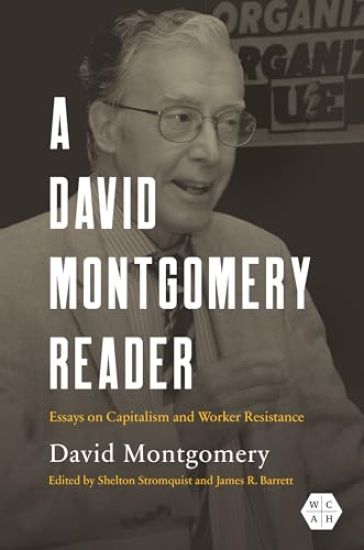
A David Montgomery Reader

A David Montgomery Reader

David W. Montgomery

UNIVERSITY OF ILLINOIS PRESS
2024
sidottu
A foundational figure in modern labor history, David Montgomery both redefined and reoriented the field. This collection of Montgomery’s most important published and unpublished articles and essays draws from the historian’s entire five-decade career. Taken together, the writings trace the development of Montgomery’s distinct voice and approach while providing a crucial window into an era that changed the ways scholars and the public understood working people’s place in American history. Three overarching themes and methods emerge from these essays: that class provided a rich reservoir of ideas and strategies for workers to build movements aimed at claiming their democratic rights; that capital endured with the power to manage the contours of economic life and the capacities of the state but that workers repeatedly and creatively mounted challenges to the terms of life and work dictated by capital; and that Montgomery’s method grounded his gritty empiricism and the conceptual richness of his analysis in the intimate social relations of production and of community, neighborhood, and family life.
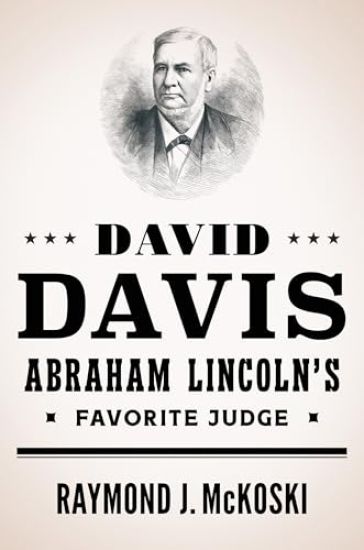
David Davis, Abraham Lincoln's Favorite Judge

David Davis, Abraham Lincoln's Favorite Judge

Raymond J. McKoski

UNIVERSITY OF ILLINOIS PRESS
2025
sidottu
One of Abraham Lincoln’s staunchest and most effective allies, Judge David Davis masterminded the floor fight that gave Lincoln the presidential nomination at the 1860 Republican National Convention. This history-changing event emerged from a long friendship between the two men. It also altered the course of Davis’s career, as Lincoln named him to the U.S. Supreme Court in 1862. Raymond J. McKoski offers a biography of Davis’s public life, his impact on the presidency and judiciary, and his personal, professional, and political relationships with Lincoln. Davis lent his vast network of connections, organizational and leadership abilities, and personal persuasiveness to help Lincoln’s political rise. When Davis became a judge, he honed an ability to hear each case with complete impartiality, a practice that endeared him to Lincoln but one day put him at odds with the president over important Civil War–era rulings. McKoski details these cases while providing an in-depth account of Davis’s role in Lincoln’s two unsuccessful campaigns for U.S. Senate and the fateful run for the presidency.
David Lynch

David Lynch

Justus Nieland

University of Illinois Press
2012
nidottu
A key figure in the ongoing legacy of modern cinema, David Lynch designs environments for spectators, transporting them to inner worlds built by mood, texture, and uneasy artifice. We enter these famously cinematic interiors to be wrapped in plastic, the fundamental substance of Lynch’s work. This volume revels in the weird dynamism of Lynch’s plastic worlds. Exploring the range of modern design idioms that inform Lynch’s films and signature mise-en-scÈne, Justus Nieland argues that plastic is at once a key architectural and interior design dynamic in Lynch’s films, an uncertain way of feeling essential to Lynch’s art, and the prime matter of Lynch’s strange picture of the human organism. Nieland’s study offers striking new readings of Lynch’s major works (Eraserhead, Blue Velvet, Wild at Heart, Mulholland Dr., Inland Empire) and his early experimental films, placing Lynch’s experimentalism within the aesthetic traditions of modernism and the avant-garde; the genres of melodrama, film noir, and art cinema; architecture and design history; and contemporary debates about cinematic ontology in the wake of the digital. This inventive study argues that Lynch’s plastic concept of life -supplemented by technology, media, and sensuous networks of an electric world--is more alive today than ever.
A David Montgomery Reader

A David Montgomery Reader

David W. Montgomery

UNIVERSITY OF ILLINOIS PRESS
2024
nidottu
A foundational figure in modern labor history, David Montgomery both redefined and reoriented the field. This collection of Montgomery’s most important published and unpublished articles and essays draws from the historian’s entire five-decade career. Taken together, the writings trace the development of Montgomery’s distinct voice and approach while providing a crucial window into an era that changed the ways scholars and the public understood working people’s place in American history. Three overarching themes and methods emerge from these essays: that class provided a rich reservoir of ideas and strategies for workers to build movements aimed at claiming their democratic rights; that capital endured with the power to manage the contours of economic life and the capacities of the state but that workers repeatedly and creatively mounted challenges to the terms of life and work dictated by capital; and that Montgomery’s method grounded his gritty empiricism and the conceptual richness of his analysis in the intimate social relations of production and of community, neighborhood, and family life.
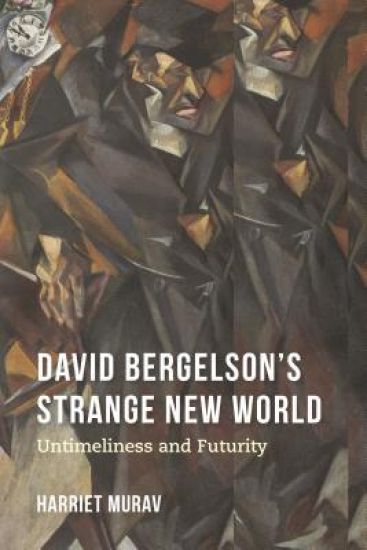
David Bergelson's Strange New World

David Bergelson's Strange New World

Harriet Murav

Indiana University Press
2019
sidottu
David Bergelson (1884–1952) emerged as a major literary figure who wrote in Yiddish before WWI. He was one of the founders of the Kiev Kultur-Lige and his work was at the center of the Yiddish-speaking world of the time. He was well known for creating characters who often felt the painful after-effects of the past and the clumsiness of bodies stumbling through the actions of daily life as their familiar worlds crumbled around them. In this contemporary assessment of Bergelson and his fiction, Harriet Murav focuses on untimeliness, anachronism, and warped temporality as an emotional, sensory, existential, and historical background to Bergleson's work and world. Murav grapples with the great modern theorists of time and memory, especially Henri Bergson, Sigmund Freud, and Walter Benjamin, to present Bergelson as an integral part of the philosophical and artistic experiments, political and technological changes, and cultural context of Russian and Yiddish modernism that marked his age. As a comparative and interdisciplinary study of Yiddish literature and Jewish culture, this work adds a new, ethnic dimension to understandings of the turbulent birth of modernism.
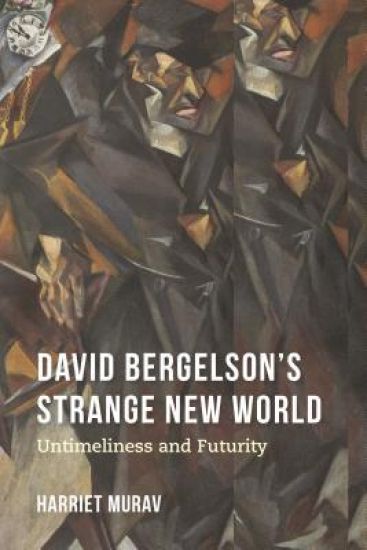
David Bergelson's Strange New World

David Bergelson's Strange New World

Harriet Murav

Indiana University Press
2019
pokkari
David Bergelson (1884–1952) emerged as a major literary figure who wrote in Yiddish before WWI. He was one of the founders of the Kiev Kultur-Lige and his work was at the center of the Yiddish-speaking world of the time. He was well known for creating characters who often felt the painful after-effects of the past and the clumsiness of bodies stumbling through the actions of daily life as their familiar worlds crumbled around them. In this contemporary assessment of Bergelson and his fiction, Harriet Murav focuses on untimeliness, anachronism, and warped temporality as an emotional, sensory, existential, and historical background to Bergleson's work and world. Murav grapples with the great modern theorists of time and memory, especially Henri Bergson, Sigmund Freud, and Walter Benjamin, to present Bergelson as an integral part of the philosophical and artistic experiments, political and technological changes, and cultural context of Russian and Yiddish modernism that marked his age. As a comparative and interdisciplinary study of Yiddish literature and Jewish culture, this work adds a new, ethnic dimension to understandings of the turbulent birth of modernism.
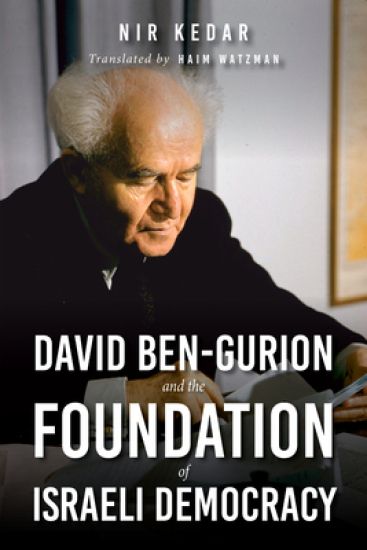
David Ben-Gurion and the Foundation of Israeli Democracy
In David Ben-Gurion and the Foundation of Israeli Democracy, Nir Kedar offers a poignant study of the primary national founder of the State of Israel and the first prime minister of Israel. Kedar provides an explication of the making of Israeli democracy in terms of its institutional-legal structures and social-cultural underpinnings. David Ben-Gurion and the Foundation of Israeli Democracy connects the formal structures of democracy to the fundamental principles that they were constructed to serve—human freedom and dignity.
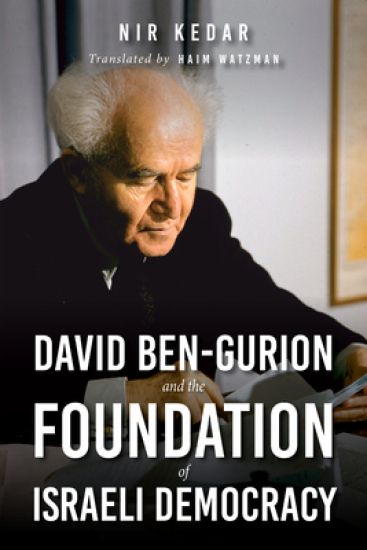
David Ben-Gurion and the Foundation of Israeli Democracy
In David Ben-Gurion and the Foundation of Israeli Democracy, Nir Kedar offers a poignant study of the primary national founder of the State of Israel and the first prime minister of Israel. Kedar provides an explication of the making of Israeli democracy in terms of its institutional-legal structures and social-cultural underpinnings. David Ben-Gurion and the Foundation of Israeli Democracy connects the formal structures of democracy to the fundamental principles that they were constructed to serve—human freedom and dignity.
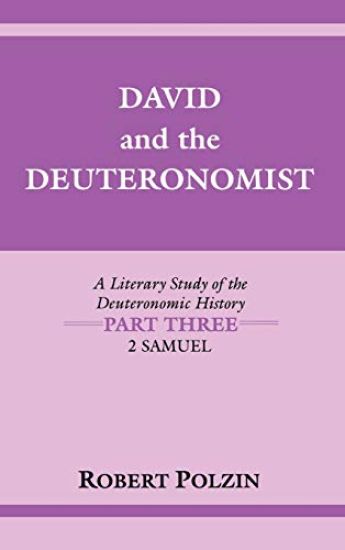
David and the Deuteronomist

David and the Deuteronomist

Robert Polzin

Indiana University Press
1993
sidottu
" . . . brilliant . . . [Polzin's] splendid work deserves consideration by all serious students of 2 Samuel." —The Catholic Biblical Quarterly The figure of David is the focus of Polzin's provocative new reading of 2 Samuel. Polzin makes a strong case for a complex yet coherent picture of the monarchy within Israelite theology as he demonstrates the literary artfulness and ideological sophistication of the Deuteronomic History.
David Baker

David Baker

Indiana University Press
2011
sidottu
A Living Jazz Legend, musician and composer David Baker has made a distinctive mark on the world of music in his nearly 60-year career—as player (chiefly on trombone and cello), composer, and educator. In this richly illustrated volume, Monika Herzig explores Baker's artistic legacy, from his days as a jazz musician in Indianapolis to his long-term gig as Distinguished Professor and Chairman of the Jazz Studies department at Indiana University. Baker's credits are striking: in the 1960s he was a member of George Russell's "out there" sextet and orchestra; by the 1980s he was in the jazz educator's hall of fame. His compositions have been recorded by performers as diverse as Dexter Gordon and Janos Starker, the Beaux Arts Trio, the Composer's String Quartet and the Czech Philharmonic. Featuring enlightening interviews with Baker and a CD of unreleased recordings and Baker compositions, this book brings a jazz legend into clear view.
David Walker’s Appeal to the Coloured Citizens of the World
In 1829 David Walker, a free black born in Wilmington, North Carolina, wrote one of America’s most provocative political documents of the nineteenth century, Walker’s Appeal to the Coloured Citizens of the World. Decrying the savage and unchristian treatment blacks suffered in the United States, Walker challenged his “afflicted and slumbering brethren” to rise up and cast off their chains. Walker worked tirelessly to circulate his book via underground networks in the South, and he was so successful that Southern lawmakers responded with new laws cracking down on “incendiary” antislavery material. Although Walker died in 1830, the Appeal remained a rallying point for African Americans for many years to come, anticipating the radicalism of later black leaders, from Malcolm X to Martin Luther King, Jr. In this new edition of the Appeal, the first in over thirty years, Peter P. Hinks, the leading authority on David Walker, provides a masterly introduction and extensive annotations that incorporate the most up-to-date research on Walker, much of it first reported by Hinks in his highly acclaimed biography, To Awaken My Afflicted Brethren. Hinks also includes a unique appendix of documents showing the contemporary response—from North and South, black and white—to the Appeal itself and Walker’s attempts to distribute it in the South. Historians and political activists have long recognized the importance of Walker’s Appeal. At last we have an edition worthy of its persuasive immediacy and its enduring place in American history.
David Walker’s Appeal to the Coloured Citizens of the World
In 1829 David Walker, a free black born in Wilmington, North Carolina, wrote one of America’s most provocative political documents of the nineteenth century, Walker’s Appeal to the Coloured Citizens of the World. Decrying the savage and unchristian treatment blacks suffered in the United States, Walker challenged his “afflicted and slumbering brethren” to rise up and cast off their chains. Walker worked tirelessly to circulate his book via underground networks in the South, and he was so successful that Southern lawmakers responded with new laws cracking down on “incendiary” antislavery material. Although Walker died in 1830, the Appeal remained a rallying point for African Americans for many years to come, anticipating the radicalism of later black leaders, from Malcolm X to Martin Luther King, Jr. In this new edition of the Appeal, the first in over thirty years, Peter P. Hinks, the leading authority on David Walker, provides a masterly introduction and extensive annotations that incorporate the most up-to-date research on Walker, much of it first reported by Hinks in his highly acclaimed biography, To Awaken My Afflicted Brethren. Hinks also includes a unique appendix of documents showing the contemporary response—from North and South, black and white—to the Appeal itself and Walker’s attempts to distribute it in the South. Historians and political activists have long recognized the importance of Walker’s Appeal. At last we have an edition worthy of its persuasive immediacy and its enduring place in American history.
David Hume

David Hume

Schmidt Claudia M.

Pennsylvania State University Press
2003
sidottu
In his seminal Philosophy of David Hume (1941), Norman Kemp Smith called for a study of Hume "in all his manifold activities: as philosopher, as political theorist, as economist, as historian, and as man of letters," indicating that "Hume's philosophy, as the attitude of mind that found for itself these various forms of expression, will then have been presented, adequately and in due perspective, for the first time." Claudia Schmidt seeks to address this long-standing need in Hume scholarship. Against the charges that Hume holds no consistent philosophical position, offers no constructive account of rationality, and sees no positive relation between philosophy and other areas of inquiry, Schmidt argues for the overall coherence of Hume's thought as a study of "reason in history." She develops this interpretation by tracing Hume's constructive account of human cognition and its historical dimension as a unifying theme across the full range of his writings. Hume, she shows, provides a positive account of the ways in which our concepts, beliefs, emotions, and standards of judgment in different areas of inquiry are shaped by experience, both in the personal history of the individual and in the life of a community. This book is valuable at many levels: for students, as an introduction to Hume's writings and issues in their interpretation; for Hume specialists, as a unified and intriguing interpretation of his thought; for philosophers generally, as a synthesis of recent developments in Hume scholarship; and for scholars in other disciplines, as a guide to Hume's contributions to their own fields.
David Hume

David Hume

Claudia M. Schmidt

Pennsylvania State University Press
2003
pokkari
In his seminal Philosophy of David Hume (1941), Norman Kemp Smith called for a study of Hume "in all his manifold activities: as philosopher, as political theorist, as economist, as historian, and as man of letters," indicating that "Hume's philosophy, as the attitude of mind that found for itself these various forms of expression, will then have been presented, adequately and in due perspective, for the first time." Claudia Schmidt seeks to address this long-standing need in Hume scholarship. Against the charges that Hume holds no consistent philosophical position, offers no constructive account of rationality, and sees no positive relation between philosophy and other areas of inquiry, Schmidt argues for the overall coherence of Hume's thought as a study of "reason in history." She develops this interpretation by tracing Hume's constructive account of human cognition and its historical dimension as a unifying theme across the full range of his writings. Hume, she shows, provides a positive account of the ways in which our concepts, beliefs, emotions, and standards of judgment in different areas of inquiry are shaped by experience, both in the personal history of the individual and in the life of a community. This book is valuable at many levels: for students, as an introduction to Hume's writings and issues in their interpretation; for Hume specialists, as a unified and intriguing interpretation of his thought; for philosophers generally, as a synthesis of recent developments in Hume scholarship; and for scholars in other disciplines, as a guide to Hume's contributions to their own fields.
David Franks

David Franks

Mark Abbott Stern

Pennsylvania State University Press
2014
pokkari
David Franks, a colonial businessman in Philadelphia, was one of the most important figures in American Jewish history in the eighteenth century. This extensively researched biography illuminates not only Franks's personal dealings, but also his business life. Franks was involved with Indian trade, ship design and building, manufacturing, international trade, land speculation, westward exploration, and military provisioning. This volume follows Franks from his beginnings in a prominent Jewish family to his trials for treason and his exile in the postrevolutionary period, offering a unique portrait of a forgotten American.
David Franks

David Franks

Mark Abbott Stern

Pennsylvania State University Press
2010
sidottu
David Franks, a colonial businessman in Philadelphia, was one of the most important figures in American Jewish history in the eighteenth century. This extensively researched biography illuminates not only Franks's personal dealings, but also his business life. Franks was involved with Indian trade, ship design and building, manufacturing, international trade, land speculation, westward exploration, and military provisioning. This volume follows Franks from his beginnings in a prominent Jewish family to his trials for treason and his exile in the postrevolutionary period, offering a unique portrait of a forgotten American.
David Hume

David Hume

Mark G. Spencer

Pennsylvania State University Press
2013
sidottu
This volume provides a new and nuanced appreciation of David Hume as a historian. Gone for good are the days when one can offhandedly assert, as R. G. Collingwood once did, that Hume “deserted philosophical studies in favour of historical” ones. History and philosophy are commensurate in Hume’s thought and works from the beginning to the end. Only by recognizing this can we begin to make sense of Hume’s canon as a whole and see clearly his many contributions to fields we now recognize as the distinct disciplines of history, philosophy, political science, economics, literature, religious studies, and much else besides. Casting their individual beams of light on various nooks and crannies of Hume’s historical thought and writing, the book’s contributors illuminate the whole in a way that would not be possible from the perspective of a single-authored study.Aside from the editor, the contributors are David Allan, M. A. Box, Timothy M. Costelloe, Roger L. Emerson, Jennifer Herdt, Philip Hicks, Douglas Long, Claudia M. Schmidt, Michael Silverthorne, Jeffrey M. Suderman, Mark R. M. Towsey, and F. L. van Holthoon.