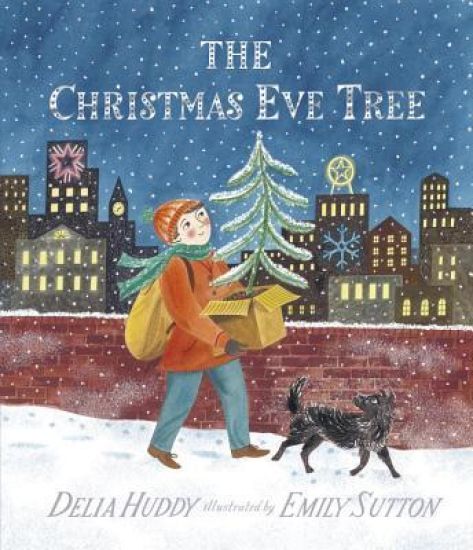
In a deeply moving story with the hallmarks of a classic, a homeless boy's rescue of a spindly Christmas tree sparks a glimmer of hope that has far-reaching effects. It's late on Christmas Eve, and the little fir tree is the only tree left in the shop. What a poor thing I am, it thinks. But then a young boy enters the store, drawn in from the damp by the warmth and lights and the wonderful smell of Christmas, and he doesn't seem to mind that the scrawny tree isn't tall and straight like the others. . . . This magical story, beautifully illustrated by Emily Sutton, captures an unexpected and unforgettable moment of happiness that brings a whole city together.
Never before published, "White Rose and the Red" is the fictional biography of Elizabeth Siddall, wife of English poet and painter Dante Gabriel Rossetti. This extraordinary novel explores the charged interpersonal relationships between and among Siddall, Rossetti, and other key members of the pre-Raphaelite movement, including William Morris and John Ruskin. During H.D.'s lifetime, publishers shied away from the novel's radically unconventional hybrid form that combines elements of historical nonfiction, fiction, and biography. As part of the dense and allusive prose trilogy written during and after World War II (along with "The Sword Went Out to Sea" and "The Mystery"), "White Rose and the Red" exemplifies the mythic theme that H.D. saw as unifying all her writing. It also examines how Siddall - a controversial muse and model - came to become the iconic figure of an artistic movement.
Set during the World War II air raids in London, H.D.'s fascinating and visionary novel, Majic Ring, documents her spiritualist activities during this time.
Whether presented as exotic fantasy, a strategic location during World War II, or a site combining postwar leisure with military culture, Hawaii and the South Pacific figure prominently in the U.S. national imagination. Hollywood’s Hawaii is the first full-length study of the film industry’s intense engagement with the Pacific region from 1898 to the present. Delia Malia Caparoso Konzett highlights films that mirror the cultural and political climate of the country over more than a century—from the era of U.S. imperialism on through Jim Crow racial segregation, the attack on Pearl Harbor and WWII, the civil rights movement, the contemporary articulation of consumer and leisure culture, as well as the buildup of the modern military industrial complex. Focusing on important cultural questions pertaining to race, nationhood, and war, Konzett offers a unique view of Hollywood film history produced about the national periphery for mainland U.S. audiences. Hollywood’s Hawaii presents a history of cinema that examines Hawaii and the Pacific and its representations in film in the context of colonialism, war, Orientalism, occupation, military buildup, and entertainment.
Whether presented as exotic fantasy, a strategic location during World War II, or a site combining postwar leisure with military culture, Hawaii and the South Pacific figure prominently in the U.S. national imagination. Hollywood’s Hawaii is the first full-length study of the film industry’s intense engagement with the Pacific region from 1898 to the present. Delia Malia Caparoso Konzett highlights films that mirror the cultural and political climate of the country over more than a century—from the era of U.S. imperialism on through Jim Crow racial segregation, the attack on Pearl Harbor and WWII, the civil rights movement, the contemporary articulation of consumer and leisure culture, as well as the buildup of the modern military industrial complex. Focusing on important cultural questions pertaining to race, nationhood, and war, Konzett offers a unique view of Hollywood film history produced about the national periphery for mainland U.S. audiences. Hollywood’s Hawaii presents a history of cinema that examines Hawaii and the Pacific and its representations in film in the context of colonialism, war, Orientalism, occupation, military buildup, and entertainment.
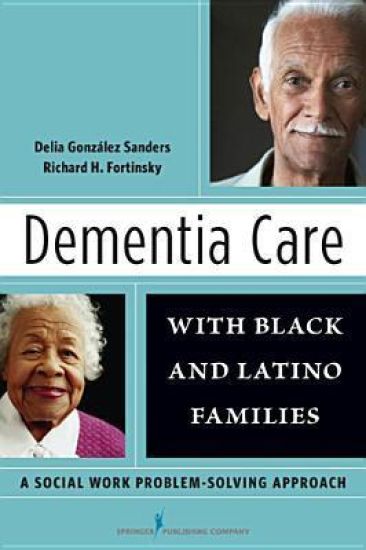
Designated a Doody's Core Title! "The authors have created a book that comfortably combines substantial research findings with readable, practical guidelines for assessment and intervention in the real-world practice of social work. This authoritatively researched, well-written volume will appeal to the multiple disciplines involved in assisting dementia patients and their families. It will also be useful for academic health care collections...Highly recommended."--Choice: Current Reviews for Academic Libraries Understanding the role of dementia caregivers in different ethnic and cultural contexts is one of the most important skills that social workers should master. This comprehensive volume provides practical guidance for social work professionals who work with Black and Latino families living with the daily challenges of Alzheimer's disease and other forms of dementia. It is grounded in the interpretation and meaning of dementia in Black and Latino cultural heritages, and based on both a solid theoretical framework and the substantial research and clinical expertise of the authors. Detailed, step-by-step guidelines to assessment and intervention in ethnic-specific situations provide useful strategies that go beyond generic solutions. The text presents an overview of the epidemiology and clinical course of dementia with a focus on those forms of the disease most common to Blacks and Latinos. It addresses family care and role responsibilities in ethnic families and their theoretical, ethnic, and cultural foundations. Self-efficacy and cognitive behavioral problem-solving theories are discussed as modalities of choice. The text also considers financial and service delivery trends and use of technology, and provides detailed forms, documents, and dementia care resources. Numerous case studies will help readers to quickly put information into the context of real-world situations. Key Features: Provides concrete, targeted interventions for assisting ethnic family caregivers in confronting day-to-day issues Explains how and why self-efficacy and cognitive behavioral problem-solving theories are particularly useful for social work with ethnic family caregivers Offers detailed, step-by-step guidelines to assessment and intervention Includes problem-solving forms, documents, and additional dementia care resources Contains vivid supporting case studies in each chapter
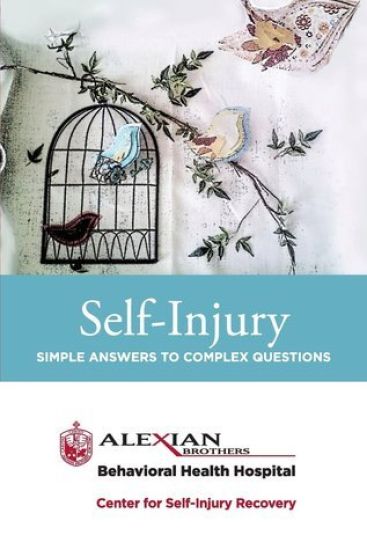
This book provides comprehensive, authoritative, yet accessible information about nonsuicidal self-injury (referred to simply as "self-injury). Self-injury is a complicated and mystifying condition; purposefully causing pain in order to feel better is, by its very nature, a complex thing. This book helps to de-mystify this condition by providing answers to questions about self-injury that are informed both by the research and the rich clinical experience of the authors. Written by a team of clinical experts in the assessment and treatment of self-injury, this book is designed to be accessible to a wide audience, including the general public, healthcare providers, teachers and school administrators, people who suffer from self-injury, and family members of people who suffer from self-injury. Here are three reasons why this book is worth your time and energy: 1.Written by Experts. The authors are clinicians who work every day with children, adolescents, and adults who engage in self-injury. We are a multidisciplinary team of experts who specialize in self-injury, providing insights from clinical psychology, medicine, psychiatry, nursing, and counseling fields. Specifically, we are the medical directors, program directors and coordinators, clinicians, and researchers for one of the largest specialty services for self-injury, the Center for Self-Injury Recovery. The Center for Self-Injury Recovery is located within the 7th largest behavioral health provider in the United States, Alexian Brothers Behavioral Health Hospital. Since the service began in 2002, the Center for Self-Injury Recovery has treated over 2,500 individuals with self-injury. In the year before this book was published, we treated 608 children, adolescents, and adults suffering from self-injury. 2.Practical, informed answers. This is a practical book designed to provide answers to common questions about a complex and often confusing condition: self-injury. Our answers are based on information that is available in the research literature on self-injury and are enriched by our extensive clinical experience. We answer basic as well as complex questions about self-injury in a way that is accessible to someone with little knowledge about self-injury, but also informative to someone who has extensive experience with self-injury. 3.Multidisciplinary and comprehensive focus. The Center for Self-Injury Recovery at Alexian Brothers is multidisciplinary and cuts across all continuums of care, from traditional outpatient therapy to inpatient treatment. Our integrated care model includes counselors, therapists, case managers, expressive therapists, chaplains, nurses, clinical psychologists, and psychiatrists. The questions and answers in this book reflect the variety of clinical disciplines and levels of care that is provided at the Center for Self-Injury Recovery. This book is designed to provide answers to questions asked by people who self-injure and the people that care about them, including parents, spouses, siblings, and friends. It is also designed to answer questions that professionals may have, such as therapists, counselors, teachers, nurses, clinical psychologists, physicians, and psychiatrists. In conclusion, this book is our attempt to share with you the expertise, experience, and tools we have gathered and developed over the last decade treating people with self-injury in the Center for Self-Injury Recovery at Alexian Brothers. We believe that the practical, clinically-focused, and evidence-informed answers provided in this book will be a resource for all people interested in better understanding and addressing self-injury. Our goal for this book is that it is kept within close reach on your desk (or your e-reader ), that it develops furled pages, is bookmarked extensively, and has text highlighted and margins full of scribbles. Above all else, we hope that you find it useful in recovery from self-injury.
This work has been selected by scholars as being culturally important and is part of the knowledge base of civilization as we know it.This work is in the public domain in the United States of America, and possibly other nations. Within the United States, you may freely copy and distribute this work, as no entity (individual or corporate) has a copyright on the body of the work.Scholars believe, and we concur, that this work is important enough to be preserved, reproduced, and made generally available to the public. To ensure a quality reading experience, this work has been proofread and republished using a format that seamlessly blends the original graphical elements with text in an easy-to-read typeface.We appreciate your support of the preservation process, and thank you for being an important part of keeping this knowledge alive and relevant.
This work has been selected by scholars as being culturally important and is part of the knowledge base of civilization as we know it.This work is in the public domain in the United States of America, and possibly other nations. Within the United States, you may freely copy and distribute this work, as no entity (individual or corporate) has a copyright on the body of the work.Scholars believe, and we concur, that this work is important enough to be preserved, reproduced, and made generally available to the public. To ensure a quality reading experience, this work has been proofread and republished using a format that seamlessly blends the original graphical elements with text in an easy-to-read typeface.We appreciate your support of the preservation process, and thank you for being an important part of keeping this knowledge alive and relevant.
This work has been selected by scholars as being culturally important and is part of the knowledge base of civilization as we know it.This work is in the public domain in the United States of America, and possibly other nations. Within the United States, you may freely copy and distribute this work, as no entity (individual or corporate) has a copyright on the body of the work.Scholars believe, and we concur, that this work is important enough to be preserved, reproduced, and made generally available to the public. To ensure a quality reading experience, this work has been proofread and republished using a format that seamlessly blends the original graphical elements with text in an easy-to-read typeface.We appreciate your support of the preservation process, and thank you for being an important part of keeping this knowledge alive and relevant.