Kirjojen hintavertailu. Mukana 11 392 248 kirjaa ja 12 kauppaa.

Kirjahaku

Etsi kirjoja tekijän nimen, kirjan nimen tai ISBN:n perusteella.

402 tulosta hakusanalla Dermot Turing

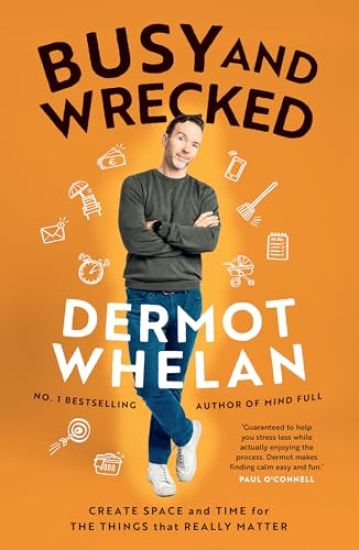
Busy and Wrecked

Busy and Wrecked

Dermot Whelan

Gill
2025
nidottu
Go on, admit it. How many times this week, or even today, have you told someone how busy or wrecked you are? How many times has someone told you? Dermot Whelan is here to tell you that you are okay, and it’s not your fault! Everything in our world is set up for busyness and distraction. But there is another way! If you’re feeling frayed around the edges, like there’s just not enough space in the day for all the things that you feel need doing, don’t despair! There is another path where your time is truly yours and not parcelled out in tinier and tinier pieces to everyone and everything making demands on it. This enlightened and often hilarious book will give you the map to find the way home to yourself, to reawaken those parts of you that may have faded away in recent times. Dermot will show you that those parts are still very much there and that they are dying to shine brighter than ever before. So get ready for stress and overwhelm to ebb away and calm and peace of mind to flow back? And the next time somebody asks you how you are, prepare to say, ‘I’m wonderful, thank you!’
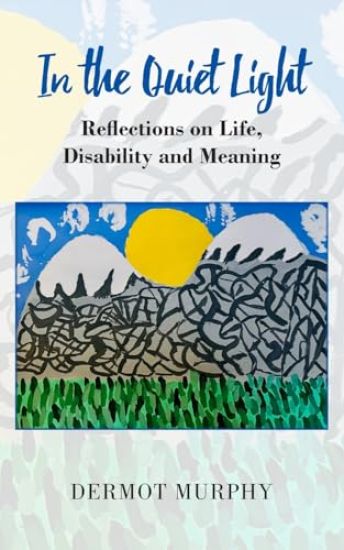
In the Quiet Light

In the Quiet Light

Dermot Murphy

New Generation Publishing
2024
pokkari
In the Quiet Light: Reflections on Life, Disability and Meaning is a poignant collection of poems that invites readers to understand life through the eyes of young people with life-limiting conditions. Drawing on years of experience, the author offers a window into lives that resonate with universal human truths; resilience, acceptance, and the profound beauty found in the ordinary. These poems weave between the bittersweet and the joyous, exploring the complexity of lives that are often underestimated or misunderstood. With an honesty and empathy that will resonate, this collection gives voice to feelings that many cannot articulate themselves, reminding us that life's value is not measured by years, but by the depth of lived experience and the bonds that hold us together. Whether reflecting on the challenges, the shared laughter, or the strength found in embracing life, this collection shows how much we can learn from the perspective and wisdom of these young people. In the Quiet Light leaves readers with a deeper understanding of their own lives and the meaning that can be found in every moment. Step into a world where each word is a testament to life's enduring light and find comfort in its calm embrace.
Conduct Disorder and Behavioural Parent Training

Conduct Disorder and Behavioural Parent Training

Dermot OReilly

Jessica Kingsley Publishers
2005
pokkari
Progress made with children with conduct disorder in specialist schools often does not transfer to the home, but this book shows how behavioural parent training and applied behaviour analysis can help professionals work with parents to continue improving their child's behaviour.Conduct Disorder and Behavioural Parent Training provides a comprehensive introduction to the field of conduct disorder and the individual, familial and social factors that influence the development of persistent antisocial behaviour. The author presents thorough evidence for the effectiveness of the following aspects of behavioural parent training:* compliance training* encouraging good behaviour through praise, enthusiasm and attention* using `time out' as an effective punishment technique* transfer of improvements to school setting* effects of treatment on the child's siblings.He considers the relative impact and costs of different settings for parent training, and outlines ethical issues and future directions for research in this area.This book is essential reading for all professionals involved in the care of children with conduct disorder, as well as psychology and social work students and academics.
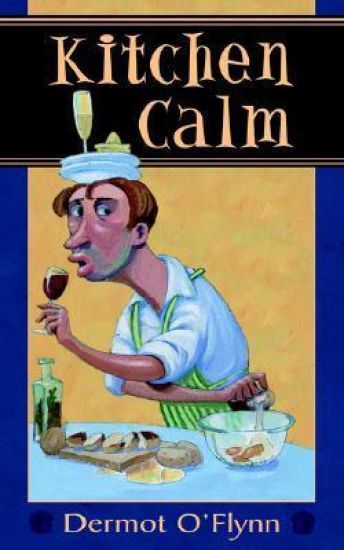
Kitchen Calm

Kitchen Calm

Dermot O'Flynn

New Generation Publishing
2006
pokkari
What should you do when your hollandaise sauce splits? Or when your gravy has a skin of grease on it? How exactly are you supposed to peel those tomatoes for your salad; how is it possible to get twice the juice from one lemon, and what is Gas mark 4 in Fahrenheit? This book addresses these and several other questions.
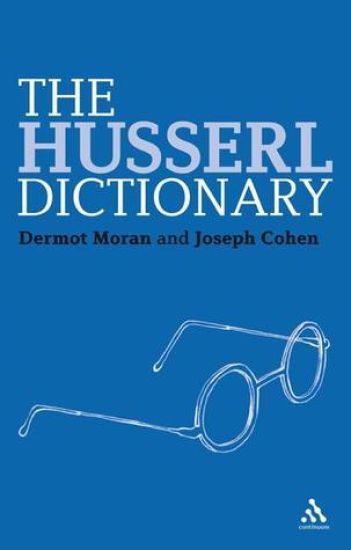
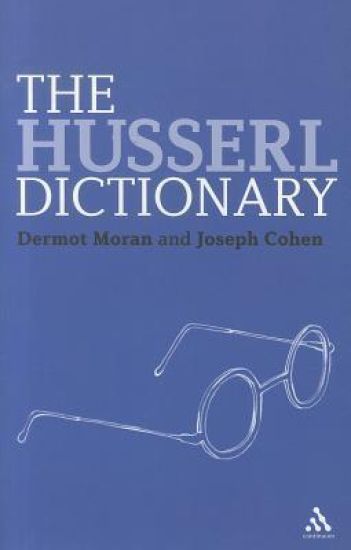
The Husserl Dictionary

The Husserl Dictionary

Dermot Moran; Joseph Cohen

Continuum International Publishing Group Ltd.
2012
sidottu
The Husserl Dictionary is a comprehensive and accessible guide to the world of Edmund Husserl, the founder of phenomenology. Meticulously researched and extensively cross-referenced, this unique book covers all his major works, ideas and influences and provides a firm grounding in the central themes of Husserls thought. Students will discover a wealth of useful information, analysis and criticism. A-Z entries include clear definitions of all the key terms used in Husserls writings and detailed synopses of his key works. The Dictionary also includes entries on Husserls major philosophical influences, including Brentano, Hume, Dilthey, Frege, and Kant, and those he influenced, such as Gadamer, Heidegger, Levinas, Sartre and Merleau-Ponty. It covers everything that is essential to a sound understanding of Husserls phenomenology, offering clear and accessible explanations of often complex terminology. The Husserl Dictionary is the ideal resource for anyone reading or studying Husserl, Phenomenology or Modern European Philosophy more generally.
The Husserl Dictionary

The Husserl Dictionary

Dermot Moran; Joseph Cohen

Continuum International Publishing Group Ltd.
2012
nidottu
This is a dictionary of the key terms and concepts in Husserl's philosophy, his major works and philosophical influences. "The Husserl Dictionary" is a guide to the world of Edmund Husserl, the founder of phenomenology. Meticulously researched and extensively cross-referenced, this unique book covers all his major works, ideas and influences and provides a firm grounding in the central themes of Husserl's thought. Students will discover a wealth of useful information, analysis and criticism. A-Z entries include clear definitions of all the key terms used in Husserl's writings and detailed synopses of his key works. The Dictionary also includes entries on Husserl's major philosophical influences, including Brentano, Hume, Dilthey, Frege, and Kant, and those he influenced, such as Gadamer, Heidegger, Levinas, Sartre and Merleau-Ponty. It covers everything that is essential to a sound understanding of Husserl's phenomenology, offering clear and accessible explanations of often complex terminology. "The Husserl Dictionary" is the ideal resource for anyone reading or studying Husserl, Phenomenology or Modern European Philosophy more generally. The "Continuum Philosophy Dictionaries" offer clear and accessible guides to the work of some of the more challenging thinkers in the history of philosophy. A-Z entries provide clear definitions of key terminology, synopses of key works, and details of each thinker's major themes, ideas and philosophical influences. The Dictionaries are the ideal resource for anyone reading or studying these key philosophers.
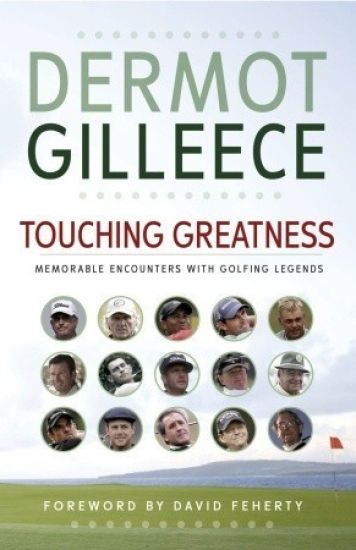
Touching Greatness

Touching Greatness

Dermot Gilleece

TRANSWORLD PUBLISHERS LTD
2008
pokkari
Includes tales of golfing stars and memorable moments from one of Ireland's golf correspondents. This work looks back over many wonderful years of golf with the greats - from Jack Nicklaus' first game on Irish soil, to sympathetic accounts of the declining skills of iconic golfers such as Seve Ballesteros.
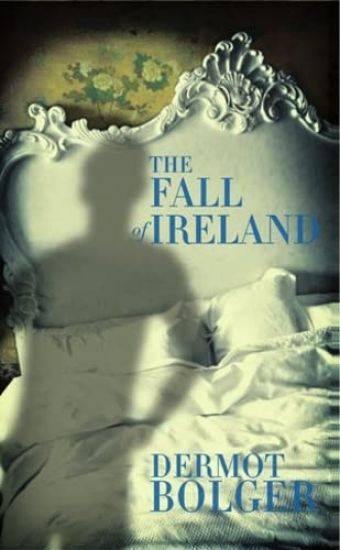
The Fall of Ireland

The Fall of Ireland

Dermot Bolger

New Island Books
2013
nidottu
An intimate human study and subtle portrait of a country in flux from New Island author Dermot Bolger. While a floundering Irish government clings to its illusion of power as an international troika waits in the wings, Martin, a mid-ranking civil servant, finds himself alone in a Beijing hotel: a superfluous accessory in a delegation accompanying a Minister to China. A cat-and-mouse encounter with a Chinese masseuse draws Martin into a world beyond his experience, forcing him to confront the gap between the chameleon face of someone at work and the reality when everything is stripped bare, with nowhere left to hide from the anxieties, longings and contradictions in his head. The Fall of Ireland is a subtle meditation on the thin line between illusion and actuality: a study of a homesick man in the gilded cage of a luxury hotel, trying to unravel which elements of his life are real and which are subconscious deceptions.
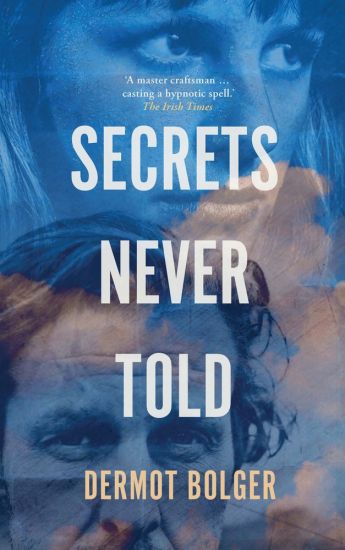
Secrets Never Told

Secrets Never Told

Dermot Bolger

New Island Books
2020
nidottu
A widow spends weeks haunting a cemetery, desperate to track down an unknown woman who keeps leaving flowers on her husband’s grave; A daughter searches a foreign city for her father, trying to understand why he disappeared forty-five years ago; A former gay lover of Roger Casement stands among the crowds at his state funeral in 1965, paying silent homage to the closeted world they were forced to inhabit at the dawning of the Irish State. A writer at a book launch comes face to face with the person secretly responsible for his success. In his first collection of short stories, Dermot Bolger peers under the veneer of our lives, exploring the secrets that bind families together, or tear them apart, creating worlds where people find that nothing is truly certain. There are always truths just beyond reach that would make sense of their lives, if they only know how to unlock them.
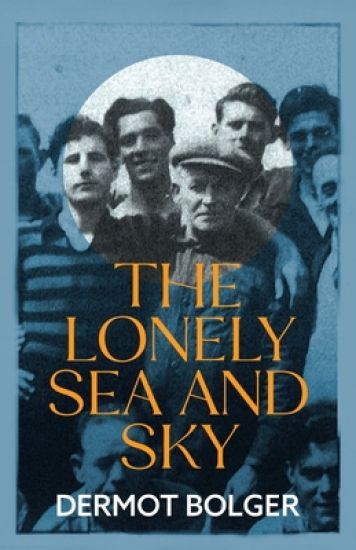
The Lonely Sea and Sky

The Lonely Sea and Sky

Dermot Bolger

NEW ISLAND BOOKS
2022
nidottu
'Myles Foley gripped my soaked jumper. Before his ship sank he was a Nazi: now he's a drowning sailor. Out here, we are all sailors. Your father and grandfather understood that. Are you going to disgrace their memory?' Part historical fiction, part extraordinary coming-of-age tale, The Lonely Sea and Sky charts the maiden voyage of fourteen-year-old Jack Roche aboard a tiny Wexford ship, the Kerlogue, on a treacherous wartime journey to Portugal. After his father's ship is sunk on this same route, Jack must go to sea to support his family swapping Wexford's small streets for Lisbon's vibrant boulevards: where every foreigner seems to be a refugee or a spy, and where he falls under the spell of Katerina, a Czech girl surviving on her wits. Bolger's new novel is based on a real-life rescue in 1943, when the Kerlogue's crew risked their lives to save 168 drowning German sailors - members of the navy that had killed Jack's father. Forced to choose who to save and who to leave behind, the Kerlogue grows so dangerously overloaded that no one knows if they will survive amid the massive Biscay waves. A brilliant portrayal of those unarmed Irish ships that sailed alone through hazardous waters; of young romance and a boy encountering a world where every experience is intense and dangerous, this is Bolger's most spellbinding novel, and the work of a master storyteller who is one of Ireland's best-known novelists, playwrights and poets.
Other People's Lives

Other People's Lives

Dermot Bolger

NEW ISLAND BOOKS
2022
nidottu
Every night during a year spent in lockdown, Dermot Bolger set out on long walks through deserted streets, armed only with a pen and paper. Bolger follows in the footsteps of the great Portuguese poet, Fernando Pessoa, using walks through his native city to allow his imagination free rein to revisit pivotal moments in his own life and speculatively meditate on the lives of others in a series of remarkable poems. The book starts with his parents honeymooning in a wartime Wicklow orchard and ends, eight decades later, as the poet dances with his partner in a Wicklow field. In between we encounter Nuala O’Faolain on a bicycle on Brooklyn Bridge; Grace Gifford Plunkett, defiant in her lonely final years; Herbert Simms, Dublin’s brilliant, tragically overworked housing architect; and Patricia Lynch, writing The Turf-Cutter’s Donkey in one room while her husband wrote communist tracts in the next. Interlaced with such real lives are imagined ones – a hardened criminal detailing prison life in haikus, a doppelganger exploring alternative pasts for the author. Taken together, these poems chart a dazzling constellation of experiences.
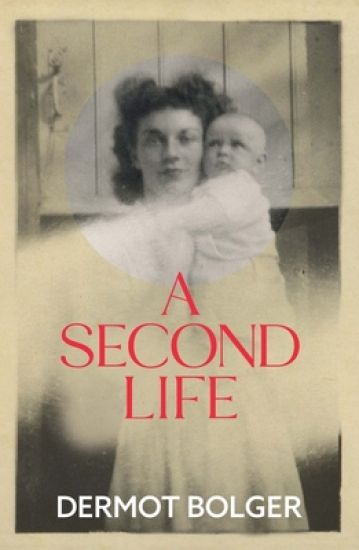
A Second Life

A Second Life

Dermot Bolger

NEW ISLAND BOOKS
2022
pokkari
Following a car crash, for several seconds Dublin photographer Sean Blake is clinically dead but finds his progress towards the afterworld blocked by a haunting face he only partially recognises. Restored to a miraculous second chance at life – he feels profoundly changed. He is haunted by not knowing who he truly is because this is not the first time he has been given a second life. At six weeks old he was taken from his birth mother, a young girl forced to give him up for adoption. Now he knows that until he unlocks the truth about his origins, he will be a stranger to his wife, to his children and to himself. Struggling against a wall of official silence and a complex sense of guilt, Sean determines to find his birth mother, embarking on an absorbing journey into archives, memories, dreams and startling confessions. The first modern novel to address the scandal of Irish Magdalene laundries when it was published in 1994, A Second Life continued to haunt Bolger’s imagination. He has never allowed its republication until he felt ready to retell the story in a new and even more compelling way. This reimagined text is therefore neither an old novel nor a new one, but a completely ‘renewed’ novel, that grows towards a spelling-binding, profoundly moving conclusion.
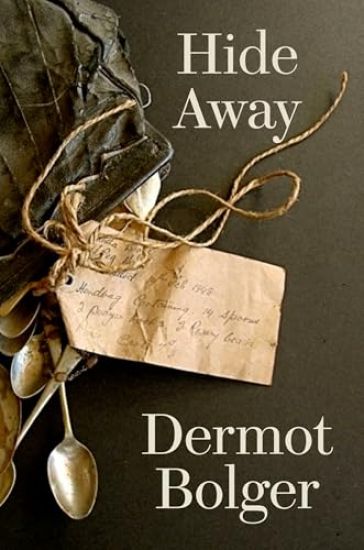
Hide Away

Hide Away

Dermot Bolger

NEW ISLAND BOOKS
2024
nidottu
Hidden behind the walls of Grangegorman Mental Hospital in 1941, four lives collide, all afflicted by the human cost of wars, betrayals and trauma. Gus, a shrewd attendant, is the keeper of everyone’s secrets, especially his own. Two War of Independence veterans are reunited. One, Jimmy Nolan, has spent twenty years as a psychiatric patient, unable to recover from his involvement in youthful killings. In contrast, Francis Dillon has prospered as a businessman, until rumours of Civil War atrocities cause his collapse, suffering delusions of enemies seeking to kill him. Doctor Fairfax has fled London after his gay lover’s death. Desperate to rekindle a sense of purpose, Fairfax tries to help Dillon recover by getting him to talk about his past. But a code of silence surrounds the traumatic violence Ireland has endured. Is Dillon willing to break his silence to find a way back to his family? In this superb evocation of hidden worlds, master storyteller Dermot Bolger explores the aftershock within people who participate in violence and the fault-lines in all post-conflict societies only held together by collective amnesia.
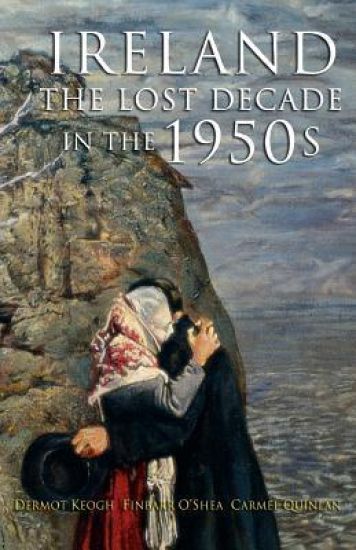
Ireland In The 1950s (Lost Decade)

Ireland In The 1950s (Lost Decade)

Dermot Keogh

The Mercier Press Ltd
2004
nidottu
This book brings to light the social, cultural, political and economic complexities and contradictions of Ireland in the 1950s. There is a strong emphasis on the development of economic thinking and cultural life in Ireland during the 1950s. There are contributions on the role of women in society, the question of abortion and attitudes towards adoption The academic panel, which includes John Banville, Andrew McCarthy, John Bradley and Gerry O’Hanlon, has contributed essays based on original research.
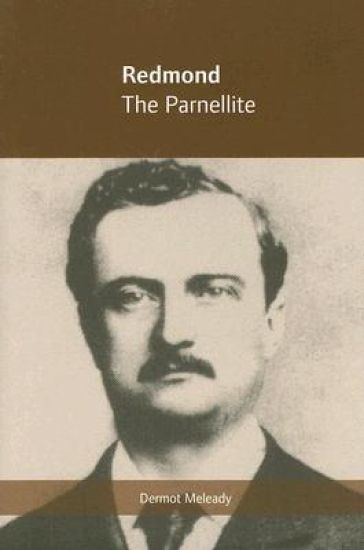
Redmond

Redmond

Dermot Meleady

Cork University Press
2008
sidottu
John Edward Redmond (1856-1918) was next to Eamon de Valera, the longest- serving national leader of the Irish nationalist community in the twentieth century. As chairman of the Irish Parliamentary Party in the U.K. Parliament from 1900 to 1918, he brought the forty-year struggle for Home Rule to a successful conclusion in 1914, only to see his achievement wrecked by war in Europe and insurrection at home. He is now remembered principally - and controversially - for his call to Irishmen to enlist in the British army in the Great War. Previous biographies - the last appeared in 1932 - concentrated on the later part of Redmond's career. This book, the first part of a projected two-volume biography, sets out to provide a more rounded portrait of this important figure by examining his early life and career up to his election, in 1900, as chairman of the reunited Irish Party. Beginning with his family's tradition of public service in Victorian Wexford, it traces Redmond's first years as a young M.P. and acolyte of Parnell in the Home Rule campaign and agrarian struggles of the 1880s. The enduring impact of a fundraising mission to Australasia and the U.S. in 1883-4 is discussed. The book examines his motives in taking Parnell's side in the disastrous party split caused by the exposure of the latter's affair with Katharine O'Shea. It then follows his efforts, as leader of the small rump of Parnellite M.P.s during the strife-torn 1890s, to uphold Parnell's principle of independent opposition in Parliament, while seeking at home to cultivate the support of both Fenian elements and Irish unionists.
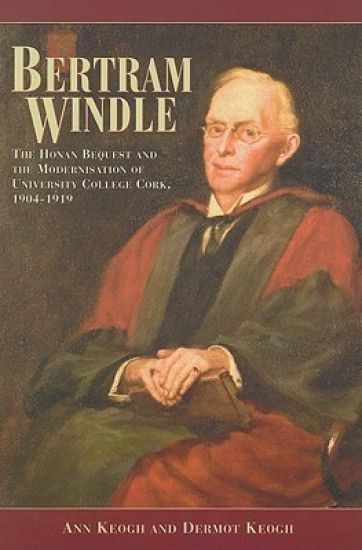
Bertram Windle

Bertram Windle

Dermot Keogh; Ann Keogh

Cork University Press
2010
sidottu
Bertram Windle was a doctor, a scientist, an archaeologist, an anthropologist, a writer on English literature and evolution, and President of Queen's/University College Cork. During his time in Ireland between 1904 and 1919, he had a major impact on the development of higher education and the development of the National University of Ireland. Windle was a privileged participant in Irish public affairs with friends in the British Government, Dublin Castle, the Irish Parliamentary Party, the Gaelic League and the Catholic Church. The son of a Church of Ireland rector, he studied medicine at Trinity College Dublin. A convert to Catholicism in the early 1880s, he became a Professor of Anatomy in Birmingham, helping to found Birmingham University. He took up his post as President of Queen's College Cork in 1904, transforming the university during the following decade and a half into a modern institution with an enhanced curriculum, more staff, a growing student body and new buildings and facilities. He was responsible for the building of the Honan Hostel and Honan chapel. Windle viewed with great concern the rise of radical nationalism and the growth of Sinn Fein. He was a strong supporter of the British government's participation in World War 1, a critic of the 1916 rising, and a member of the Irish Convention which sought to resolve the 'Irish question' in 1917/1918. Windle had no sympathy for the new radical nationalist coalition which contested the general election of 1918. In the context of the decline of the Irish Parliamentary Party and the rise of Sinn Fein led by Eamon de Valera, he launched his second unsuccessful bid to establish an autonomous university of Munster. Thwarted by a combination of nationalist intransigence and the weakness of the British government, he left Ireland for Canada in 1919 thoroughly disillusioned by the politics of UCC, the Irish Catholic Church and the emerging independent Irish state. Students of Irish history, politics, culture, society and education will find the work of interest together with those who wish to see Windle in his role as a scientist and commentator on evolution and on religious matters. Windle, given his background and formation, provides a unique view of Irish politics, history and education. The work is all the more important because of the richness primary sources on which it is based
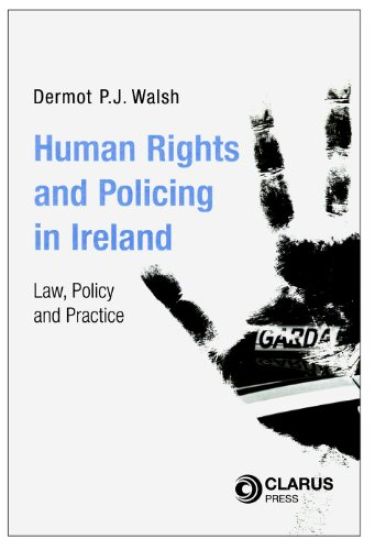
Human Rights and Policing in Ireland

Human Rights and Policing in Ireland

Dermot Walsh

Clarus Press Ltd
2009
nidottu
This book assesses Garda powers, practices and processes for compliance with international best practice in human rights standards. It offers a unique critique of the law, policy and practice on policing in Ireland from a human rights perspective. It consists of three substantive parts: Part I is a major contribution to the literature on human rights and policing generally. It offers a detailed and comprehensive account of human rights standards applicable to key aspects of policing such as: * arrest; * detention; * interrogation; * right of access to legal advice and medical treatment; * taking bodily samples; * stop and question/search; * entry, search and seizure; * surveillance; * the use of informers; * improper use of intelligence; * public order; * the use of force; * the treatment of victims; * the treatment of ethnic minorities; * complaints; * internal discipline; * accountability to the law; * governance and democratic accountability; * gender and diversity in the composition of the police organisation; * the rights of police officers with respect to trade union membership, political activity and disciplinary procedures; and * education and training. The human rights standards on each of these aspects are extracted in the first instance from international sources such as: * the European Convention on Human Rights; * the International Covenant on Civil and Political Rights; * the UN Basic Principles on the Use of Force and Firearms by Law Enforcement Officials; * the Council of Europe's Code of Police Ethics; * the reports of the Council of Europe's Committee on the Prevention of Torture * the jurisprudence of the European Court of Human Rights and examples of best practice from other jurisdictions. This is supplemented by an account of relevant Irish human rights standards as extracted from the Constitution, the common law and legislation. On each of these key aspects of policing, attention is drawn to how and where Irish law falls short of international best practice and what is needed to remedy the deficiencies. The Part closes with a detailed and comprehensive account of how and the extent to which human rights based policing policies were formulated, disseminated and monitored within the Garda up to the current reforms triggered by the Garda Siochana Act 2005, the reports of the Morris and Barr Tribunals of Inquiry and the Ionann Human Rights Audit. Part II offers a structured and comprehensive account of the human rights concerns that have affected policing in Ireland over the past decade or so. It brings together in one place an overview of the human rights failings that have been revealed by sources such as: * the Morris Tribunal of Inquiry into events in Donegal; * the Barr Tribunal into the fatal shooting of John Carthy at Abbeylara; * the Garda Siochana Complaints Board and Ombudsman Commission; * the European Committee on the Prevention of Torture; * judgments from Irish courts; * the Ionann Human Rights Audit on the Garda; and * investigative journalism. A concerted attempt is made to present the findings from these sources under the same headings which are used to present the human rights standards on key aspects of policing in part one. Part III offers a critique of the Garda policies and processes that have been and are being taken to address the human rights deficiencies outlined in Part II. This includes an expert analysis of the internal formulation and dissemination of human rights policies and the monitoring of compliance with those policies and human rights standards within the force. Once again a concerted attempt is made to present the analysis under the same headings that are used in the first and second parts. In Part IV the book concludes with a body of broad recommendations on the further actions that are needed to ingrain human rights standards at the heart of all aspects of policing in Ireland.
Human Rights and Policing in Ireland

Human Rights and Policing in Ireland

Dermot Walsh

Clarus Press Ltd
2009
sidottu
This book assesses the powers, practices, and processes of Garda (Ireland's police force) for compliance with international best practice in human rights standards. It offers a unique critique of the law, policy, and practice on policing in Ireland from a human rights perspective. The book is divided into four sections, with Part I examining human rights and policing in general. It offers a detailed and comprehensive account of human rights standards applicable to key aspects of policing, such as: arrest * detention * interrogation * the right of access to legal advice and medical treatment * the taking bodily samples * stop and question/search * entry, search, and seizure * surveillance * the use of informers * the improper use of intelligence * public order * the use of force * the treatment of victims * the treatment of ethnic minorities * complaints * internal discipline * accountability to the law * governance and democratic accountability * gender and diversity in the composition of the police organization * the rights of police officers with respect to trade union membership, political activity, and disciplinary procedures. The human rights standards on each of these aspects are extracted from international sources, such as: the European Convention on Human Rights, the International Covenant on Civil and Political Rights, the UN Basic Principles on the Use of Force and Firearms by Law Enforcement Officials, the Council of Europe's Code of Police Ethics, the reports of the Council of Europe's Committee on the Prevention of Torture, the jurisprudence of the European Court of Human Rights, and examples of best practice from other jurisdictions. This is supplemented by an account of relevant Irish human rights standards as extracted from Ireland's Constitution, the common law, and legislation. On each of these key aspects of policing, attention is drawn to how and where Irish law falls short of international best practice and what is needed to remedy the deficiencies. Part II offers a structured and comprehensive account of the human rights concerns that have affected policing in Ireland over the past decade or so. It gives an overview of the human rights failings that have been revealed by sources, such as: the Morris Tribunal of Inquiry into events in Donegal * the Barr Tribunal into the fatal shooting of John Carthy at Abbeylara * the Garda Siochana Complaints Board and Ombudsman Commission * the European Committee on the Prevention of Torture * judgments from Irish courts * the Ionann Human Rights Audit on the Garda * investigative journalism. Part III offers a critique of the Garda policies and processes that have been and are being taken to address the human rights deficiencies outlined in Part II. This includes an expert analysis of the internal formulation and dissemination of human rights policies and the monitoring of compliance with those policies and human rights standards within the force. In Part IV, the book concludes with a body of broad recommendations on the further actions that are needed to ingrain human rights standards at the heart of all aspects of policing in Ireland.