Kirjojen hintavertailu. Mukana 11 518 949 kirjaa ja 12 kauppaa.

Kirjahaku

Etsi kirjoja tekijän nimen, kirjan nimen tai ISBN:n perusteella.

1000 tulosta hakusanalla Dimitris Margetas

The Burning Saints

The Burning Saints

Dimitris Xygalatas

Equinox Publishing Ltd
2012
sidottu
The Anastenaria are Orthodox Christians in Northern Greece who observe a unique annual ritual cycle focused on two festivals, dedicated to Saint Constantine and Saint Helen. The festivals involve processions, music, dancing, animal sacrifices, and culminate in an electrifying fire-walking ritual. Carrying the sacred icons of the saints, participants dance over hot coals as the saint moves them. 'The Burning Saints' presents an analysis of these rituals and the psychology behind them. Based on long-term fieldwork, 'The Burning Saints' traces the historical development and sociocultural context of the Greek fire-walking rituals. As a cognitive ethnography, the book aims to identify the social, psychological and neurobiological factors which may be involved and to explore the role of emotional and physiological arousal in the performance of such ritual. A study of participation, experience and meaning, 'The Burning Saints' presents a highly original analysis of how mental processes can shape social and religious behaviour.
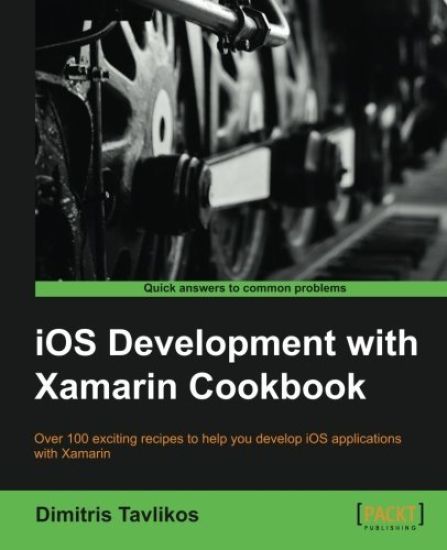
iOS Development with Xamarin Cookbook

iOS Development with Xamarin Cookbook

Dimitris Tavlikos

Packt Publishing Limited
2014
nidottu
The book is written in a recipe format with practical examples, allowing you to go directly to your topic of interest or follow topics throughout a chapter to gain an indepth knowledge. There are also plenty of hints and best practices along the way. If you are a C#/.NET developer with no previous experience in iOS development or an ObjectiveC developer who wants to create complete iOS applications and deploy them to the App Store, then this book is ideal for you. No experience with Xamarin is needed.
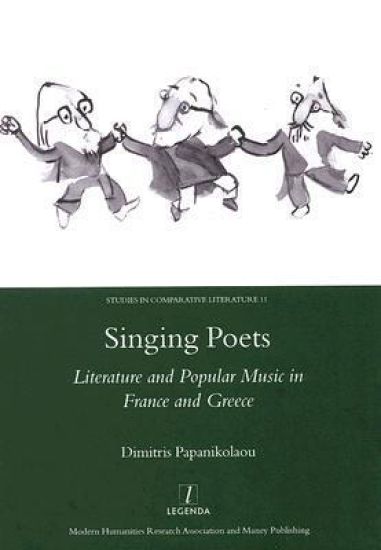
Singing Poets

Singing Poets

Dimitris Papanikolaou

Maney Publishing
2007
sidottu
This book shows how the model of singing poets becomes then an organizing principle for a system of national popular music. It responds to the growing call for the teaching of the textual networks of popular music within the domains of literary and cultural studies.
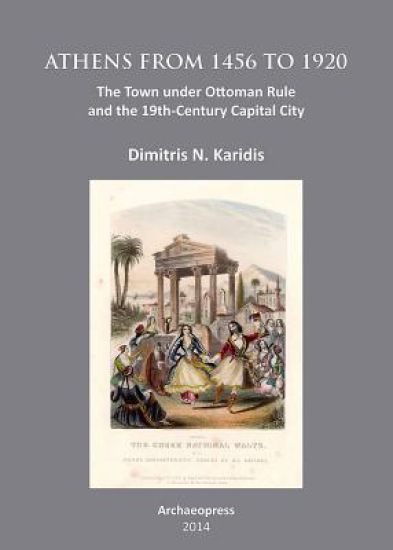
Athens from 1456 to 1920

Athens from 1456 to 1920

Dimitris N. Karidis

Archaeopress
2014
nidottu
Few people are aware that shortly after 1456, when Athens yielded without fighting to the bitter end, she had become one of the bigger Balkan towns within the Ottoman Empire. The limited area confined within the boundaries of the late Roman fortification walls soon developed into a town of thirty-six mahalles. A thorough analysis of the town/country relationship within the Ottoman feudal system of production in general, and as related to Athens in particular, reveals the dynamic conditions of urban development. Athens shared many of the characteristics of prosperity based on specific modes of appropriation of surpluses and patterns of division of labour between town and countryside. Strange though it might seem, it was only after the middle of the 17th century, when land-tenure conditions changed and Athens was heading towards decline, that an ‘Ottoman’ character as such could be detected in its built environment, although Christians still strongly outnumbered Muslim citizens. That being so, the presence at that time in Athens of representatives of the European Enlightenment, hypnotized by the myth of its artistic and cultural treasures, did not affect the general conditions of development. In the 1830s, Athens, by that time a provincial town of secondary importance, was ‘ordered’ to stride from feudalism to capitalism, to transform itself into a modern capital city of a new-born state. The shift from a small town under Ottoman rule to the modern city of the Hellenic Kingdom implied the quick transformation of belonging to a community (understood in terms of sharing common cultural characteristics) to a sense of being a member of a society (understood as an institution, as an externality demanding obedience). The amorphous masses of the medieval quarters that had arranged themselves so that unity within variety was established, where each particular architectural entity retained its meaning in so far as it was experienced as part of the whole urban fabric, had to give way to the early 19th-century planning environment, conceived more or less as a series of autonomous architectural identities understood only within a specific urban complex. It was not easy for Athens to cross the ‘line’ in 1834. The rejection of the first plan should not be naively understood as an urban restructuring triggering the virulent dissent of those Athenian landowners who detected threats to their vested interests. A violent break with the past was necessary so that new compositional stratagems could be implemented. But ever since Athens became a capital city, the pendulum of its history swung dramatically between tradition and modernism, not least because nationalism kept propagating an idealistic vision of an historical continuum that ran from the glorious ancient past down to the euphoria of the modern Greek state. Although Athens did make steady steps towards becoming a ‘modern’, ‘European-like’ city, comprehensive planning and centralized control of public works, as they had been essayed in central and western European cities in the second half of the 19th century, were totally incompatible with the build-as-you-please practice foisted on the capital city of Greece. Architectural and urban analysis of Athens between 1456 and 1920 discloses the metamorphosis of a town to a city, experienced as an invigorating adventure through the meandering routes of history. This is what this book is about.
Risk Pricing

Risk Pricing

Dimitris N. Chorafas

Harriman House Publishing
2010
pokkari
Every industry experiences strategic inflection points which offer promises as well as threats. The crisis of 2007-2009 was one of strategic inflection for the banking industry, and a significant part of the danger came from the fact that risk pricing was found desperately wanting. The flaws in the existing risk pricing system were exposed, but this could also be the starting point of a new, innovative and more accurate risk regime – indeed, if the global economy is to recover with any long-term strength, it must be.Deconstructing the failures of the past, and introducing some of the best techniques and disciplines for the future, 'Risk Pricing' is an essential guide to how the financial world got risk so badly wrong – and how it might avoid doing so again.Bringing much needed sunlight on the workings of modern financial risk, and the inadequacies of past attempts to price it, amongst numerous topics the author covers are:- Why the response of governments to the 2007-2009 crisis was seriously flawed- How risk complexity makes pricing in the 21st century particularly difficult, and what can be done about it- The application of Feynman diagrams in risk management- Why the top methodology of physicists – quantum electrodynamics (QED) – offer a potential solution with the qualities and capacity necessary for this complex taskThis is a book about managing risk through the correct pricing of exposure embedded in financial products. A high level risk control plan is necessary because, in many banks and other financial institutions, even CEOs and senior managers have often lacked the timely and detailed information they require to watch over exposures building up in warehoused positions. Regulators, too, have struggled to monitor risk, which means there is no time to lose in implementing a better risk pricing method. Another global economic crisis could take place if changes are not made.
Ta Vrahia

Ta Vrahia

Dimitris Stergiou

Stergiou Limited
2014
nidottu
Constantine Ostas, a University professor is spending his holidays at his home village with his family. One very hot noon on August the 13th, he gets his books and archives and lies down in the garden under the shady pergola. There, he is overwhelmed by thoughts that turn into vivid memories and bring him back exactly twelve years ago at the same place. His memories begin from the day that he, as a graduate of the University, visits the house of his fellow villager Helen, who is a student at the School of Philosophy in the University of Athens and to whom he had been closely acquainted two years ago. Back then a mutual respect had developed between them which eventually evolved into mutual love, but without any continuation. The son of a big landowner of the village, John Kostoula was madly in love with Helen, but she rejected him discreetly. After that John tried to establish relations with Helen's sister, Alexandra, a schoolgirl, who also rejected him. This behaviour of Helen and Alexandra turned his love for Helen into hatred against Constantine when he learned that when Constantine came to the village, he went straight to her house and then went with her for hiking tours to the rocks... The memories of the professor of his love for Helen, the behaviour of John and his shepherd, (the sly Mitros) and the deep discussions with intense lyricism and metaphor about his love for Helen are covering the first nine chapters of the novel. And so it is a kind of 'boxing' with the past, but in the present These memories are interrupted abruptly when the scene of the tragedy at the rocks is introduced - the death of Helen and John caused by falling rocks. Two years after Helen's death, Constantine married her sister, Alexandra, in respect to Helen's last wish that she shared with her father in her last breath, and acquired by this marriage a daughter of ten years, whom he named Helen. The landowner Kostoula donated half of his real estate in the area of the rocks to the church, and the other half - to the village community. Constantine bought his half estate at the rocks from the community by winning a contest a year ago. In the following chapters the lyrical and allegorical catharsis of the character is revealed. Mitros, chased by his remorse, reveals to the teacher, Constantine, that the tragedy at the rocks twelve years ago was not an "accident ", but a plan to assassinate him, which he and John had elaborated. After these revelations, the teacher decided to divide the land he had bought between the landless of the village, giving ten acres to Mitros, the killer of his beloved Helen Also, the donated money to the community to build school with the stone from the rocks which he flattened and in their place created a garden...
The Rocks

The Rocks

Dimitris Stergiou

Stergiou Limited
2014
nidottu
Constantine Ostas, a University professor is spending his holidays at his home village with his family. One very hot noon on August the 13th, he gets his books and archives and lies down in the garden under the shady pergola. There, he is overwhelmed by thoughts that turn into vivid memories and bring him back exactly twelve years ago at the same place. His memories begin from the day that he, as a graduate of the University, visits the house of his fellow villager Helen, who is a student at the School of Philosophy in the University of Athens and to whom he had been closely acquainted two years ago. Back then a mutual respect had developed between them which eventually evolved into mutual love, but without any continuation. The son of a big landowner of the village, John Kostoula was madly in love with Helen, but she rejected him discreetly. After that John tried to establish relations with Helen's sister, Alexandra, a schoolgirl, who also rejected him. This behaviour of Helen and Alexandra turned his love for Helen into hatred against Constantine when he learned that when Constantine came to the village, he went straight to her house and then went with her for hiking tours to the rocks... The memories of the professor of his love for Helen, the behaviour of John and his shepherd, (the sly Mitros) and the deep discussions with intense lyricism and metaphor about his love for Helen are covering the first nine chapters of the novel. And so it is a kind of 'boxing' with the past, but in the present These memories are interrupted abruptly when the scene of the tragedy at the rocks is introduced - the death of Helen and John caused by falling rocks. Two years after Helen's death, Constantine married her sister, Alexandra, in respect to Helen's last wish that she shared with her father in her last breath, and acquired by this marriage a daughter of ten years, whom he named Helen. The landowner Kostoula donated half of his real estate in the area of the rocks to the church, and the other half - to the village community. Constantine bought his half estate at the rocks from the community by winning a contest a year ago. In the following chapters the lyrical and allegorical catharsis of the character is revealed. Mitros, chased by his remorse, reveals to the teacher, Constantine, that the tragedy at the rocks twelve years ago was not an "accident ", but a plan to assassinate him, which he and John had elaborated. After these revelations, the teacher decided to divide the land he had bought between the landless of the village, giving ten acres to Mitros, the killer of his beloved Helen Also, the donated money to the community to build school with the stone from the rocks which he flattened and in their place created a garden...
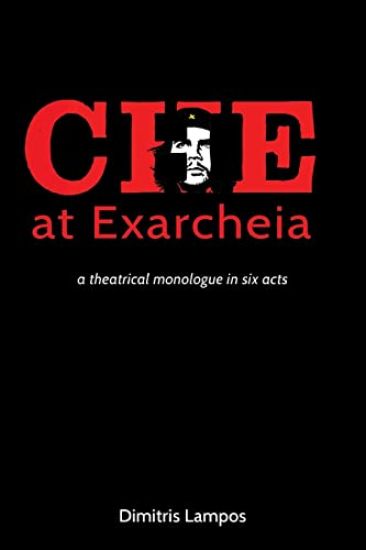
Che at Exarcheia

Che at Exarcheia

Dimitris Lampos

Gap Advertising Ltd
2021
pokkari
Che was not simply a consistent revolutionary. He was much more than that. He was the conscience of social revolution. That's why he still lives as a spiritual entity. Actually, many people got to know him after his death. A few familiarised themselves with him through his writings and many through the praise others heaped on him or through their aphorisms. This means that Che still lives and develops in our conscience as well as in the collective consciousness of humanity that is striving for the sake of New Man, for a better world.As the "bosses", the spheres of influence and the would-be rulers of this dark world do all they can to make us forget about him; in other words, to stop "being realistic and fighting for the impossible". Che, imitating Marx, who appeared in Soho, decided to appear at Exarcheia with this gripping theatrical monologue.
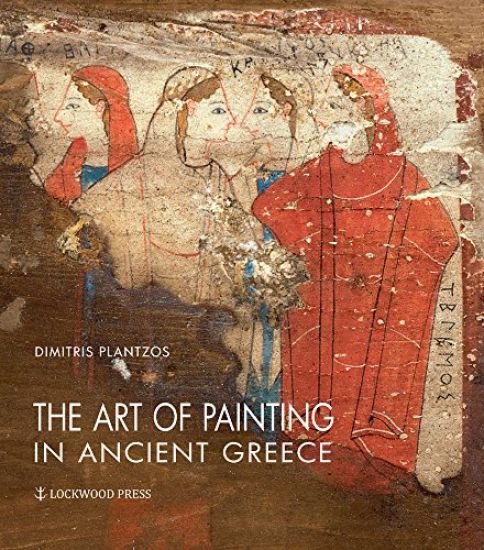
The Art of Painting in Ancient Greece

The Art of Painting in Ancient Greece

Dimitris Plantzos

Lockwood Press
2018
nidottu
This new and richly illustrated overview of Greek painting combines a fresh scholarly approach to visual arts with the most complete survey to date of the painted monuments of classical antiquity. The Art of Painting in Ancient Greece covers a wide chronological and geographical span, from the Bronze Age murals of Knossos, Santorini and Mycenae to the opulent villas of the Roman Empire, from Anatolia and Egypt in the East to Campania and Etruria in the West. Surveying the techniques, materials, and works produced, as well as ancient literary accounts, the book engages in five main lines of inquiry: Why did the Greeks cover the walls of their sanctuaries, agoras, palaces, homes, and even their tombs with painted images? What topics, real or imaginary, did they choose to depict? How were those images created? What were the techniques employed and the materials used? Who painted those images? And how does the spectacular phenomenon of Greek monumental painting compare with other branches of Greek art, from mosaics and vase painting to sculpture?
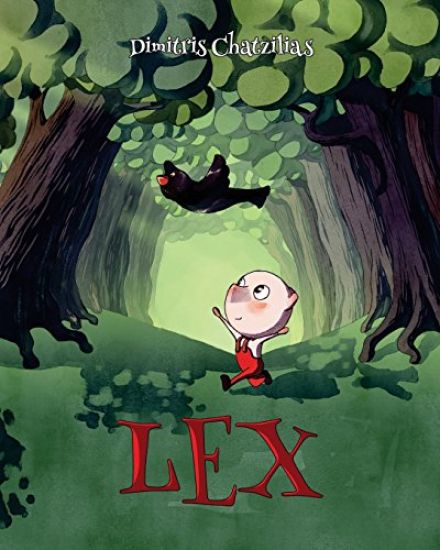
Lex

Lex

Dimitris Chatzilias

Createspace Independent Publishing Platform
2018
nidottu
Lex decides to enter the forest for the first time and discover all the secrets that are hidden in it. Apart from new places, events and creatures, Lex, accompanied by his oak tree friend, explores personal limitations, causes of behaviors, interactions with the environment and people around him, the value of respect in these interactions and, most importantly, the meaning of freedom, which is the central subject of the book. Their roaming is a course towards adulthood and independence through questioning, healthy disobedience and critical thinking. Although the story gives the chance for a deeper level of interpretation for older children, it remains a fun and adventurous read for all ages. Without being heavy or instructional, the book's main goal is to trigger critical thought and constructive conversations; to let Lex's discoveries during his roaming be perceived in a free and personal way by each reader. To inspire children who are just taking their first steps in life with the joy of spreading their own wings and taking their future into their own hands, and also to remind older readers of the excitement of constant exploration, one of the most important ingredients in a joyful life.
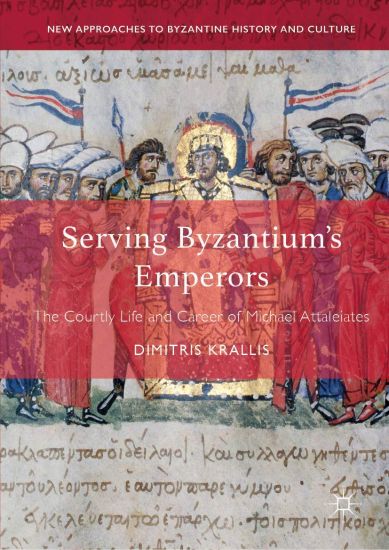
Serving Byzantium's Emperors

Serving Byzantium's Emperors

Dimitris Krallis

Springer Nature Switzerland AG
2019
sidottu
This book is a microhistory of eleventh-century Byzantium, built around the biography of the state official Michael Attaleiates. Dimitris Krallis presents Byzantium as a cohesive, ever-evolving, dynamic, Roman political community, built on traditions of Roman governance and Hellenic culture. In the eleventh century, Byzantium faced a crisis as it navigated a shifting international environment of feudal polities, merchant republics, steppe migrations, and a rapidly transforming Islamic world. Attaleiates’ life, from provincial birth to Constantinopolitan death, and career, as a member of an ancient empire’s officialdom, raise questions of identity, family, education, governance, elite culture, Romanness, Hellenism, science and skepticism, as well as political ideology during this period. The life and work of Attaleiates is used as a prism through which to examine important questions about a long-lived medieval polity that is usually studied as exotic and distinct from both theEuropean and the Near Eastern historical experience.
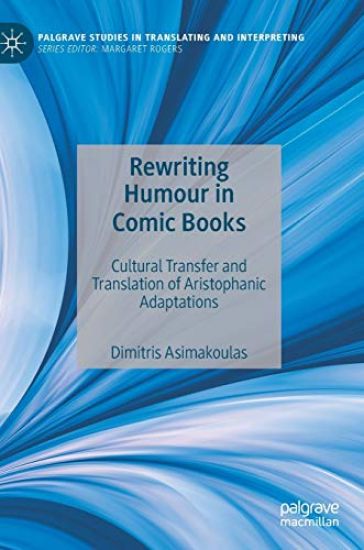
Rewriting Humour in Comic Books

Rewriting Humour in Comic Books

Dimitris Asimakoulas

Springer Nature Switzerland AG
2019
sidottu
This book examines comic book adaptations of Aristophanes’ plays in order to shed light on how and why humour travels across cultures and time. Forging links between modern languages, translation and the study of comics, it analyses the Greek originals and their English translations and offers a unique, language-led research agenda for cultural flows, and the systematic analysis of textual norms in a multimodal environment. It will appeal to students and scholars of Modern Languages, Translation Studies, Comics Studies, Cultural Studies and Comparative Literature.
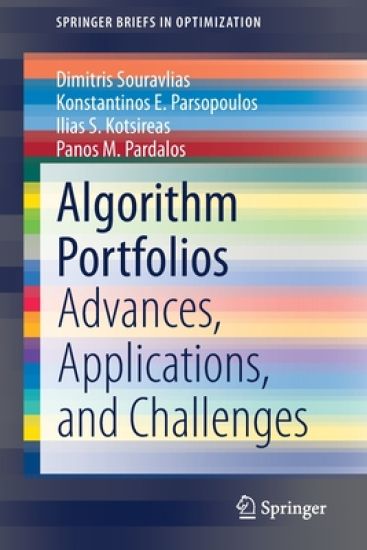
Algorithm Portfolios

Algorithm Portfolios

Dimitris Souravlias; Konstantinos E. Parsopoulos; Ilias S. Kotsireas; Panos M. Pardalos

Springer Nature Switzerland AG
2021
nidottu
This book covers algorithm portfolios, multi-method schemes that harness optimization algorithms into a joint framework to solve optimization problems. It is expected to be a primary reference point for researchers and doctoral students in relevant domains that seek a quick exposure to the field. The presentation focuses primarily on the applicability of the methods and the non-expert reader will find this book useful for starting designing and implementing algorithm portfolios. The book familiarizes the reader with algorithm portfolios through current advances, applications, and open problems. Fundamental issues in building effective and efficient algorithm portfolios such as selection of constituent algorithms, allocation of computational resources, interaction between algorithms and parallelism vs. sequential implementations are discussed. Several new applications are analyzed and insights on the underlying algorithmic designs are provided. Future directions, new challenges, andopen problems in the design of algorithm portfolios and applications are explored to further motivate research in this field.
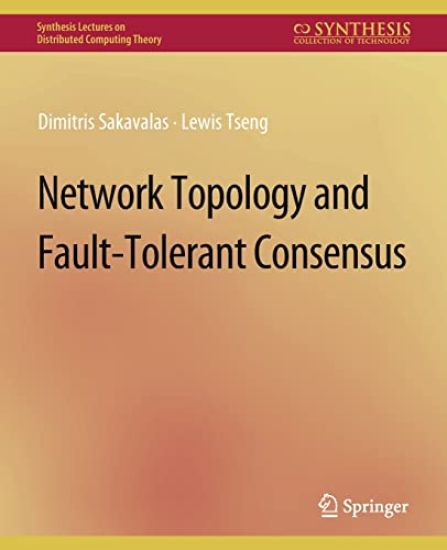
Network Topology and Fault-Tolerant Consensus

Network Topology and Fault-Tolerant Consensus

Dimitris Sakavalas; Lewis Tseng

Springer International Publishing AG
2019
nidottu
As the structure of contemporary communication networks grows more complex, practical networked distributed systems become prone to component failures. Fault-tolerant consensus in message-passing systems allows participants in the system to agree on a common value despite the malfunction or misbehavior of some components. It is a task of fundamental importance for distributed computing, due to its numerous applications. We summarize studies on the topological conditions that determine the feasibility of consensus, mainly focusing on directed networks and the case of restricted topology knowledge at each participant. Recently, significant efforts have been devoted to fully characterize the underlying communication networks in which variations of fault-tolerant consensus can be achieved. Although the deduction of analogous topological conditions for undirected networks of known topology had shortly followed the introduction of the problem, their extension to the directed network case has been proven a highly non-trivial task. Moreover, global knowledge restrictions, inherent in modern large-scale networks, require more elaborate arguments concerning the locality of distributed computations. In this work, we present the techniques and ideas used to resolve these issues. Recent studies indicate a number of parameters that affect the topological conditions under which consensus can be achieved, namely, the fault model, the degree of system synchrony (synchronous vs. asynchronous), the type of agreement (exact vs. approximate), the level of topology knowledge, and the algorithm class used (general vs. iterative). We outline the feasibility and impossibility results for various combinations of the above parameters, extensively illustrating the relation between network topology and consensus.
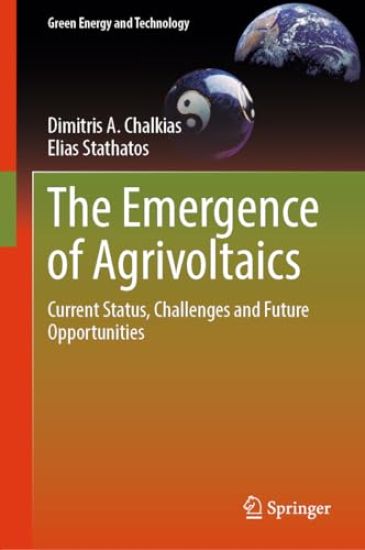
The Emergence of Agrivoltaics

The Emergence of Agrivoltaics

Dimitris A. Chalkias; Elias Stathatos

Springer International Publishing AG
2024
sidottu
This book assists in the adoption of the sustainable cross-sectoral nexus approach of agrivoltaics, which can provide a quite significant untapped potential for the sustainable development of humanity. Increasing demand for water, energy and food, due to population growth and urbanization, is aggravated by unprecedented extreme weather and climatic conditions. This situation is likely to undermine the sustainable and peaceful development of humanity. Today, more than ever, there is an imperative need to support the identification and development of practical solutions, where the use of a nexus approach can lead to improved outcomes in the integrated management of water–energy–food–ecosystem (WEFE) resources. This book disseminates the current knowledge of the modern approach of agrivoltaics, providing a comprehensive state of the art on the field, discussing the current status, the challenges and the future perspectives for their further development. This new currently in-depth unexplored topic will be covered thoroughly by the present book, which will attract the readership of both the scientific and industrial research communities, even of people who are dealing with cultivations, promoting the development in the field, from conceptual designs to practical realizations.
Kyrillos Loukaris as an Author of Sermons (1602–1626)
The volume explores the unpublished work of the Greek Orthodox Patriarch Kyrillos Loukaris (c.1570–1638), specifically focusing on his sermons delivered between 1602 and 1626. The study centers on Loukaris’ extant sermons, preserved in an autograph manuscript corpus titled Didachae, currently housed in the collection of the Metochion of the Holy Sepulchre. Following a comprehensive codicological and paleographical examination and the compilation of an annotated inventory of the material, the volume delves into various scholarly inquiries. These include identifying the official corpus of Loukaris’ homiletic work, defining criteria for the standard form, structure, subject matter, and language of the sermons, and analyzing the numerous references to the preacher's diverse readings, including both Orthodox and Latin sources. Moreover, the inventory encompasses all entries found in the codices, presenting the internal classification of the sermons, their methodologies, arguments, the development of each topic, and the application of systems for subsequent processing and revision of the material. Consequently, the description of Loukaris’ unpublished Didachae, regarded as his magnum opus, significantly enriches the modern bibliography on the Patriarch and contributes to the growing field of Eastern Christian homiletics in the early modern period.