Kirjojen hintavertailu. Mukana 12 366 312 kirjaa ja 12 kauppaa.

Kirjahaku

Etsi kirjoja tekijän nimen, kirjan nimen tai ISBN:n perusteella.

1000 tulosta hakusanalla E-Energy 15 Conference Committee

Energy Transitions and the Future of Gas in the EU

Energy Transitions and the Future of Gas in the EU

Gök?e Mete

Springer Nature Switzerland AG
2020
nidottu
This book assesses the impact of energy transitions on the future of natural gas in the EU energy mix. As we approach 2050, the requirement to sharply decrease CO2 and other GHG emissions means that the role of gas infrastructure in the EU and beyond will change drastically. But what does such change mean? To address this question the author critically analyses the EU’s evolving natural gas market policy and law. Clearly structured throughout, the book explores the following questions: How can we maximise the potential of gas infrastructure to reduce carbon emissions? What are the lessons learned from decision making experience in the natural gas sector? Is the EU moving towards or away from a climate neutral gas sector? How will green and low carbon gas technologies be supported? And, are proposals to drive a growing share of hydrogen, biomethane, and synthetic methane to the system just an excuse to prolong fossil fuel operations?The book explores whether the EU will continue to subsidy natural gas projects or decarbonise the gas grid before 2050, and at what cost. Recommendations are proposed for a new regulatory and policy framework for development and operation of hydrogen pipelines, injection of biomethane into the existing gas grid and for pipelines carrying CO2. Filling an important gap in the literature, this book aims to develop an understanding of and clarify the complex range of legislation involved within a single analytical framework. Although the focus is mainly on the future of gas in the EU, the findings and recommendations are relevant for a much wider geography. This book will be an invaluable reference to policy makers and practitioners as well as researchers and students across the social sciences interested in the future of energy.
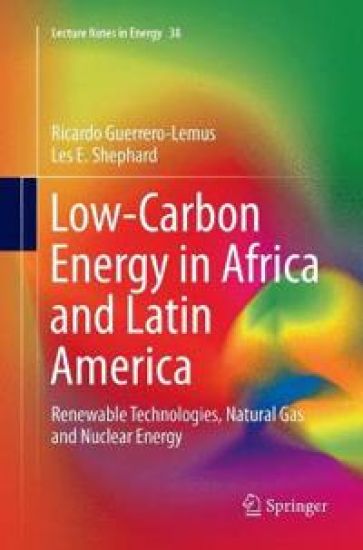
Low-Carbon Energy in Africa and Latin America

Low-Carbon Energy in Africa and Latin America

Ricardo Guerrero-Lemus; Les E. Shephard

Springer International Publishing AG
2017
sidottu
This book offers a comprehensive overview of energy sectors in emerging African and Latin American nations, providing a one-stop source of information and analysis of energy sectors that differ radically from those of developed countries. It focuses on how indigenous energy sources can be used within a systems framework to enhance each nation’s economic prosperity, secure their energy future and reduce global carbon emissions. It begins by examining the current energy trends in Africa and Latin America, and the constraints that current practices place on meeting future energy needs. Further chapters present a deeper analyses of each technology adapted to these regions and a description of 94 selected case examples recently published in the scientific literature (2014-2016) and covering almost all countries to highlight energy experiences that could serve as engines for developing low-carbon energy technologies across the two regions. These issues are elucidated by a large number of illustrations and tables to offer valuable insights into the topics and technologies discussed. The book enables students, researchers and professionals in energy to better understand the energy context in Africa and Latin America, and helps define strategies for supporting these regions in introducing low-carbon energy technologies that supplement indigenous sources in a manner that enhances long-term economic prosperity. It is also intended for consulting companies and government agencies involved in the energy sector, as well as environmental science and energy management students.
Low-Carbon Energy in Africa and Latin America

Low-Carbon Energy in Africa and Latin America

Ricardo Guerrero-Lemus; Les E. Shephard

Springer International Publishing AG
2018
nidottu
This book offers a comprehensive overview of energy sectors in emerging African and Latin American nations, providing a one-stop source of information and analysis of energy sectors that differ radically from those of developed countries. It focuses on how indigenous energy sources can be used within a systems framework to enhance each nation’s economic prosperity, secure their energy future and reduce global carbon emissions. It begins by examining the current energy trends in Africa and Latin America, and the constraints that current practices place on meeting future energy needs. Further chapters present a deeper analyses of each technology adapted to these regions and a description of 94 selected case examples recently published in the scientific literature (2014-2016) and covering almost all countries to highlight energy experiences that could serve as engines for developing low-carbon energy technologies across the two regions. These issues are elucidated by a large number of illustrations and tables to offer valuable insights into the topics and technologies discussed. The book enables students, researchers and professionals in energy to better understand the energy context in Africa and Latin America, and helps define strategies for supporting these regions in introducing low-carbon energy technologies that supplement indigenous sources in a manner that enhances long-term economic prosperity. It is also intended for consulting companies and government agencies involved in the energy sector, as well as environmental science and energy management students.
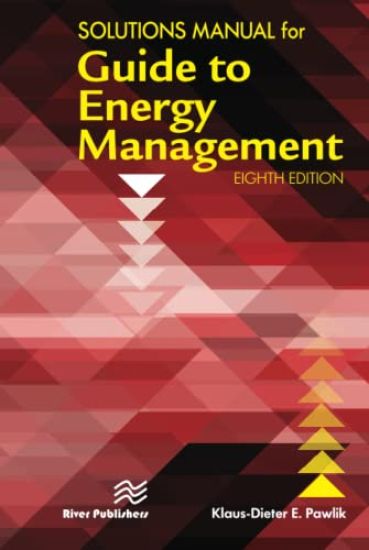
Solutions Manual for the Guide to Energy Management

Solutions Manual for the Guide to Energy Management

Klaus-Dieter E. Pawlik

River Publishers
2021
sidottu
First published in 2016. This practical study guide serves as a valuable companion text, providing workedout solutions to all of the problems presented in Guide to Energy Management, Eighth Edition. Covering each chapter in sequence, the author has provided detailed instructions to guide you through every step in the problem solving process. You’ll find all the help you need to fully master and apply the state of th eart concepts and strategies presented in Guide to Energy Management.
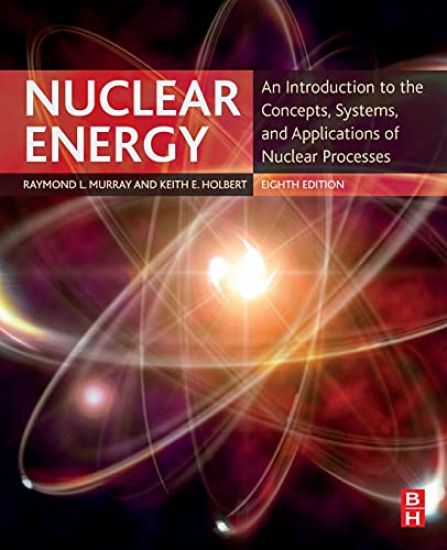
Nuclear Energy

Nuclear Energy

Raymond L. Murray; Keith E. Holbert

Butterworth-Heinemann Inc
2019
nidottu
Nuclear Energy: An Introduction to the Concepts, Systems, and Applications of Nuclear Processes, Eighth Edition, provides essential information on basic nuclear physics, systems and the applications of nuclear energy. It comprehensively covers Basic Concepts, Radiation and Its Uses, and Nuclear Power, providing students with a broad view of nuclear energy and science in a fast-paced format that features updated, timely content on topics of new and growing importance to current and future nuclear professionals, such as tritium-powered betavoltaic integrated circuit chips, the modulation of radioactive decay constant due to solar activity, Monte Carlo radiation transport calculations and accelerator-driven systems. This book is an essential resource for any first course on nuclear energy and systems.
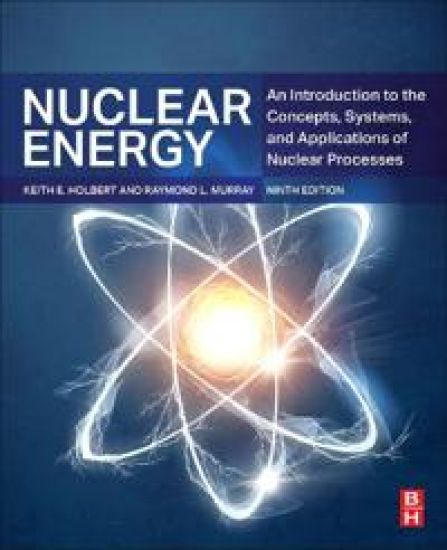
Nuclear Energy

Nuclear Energy

Raymond L. Murray; Keith E. Holbert

Elsevier - Health Sciences Division
2025
nidottu
Nuclear Energy: An Introduction to the Concepts, Systems, and Applications of Nuclear Processes, Ninth Edition provides essential information on basic nuclear physics, systems, and the applications of nuclear energy. It comprehensively covers Basic Concepts, Radiation and Its Uses, and Nuclear Power, providing students with a broad view of nuclear energy and science in a fast-paced format that features updated, timely content on topics of new and growing importance to current and future nuclear professionals, such small modular reactors (SMRs). This book is an essential resource for any first course on nuclear energy and systems.
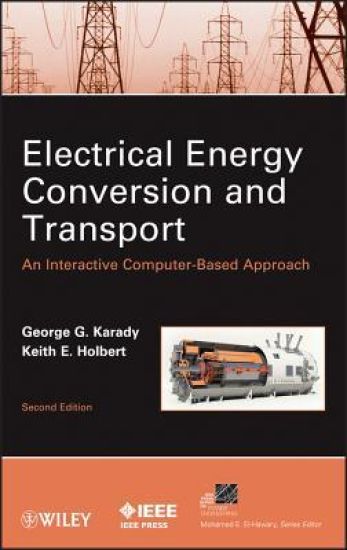
Electrical Energy Conversion and Transport

Electrical Energy Conversion and Transport

George G. Karady; Keith E. Holbert

John Wiley Sons Inc
2013
sidottu
Designed to support interactive teaching and computer assisted self-learning, this second edition of Electrical Energy Conversion and Transport is thoroughly updated to address the recent environmental effects of electric power generation and transmission, which have become more important together with the deregulation of the industry. New content explores different power generation methods, including renewable energy generation (solar, wind, fuel cell) and includes new sections that discuss the upcoming Smart Grid and the distributed power generation using renewable energy generation, making the text essential reading material for students and practicing engineers.
Advanced High Energy Rate Forming: Explosive, Pneumatic-Mechanical, Electro-Hydraulic, Magnetic, Explosive Metal Cutting and Welding
Advanced High Energy Rate Forming: Explosive, Pneumatic-Mechanical, Electro-Hydraulic, Magnetic, Explosive Metal Cutting And Welding is a comprehensive guidebook published by the American Society of Tool Manufacturing. The book delves into various advanced high energy rate forming techniques that are used in the manufacturing industry. The techniques discussed in the book include explosive forming, pneumatic-mechanical forming, electro-hydraulic forming, magnetic forming, explosive metal cutting, and welding.The book provides a detailed overview of each technique, including the principles behind them, the equipment required, and the advantages and disadvantages of each method. It also covers the various materials that can be formed using these techniques, such as metals, composites, and plastics.In addition to the technical details, the book also includes case studies and practical examples of how these techniques are used in real-world manufacturing applications. It also provides guidance on safety considerations and best practices for using these high-energy techniques.Overall, Advanced High Energy Rate Forming: Explosive, Pneumatic-Mechanical, Electro-Hydraulic, Magnetic, Explosive Metal Cutting And Welding is an essential resource for engineers, technicians, and anyone involved in the manufacturing industry who wants to stay up-to-date with the latest high-energy rate forming techniques.Includes Articles By H. J. Wagner, A. M. Sabroff, And Many Others.This scarce antiquarian book is a facsimile reprint of the old original and may contain some imperfections such as library marks and notations. Because we believe this work is culturally important, we have made it available as part of our commitment for protecting, preserving, and promoting the world's literature in affordable, high quality, modern editions, that are true to their original work.
Linear Energy Relationships to Chemical Kinetics

Linear Energy Relationships to Chemical Kinetics

R G Makitra; A A Turovsky; G E Zaikov

Nova Science Publishers Inc
2009
nidottu
Since the early investigations by Berthelot (1862) and N.A. Menshutkin (1887) the solvent effects on the chemical reaction rate is an object of regard for chemists. Primarily, solvents were considered as reaction media, and attempts were made to explain solvent effects by pure physical interactions. In recent decades, specific (chemical) interactions between solutes and the medium became of greater attention. Further on, the necessity of combined consideration of all solvation interactions in the solution was highly apprehended. Hence, a solvent may not only solvate the initial reagents and the initial state, but also take active part in its formation. Such consideration may be performed using linear free energy relationships (LFER). Numerical accuracy of the description will depend on adequacy of a formal solvation model which forms the basis of corresponded linear free energy (LFE) equation. At present, Koppel-Palm and Kamlet-Taft models are the most widespread. Corresponded reviews of various models are discussed. However, it should be remembered that these approaches are not the final dogma and are permanently changed and modified.
Building Better - Less - Different: Clean Energy Transition and Digital Transformation
Sustainability Sustainability is to become the guiding principle of social action and economic activity. At the same time, its ways and means are far from clear. As a holistic praxis, sustainability must combine technical and material as well as social, economic, ecological and also ethical strategies, which have multiple complex interactions and all too often also conflicting goals and priorities. In no other field can these be better observed, addressed and influenced than in architecture and building. "Building Better – Less – Different" Each volume of "Building Better – Less – Different" details two fundamental areas of sustainability and explores their specific dynamics and interactions. After introductory overviews, innovative methods and current developments are described and analysed in in-depth essays, international case studies and pointed commentaries. The sustainability criteria of efficiency ("better"), sufficiency ("less") and consistency ("different") form the framework for each book. What the press say about the first volume"Circular Construction and Circular Economy" "The articles, case studies and commentaries in this book make a major contribution to advancing the current discourse on implementing circular-based economic models in the building sector." Hessian Chamber of Architects, book reviews "To think of tomorrow when building today is the core message that Dirk E. Hebel and Felix Heisel want to convey to their readers. … And they also show us how: with the help of relevant examples, grouped under the headings ‘better’, ‘less’ and ‘different’, they demonstrate concrete applications and argue that circular construction can also benefit the construction industry…" architektur aktuell Clean energy transition It has long been common knowledge that energy and sustainability are closely interlinked. And yet we are witnessing a profound shift in the sector. While the earlier focus was on improving energy efficiency and increasing the proportion of renewable energy in buildings, current energy conservation policies are supporting a broader, more holistic view. This encompasses integral approaches in which building design and construction measures form part of the energy concept from the outset, as well as accounting for grey energy in building materials and a holistic evaluation of buildings over their entire life cycle. For the energy-intensive and emission-producing building sector, climate change presents an even greater challenge than conserving resources. How can we contribute to a shift in heating strategies and employ new technologies to achieve climate-neutral heating? How can we respond to rising temperatures and the risk of increased energy consumption for cooling? Can low-tech concepts help to reduce the environmental impact of buildings over their life cycle? Shouldn’t we take greater account of the users of buildings, and do we need completely different energy supply strategies? Digital Transformation At a time of natural ubiquity of digital tools, widely adopted to streamline project delivery in architecture, the foundations have been laid for a profound transformation of the construction industry to address the climate crisis. Digital architectural design and construction methods can be used as enabling technologies for a fundamental change towards a circular construction approach with significantly reduced ecological and climate impact. This approach comprises a digital reinterpretation of natural building materials through digital construction technologies. Digital deconstruction and reuse strategies can transform the existing building stock into resources for the future. Mass customization of tailor-made building components minimizes resource consumption. Architects, in their emerging role as interdisciplinary interface and digital master builders, reunite design and making through digital craft. Finally, the book provides a glimpse into the potential future of construction, which might be characterized by fundamentally different concepts of design and materialization of our built environment, challenging current paradigms within our discipline.
Renewable Energy-2000

Renewable Energy-2000

Gerard T. Wrixon; Anne-Marie E. Rooney; Wolfgang Palz

Springer-Verlag Berlin and Heidelberg GmbH Co. K
2012
nidottu
The limited available of fossil energy carriers and the environmental impacts of energy consumtion demand mid-and long-term strategies both for the rational use of energy and for increased renewable energy utilization. Concepts of renewable energy conversion have been proposed and implemented during recent decades allover the world and their remarkable potential has been demonstrated. However, large scale implementation in the context of the requirements above has not yet taken place. The EUREC (European Renewable Energy Centres) Agency - an association of 25 European research centres from 11 EC countries, provides a framework of leading experts in the field of renewable energies, focusing on assessment studies, joint projects in research and development and on proposing future strategies in a European context. Under the leadership of Professor Wrixon, with the assistance and contributions of experts from the EUREC Agency, the document 'Renewable Energy - 2000' has been elaborated. This document critically evaluates the potential of renewable energies, focusing on the most relevant sources and methodologies, namely: wind energy, solar heating, cooling and daylighting, photovoltaics and biomass. It also proposes strategies for implementing components and systems to achieve economic operation in different regions of the European Community. It thereby makes use of the expert knowledge and experience concentrated in EUREC Agency member institutions.
Implementing the Water-Energy-Food- Ecosystems Nexus and Achieving the Sustainable Development Goals

Implementing the Water-Energy-Food- Ecosystems Nexus and Achieving the Sustainable Development Goals

Cesar Carmona-Moreno; E. Crestaz; Y. Cimmarrusti; F. Farinosi; M. Biedler; A. Amani; A. Mishra; A. Carmona-Gutierrez

Iwa Publishing
2021
nidottu
The book’s primary intention is to serve as a roadmap for professionals working in developing countries interested in the Nexus Water-Energy-Food-Ecosystems (WEFE) approach. The book shows a multi-disciplinary approach, showcasing the importance of the proper use of Nexus WEFE when implementing certain development programs in regions around the globe. It can be presented as a manual for an individual that either wishes to implement intervention projects following the NEXUS approach or students interested in cooperation and development. The book begins with a general explanation of the theoretical concepts and implementation processes of Nexus WEFE and continues getting into case studies, explaining the importance of proper implementation and potential drawbacks and solutions to them. This book has a particular focus on the European Union cooperation policies when implementing such an approach in developing countries.
Energy Management Principles

Energy Management Principles

Craig B. Smith; Kelly E. Parmenter

Elsevier Science Publishing Co Inc
2015
nidottu
Energy Management Principles: Applications, Benefits, Savings, Second Edition is a comprehensive guide to the fundamental principles and systematic processes of maintaining and improving energy efficiency and reducing waste. Fully revised and updated with analysis of world energy utilization, incentives and utility rates, and new content highlighting how energy efficiency can be achieved through 1 of 16 outlined principles and programs, the book presents cost effective analysis, case studies, global examples, and guidance on building and site auditing. This fully revised edition provides a theoretical basis for conservation, as well as the avenues for its application, and by doing so, outlines the potential for cost reductions through an analysis of inefficiencies.
Energy from Biomass

Energy from Biomass

Peter Quaak; Harrie Knoef; Hubert E. Stassen

World Bank Publications
1999
nidottu
While energy is essential for development, standard fossil fuels are often in short supply in countries where it is needed most. However, alternative fuel resources abound in the form of agricultural and municipal waste or "biomass." This report reviews the state of the art of biomass combustion and gasification systems, their advantages and disadvantages. It also encourages investment in use of these technologies to enable developing countries to better exploit their biomass resources and help close the gap between their energy needs and their energy supply.
Juicing for Weight Loss - A Juicing Book with the Best Juicing Recipes to Help You Lose Weight and Gain Energy
"Juicing For Weight Loss" is your personal guide into the world of juicing. It was written specifically to help you lose weight and gain more energy Do You Experience Any Of These?: - Are you frustrated with fad diets that don't work? - Have you been wanting to lose some weight lately and haven't been able to do so? - Are you tired of feeling lethargic and low everyday? - Do you actually want to keep the weight off this year? If you are a human being, you probably answered yes to at least one (if not all) of the previous questions. And that's OK Every one of us needs guidance in one or more areas of our lives and this book was meant specifically to help you regain your health and vitality through the ritual of juicing whole, natural delicious fruits and vegetables. In This Book You Will Learn: - Top 20 recipes for weight loss and boosting energy levels - Best fruits and vegetables for juicing - Produce chart with fruits and veggies broken down with best nutritional value - The true benefits of juicing and how often to juice - What type of juicer to buy - And much more... This Book Will Help You If you are looking to lose weight and/or gain more energy, this book has you covered. Some might say it is the only juicing guide you will ever need. Juicing isn't complicated but IT IS important that you know what juicing will do for your life and your energy levels. Once people discover the power of juicing they usually never look back People who juice are typically more energetic and tend to have an easier time losing weight when coupled with a healthy eating plan. It really is quite amazing Get this book and start implementing this stuff into your everyday life and see how you feel. Juicing isn't tough and it actually can be fun It will make a BIG difference in your life - you can count on it Here's to your new body
Circular of the Bureau of Standards No. 467: Atomic Energy Levels as Derived From the Analyses of Optical Spectra. Volume 2: the Spectra of Chromium,
This work has been selected by scholars as being culturally important and is part of the knowledge base of civilization as we know it.This work is in the public domain in the United States of America, and possibly other nations. Within the United States, you may freely copy and distribute this work, as no entity (individual or corporate) has a copyright on the body of the work.Scholars believe, and we concur, that this work is important enough to be preserved, reproduced, and made generally available to the public. To ensure a quality reading experience, this work has been proofread and republished using a format that seamlessly blends the original graphical elements with text in an easy-to-read typeface.We appreciate your support of the preservation process, and thank you for being an important part of keeping this knowledge alive and relevant.
Creative Energy: Being an Introduction to the Study of the Yih King, or Book of Changes, with Translations from the Original Text
Creative Energy is a book that serves as an introduction to the study of the Yih King, also known as the Book of Changes. Written by I. Mears, the book includes translations from the original text and aims to provide readers with an understanding of the principles and concepts behind the Yih King. The Yih King is a Chinese classic text that is believed to have been written over 3,000 years ago and is considered to be one of the most important texts in Chinese philosophy. It is a complex system of divination and interpretation that is based on 64 hexagrams, each of which represents a unique combination of six lines. The book explores the meaning and symbolism behind these hexagrams and how they can be used to gain insight into the world and oneself. It also delves into the concepts of yin and yang, the five elements, and the importance of balance and harmony in life. Overall, Creative Energy is a comprehensive guide to the Yih King that provides readers with a deep understanding of this ancient text and its relevance to modern life.This is a new release of the original 1932 edition.This scarce antiquarian book is a facsimile reprint of the old original and may contain some imperfections such as library marks and notations. Because we believe this work is culturally important, we have made it available as part of our commitment for protecting, preserving, and promoting the world's literature in affordable, high quality, modern editions, that are true to their original work.