Kirjahaku
Etsi kirjoja tekijän nimen, kirjan nimen tai ISBN:n perusteella.
1000 tulosta hakusanalla Edward M. Stack


Peace and Peacemaking in Paul and the Greco-Roman World
Edward M. Keazirian
Peter Lang Publishing Inc
2013
sidottu
Peace and Peacemaking in Paul and the Greco-Roman World compares the Apostle Paul’s understanding of peace with various conceptions of peace in the Greco-Roman thought world of the first century. In contrast to similar studies that focus on the question of pacifism in the ancient world, the author seeks to clarify how the Greeks defined peace and then to show how their conception of war and peace established the ethos that ultimately defined them as a people. From their earliest days, the city-states that eventually became Greece were constantly ravaged by war. Their myth, legend, religion, education, philosophy, and science created and perpetuated the idea that conflict was essential for existence. This idea passed to Rome as well so that by the first century, the Greco-Roman world consistently viewed peace as brief periods of tranquility in an existence where war and conflict were the norm. Paul, however, insists that peace must be the norm within the churches. Peace originates in God and is graciously given to those who are justified and reconciled to God through Jesus Christ. God removes the enmity caused by sin and provides the indwelling Spirit to empower believers to think and behave in ways that promote and maintain peace. Three social dynamics (shame-honor, patron-client, and friendship-enmity) are at work in Paul’s approach to conflict resolution and peacemaking within the churches. Rather than giving specific procedures for resolving conflict, Paul reinforces the believers’ new identity in Christ and the implications of God’s grace, love, and peace for their thoughts, words, and behavior toward one another. Paul uses these three social dynamics to encourage believers in the right direction, but their ultimate motivation and empowerment must arise from their common relationship with God in Jesus Christ by the power of the Holy Spirit.
An Illustrated Annual of Works by American Artists and Craft Workers
Edward M Ericson
Book Jungle
2009
pokkari

"Words are our tools, and, as a minimum, we should use clean tools. We should know what we mean and what we do not, and we must forearm ourselves against the traps that language sets us." -- The Need for Precise Terminology, Austin (1957, 7–8) It follows that, for effective and efficient communication, people should have, or at least understand, the same precise terminology. Such terminology is crucial for the advancement of basic, theoretical, and applied science, yet too often there is ambiguity between scientific and common definitions and even discrepancies in the scientific literature.Providing a common ground and platform for precise scientific communication in animal behavior, ecology, evolution, and related branches of biology, Animal Behavior Desk Reference, A Dictionary of Behavior, Ecology, and Evolution, Third Edition contains more than 800 new terms and definitions, 48 new figures, and thousands of additions and improvements. Using a dictionary format to present definitions in a standard, easily accessible manner, the book’s main body emphasizes conceptual terms, rather than anatomical parts or taxonomic terms, and focuses on nouns, rather than verbs or adjectives. Term hierarchies are handled with bulleted entries and terms with multiple definitions are included as superscripted entries. All sources are cited and most are paraphrased to conform to uniform style and length.The dictionary also includes nontechnical and obsolete terms, synonyms, pronunciations, and notes and comments, as well as etymologies, term originators, and related facts. Appendices address organism names, organizations, and databases.Devoted to the precise and correct use of scientific language, this third edition of a bestselling standard enables students and scientists alike to communicate their findings and promote the efficient advancement of science.

Forthcoming Fall 2025

Forthcoming Fall 2025
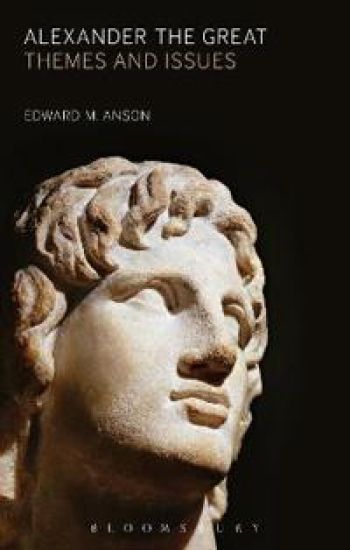
Alexander the Great's life and career are here examined through the major issues surrounding his reign. What were Alexander's ultimate ambitions? Why did he pursue his own deification while alive? How did he administer his conquests? Did he actually set the world in ‘a new groove' as has been claimed by some scholars? Each of the key themes, arranged as chapters, will be presented in approximately chronological order so that readers unfamiliar with the life of Alexander will be able to follow the narrative. The themes are tied to the major controversies and questions surrounding Alexander's career and legacy. Each chapter includes a discussion of the major academic positions on each issue, and includes a full and up-to-date bibliography and an evaluation of the historical evidence. All source material is in translation. Designed to bring new clarity to the contentious history of Alexander the Great, this is an ideal introduction to one of history's most controversial figures.
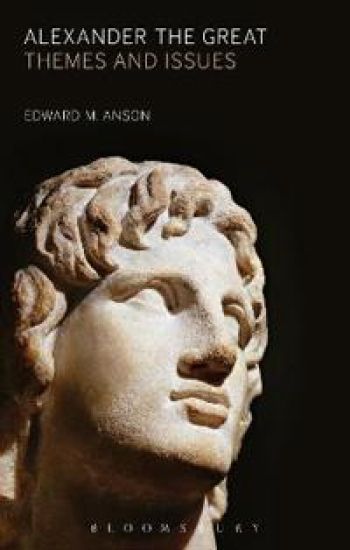
Alexander the Great's life and career are here examined through the major issues surrounding his reign. What were Alexander's ultimate ambitions? Why did he pursue his own deification while alive? Did he actually set the world in ‘a new groove' as has been claimed by some scholars? And was his death natural or the result of a murderous conspiracy? Each of the key themes, arranged as chapters, will be presented in approximately chronological order so that readers unfamiliar with the life of Alexander will be able to follow the narrative. The themes are tied to the major controversies and questions surrounding Alexander's career and legacy. Each chapter includes a discussion of the major academic positions on each issue, and includes a full and up-to-date bibliography and an evaluation of the historical evidence. All source material is in translation. Designed to bring new clarity to the contentious history of Alexander the Great, this is an ideal introduction to one of history's most controversial figures.
Digital Preservation for Libraries, Archives, and Museums
Edward M. Corrado; Heather Moulaison Sandy
Rowman Littlefield
2017
sidottu
This new edition of Digital Preservation in Libraries, Archives, and Museums is the most current, complete guide to digital preservation available today. For administrators and practitioners alike, the information in this book is presented readably, focusing on management issues and best practices. Although this book addresses technology, it is not solely focused on technology. After all, technology changes and digital preservation is aimed for the long term. This is not a how-to book giving step-by-step processes for certain materials in a given kind of system. Instead, it addresses a broad group of resources that could be housed in any number of digital preservation systems. Finally, this book is about “things (not technology; not how-to; not theory) I wish I knew before I got started.” Digital preservation is concerned with the life cycle of the digital object in a robust and all-inclusive way. Many Europeans and some North Americans may refer to digital curation to mean the same thing, taking digital preservation to be the very limited steps and processes needed to insure access over the long term. The authors take digital preservation in the broadest sense of the term: looking at all aspects of curating and preserving digital content for long term access. The book is divided into four part: 1.Situating Digital Preservation, 2.Management Aspects, 3.Technology Aspects, and 4.Content-Related Aspects. Digital Preservation will answer questions that you might not have even known you had, leading to more successful digital preservation initiatives.

Digital Preservation for Libraries, Archives, and Museums
Edward M. Corrado; Heather Moulaison Sandy
Rowman Littlefield
2017
nidottu
This new edition of Digital Preservation in Libraries, Archives, and Museums is the most current, complete guide to digital preservation available today. For administrators and practitioners alike, the information in this book is presented readably, focusing on management issues and best practices. Although this book addresses technology, it is not solely focused on technology. After all, technology changes and digital preservation is aimed for the long term. This is not a how-to book giving step-by-step processes for certain materials in a given kind of system. Instead, it addresses a broad group of resources that could be housed in any number of digital preservation systems. Finally, this book is about “things (not technology; not how-to; not theory) I wish I knew before I got started.” Digital preservation is concerned with the life cycle of the digital object in a robust and all-inclusive way. Many Europeans and some North Americans may refer to digital curation to mean the same thing, taking digital preservation to be the very limited steps and processes needed to insure access over the long term. The authors take digital preservation in the broadest sense of the term: looking at all aspects of curating and preserving digital content for long term access. The book is divided into four part: 1.Situating Digital Preservation, 2.Management Aspects, 3.Technology Aspects, and 4.Content-Related Aspects. Digital Preservation will answer questions that you might not have even known you had, leading to more successful digital preservation initiatives.

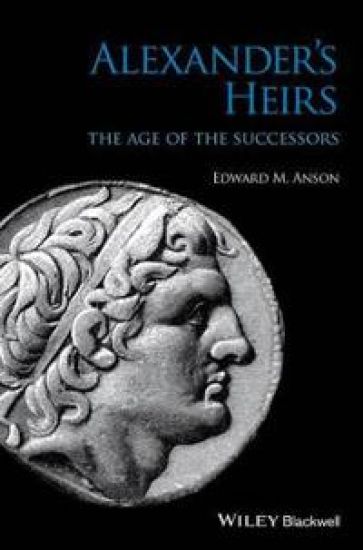
Alexander’s Heirs offers a narrative account of the approximately forty years following the death of Alexander the Great, during which his generals vied for control of his vast empire, and through their conflicts and politics ultimately created the Hellenistic Age. Offers an account of the power struggles between Alexander’s rival generals in the forty year period following his deathDiscusses how Alexander’s vast empire ultimately became the Hellenistic WorldMakes full use of primary and secondary sourcesAccessible to a broad audience of students, university scholars, and the educated general readerExplores important scholarly debates on the Diadochi

The Tommy Fierson Story
Edward M. Scully Sr
Createspace Independent Publishing Platform
2010
nidottu