Kirjahaku
Etsi kirjoja tekijän nimen, kirjan nimen tai ISBN:n perusteella.
1000 tulosta hakusanalla Edwin Reed

Edwin Brothertoft, By: Theodore Winthrop: Novel (The plot of the novel takes place chiefly in New York during the American Revolutionary War)
Theodore Winthrop
Createspace Independent Publishing Platform
2018
nidottu
This is a work of fiction. The plot of the novel takes place chiefly in New York during the American Revolutionary War. This work was published posthumously in 1862..................... Major Theodore Woolsey Winthrop (September 22, 1828 - June 10, 1861) was a writer, lawyer, and world traveller. He was one of the first Union officers killed in the American Civil War. Biography: Winthrop was born in New Haven, Connecticut. He was descended through his father from Governor John Winthrop and through his mother from George (Joris) Woolsey, one of the earliest settlers of New Amsterdam, Thomas Cornell (settler) and Jonathan Edwards. He graduated in 1848 from Yale University, where his uncle Theodore Dwight Woolsey was President and he was a member of the Phi Chapter of the Delta Kappa Epsilon Fraternity, he travelled for a year in Great Britain and Europe and then through the United States. After contributing to periodicals, short sketches, and stories, which attracted little attention, Winthrop enlisted in the 7th Regiment, New York State Militia, an early volunteer unit of the Federal Army that answered President Abraham Lincoln's call for troops in 1861. He wrote a popular essay about the experience titled "Our March to Washington." He was appointed Major and soon became an aide-de-camp to Maj. Gen. Benjamin Butler, commander of the Department of Virginia headquartered at Fort Monroe. Battle of Big Bethel: At the Battle of Big Bethel on June 10, 1861, he volunteered for General Ebenezer W. Peirce's staff and drew up a crude plan of battle. After a Federal attack to the enemy right flank was foiled, Winthrop led an ill-fated assault on the Confederate left held by four companies of the 1st Regiment North Carolina Infantry, under the command of Colonel (later Lieutenant General) Daniel Harvey Hill. In the heat of battle, Major Winthrop leapt onto the trunk of a fallen tree and reportedly yelled, "One more charge boys, and the day is ours." Soon thereafter, he was killed by a musket ball to the heart and became the first casualty of rank for the Northern side in what history regards as the first pitched land battle of the Civil War. Ironically, ardent abolitionist Winthrop may have been shot by the African-American slave of a Confederate officer in the 1st North Carolina Infantry. (Three different soldiers, as well as this slave, referred to in the records only as "Sam," claimed to have killed him.)..........................
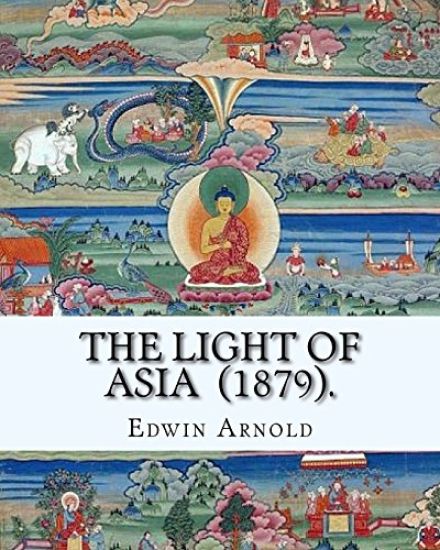
The Light of Asia (1879). By: Edwin Arnold: Narrative poem
Edwin Arnold
Createspace Independent Publishing Platform
2018
nidottu
The Light of Asia, subtitled The Great Renunciation, is a book by Sir Edwin Arnold. The first edition of the book was published in London in July 1879. In the form of a narrative poem, the book endeavors to describe the life and time of Prince Gautama Siddhartha, who after attaining enlightenment became The Buddha, The Awakened One. The book presents his life, character, and philosophy, in a series of verses. It is a free adaptation of the Lalitavistara. A few decades before the book's publication, very little was known outside Asia about the Buddha and Buddhism, the religion which he founded, and which had existed for about twenty-five centuries. Arnold's book was one of the first successful attempts to popularize Buddhism for a Western readership.The book has been highly acclaimed from the time it was first published, and has been the subject of several reviews. It has been translated into several languages, including Hindi.................................. Sir Edwin Arnold KCIE CSI (10 June 1832 - 24 March 1904) was an English poet and journalist, who is most known for his work The Light of Asia. Biography: Arnold was born at Gravesend, Kent, the second son of a Sussex magistrate, Robert Coles Arnold. One of his six children was the novelist Edwin Lester Arnold. He was educated at King's School, Rochester; King's College London; and University College, Oxford, where he won the Newdigate prize for poetry in 1852. He became a schoolmaster, at King Edward's School, Birmingham, and in 1856 went to India as Principal of the Government Sanskrit College at Poona, a post which he held for seven years, which includes a period during the mutiny of 1857, when he was able to render services for which he was publicly thanked by Lord Elphinstone in the Bombay Council. Here he received the bias towards, and gathered material for, his future works. Returning to England in 1861 he worked as a journalist on the staff of the Daily Telegraph, a newspaper with which he continued to be associated as editor for more than forty years, and of which he later became editor-in-chief. It was he who, on behalf of the proprietors of the Daily Telegraph in conjunction with the New York Herald, arranged the journey of H.M. Stanley to Africa to discover the course of the Congo River, and Stanley named after him a mountain to the north-east of Albert Edward Nyanza. Arnold must also be credited with the first idea of a great trunk line traversing the entire African continent, for in 1874 he first employed the phrase "Cape to Cairo railway" subsequently popularised by Cecil Rhodes. It was, however, as a poet that he was best known to his contemporaries. The literary task which he set before him was the interpretation in English verse of the life and philosophy of the East. His chief work with this object is The Light of Asia, or The Great Renunciation, a poem of eight books in blank verse which was translated into various languages such as Hindi (tr. by Acharya Ram Chandra Shukla). In it, in Arnold's own words, he attempted 'by the medium of an imaginary Buddhist votary to depict the life and character and indicate the philosophy of that noble hero and reformer, Prince Gautama of India, founder of Buddhism'. It appeared in 1879 and was an immediate success, going through numerous editions in England and America, though its permanent place in literature is quite uncertain. It is an Indian epic, dealing with the life and teaching of the Buddha. The poem was subjected to two lines of criticism: it was held by Oriental scholars to give a false impression of Buddhist doctrine; while, on the other, the suggested analogy between Sakyamuni and Jesus offended the taste of some devout Christians....

Edwin Letter Tracing for Kids Trace my Name Workbook: Tracing Books for Kids ages 3 - 5 Pre-K & Kindergarten Practice Workbook
Elise Garcia
Createspace Independent Publishing Platform
2018
nidottu
EDWIN Name Tracing Workbook - Preschoolers Kindergarten Practice Workbook - Toddlers Writing Notebook - Learn How to Write EDWIN - Preschoolers Activities Teaching your child the basics of writing is a difficult task especially if he or she is full of energy and finds it more difficult to focus. In order to give him a push in the first years of school or kindergartner, we are presenting a revolutionary way of teaching your baby the basics of the alphabet: the name tracing workbook for children. Why our workbook? The name tracing workbook has been designed specifically to teach children the basic of spelling and writing. By learning to write his own name, your child will develop the abilities and skills needed in the first years of schools while having fun. The 100 pages activity book is the perfect choice if you are searching to invest in your child's education from the beginning so don't hesitate and get him the only workbook he needs LEARNING THE FIRST LETTERS teaching your toddler the first letters and how to spell his or her name is difficult, which is why we have designed a special workbook that will make the learning process easier and a lot more fun, adding to the baby's educational fund. PERSONALIZED WORKING: the name is the first word any child should learn how to spell, but it is almost impossible to find special help for that task. EDWIN Name Tracing Workbook is divided in 12 themed chapters that will teach your toddler how to spell his or her name in a fun and interactive way. WHAT IT CONTAINS: EDWIN Name Tracing Workbook counts no less than 100 pages divided in 12 themed sheets that propose recognition activities, letter tracing practice and letter games, that are sure to teach your child the basics of writing and spelling. FOR TODDLERS: EDWIN Name Tracing Workbook is made especially for children aged 3 to 6 so your son or daughter will be well prepared for both kindergarten and first grade Learning the alphabet will be a piece of cake if your kid will already have the foundation letter tracing so why not give him a head start in school. THE PERFECT GIFT: offering a present to a toddler that is both fun and parents-approved is an almost impossible task, but the name tracing workbook has it all: it is educational, personalized and made especially for youngsters ages 3 to 6 so, if you're trying to bring a smile on a kid's face, this is it
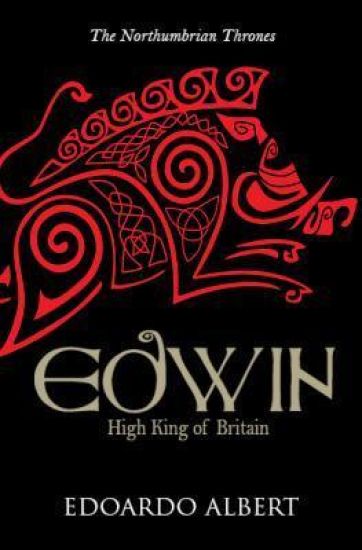
"Edwin, High King of Britain, brings to life the heroic age of our distant past, a splendid novel that leaves the reader wanting more." Bernard Cornwell Debut historical fiction series vividly recreating the rise of the Christian kings of Northumbria, England In 604 AD, Edwin, the deposed king of Northumbria, seeks refuge at the court of King Raedwald of East Anglia. But Raedwald is urged to kill his guest by Aethelfrith, Edwin's usurper. As Edwin walks by the shore, alone and at bay, he is confronted by a mysterious figure--the missionary Paulinus-- who prophesies that he will become High King of Britain. It is a turning point. Through battles and astute political alliances Edwin rises to great power, in the process marrying the Kentish princess Aethelburh. As part of the marriage contract the princess is allowed to retain her Christian faith. But, in these times, to be a king is not a recipe for a long life. This turbulent and tormented period in British history sees the conversion of the Anglo-Saxon settlers who have forced their way on to British shores over previous centuries, arriving first to pillage, then to farm and trade--and to come to terms with the faith of the Celtic tribes they have driven out. The dramatic story of Northumbria's Christian kings helped give birth to England as a nation, English as a language, and the adoption of Christianity as the faith of the English.

Edwin's Story - The Mystery of Edwin Drood: Resolved and Four Other Short Stories: Edwin's Story - No Regrets - Wild River - The Shed - Prison Earth
James Martin Kerr
Independently Published
2018
nidottu
'Edwin's Story' resolves the mystery of what happened to Edwin Drood after he mysteriously disappears on the night of Christmas Eve, after going to witness the effects of a great storm on the river, accompanied by his rival in love, Neville Landless, who harbours very strong feelings for Edwin's betrothed, the beautiful and youthful Rosa Bud. However, Neville is not the only person who hides these secret desires. Edwin's Uncle, John Jasper the Choir Master of Cloisterham Cathedral, who is also Rosa's Music Master, holds the same secret desires for Edwin's betrothed. What has happened to Edwin, who has simply disappeared during the night? Has he been done away with by a love rival, has he been pushed into or fallen into the raging river, or has he merely fled from sleepy Cloisterham City, after a heart to heart talk with the beautiful, Rosa Bud. 'No Regrets' is a post American civil war western, which tells the story of two young children who are kidnapped by a Comanche War Party, who have killed their parents. Brother and sister Matt and Maisie are unceremoniously tied to horses by their captors, who gallop off westwards with them in tow. Will Matt and Maisie survive their harsh treatment at the hands of their Indian captors and will they ever return to the place, they once called home? 'Wild River' continues the 'No Regrets' saga and centres around the story of two hunters, namely Brent and Tom, who meet up with a mysterious stranger, who introduces them to the people of his secluded Indian village, which becomes the target of US Cavalry troops. Will Brent and Tom be able to help the stranger's people avoid being killed or captured, by the steadily approaching soldiers? Moreover, will Brent ever see Matt and Maisie again? 'The Shed' is a magical fantasy, which tells the story of John who is an avid collector of everything from model aircraft to antique horses. However, after many years collecting all sorts of artefacts, John's collection has begun to take up all the available storage space in the house, much to his wife Jane's dismay. It is only after his long suffering wife threatens to leave him, that John realises that he will have to build 'The Shed'. 'Prison Earth' is a science fiction story which straddles the past, present and future. It tells the story of how human beings came to inhabit the Earth, ultimately do their best to destroy it and how visitors from another planet come to the rescue of some of their descendants, in an environmentally damaged planet Earth.
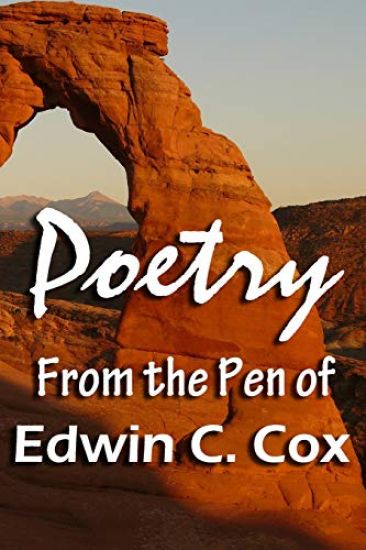
Edwin C. Cox was a faithful Latter-Day Saint his entire life. He had a good life, married his sweetheart and had five children which all grew up in the faith. He was born in Hamilton Fort, Iron County, Utah in 1917 and died at the age of 81 on February 12, 1999. He wrote poetry as a side-line and this book is a collection of his work and is published largely for his family, so that they might have a collection of his work. It is, however, published here so that it may be of value to anyone who knew Edwin Cox and wishes to read his work.
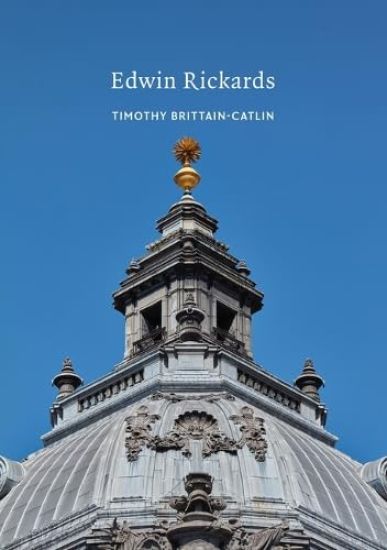
Edwin Rickards was the most flamboyant of Edwardian architects: his buildings were said by John Summerson to fizz like champagne. During a short working life, launched at the age of 25 by winning the competition to design Cardiff City Hall with his partners H.V. Lanchester and James Stewart, he completed four spectacular baroque buildings. Rickards’ work was unique in Edwardian architecture for his personal combination of French and especially Austrian sources. Working closely with H.C. Fehr and Henry Poole, leading practitioners of the New Sculpture, he designed two of the major monuments of the period. As well as being one of the best freehand draughtsmen in London, he was also a prodigious caricaturist. With a foot in the demi-monde and an endless appetite for architectural and personal adventure, Rickards was an unforgettable figure to everyone who met him. Illustrated throughout with stunning new photography by Robin Forster and by Rickards’ own sketches and drawings, this book portrays his close friendship with the novelist Arnold Bennett who described him, along with H.G Wells, as one of ‘the two most interesting, provocative, and stimulating men I have yet encountered’, and his meteoric career that ended with his early death.
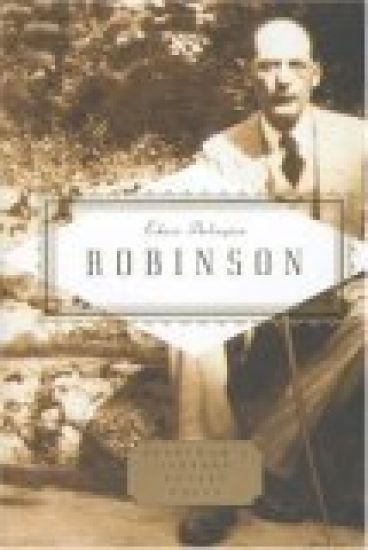
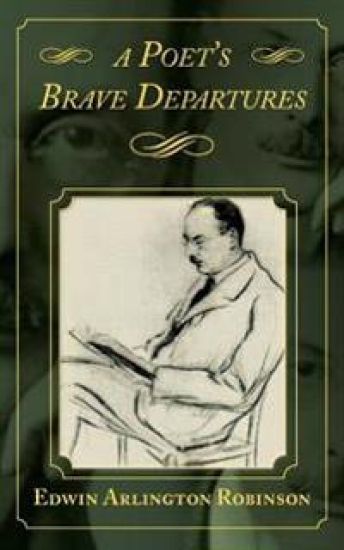
A best seller in his lifetime though neglected in recent years, Edwin Arlington Robinson (1869-1935) is due to be restored to his rightful place in literary history as one of the first of the great American Modernist poets. His poetry was revolutionary, though because it was written in metre and rhyme it looked deceptively conventional. He cast aside the stiff archaism and prettiness favoured by his contemporaries, employing instead everyday language with dramatic power, wit and sensitivity. His lyric poems illuminate the most unlikely subjects - ordinary people, especially the downtrodden, the bereft and the mistunderstood. In the process he created the gallery of character portraits for which he is most fondly remembered, among them Eben Flood, Aunt Imogen, Isaac and Archibald, Miniver Cheevy and Richard Cory.Scott Donaldson, editor of this volume, is the author of a forthcoming biography of Robinson, to be published in February 2007.

Introduced by Jackie Kay, this selection of poems include the famous Strawberries and One Cigarette and four from Morgan's autobiographical sequence, Love and a Life - love in all its aspects.
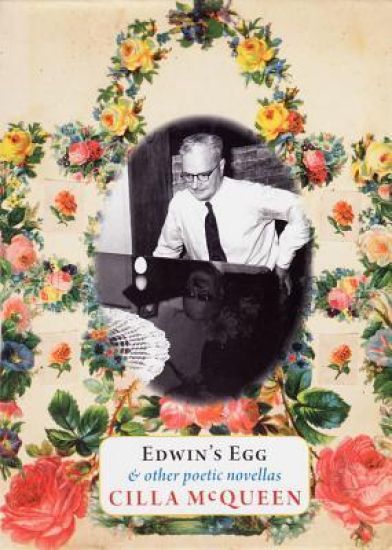
During her time as New Zealand's Poet Laureate, Cilla McQueen worked on a project that explored a space between prose and poetry. It was published in chapters on the Poet Laureate website, and retitled Edwin’s Egg & Other Poetic Novellas. This work is now published for the first time in hard-copy format, combining McQueen’s evocative text with wonderful images from the collection of the Alexander Turnbull Library.

Edwin Morgan: In Touch With Language
Edwin Morgan
Association for Scottish Literary Studies
2020
nidottu
“I try to write something every day even though I am not writing poetry, just to get myself in touch with language.”—Edwin Morgan Edwin Morgan (1920–2010) is one of the giants of modern literature. Scotland’s national poet from 2004 to his death, throughout his long life he produced an astonishing variety of work, from the playful to the profound. Edwin Morgan: In Touch With Language presents previously uncollected prose – journalism, book and theatre reviews, scholarly essays and lectures, drama and radio scripts, forewords and afterwords – all carefully moulded to the needs of differing audiences. Morgan’s writing fizzes with clarity and verve: the topics range from Gilgamesh to Ginsberg, from cybernetics to sexualities, from international literatures to the changing face of his home city of Glasgow. Everyone will find surprises and delights in this new collection.
Edwin Morgan's Cyrano de Bergerac
John Corbett
Association for Scottish Literary Studies
2020
nidottu
Edwin Morgan’s brilliant Glasgow-based Scots translation of Edmond Rostand’s Cyrano de Bergerac is one of the most successful productions in modern Scottish theatre. Fresh, clever and dynamic, Morgan’s refashioning of the play establishes a cultural bond between the classic French play and Scotland’s own dramatic and literary heritage. John Corbett’s SCOTNOTE provides a succinct background to Edmond Rostand and his original play – first performed in Paris, 1897 – as well as to Edwin Morgan and his 1992 Scots verse translation, and is a perfect introduction for senior school pupils and students of all ages.

H. R. (1915). By: Edwin Lefevre, (Original Classics): Robert (Bob) Hobart Davis (1869-1942) was an American editor and photographer. (H.R).
Edwin Lefevre
Createspace Independent Publishing Platform
2017
nidottu
Edwin Lef vre (1871-1943) was an American journalist, writer, and diplomat most noted for his writings on Wall Street business. Biography: Lef vre was born George Edwin Henry Lef vre on January 23, 1871 in Col n, Colombia (now Republic of Panama), the son of Henry Lef vre (1841-1899), who was for many years the general agent of the Pacific Steamship Company American for Panama; he was born in Jersey, in the Channel Islands and emigrated to the United States in his youth. Mr. Lef vre sent his son Edwin to the United States when he was a boy and he was educated at Lehigh University where he received training as a mining engineer. However, at the age of nineteen, he began his career as a journalist and eventually became a stockbroker, as well. Following his father's death, he inherited some wealth and became an independent investor; and while living in Hartsdale, New York a collection of Edwin Lef vre's short stories were published (1901) under the title "Wall Street Stories." This was followed by several novels about money and finance until 1908 when Lef vre and his wife Martha and their children moved to a country estate in East Dorset, Vermont. In 1909 he was appointed ambassador to Spain and Italy by his native country, Panama. 1] Lef vre did work as a broker on Wall Street and was the financial writer for the New York Sun newspaper. He later returned to his home in Vermont where he resumed his literary work, providing short stories for magazines such as The Saturday Evening Post and writing novels. Of the eight books written by Edwin Lef vre his Reminiscences of a Stock Operator is considered a classic of American business writing. The book began as a series of twelve articles published between 1922 and 1923 in The Saturday Evening Post. It is written as first-person fiction, telling the story of a professional stock trader on Wall Street. While published as fiction, it is generally accepted to be the biography of stock market whiz Jesse Livermore. The book has been reprinted in almost every decade since its original publication in 1925, the latest put out by John Wiley & Sons in hardcover and paperback in 1994 which remains in print. It has been translated into the Chinese, German, French, Polish, and Italian languages, amongst others..... Robert (Bob) Hobart Davis (1869-1942) was an American editor and photographer. He was born in Brownsville, Nebraska on March 23, 1869 to Reverend George Ransome Davis and Silvia Nichols Davis. His parents had moved from New England to Nebraska to do missionary work with the American Indians of the region. As a result, Davis was exposed to American Indian culture early-on in his childhood and even could speak a few words of Comanche, Sioux, and Cheyenne by the age of six. Davis began his career working for this brother, Sam, to publish the Carson City Daily Appeal. Although he started by delivering the newspaper to weekly subscribers, Davis was a proficient compositor by the age of nineteen. After Carson City, Davis moved to San Francisco before moving to New York to begin work at the New York Journal. During the Spanish American War, Davis wrote about the conditions of war, his most notable work being an expos on the rotten meat served to soldiers. Davis's first editing job was at the New York Sunday News, where he served as managing editor in early 1900s. He would go on to become editor of Munsey's Magazine, owned by Frank Munsey. While in this position Davis was known for his willingness to help young writers break into the field of literary fiction. In addition to his editorial career, Davis was an amateur photographer. During his lifetime he took more than 3,000 portraits of a variety of prominent individuals. Bob Davis married Madge Lee Hutchinson of San Francisco in 1899. He died in Montreal, Canada in 1942 at the age of 73....
The Science of Fairy Tales (1891) by: Edwin Sidney Hartland AND Edited by: Havelock Ellis
Edwin Sidney Hartland
Createspace Independent Publishing Platform
2017
nidottu
The chief object of this volume is to exhibit, in a manner acceptable to readers who are not specialists, the application of the principles and methods which guide investigations into popular traditions to a few of the most remarkable stories embodying the Fairy superstitions of the Celtic and Teutonic peoples. Some of the subjects discussed have already been dealt with by more competent inquirers. But even in these cases I have sometimes been able to supply additional illustrations of the conclusions previously arrived at, and occasionally, I hope, to carry the argument a step or two further than had been done before. I have thus tried to render the following pages not wholly valueless to students.
The Light of Asia (1879) by: Edwin Arnold. / the book endeavors to describe the life and time of Prince Gautama Buddha /
Edwin Arnold
Createspace Independent Publishing Platform
2017
nidottu
Sir Edwin Arnold (10 June 1832 - 24 March 1904) was an English poet and journalist, who is most known for his work The Light of Asia. The Light of Asia', subtitled 'The Great Renunciation', was first published in London in July 1879. In the form of poem, the book endeavors to describe the life and time of Prince Gautama Buddha, who after attaining enlightenment became the Buddha, the learned one. The book presents his life, character, and philosophy, in a series of verses.