Il fenomeno della sovramedicazione in aumento nella categoria degli anziani e gli effetti collaterali associati a questi farmaci ne risultano esacerbati. L'eccesso di farmaci considerato una sindrome dell'invecchiamento e, con lo sviluppo della medicina moderna e il rapido aumento del numero di anziani, il fenomeno dell'eccesso di farmaci diventato una preoccupazione per gli operatori sanitari che si occupano degli anziani, come medici, farmacisti, istituti e istituzioni mediche, per le conseguenze che ne derivano in termini di effetti collaterali, aumento del tasso di cadute e mancata osservanza del regime farmacologico.La polifarmacia generalmente quantificata come l'uso di diversi farmaci, come quelli da prescrizione e da banco, prodotti di medicina complementare e alternativa e vitamine. Il numero di farmaci solitamente utilizzato per definire la politerapia stato fonte di controversie ed in costante aumento. Cinque o pi farmaci giornalieri sono generalmente considerati una polifarmacia elevata, mentre dieci o pi farmaci sono considerati una polifarmacia estrema.
The phenomenon of over-medication is increasing in the elderly category, and the side effects associated with these drugs are exacerbated by it. Medicinal over-medication is considered a syndrome of aging and with the development of modern medicine and the rapid increase in the number of elderly, the phenomenon of over-medication has become a concern of health care providers for the elderly, such as doctors, pharmacists, institutes, and medical institutions, for the consequences there of side effects, increased rates of falls, and non-compliance with the drug regimen.Polypharmacy is generally quantified as the use of several medicines, such as prescription and over-the-counter pharmaceuticals, complementary and alternative medicine products, and vitamins. The number of medications usually used to define polypharmacy has been a source of contention and is constantly growing. Five or more daily medicines are generally regarded as high polypharmacy, while ten or more medications are considered extreme polypharmacy.
A classic text that develops one prong of Dumezil's tripartite hypothesis of Indo-European tribes: the sacred sovereign. Georges Dumezil's fascination with the myths and histories of India, Rome, Scandinavia, and the Celts yielded an idea that became his most influential scholarly legacy: the tripartite hypothesis, which divides Indo-European societal functions into three classes: the sacred sovereign, the warrior, and the producer. Mitra-Varuna, originally published in 1940, concentrates on the first function, that of sovereignty. Dumezil identifies two types of rulers, the first judicial and worldly, the second divine and supernatural. These figures, both priestly, are oppositional but complementary. The title nods to these roles, referring to the gods Mitra, a rational mediator, and Varuna, an awesome religious figure. Stuart Elden's critical edition, based on the 1988 English translation by Derek Coltman, identifies variations between the first and second French editions and completes-and in places corrects-Dumezil's references. The editor's detailed introduction situates Mitra-Varuna within Dumezil's career, outlines how his treatment of its themes developed over time, and relates the book to the political controversy around his ideas. Two new appendices contain passages that did not appear in the second French edition.
Metodboken är en introducerande och heltäckande bok. Den omfattar allt från vetenskapsteoretiska frågeställningar och etik till hur en uppsats kan utformas och struktureras. Däremellan diskuteras problemformuleringar, teorier och teoribildning, samt olika metoder och analytiska ansatser.Boken är indelad i fem delar:• Det samhällsvetenskapliga projektet• Forskningsdesign• Skapa material• Analyser• SkrivandeAmbitionen är att öppna upp för mer kreativ och nyfiken samhällsvetenskaplig forskning utan att ge avkall på akademisk stringens. Författarna förklarar hur olika metoder inom samhällsvetenskapen fungerar och ger många åskådliggörande exempel på tillämpningar.Metodboken kompromissar inte med det samhällsvetenskapliga projektets komplexitet.
Michael Hviid Jacobsen; Gunnar Aakvaag; Gunnar C. Aakvaag; Thomas Johansson; Willy Guneriussen; Johanna Esseveld; Mai Ottosen; Nihad Bunar; Rickard Jonsson; Sara Eldén; Thomas Eriksen; Simon Lindgren; Fredrik Engelstad; Inger Hagen; Bjørn Schiermer; Philip Lalander; Søren Kristiansen; Marko Valenta; Ola Sigurdson; Thomas Boje
Sociology is a constantly changing scientific endeavour, adventure and practice that was born with the advent of modernity. One of the main reasons for the rise of sociology was modern societys wish to understand itself. In this introduction to sociology, the authors emphasize the importance and centrality of the idea of the sociological imagination, as it was conceived by sociologist C. Wright Mills. This book will enhance and further develop your sociological imagination with a sensibility that has its breeding ground in the Scandinavian countries; this is the first comprehensive attempt to write an international/Nordic text book and introductory text to sociology. This book is aimed primarily at first year students in sociology but will be of interest to anyone who is looking for a comprehensive guide to the exciting field of sociology. Contents Introduction The legacy of the sociological imagination Scandinavian sensibility Structure and content of the book Summary Think for yourself Further reading Chapter 1. What is society? Contested concepts and shifting metaphors Willy Guneriussen, University of Tromsø Introduction Individualism vs holism: methodological and ontological controversies Sociology – an explanatory or interpretive science? Structure or action? Society – a material or symbolic reality? The symbolic turn Combining distinctions The theoretical landscape of sociology Several theories – one reality? Beyond traditions – towards a minimalist model of society Biology and society Combining traditions The first synthesis: Talcott Parsons’ sociology Modifying Parsons’ theory of society Metaphors, science and sociological imagination Metaphors Changing conceptions or changing realities? Concluding reflections Summary Think for yourself Further reading Chapter 2. The sociology of work Inger Marie Hagen, Fafo Introduction The labour contract – labour as commodity in the market From work to labour Modern labour – work as commodity The two parties to the contract: labour and managerial prerogative The labour contract and the social context – different models The collective agreement Labour and self-expression Working conditions Other answers to `why work?’ Motivation and management The work organisation From command to self-management? An example – the modern work organisation – the three different company systems Employer and employee – equal partners Management as superior to employees Employee and management as parties in an ongoing dialogue Working life and distribution – industrial democracy Norms of distribution and norms of democracy Three notions of industrial democracy Industrial democracy and participation – individual and representative participation The Nordic labour market The Nordic model of labour relations When contemporary labour is a part of the past . . . Summary Think for yourself Further reading Chapter 3. The sociology of power Fredrik Engelstad, University of Oslo Introduction The interpretation of `power’ Power as concept Dimensions in social action Expectations and legitimacy From micro to macro State, democracy, politics State, rights and informal power relations Shaping and articulation of interests Political participation on a broad scale Fragmentation and globalisation: abdication of politics? Civil society Networks and organising capacity Gender power and attitudes toward gender Encounters with welfare state institutions Economy and working life Business life, markets and power Management and leadership in enterprises Participation and industrial democracy Ideas and communication Power in the public sphere Aesthetics, culture and national values Social elites: who governs? Power and democratisation Summary Think for yourself Further reading Chapter 4. The sociology of the family Mai Heide Ottosen, The Danish National Centre for Social Research Introduction What is a family? Sociological perspectives on the family Kinship vs family studies The family as a social institution The family as a social group Family as social practice Demographic trends The `bean-pole’ family The crisis of the patriarchal family Structuring family networks Family policies Inside the family: marriage, parenthood and childhood The de-institutionalisation of marriage From fatherhood and motherhood to parenthood Childhood Summary Think for yourself Further reading Chapter 5. The sociology of education Nihad Bunar and Rickard Jonsson, Stockholm University Introduction Sociological perspectives on education The functionalist approach Education and socialisation Social integration Education and gatekeeping: screening and selecting Education as an agent of social change The conflict approach The correspondence principle Reproduction through expectations and opposition Subjective expectation of objective probability Restricted and elaborated codes The subjective-interpretative approach Education and the market The market-oriented position The market-sceptical position The market-ambivalent position Education and ethnicity Urban schools Refugee and migrant students Education and gender Gender and school achievement Summary Think for yourself Further reading Chapter 6. The sociology of religion Ola Sigurdson, University of Gothenburg Introduction What is the sociology of religion? Sociology, the secularisation thesis and the return of religion Religion in the Scandinavian nation-states: an example The continuities and discontinuities of secularised religion The future of religion: towards a post-secular society? Summary Think for yourself Further reading Chapter 7. The sociology of media and information technologies Simon Lindgren, UmeS University Introduction Constructions and representations The media `effects’ model Media, ideology and struggles over hegemony New media and participatory culture Summary Think for yourself Further reading Chapter 8. The sociology of health Thomas Johansson, University of Gothenburg Introduction Historical perspectives Health inequalities Gender and health Lifestyles, risks and health The face of health Global health Summary Think for yourself Further reading Chapter 9. The sociology of class and social stratification Gunnar C. Aakvaag, University of Oslo Introduction Marx’s definition of class The class structure of modern capitalism Max Weber: a multidimensional approach to stratification and class Weber’s general approach to social stratification: class, status and party Weber’s class theory Contemporary class analysis A neo-Marxian approach: Erik Olin Wright and exploitation Wright’s class schema A neo-Weberian approach: John H. Goldthorpe and life chances Service and labour contracts Goldthorpe’s class schema Pierre Bourdieu: classes and lifestyles The social space Bourdieu’s class schema Habitus and class Class, habitus and lifestyle Class and social mobility Social relationships Intergenerational mobility Summary Think for yourself Further reading Chapter 10. The sociology of deviance Philip Lalander, Malmö University Introduction Labelling, ambivalence and counter-labelling Different types of deviance Diagnosis and identity Indulgence at the margins of society Escape from everyday life/escaping everyday life Summary Think for yourself Further reading Chapter 11. The sociology of gender Johanna Esseveld and Sara Eldén, Lund University Introduction Gender and sex Beyond dichotomies A sociological definition of gender Theorising gender Classical texts Men’s and women’s roles Gender oppression and structural inequality New themes in the sociology of gender Gender as a social practice Intersectionality Scandinavian sociology of gender today Conclusions Summary Think for yourself Further reading Chapter 12. The sociology of micro-social interaction and everyday life Søren Kristiansen and Michael Hviid Jacobsen, Aalborg University Introduction Everyday life as a social domain Micro-social interaction The basis of micro-social interaction: common sense, meaning and intersubjectivity Phenomenological sociology Symbolic interactionism Ethnomethodology The syntax of interaction: rules, rituals and ceremonies Goffman and dramaturgical sociology Conversation analysis Summary Think for yourself Further reading Chapter 13. The sociology of globalisation Thomas Hylland Eriksen, University of Oslo Introduction Origins of contemporary globalisation Globalisation today Globalisers and sceptics Dimensions of globalisation Disembedding, including de-localisation Standardisation Interconnectedness Mobility Mixing Vulnerability Re-embedding Central questions about globalisation The dialectics of globalisation Summary Think for yourself Further reading Chapter 14. The sociology of culture Bjorn Schiermer, University of Copenhagen Introduction Sociology of culture and popular culture The Frankfurt School: the critique and the potential of modern mass culture Siegfried Kracauer: the dialectics of commodified culture Theodor W. Adorno: the critical potential of autonomous art Walter Benjamin: art and politics The Birmingham School: culture as `a way of life’ Poststructuralism and semiotics: culture as `text’ The `material turn’: re-extending the shortened concept of culture Cultural studies: leaving the high/low dichotomy behind Ironic sensibilities: kitsch and camp and new ways of being together Summary Think for yourself Further reading Chapter 15. The sociology of ethnicity Nihad Bunar and Marko Valenta, Stockholm University and NTNU Introduction Defining ethnicity Theoretical approaches to ethnicity Primordialism Instrumentalism New ethnicities The importance of ethnic networks Symbolic ethnicity Theories and policies for managing ethnic diversity Ethnicity and other sociologically relevant concepts of categorisation Ethnicity and class Ethnicity and gender Ethnicity and race Ethnicity, racism and discrimination Ethnicity and nation Ethnicity and citizenship Summary Think for yourself Further reading Chapter 16. The sociology of the self Thomas Johansson, University of Gothenburg Introduction The sociology of the body: classical texts Consuming the Other Cyborgs and transvestites Lifestyle, fashion and the body Bodybuilding, fitness and gender Plastic surgery and body modifications Summary Think for yourself Further reading Chapter 17. The sociology of social change Gunnar C. Aakvaag, University of Oslo Introduction What are the `general characteristics’ of a society? Functional differentiation Consequences for the individual: facing social complexity Institutional `colonisation’ Consequences for the individual: facing commercialisation and bureaucratisation Individualisation Industrial modernity Individualised modernity Consequences for the individual: facing the decline of standard biographies Risk society Objective side-effects Subjective perception Consequences for the individual: facing uncertainty Social change: all that is solid melts into air? Summary Think for yourself Further reading Notes References Index
Helena Lindgren; Kyllike Christensson; Anna-Karin Dykes; Gudrun Abascal; Tone Ahlborg; Anna Akselsson; Michael Algovik; Eva Anderberg; Ove Axelsson; Mia Barimani; Marie Berg; Anna Berglund; Kerstin Berntorp; Ellen Blix; Catrin Borneskog Sinclair; Ulrika Byrskog; Ylva Carlsson; Peter Conner; Elizabeth Crang Svalenius; Anna Dencker; Malin Edqvist; Cecilia Ekéus; Maria Ekstrand Ragnar; Helen Elden; Kerstin Erlandsson; Marianne Forsgren; Karin Forslund Frykedal; Kristina Gemzell Danielsson; Susanne Georgsson; Ulf Hanson
Reproduktiv, perinatal och sexuell hälsa är ett självständigt huvudområde knutet till livets början och området för mänsklig reproduktion i ett livscykel- och genusperspektiv. Inom huvudområdet studeras och utvecklas kunskap om den normala processen och dess avvikelser i samband med graviditet, förlossning och nyföddhetsperiod samt föräldraskapets utveckling. Vidare studeras och utvecklas kunskap och teorier om kvinnors reproduktiva hälsa, sexualitet och fertilitetskontroll samt barnmorskansfrämjande, förebyggande, vårdande och behandlande arbete – med och för – kvinnan, barnet och familjen. Reproduktiv hälsa omfattar barnmorskans verksamhet inom reproduktiv, perinatal och sexuell hälsa. Boken är uppbyggd utifrån ICM:s (International Confederation of Midwives) beskrivning av barnmorskans kompetensområden. Boken finns tillgänglig digitalt, inklusive fördjupande bildmaterial.Boken riktar sig till barnmorskestudenter och yrkesverksamma barnmorskor samt till övriga hälsoprofessioner verksamma inom reproduktiv hälsa.”Rekommenderas till landets barnmorskeutbildningar, kliniska verksamheter och andra intresserade för att uppnå gedigen och underbyggd kunskap.”Eva Nordlund, ordförande, Svenska Barnmorskeförbundet
David Wästerfors; Erika Andersson; Katarina Jacobsson; Veronika Burcar Alm; Liv Finstad; Lisa Flower; Jerzy Sarnecki; Sven-Åke Lindgren; Henrik Tham; Karin Aronsson; Erik Hannerz; Hanna Sahlin Lilja; Ingrid Sahlin; Goran Basic; Stina Bergman Blix; Kristina Göransson; Sébastien Tutenges; Patrik Hall; Åsa Wettergren; Tove Pettersson; Sara Eldén; Joakim Thelander; Ann-Mari Sellerberg; Vesa Leppänen; Susanne Boethius; Anna Rypi; Christofer Edling; Åsa Lundqvist; Anne Ryen; Christer Lindberg
Det finns energi att hämta i empiriska iakttagelser och det kan vara en fröjd att utvinna den energin. Så lyder budskapet i den här vänboken till Malin Åkerström, professor emerita vid Lunds universitet. Med nedslag i vitt skilda fält och projekt vill författarna exemplifiera och analysera det speciella samspel som äger rum mellan empiri och forskare i olika samhällsvetenskapliga ämnen. Det rör sig om en tolkande aktivitet som är nyfiken och öppen för överraskningar och lyckoträffar. Malin Åkerström har under flera decennier bedrivit forskning i den här andan och publicerat en rad färgstarka och stilbildande böcker och artiklar. Den empiriska glädjen är en antologi uppdelad i fyra delar: brott och straff, kultur och kontroll, interaktioner och ritualer samt forskare och fält. Boken innehåller bidrag från 30 författare vid olika lärosäten och riktar sig till forskare och studenter i sociologi, kriminologi, socialt arbete och socialantropologi samt angränsande ämnen.
WHEN PARADISE TURNS TO CHAOS, WHO WILL SURVIVE? An incredible true story of murder, romance and a fateful search for utopia in the Galápagos from the New York Times bestselling author of The Ghosts of Eden Park At the height of the Great Depression, Los Angeles oil mogul George Allan Hancock and his crew of Smithsonian scientists, who had spent four years travelling the South Seas collecting rare specimens for scientific research, came upon a gruesome scene on reaching the Galápagos: two bodies, mummified by the searing heat, on the shore of the remote island. Hancock was surprised to discover an equally exotic group of humans: European exiles who had fled political and economic unrest, hoping to create a utopian paradise. As Hancock and his fellow American explorers would witness, paradise had turned into chaos. The three sets of exiles – a Berlin doctor and his lover, a traumatised World War I veteran and his young family, and an Austrian baroness with two adoring paramours – were riven by conflict. Petty slights led to angry confrontations. The baroness, wielding a riding crop and a pearl-handled revolver, staged fights between her two lovers and brazenly seduced American tourists. The conclusion was deadly: two exiles missing, two others dead, and the survivors hurling accusations of murder. Using previously unpublished archives, Abbott Kahler weaves a chilling, stranger-than-fiction tale worthy of Agatha Christie, a mystery as alluring and curious as the Galápagos themselves. Eden Undone explores our universal desire to seek utopia, while laying bare the human fallibility that, inevitably, renders such a quest doomed.
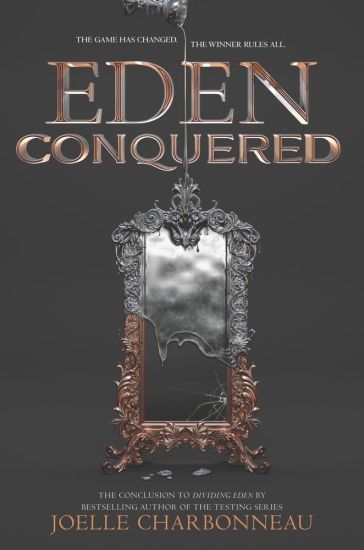
The electrifying conclusion to the Dividing Eden series by the New York Times bestselling author of the Testing trilogy, Joelle Charbonneau.The Trials of Virtuous Succession have ended. Prince Andreus is king—and Princess Carys is dead.But even as he’s haunted by what he did to win the throne, Andreus discovers that his dream of ruling only brings new problems. The people love his twin even more in death than they did when she was alive. The Elders treat him as a figurehead. And worst of all, the winds of Eden are faltering. But despite what everyone believes, Carys is alive. Exiled to the wilderness, Carys struggles to control the powers that have broken free inside her. And as she grows stronger, so does her conviction that she must return to the Palace of Winds, face her twin and root out the treachery that began long before the first Trials started. The Kingdom of Eden is growing darker with each passing day. Brother and sister, former foes, must decide whether some betrayals cut too deep to be forgiven—and whether one will wear the crown or both will lose everything.
The electrifying conclusion to the Dividing Eden series by the New York Times bestselling author of the Testing trilogy, Joelle Charbonneau.The Trials of Virtuous Succession have ended. Prince Andreus is king—and Princess Carys is dead.But even as he’s haunted by what he did to win the throne, Andreus discovers that his dream of ruling only brings new problems. The people love his twin even more in death than they did when she was alive. The Elders treat him as a figurehead. And worst of all, the winds of Eden are faltering. But despite what everyone believes, Carys is alive. Exiled to the wilderness, Carys struggles to control the powers that have broken free inside her. And as she grows stronger, so does her conviction that she must return to the Palace of Winds, face her twin and root out the treachery that began long before the first Trials started. The Kingdom of Eden is growing darker with each passing day. Brother and sister, former foes, must decide whether some betrayals cut too deep to be forgiven—and whether one will wear the crown or both will lose everything.
In a Paris slum, the body of a rogue geneticist is found tortured and defiled. Ex-CIA agent Hawker is determined to find the men responsible. However, the secrets his friend may have died to protect, lead to a fabled Sumerian tablet that contains ancient secrets powerful enough to transform the world for good or evil.
Elder Abuse: Forensic, Legal and Medical Aspects focuses on the psychological, financial and physical abuse and neglect that is widespread in elder abuse across socioeconomic levels. It provides expert information on forensic and legal topics that professionals need to understand to confront these crimes. The topics included are those most important in the detection and prosecution of elder abuse. Identification and epidemiology are discussed, as are types and presentations of abuse. Written at a level for both professionals and students who wish to gain a broader understanding of specific forensic topics in elder maltreatment, this book is an ideal source.