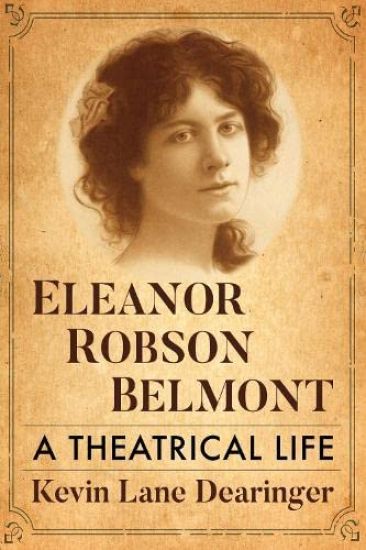
When Mrs. August Belmont died in 1979, just before her 100th birthday, she was remembered as a philanthropist and advocate for the arts, especially the Metropolitan Opera--but before her triumphs as Mrs. Belmont, she had dignified the American stage for 13 glorious years as Eleanor Robson, actress. Her splendid voice, understated style, and always-evident intelligence thrilled legions of theatregoers and enthralled the best playwrights of her time, including Israel Zangwill, Clyde Fitch, and George Bernard Shaw. Despite the brevity of her career, Eleanor Robson stands as a prototype for many actresses who followed her--women who sought to control their own careers and demanded artistic respect and freedom, and who, by the twenty-first century, would confidently call themselves not actresses, but actors. This is the first book-length biography of her, focusing especially on her theatrical career.
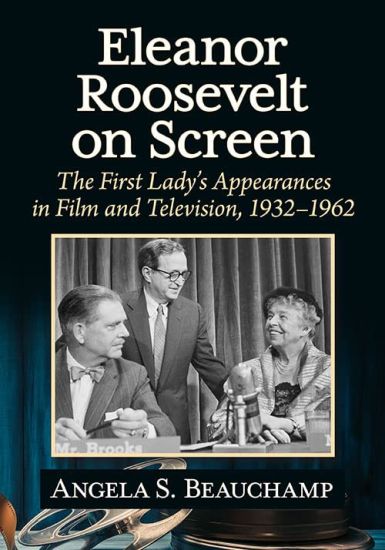
Eleanor Roosevelt recognized the power of film and television, especially as educational tools to reach young people. She hosted three political talk shows in the 1950s and early 1960s, often appearing in guest spots to promote the United Nations, Democratic candidates, and progressive issues with Ed Sullivan, Bob Hope, Frank Sinatra, Mike Wallace, and Edward R. Murrow. In the 1930s and '40s, fan magazines such as Photoplay and Modern Screen published her opinions on the movies, and she boldly appeared in an interventionist prologue to the 1940 anti-Nazi film Pastor Hall. During World War II, she contributed to civil defense films and became a staple joke in Hollywood comedies. She also negotiated postwar representations of FDR on the big screen, culminating in 1960's Sunrise at Campobello, which portrayed her as the perfect wife. This book is the first to address Eleanor Roosevelt's moving image record and her relationship to film and television in the three decades from the 1932 presidential campaign to her death in 1962.
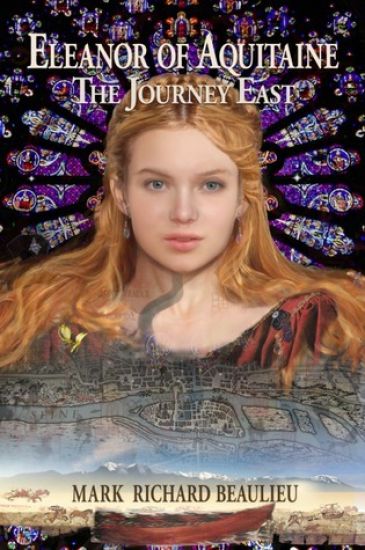
In The Journey East, Mark Richard Beaulieu continues the fascinating life of Eleanor of Aquitaine with a second volume. Set in the historically rich 12th century, the young French Queen brings her culture into conflicted Paris, where she will become a mother. Developing her court, she leads an army on an amazing journey of personal destinations. With a unique view of the world, parentless Eleanor is brought East into Paris. Married to King Louis the Seventh at age 13, Eleanor is not allowed to bring her Aquitaine chevaliers, troubadours, or friends. She runs up against the French Court, a reigning Queen, and a dark city of obedient religion. Outside of Paris, a new cathedral is built of glowing walls of stained glass, run by Abbot Adam Suger. He is in conflict with austere Abbot Bernard of Clairvaux, the nemesis of Eleanor's family. In the division of faith, Eleanor takes sides, but not as you might expect in this contest for power. The young attractive queen faces trials of majesty to bring light to France. Upholding her sister's marriage and dealing with factions that battle to divide the realm, the queen and king are swept up into the French civil war. After her first child, her Aquitaine messenger birds bring news that the First Crusade of her forefathers would not be the last.Recruiting the largest land army ever assembled using her persuasive skills, Eleanor embarks on a 3,000-mile journey East across medieval Europe to enter the ill-fated Second Crusade. She, her champion court, and a train of three hundred women encounter the enchanting culture of Byzantium - the greatest city in the world. Detained by a skilled Emperor, they cross into mountainous Outremer. Running out of supply, they suffer a brutal winter war against the Saracens. Eleanor and her friends test the bounds of chivalry, love, courage, endurance, and the very limits of faith. This fantastic exploration of stamina and a passionate tells her journey with her people. (this is the Feb 2020 edition)----This ten-year writing project draws on the latest scholarly research. Beaulieu's historical fiction significantly updates what we know of this powerful medieval queen. Born as Alienor, she twice becomes a queen, once for France with King Louis 7th, then for England with King Henri 2nd. Find out how she becomes one of the most enigmatic women of the middle ages as she develops the Eleanor Code and gets to be the grandmother of empires.----Mark Richard Beaulieu is an expert on the 12th-century life of Eleanor of Aquitaine. He is an accomplished author, collected painter, award-winning photographer, and innovative software technologist. Trained as a studio artist, Mark holds a Master of Fine Arts from the University of California at Davis and a Bachelor of Fine Arts from Trinity University in San Antonio, Texas.
The Voyage West delivers storyteller Mark Beaulieu's third volume recreating Eleanor of Aquitaine's rich medieval world on land and sea. As a spirited crusader, the young French queen and mother must fight for all she believes in. Survival becomes paramount to endure an ill-conceived war in treacherous Outremer and to sail the dangerous voyage home.Coming ashore in Antioch after horrific losses where only one in twenty survives, Eleanor must overcome despair. Meanwhile, Louis, who has lost most of his army, tours holy shrines. A barge sent by King Raymond invites her to sail up the restorative Orontes river. Her court urges her forward to discover the exotic ways of a rich desert culture. Louis and Eleanor come into a dramatic confrontation over the crusade mission, but actions far deeper are taking place by forces that have called the holy war.This begins the story of a layered world as complex as Eleanor, where armed political struggle, divisive religion, medieval beliefs, and passions compound. Eleanor, driven forward by a holy quest, finds it is everything else that matters. Through novice eyes, she experiences beauty and cruelty. Her court of chevaliers and troubadour princes meet the exotic women of Outremer and the culture of the desert. We see both sides of the enormous battle fought over Damascus. Eleanor meets the sister-queens who operate the holy lands and learn what it takes to be a Queen that uses her court to full advantage. In spite of fears for safety and facing real and immediate danger, she struggles in a holy war with an all-knowing church and an unknowing King, a perfect storm for making infallibly horrific decisions. Ultimately, she understands the forces that call and divide the Second Crusade. Eleanor arrives home as a wholly different person, changed forever. It is an amazing voyage and a thrilling adventure of one of the greatest queens you never knew.This edition is April 2021.
Eleanor McGraw, vertically challenged, empathic and sharp daughter of folk musician Isabel Payne and a world famous rock guitarist, wakes up a few days shy of her 14th birthday to a life more ordinary. After years of vagabonding around the world alongside a series of chaotic father figures, they are settling down with quiet Kjell, a Swedish dentist, on the outskirts of a small town on the South coast of England. While exploring her new home's surroundings, Eleanor discovers a solitary pony in a deserted plot of grazing land. As she befriends the animal and meets scar-faced, foul-mouthed, 16-year-old Pike she is slowly drawn into another family's tragic past and finds herself at the centre of a decision between life or death, past or future, beginning or end. A contemporary book about people, ponies, patchwork families, friendship and love, suitable for anyone - horse rider or not - between 14 and 104. Contains some strong language.
For fans of Colleen Cambridge, S.K. Golden, Jacqueline Winspear, and Ashley Weaver, a brilliant 1950s Cold War historical mystery debut featuring the former First Lady Eleanor Roosevelt's indispensable assistant as an equally resourceful sleuth. New York City and Washington, DC, 1951. Kay Thompson--secretary to Eleanor Roosevelt--is a young woman of conviction navigating the post-World War II period. But can she expose the dark truth about a transatlantic murder mystery unfolding before her eyes? Previously fired for speaking out against workplace injustices, twenty-five-year-old Kay Thompson finds her true calling once appointed to support Eleanor Roosevelt, a champion of human rights known as ER among those in her inner circle. Kay fully embraces her new role as the former First Lady's right hand--typing up daily columns and juggling a blur of political meetings, ribbon cuttings, and charitable dinners. It's not until a dead body is discovered on a train that her most compelling task comes into focus . . . Stunning Susie Taylor had star quality. Judging from her photos, it's clear why she left Sweden with plans to make it big on Broadway. But when ER enlists Kay's help on a discreet investigation about her sudden disappearance, the two suspect the up-and-comer was concealing secrets about her real identity and motives--all leading to her murder at Washington's Union Station . . . Plunged into a living Alfred Hitchcock film, an unseasoned Kay and a shrewd ER side with a handsome detective on a search for answers. What was Susie's connection with a charismatic Soviet UN delegate and an atomic energy researcher? As ER makes it her mission to find out, danger looms upon the discovery of another body. Now, Kay must play a central role in exposing the killer--before she becomes the next rising beauty to meet a cruel fate . . .
For fans of Colleen Cambridge, S.K. Golden, Jacqueline Winspear, and Ashley Weaver, a brilliant 1950s Cold War historical mystery debut featuring the former First Lady Eleanor Roosevelt's indispensable assistant as an equally resourceful sleuth. New York City and Washington, DC, 1951. Kay Thompson--secretary to Eleanor Roosevelt--is a young woman of conviction navigating the post-World War II period. But can she expose the dark truth about a transatlantic murder mystery unfolding before her eyes? Previously fired for speaking out against workplace injustices, 25-year-old Kay Thompson finds her true calling once appointed to support Eleanor Roosevelt, a champion of human rights known as ER among those in her inner circle. Kay fully embraces her new role as the former First Lady's right hand--typing up daily columns and juggling a blur of political meetings, ribbon cuttings, and charitable dinners. It's not until a dead body is discovered on a train that her most compelling task comes into focus . . . Stunning Susie Taylor had star quality. Judging from her photos, it's clear why she left Sweden with plans to make it big on Broadway. But when ER enlists Kay's help on a discreet investigation about her sudden disappearance, the two suspect the up-and-comer was concealing secrets about her real identity and motives--all leading to her murder at Washington's Union Station. As ER makes it her mission to uncover the truth, danger looms upon the discovery of another body. Now, Kay must play a central role in exposing the killer--before she becomes the next rising beauty to meet a cruel fate . . .
Appearing first as a weekly serial in The Christian Herald, Eleanor H. Porter’s Pollyanna was first published in book form in 1913. This popular story of an impoverished orphan girl who travels from America’s western frontier to live with her wealthy maternal Aunt Polly in the fictional east coast town of Beldingsville went through forty-seven printings in seven years and remains in print today in its original version, as well as in various translations and adaptations. The story’s enduring appeal lies in Pollyanna’s sunny personality and in her glad game, her playful attempt to accentuate the positive in every situation. In celebration of its centenary, this collection of thirteen original essays examines a wide variety of the novel’s themes and concerns, as well as adaptations in film, manga, and translation.In this edited collection on Pollyanna, internationally respected and emerging scholars of children’s literature consider Porter’s work from modern critical perspectives. Contributors focus primarily on the novel itself but also examine Porter’s sequel, Pollyanna Grows Up, and the various film versions and translations of the novel. With backgrounds in children’s literature, cultural and film studies, philosophy, and religious studies, these scholars extend critical thinking about Porter’s work beyond the thematic readings that have dominated previous scholarship. In doing so, the authors approach the novel from theoretical perspectives that examine what happens when Pollyanna engages with the world around her—her community and the natural environment—exposing the implicit philosophical, religious, and nationalist ideologies of the era in which Pollyanna was written. The final section is devoted to studies of adaptations of Porter’s protagonist.
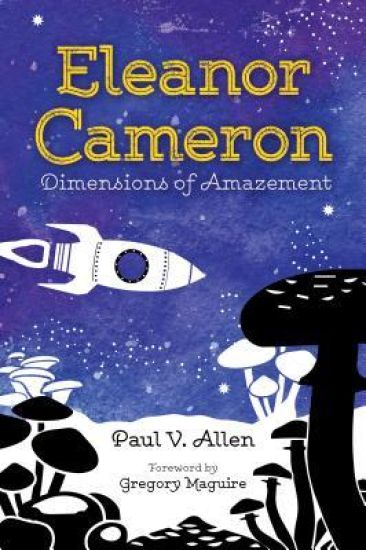
Eleanor Cameron (1912–1996) was an innovative and genre-defying author of children’s fiction and children’s literature criticism. From her beginnings as a librarian, Cameron went on to become a prominent and respected voice in children’s literature, writing one of the most beloved children’s science fiction novels of all time, The Wonderful Flight to the Mushroom Planet, and later winning the National Book Award for her time fantasy The Court of the Stone Children. In addition, Eleanor Cameron played an often vocal role in critical debates about children’s literature. She was one of the first authors to take up literary criticism of children’s novels and published two influential books of criticism, including The Green and Burning Tree. One of Cameron’s most notable acts of criticism came in 1973, when she wrote a scathing critique of Roald Dahl’s Charlie and the Chocolate Factory. Dahl responded in kind, and the result was a fiery imbroglio within the pages of the Horn Book Magazine. Yet despite her many accomplishments, most of Cameron’s books went out of print by the end of her life, and her star faded. This biography aims to reinsert Cameron into the conversation by taking an in-depth look at her tumultuous early life in Ohio and California, her unforgettably forceful personality and criticism, and her graceful, heartfelt novels. The biography includes detailed analysis of the creative process behind each of her published works and how Cameron’s feminism, environmentalism, and strong sense of ethics are reflected in and represented by her writings. Drawn from over twenty interviews, thousands of letters, and several unpublished manuscripts in her personal papers, Eleanor Cameron is a tour of the most exciting and creative periods of American children’s literature through the experience of one of its valiant purveyors and champions.