

Kirjahaku
Etsi kirjoja tekijän nimen, kirjan nimen tai ISBN:n perusteella.
1000 tulosta hakusanalla Evripides

The Alcestis And Hippolytus Of Euripides (1846)
Euripides; G. Dindorf
KESSINGER PUBLISHING, LLC
2010
sidottu



The Nineteen Tragedies and Fragments of Euripides. Translated by Michael Wodhull, Esq; In Four Volumes. ... Volume 1 of 4
Euripides
Gale Ecco, Print Editions
2010
nidottu

The Nineteen Tragedies and Fragments of Euripides. Translated by Michael Wodhull, Esq; In Four Volumes. ... Volume 2 of 4
Euripides
Gale Ecco, Print Editions
2010
nidottu
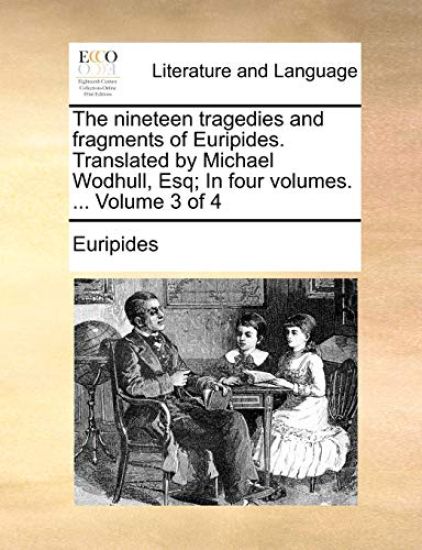
The Nineteen Tragedies and Fragments of Euripides. Translated by Michael Wodhull, Esq; In Four Volumes. ... Volume 3 of 4
Euripides
Gale Ecco, Print Editions
2010
nidottu

The Nineteen Tragedies and Fragments of Euripides. Translated by Michael Wodhull, Esq; In Four Volumes. ... Volume 4 of 4
Euripides
Gale Ecco, Print Editions
2010
nidottu
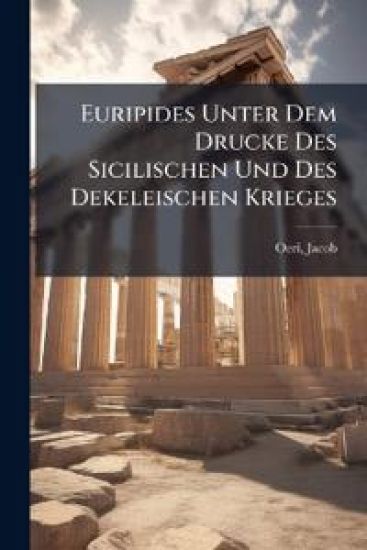
Euripides Unter Dem Drucke Des Sicilischen Und Des Dekeleischen Krieges
Oeri Jacob 1844-1908
Nabu Press
2010
pokkari


Euripides and His Influence: Our Debt to Greece and Rome
Frank Laurence Lucas; R. W. Livingstone
Literary Licensing, LLC
2012
sidottu
""Euripides and His Influence: Our Debt to Greece and Rome"" by Frank Laurence Lucas is a comprehensive study of the life and works of the ancient Greek playwright, Euripides, and his influence on Western literature and culture. The book explores Euripides' life, his innovations in dramatic form, and his impact on the development of tragedy and comedy. It also examines the reception of his plays in ancient Greece and Rome and their continued popularity in modern times. Lucas analyzes the themes and motifs that run through Euripides' plays, such as the role of women in society, the nature of love and desire, and the relationship between humans and the gods. He also discusses the influence of Euripides on later writers, including Shakespeare, Racine, and Goethe. The book is written in a clear and engaging style and is suitable for both scholars and general readers interested in the history of literature and culture. It includes a detailed bibliography and index, making it a valuable resource for further research. Overall, ""Euripides and His Influence"" is a compelling exploration of one of the greatest playwrights of all time and his enduring legacy in Western culture.This scarce antiquarian book is a facsimile reprint of the old original and may contain some imperfections such as library marks and notations. Because we believe this work is culturally important, we have made it available as part of our commitment for protecting, preserving, and promoting the world's literature in affordable, high quality, modern editions, that are true to their original work.
Euripides and His Influence: Our Debt to Greece and Rome
Frank Laurence Lucas; R. W. Livingstone
Literary Licensing, LLC
2012
nidottu
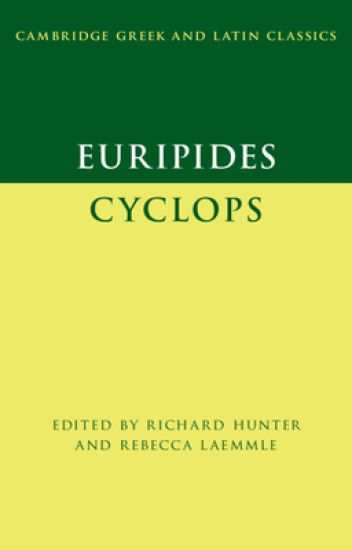
Euripides: Cyclops
Cambridge University Press
2020
sidottu
Euripides' Cyclops is the only example of Attic satyr-drama which survives intact. It is a brilliant dramatisation of the famous story from Homer's Odyssey of how Odysseus blinded the Cyclops after making him drunk. The play has much to teach us, not just about satyr-drama, but also about the reception and adaptation of Homer in classical Athens; the brutal savagery of the Homeric monster is here replaced by an ironised presentation of Athenian social custom. Problems of syntax, metre and language are fully explained, and there is a sophisticated literary discussion of the play. This edition will be of interest to advanced undergraduates and graduate students studying Greek literature, as well as to scholars.
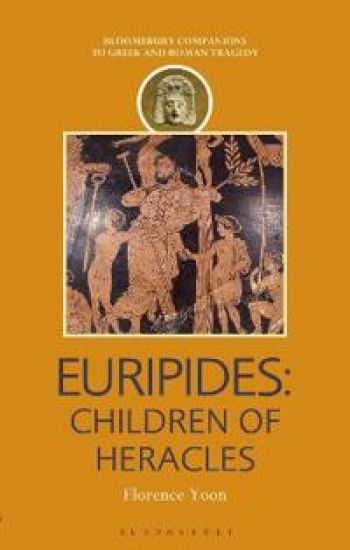
This book is an accessible guide through the many twists and turns of Euripides’ Children of Heracles, providing several frameworks through which to understand and appreciate the play. Children of Heracles follows the fortunes of Heracles’ family after his death. Euripides confronts characters and audience alike with an extraordinary series of plot twists and ethical challenges as the persecuted family of refugees struggles to find asylum in Athens before taking revenge on its enemy Eurystheus. It is a fast-paced story that explores the nature of power and its abuse, focusing on the appropriate treatment and behaviour of the powerless and the obligations and limitations of asylum. The audience must continually re-evaluate the play’s moral dimensions as the characters respond to complications that range from the fantastic to the frighteningly realistic.Yoon situates Children of Heracles in its literary context, showing how Euripides constructs a unique kind of tragic plot from a wide range of conventions. It also explores the centrality of the dead Heracles and the leading role given to the socially powerless and the dramatically marginal. Finally, it discusses the historical contexts of the play’s original performance and its political resonance both then and now.
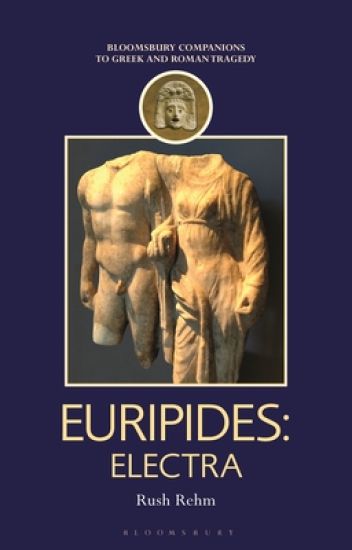
This new introduction to Euripides' fascinating interpretation of the story of Electra and her brother Orestes emphasizes its theatricality, showing how captivating the play remains to this day. Electra poses many challenges for those drawn to Greek tragedy – students, scholars, actors, directors, stage designers, readers and audiences. Rush Rehm addresses the most important questions about the play: its shift in tone between tragedy and humour; why Euripides arranged the plot as he did; issues of class and gender; the credibility of the gods and heroes, and the power of the myths that keep their stories alive. A series of concise and engaging chapters explore the functions of the characters and chorus, and how their roles change over the course of the play; the language and imagery that affects the audience's response to the events on stage; the themes at work in the tragedy, and how Euripides forges them into a coherent theatrical experience; the later reception of the play, and how an array of writers, directors and filmmakers have interpreted the original. Euripides’ Electra has much to say to us in our contemporary world. This thorough, richly informed introduction challenges our understanding of what Greek tragedy was and what it can offer modern theatre, perhaps its most valuable legacy.
This new introduction to Euripides' fascinating interpretation of the story of Electra and her brother Orestes emphasizes its theatricality, showing how captivating the play remains to this day. Electra poses many challenges for those drawn to Greek tragedy – students, scholars, actors, directors, stage designers, readers and audiences. Rush Rehm addresses the most important questions about the play: its shift in tone between tragedy and humour; why Euripides arranged the plot as he did; issues of class and gender; the credibility of the gods and heroes, and the power of the myths that keep their stories alive. A series of concise and engaging chapters explore the functions of the characters and chorus, and how their roles change over the course of the play; the language and imagery that affects the audience's response to the events on stage; the themes at work in the tragedy, and how Euripides forges them into a coherent theatrical experience; the later reception of the play, and how an array of writers, directors and filmmakers have interpreted the original. Euripides’ Electra has much to say to us in our contemporary world. This thorough, richly informed introduction challenges our understanding of what Greek tragedy was and what it can offer modern theatre, perhaps its most valuable legacy.
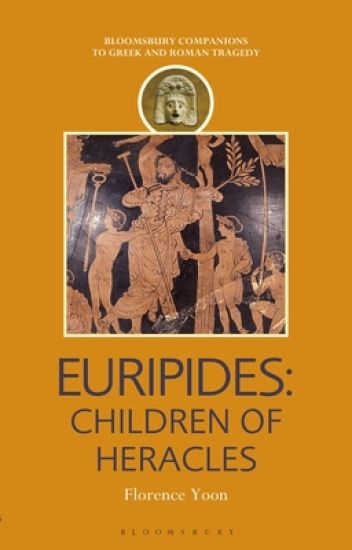
This book is an accessible guide through the many twists and turns of Euripides’ Children of Heracles, providing several frameworks through which to understand and appreciate the play. Children of Heracles follows the fortunes of Heracles’ family after his death. Euripides confronts characters and audience alike with an extraordinary series of plot twists and ethical challenges as the persecuted family of refugees struggles to find asylum in Athens before taking revenge on its enemy Eurystheus. It is a fast-paced story that explores the nature of power and its abuse, focusing on the appropriate treatment and behaviour of the powerless and the obligations and limitations of asylum. The audience must continually re-evaluate the play’s moral dimensions as the characters respond to complications that range from the fantastic to the frighteningly realistic.Yoon situates Children of Heracles in its literary context, showing how Euripides constructs a unique kind of tragic plot from a wide range of conventions. It also explores the centrality of the dead Heracles and the leading role given to the socially powerless and the dramatically marginal. Finally, it discusses the historical contexts of the play’s original performance and its political resonance both then and now.
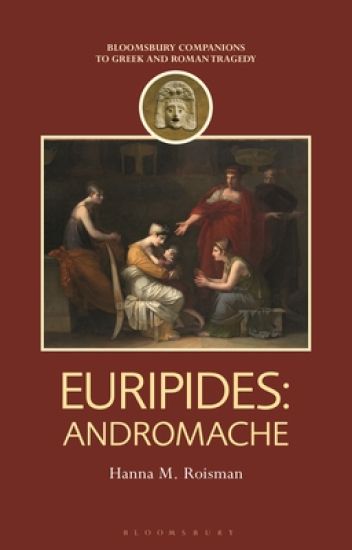
The book is written mainly for students to enable them better to appreciate and enjoy Euripides’ Andromache. Its presentation seeks to combine depth of analysis with clarity and accessibility. It discusses Greek theatre and performance, the myth behind the play, and the literary, intellectual, and political context in which it was written and first performed. The book provides analyses of the various characters, and highlights the play’s ambiguities and complexities. What makes Andromache of special interest is the fact that, of the 32 extant tragedies, it might have been originally produced outside Athens. This in turn leads the discussion of how the play’s scrutiny of the Spartan characters affected the off-stage audience. Andromache is the only play that portrays the human toll caused by the Trojan War to both the Trojan and the Greek sides. After the Fall of Troy, Andromache, former wife of Hector, has been given to Neoptolemus, Achilles’ son, as a war-prize. Andromache bore Neoptolemus a son, Molossus, before Neoptolemus married Hermione, the daughter of Menelaus and Helen. While Neoptolemus is away, Menelaus and Hermione attempt to kill Andromache and Molossus, causing a rift between the two families who were the major players in the War: the house of Atreus and the house of Peleus, father of Achilles. Although Neoptolemus is murdered, the play ends with a prophecy for the future of the line of descent of Peleus and Thetis in the form of the blessed kingdom of Molossia.
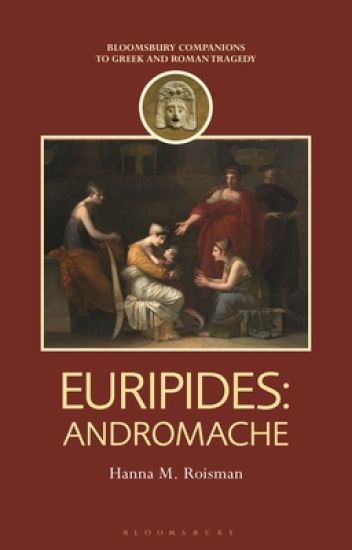
The book is written mainly for students to enable them better to appreciate and enjoy Euripides’ Andromache. Its presentation seeks to combine depth of analysis with clarity and accessibility. It discusses Greek theatre and performance, the myth behind the play, and the literary, intellectual, and political context in which it was written and first performed. The book provides analyses of the various characters, and highlights the play’s ambiguities and complexities. What makes Andromache of special interest is the fact that, of the 32 extant tragedies, it might have been originally produced outside Athens. This in turn leads the discussion of how the play’s scrutiny of the Spartan characters affected the off-stage audience. Andromache is the only play that portrays the human toll caused by the Trojan War to both the Trojan and the Greek sides. After the Fall of Troy, Andromache, former wife of Hector, has been given to Neoptolemus, Achilles’ son, as a war-prize. Andromache bore Neoptolemus a son, Molossus, before Neoptolemus married Hermione, the daughter of Menelaus and Helen. While Neoptolemus is away, Menelaus and Hermione attempt to kill Andromache and Molossus, causing a rift between the two families who were the major players in the War: the house of Atreus and the house of Peleus, father of Achilles. Although Neoptolemus is murdered, the play ends with a prophecy for the future of the line of descent of Peleus and Thetis in the form of the blessed kingdom of Molossia.