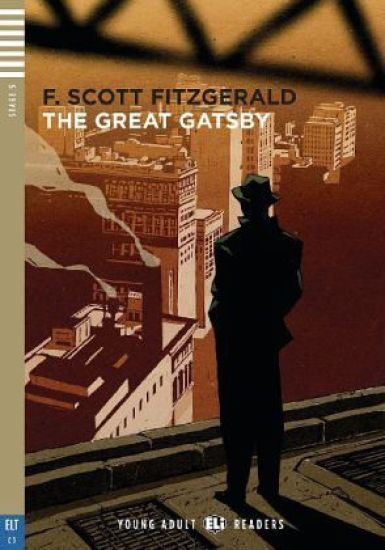
The novel provides a portrait of the Eastern elite during the Jazz Age, exploring New York Caf Society. As with his other novels, Fitzgerald's characters are complex, especially in their marriage and intimacy, much like how he treats intimacy in Tender Is the Night. The book is believed to be largely based on Fitzgerald's relationship and marriage with Zelda Fitzgerald.
Thid Side of Paradise is the debut novel by F. Scott Fitzgerald. Published in 1920 and taking its title from a line of Rupert Brooke's poem Tiare Tahiti, the book examines the lives and morality of post-World War I youth. Its protagonist, Amory Blaine, is an attractive Princeton University student who dabbles in literature. The novel explores the theme of love warped by greed and status seeking.
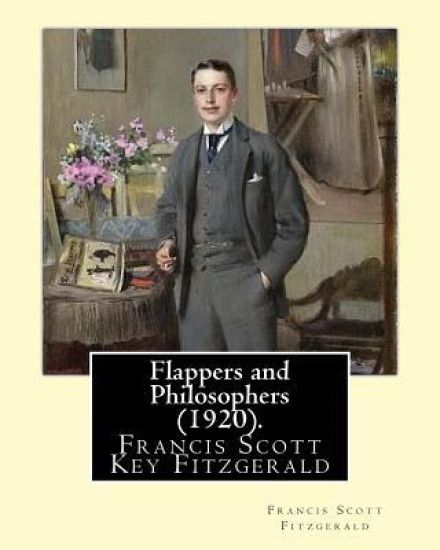
This somewhat unpleasant tale, published as a novelette in the "Smart Set" in July, 1920, relates a series of events which took place in the spring of the previous year. Each of the three events made a great impression upon me. In life they were unrelated, except by the general hysteria of that spring which inaugurated the Age of Jazz, but in my story I have tried, unsuccessfully I fear, to weave them into a pattern-a pattern which would give the effect of those months in New York as they appeared to at least one member of what was then the younger generation.
This short story was first published in the "Chicago Tribune," and first published in book form in Tales of the Jazz Age in 1922. "Of this story I can say that it came to me in an irresistible form, crying to be written. It will be accused perhaps of being a mere piece of sentimentality, but, as I saw it, it was a great deal more. If, therefore, it lacks the ring of sincerity, or even, of tragedy, the fault rests not with the theme but with my handling of it. It appeared in the "Chicago Tribune," and later obtained, I believe, the quadruple gold laurel leaf or some such encomium from one of the anthologists who at present swarm among us. The gentleman I refer to runs as a rule to stark melodramas with a volcano or the ghost of John Paul Jones in the role of Nemesis, melodramas carefully disguised by early paragraphs in Jamesian manner which hint dark and subtle complexities to follow. On this order: "The case of Shaw McPhee, curiously enough, had no hearing on the almost incredible attitude of Martin Sulo. This is parenthetical and, to at least three observers, whose names for the present I must conceal, it seems improbable, etc., etc., etc.," until the poor rat of fiction is at last forced out into the open and the melodrama begins."
This short story was first published in the "Smart Set" in 1921, although it had been written 5 years previous. It was first published in book form in Tales of the Jazz Age in 1922. "Written almost six years ago, this story is a product of undergraduate days at Princeton. Considerably revised, it was published in the "Smart Set" in 1921. At the time of its conception I had but one idea-to be a poet-and the fact that I was interested in the ring of every phrase, that I dreaded the obvious in prose if not in plot, shows throughout. Probably the peculiar affection I feel for it depends more upon its age than upon any intrinsic merit."
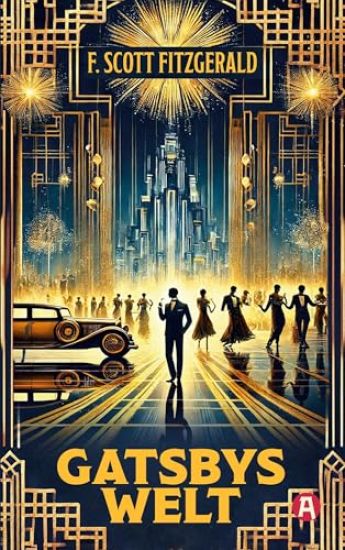
Gatsbys Welt - Glanz und Abgrund der High Society Die besten Kurzgeschichten von F. Scott Fitzgerald (Band 3) "Niemand schrieb so scharfz ngig und gleichzeitig melancholisch ber die Welt der Reichen wie Fitzgerald." - The New Yorker Glitzernde Partys, rauschende N chte, exzentrische Million re - und eine allgegenw rtige innere Leere. In Der gro e Gatsby entlarvte F. Scott Fitzgerald die Oberschicht als eine Welt voller blendender Oberfl chen und br chiger Seelen. Auch seine Kurzgeschichten werfen einen scharfen Blick auf eine Gesellschaft, die von Prestige lebt, aber an ihrer Sinnlosigkeit zerbricht. "Gatsbys Welt" ist der dritte Teil einer Sammlung, die die besten Kurzgeschichten Fitzgeralds thematisch ordnet. W hrend Gatsbys Traum von Erfolg und Scheitern erz hlt und Gatsbys Sehnsucht die Vergangenheit in den Mittelpunkt stellt, f ngt dieser Band die hohle Pracht der Reichen und ihre verlorenen Illusionen ein. In "Der Offshore-Pirat" scheint eine verw hnte Erbin die wahre Freiheit zu finden - bis sie merkt, dass jede Welt ihre eigenen Grenzen hat. "Die Babyparty" zeigt die kalte Konkurrenz unter Frauen der Oberschicht, die selbst eine harmlose Feier zum Schauplatz stiller Feindseligkeiten macht. "Magnetismus" f hrt ins Zentrum Hollywoods, wo ein Schauspieler mit unwiderstehlichem Charme die Welt lenkt - und doch nie er selbst sein kann. In "Der Eispalast" sucht eine junge Frau nach Klarheit und Ordnung, nur um festzustellen, dass K lte nicht nur in der Luft liegt, sondern auch in den Herzen. Diese zw lf meisterhaften Erz hlungen zeigen eine Gesellschaft, die in Champagner und Prestige schwelgt - und doch nie zur Ruhe kommt. Fitzgeralds Figuren sind gefangen in einer Welt aus Oberfl chlichkeit, Konventionen und leeren Versprechungen. Ihr Glanz mag bet ren, aber ihr Inneres bleibt oft erschreckend leer. Mit eleganter Sprache, ironischer Sch rfe und unbestechlicher Beobachtungsgabe entlarvt Fitzgerald eine Gesellschaft, die sich an ihrem eigenen Luxus berausch
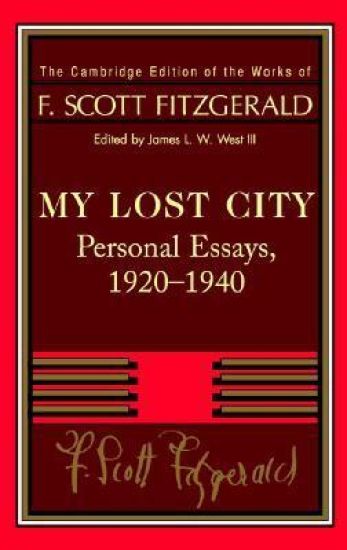
Twice during the last decade of his life, in 1934 and 1936, F. Scott Fitzgerald proposed a collection of his personal essays to Maxwell Perkins, his editor at Charles Scribner's Sons. Perkins was unenthusiastic on both occasions, and Fitzgerald died in 1940 without having put his best essays between hard covers. Fortunately Fitzgerald left behind a table of contents, and with this list as a guide it has been possible to publish here the collection that he envisioned, under the title My Lost City. This volume also includes several of Fitzgerald's autobiographical writings. My Lost City, like the other volumes in the Cambridge Edition, provides accurate texts based on Fitzgerald's surviving manuscripts and typescripts. Words and passages cut by magazine editors have been restored to several of the essays. A textual apparatus has been included, along with full explanatory notes identifying people, places, books, historical events, and other details.
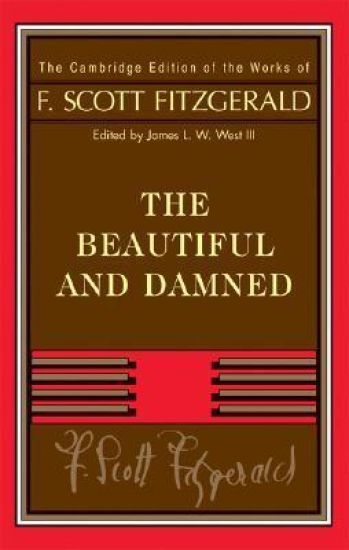
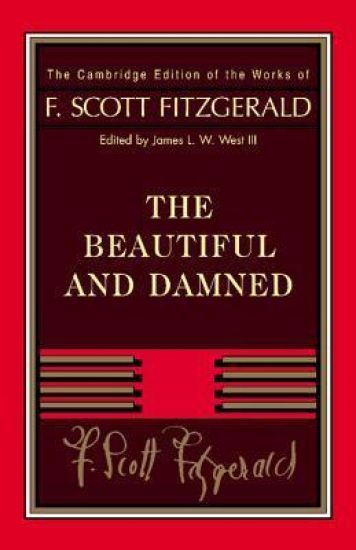
F. Scott Fitzgerald's second novel, The Beautiful and Damned (1922), was a pivotal book in his career. A trenchant satire of the Jazz Age, it is very much a novel of its times. This edition is based on the surviving manuscript, the serialized version from Metropolitan magazine, the Scribners 1922 first American edition, and the Collins 1922 first British edition. The volume includes a detailed account of the composition of the novel, a textual apparatus, a chronology of composition, and, uniquely, three versions of the ending. Explanatory notes identify Fitzgerald's topical and historical references - to books and authors, Broadway shows and Manhattan cabarets, movie stars and sports heroes, statesmen and criminals, business tycoons and historical figures. These notes situate The Beautiful and Damned in its times and deepen the reader's understanding of Fitzgerald's sources for the novel.
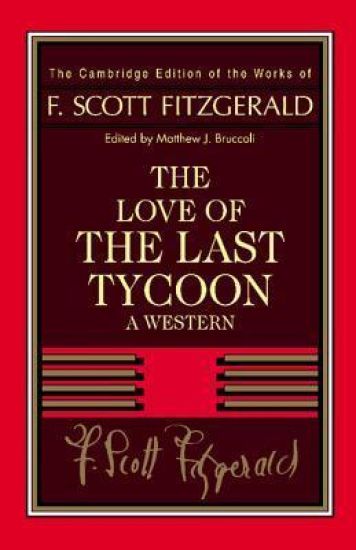
Even in its incomplete form The Love of The Last Tycoon has achieved a reputation as the best novel about Hollywood. When F. Scott Fitzgerald died in 1940 he had written seventeen of thirty projected episodes. In 1941 the 'unfinished novel' was published in a text for general readers by Edmund Wilson under the title The Last Tycoon. For more than fifty years this edition, which is not true to the original work in progress, has been the only one available. This critical edition of The Love of The Last Tycoon, first published in 1994, utilises Fitzgerald's manuscript drafts, revised typescipts, and working notes to establish the first authoritative text of the work. The volume includes a detailed history of the gestation, composition, and publication of the novel; full textual apparatus with editorial notes; fascimiles of the drafts; and explanatory notes on topical allusions and historical references for contemporary readers. The reconstruction of Fitzgerald's plan for the thirteen unwritten episodes is particularly useful. F. Scott Fitzgerald's incomplete masterpiece is restored its 1940 state, and thus made fully accessible to a cross-section of readers.
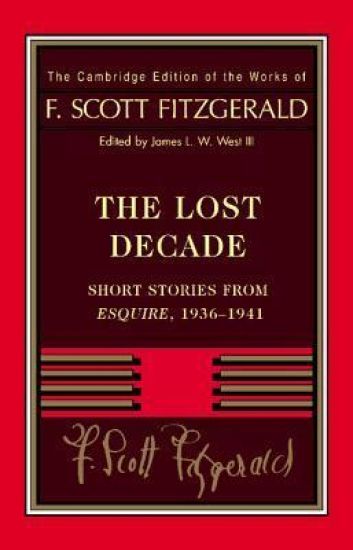
During the last six years of his life, F. Scott Fitzgerald was an Esquire author. Between 1934 and 1940, Fitzgerald sold some forty-five pieces of writing to the magazine - fiction, nonfiction, and personal essays. This volume of the Cambridge Edition includes thirteen short stories published by Fitzgerald in Esquire, together with the entire Pat Hobby Series -seventeen stories about an aging screenwriter scrambling to make a living in Hollywood during the 1930s. One other story - 'Dearly Beloved', submitted to Esquire but not published there - is included as an appendix. The volume provides restored, accurate texts based on Fitzgerald's surviving manuscripts, typescripts, and proofs. A textual apparatus records editorial decisions; explanatory notes identify people, places, literary works, historical events, and references to Hollywood actors, directors, and films. The volume also includes selected facsimiles of Fitzgerald's manuscripts and typescripts for the Esquire writings.
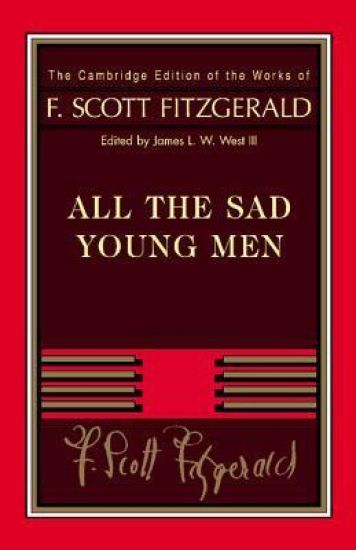
This volume of the Cambridge Fitzgerald Edition includes the original nine stories selected by Fitzgerald for All the Sad Young Men, together with eleven additional stories, published between 1925 and 1928, which were not collected by Fitzgerald during his lifetime. This edition is based on extensive surviving manuscripts and typescripts. The volume contains a scholarly introduction, historical notes, a textual apparatus, illustrations, and appendices. The complex history of composition for 'The Rich Boy' is untangled, and Fitzgerald's thorough revision of 'Winter Dreams' is described. Important passages of sexual innuendo and tabloid-style scandal in 'Jacob's Ladder', 'The Love Boat', and 'Magnetism' - removed by editors at the Saturday Evening Post - are restored to the Cambridge texts.
F. Scott Fitzgerald's second novel, The Beautiful and Damned (1922), was a pivotal book in his career. A trenchant satire of the Jazz Age, it is very much a novel of its times. This edition is based on the surviving manuscript, the serialized version from Metropolitan magazine, the Scribners 1922 first American edition, and the Collins 1922 first British edition. The volume includes a detailed account of the composition of the novel, a textual apparatus, a chronology of composition, and, uniquely, three versions of the ending. Explanatory notes identify Fitzgerald's topical and historical references - to books and authors, Broadway shows and Manhattan cabarets, movie stars and sports heroes, statesmen and criminals, business tycoons and historical figures. These notes situate The Beautiful and Damned in its times and deepen the reader's understanding of Fitzgerald's sources for the novel.
Twice during the last decade of his life, in 1934 and 1936, F. Scott Fitzgerald proposed a collection of his personal essays to Maxwell Perkins, his editor at Charles Scribner's Sons. Perkins was unenthusiastic on both occasions, and Fitzgerald died in 1940 without having put his best essays between hard covers. Fortunately Fitzgerald left behind a table of contents, and with this list as a guide it has been possible to publish here the collection that he envisioned, under the title My Lost City. This volume also includes several of Fitzgerald's autobiographical writings. My Lost City, like the other volumes in the Cambridge Edition, provides accurate texts based on Fitzgerald's surviving manuscripts and typescripts. Words and passages cut by magazine editors have been restored to several of the essays. A textual apparatus has been included, along with full explanatory notes identifying people, places, books, historical events, and other details.