Kirjojen hintavertailu. Mukana 11 627 670 kirjaa ja 12 kauppaa.

Kirjahaku

Etsi kirjoja tekijän nimen, kirjan nimen tai ISBN:n perusteella.

1000 tulosta hakusanalla FREEDOM DIVIDEND

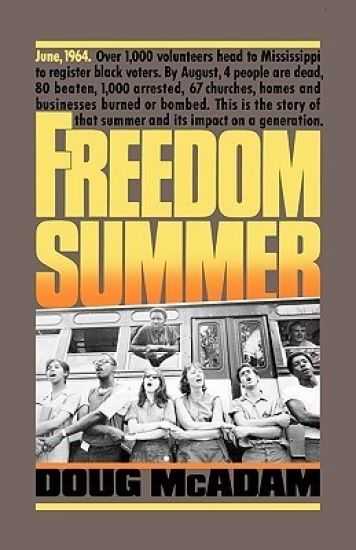
Freedom Summer

Freedom Summer

Doug McAdam

Oxford University Press Inc
1990
nidottu
In June 1964, over 1,000 volunteers - most of them white, northern college students - arrived in Mississippi to campaign for black enfranchisement and teach at `freedom schools' as part of the Freedom Summer campaign organized by the Student Non-Violent Coordinating Committee. Within 10 days, three were murdered; by summer's end, another had died and hundreds more had endured bombings, beatings, and arrests. This is the first book to gauge the impact of Freedom Summer on the project volunteers and the period we now call the `turbulent 60s'.
Freedom Within Reason

Freedom Within Reason

Wolf

Oxford University Press Inc
1994
nidottu
In this work, the author argues that, contrary to the tradition in analytic philosophy, freedom of the will cannot be understood as a purely metaphysical notion. You enjoy freedom of the will only if you are in a position that enables you, not only to govern your actions on the basis of your own values, but also to develop and alter your values on the basis of the right data and by the right means. Accordingly, free will is the freedom to be good, or the freedom to do the right thing for the right reasons. This approach allows us to explain the failure of attempts to provide satisfactory metaphysical accounts of free will, whether compatibilist or incompatilist: the metaphysical conditions of freedom of the will vary in accordance with the value of the action in question.
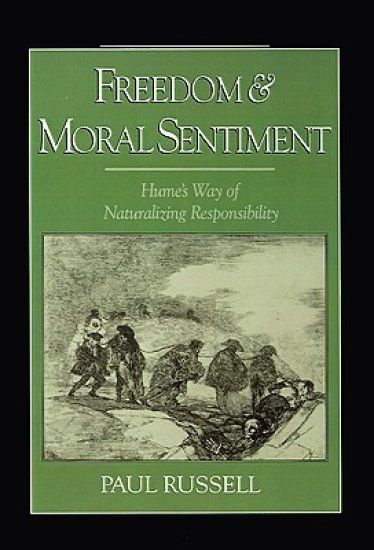
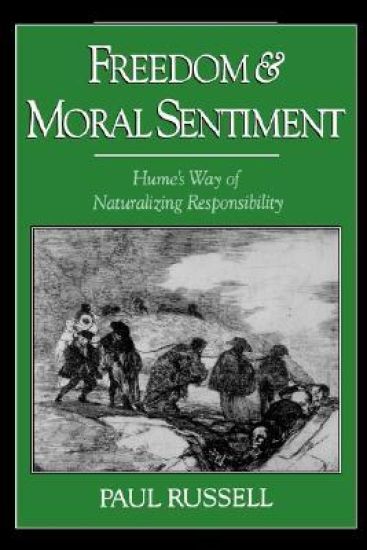
Freedom and Moral Sentiment

Freedom and Moral Sentiment

Paul Russell

Oxford University Press Inc
1996
sidottu
BLFirst study devoted entirely to Hume's influential views on freedom and responsibility David Hume is generally credited with the classic statement of the `compatibilist' position in the free will dispute. It is here argued that Hume's views on this subject, although largely influential, have nevertheless been seriously misrepresented. Classical readings have entirely overlooked Hume's naturalistic concerns and commitments, those very aspects of his general strategy which are of particular significance to the contemporary discussion.
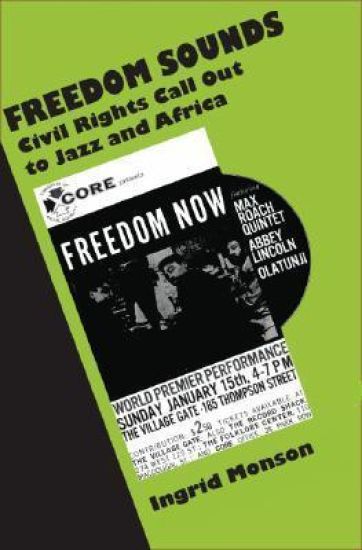
Freedom Sounds

Freedom Sounds

Monson Ingrid

Oxford University Press Inc
2007
sidottu
An insightful examination of the impact of the Civil Rights Movement and African Independence on jazz in the 1950s and 60s, Freedom Sounds traces the complex relationships among music, politics, aesthetics, and activism through the lens of the hot button racial and economic issues of the time. Ingrid Monson illustrates how the contentious and soul-searching debates in the Civil Rights, African Independence, and Black Power movements shaped aesthetic debates and exerted a moral pressure on musicians to take action. Throughout, her arguments show how jazz musicians' quest for self-determination as artists and human beings also led to fascinating and far reaching musical explorations and a lasting ethos of social critique and transcendence. Across a broad body of issues of cultural and political relevance, Freedom Sounds considers the discursive, structural, and practical aspects of life in the jazz world in the 1950s and 1960s. In domestic politics, Monson explores the desegregation of the American Federation of Musicians, the politics of playing to segregated performance venues in the 1950s, the participation of jazz musicians in benefit concerts, and strategies of economic empowerment. Issues of transatlantic importance such as the effects of anti-colonialism and African nationalism on the politics and aesthetics of the music are also examined, from Paul Robeson's interest in Africa, to the State Department jazz tours, to the interaction of jazz musicians such Art Blakey and Randy Weston with African and African diasporic aesthetics. Monson deftly explores musicians' aesthetic agency in synthesizing influential forms of musical expression from a multiplicity of stylistic and cultural influences—African American music, popular song, classical music, African diasporic aesthetics, and other world musics—through examples from cool jazz, hard bop, modal jazz, and the avant-garde. By considering the differences between aesthetic and socio-economic mobility, she presents a fresh interpretation of debates over cultural ownership, racism, reverse racism, and authenticity. Freedom Sounds will be avidly read by students and academics in musicology, ethnomusicology, anthropology, popular music, African American Studies, and African diasporic studies, as well as fans of jazz, hip hop, and African American music.
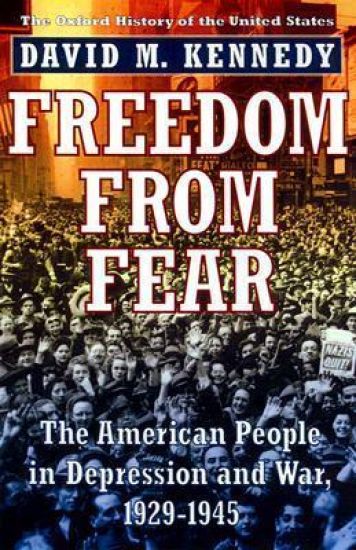
Freedom from Fear

Freedom from Fear

David M. Kennedy

Oxford University Press Inc
2001
nidottu
Between 1929 and 1945, two great travails were visited upon the American people: the Great Depression and World War II. Freedom from Fear tells the story of how Americans endured, and eventually prevailed, in the face of those unprecedented calamities. The Depression was both a disaster and an opportunity. As David Kennedy vividly demonstrates, the economic crisis of the 1930s was far more than a simple reaction to the alleged excesses of the 1920s. For more than a century before 1929, America's unbridled industrial revolution had gyrated through repeated boom and bust cycles, wastefullly consuming capital and inflicting untold misery on city and countryside alike. Nor was the fabled prosperity of the 1920s as uniformly shared ag legend portrays. Countless Americans, especially if they were farmers, African Americans, or recent immigrants, eked out thread bare lives on the margins of national life. For them the Depression was but another of the ordeals of fear and insecurity with which they were sadly familiar. Franklin Roosevelt's New Deal wrung from the trauma of the 1930s a lasting legacy of economic and social reform, in cluding the Social Security Act, new banking and financial laws, regulatory legistlation, and new opportunities for organized labour. Taken together, those reforms gave a measure of security to millons of Americans who had never had much of it, and with a fresh sense of having a stake in their country. Freedom from Fear tells the story of the New Deal's achievments, without slighting its shortcomings, contraditions and failures. It is a story rinch in drama and peopled with unforgettable personalities, including the incandescent but enigmatic figure of Roosevelt himself. Even as the New Deal was coping with the Depression, a still more fearsome menace was developing abroad--Hitler's thirst for war in Europe, coupled with the imperial ambitions of Japan in Asia. The same generation of Americans who battled the Depression evenutally had to shoulder the arms in another conflict that wreaked world wide destruction, ushered in the nuclear age and forever changed their own way of life and their country's relationship to the rest of the world. Freedom from Fear explains how the nation agonized over its role in World War II, how it fought the war, why the United States won, and why the consequences of victory were sometimes sweet, sometimes ironic. In a compelling narrative, Kenney analyses the determinants of American strategy, the painful choices faced by commanders and statesmen, and the agonies inflicted on the millions of ordinary Americans who were compelled to swallow their fears and face battle as best they could. Freedom from Fear is a comprehensive and colourful account of the most convulsive period in American history, excepting only the Civil War - a period that formed the crucible in which modern America was formed.
Freedom and Moral Sentiment

Freedom and Moral Sentiment

Paul Russell

Oxford University Press Inc
2002
nidottu
In this book, Russell examines Hume's notion of free will and moral responsibility. It is widely held that Hume presents us with a classic statement of the "compatibilist" position--that freedom and responsibility can be reconciled with causation and, indeed, actually require it. Russell argues that this is a distortion of Hume's view, because it overlooks the crucial role of moral sentiment in Hume's picture of human nature. Hume was concerned to describe the regular mechanisms which generate moral sentiments such as responsibility, and Russell argues that his conception of free will must be interpreted within this naturalistic framework. He goes on to discuss Hume's views about the nature and character of moral sentiment; the extent to which we have control over our moral character; and the justification of punishment. Throughout, Russell argues that the naturalistic avenue of interpretation of Hume's thought, far from draining it of its contemporary interest and significance, reveals it to be of great relevance to the ongoing contemporary debate.
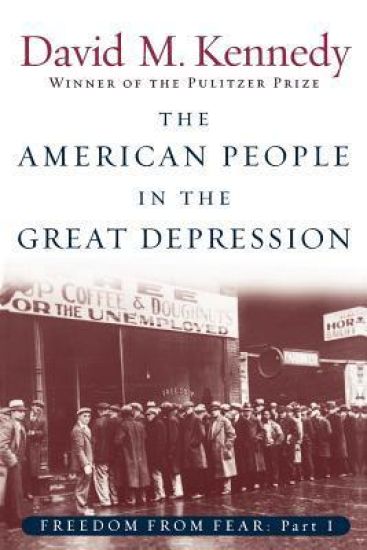
Freedom From Fear: Part 1: The American People in the Great Depression
On October 24, 1929, America met the greatest economic devastation it had ever known. In this first instalment of his Pulitzer Prize-winning Freedom from Fear, Kennedy tells how America endured, and eventually prevailed, in the face of that unprecedented calamity. Kennedy vividly demonstrates that the economic crisis of the 1930s was more than a reaction to the excesses of the 1920s. For more than a century before the Crash, America's unbridled industrial revolution had gyrated through repeated boom and bust cycles, consuming capital and inflicting misery on city and countryside alike. Nor was the alleged prosperity of the 1920s as uniformly shared as legend portrays. Countless Americans eked out threadbare lives on the margins of national life. Roosevelt's New Deal wrenched opportunity from the trauma of the 1930s and created a lasting legacy of economic and social reform, but it was afflicted with shortcomings and contradictions as well. With an even hand Kennedy details the New Deal's problems and defeats, as well as its achievements. He also sheds fresh light on its incandescent but enigmatic author, Franklin D. Roosevelt. Marshalling unforgettable narratives that feature prominent leaders as well as lesser-known citizens, The American People in the Great Depression tells the story of a resilient nation finding courage in an unrelenting storm.
Freedom From Fear: Part 2: The American People in World War II

Freedom From Fear: Part 2: The American People in World War II

David M. Kennedy

Oxford University Press Inc
2004
nidottu
Even as the New Deal was coping with the Depression, a new menace was developing abroad. Exploiting Germany's own economic burdens, Hitler reached out to the disaffected, turning their aimless discontent into loyal support for his Nazi Party. In Asia, Japan harbored imperial ambitions of its own. The same generation of Americans who battled the Depression eventually had to shoulder arms in another conflict that wreaked worldwide destruction, ushered in the nuclear age, and forever changed their way of life and their country's relationship to the rest of the world. The American People in World War II--the second installment of Kennedy's Pulitzer Prize-winning Freedom from Fear--explains how the nation agonized over its role in the conflict, how it fought the war, why the United States emerged victorious, and why the consequences of victory were sometimes sweet, sometimes ironic. In a compelling narrative, Kennedy analyzes the determinants of American strategy, the painful choices faced by commanders and statesmen, and the agonies inflicted on the millions of ordinary Americans who were compelled to swallow their fears and face battle as best they could. The American People in World War II is a gripping narrative and an invaluable analysis of the trials and victories through which modern America was formed.
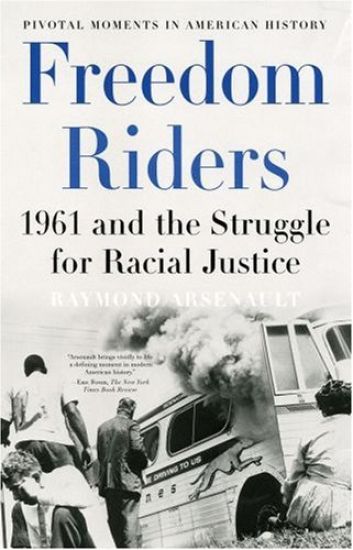
Freedom Riders

Freedom Riders

Raymond Arsenault

Oxford University Press Inc
2007
nidottu
They were black and white, young and old, men and women. In the spring and summer of 1961, they put their lives on the line, riding buses through the American South to challenge segregation in interstate transport. Their story is one of the most celebrated episodes of the civil rights movement, yet a full-length history has never been written until now. In these pages, acclaimed historian Raymond Arsenault provides a gripping account of six pivotal months that jolted the consciousness of America. The Freedom Riders were greeted with hostility, fear, and violence. They were jailed and beaten, their buses stoned and firebombed. In Alabama, police stood idly by as racist thugs battered them. When Martin Luther King met the Riders in Montgomery, a raging mob besieged them in a church. Arsenault recreates these moments with heart-stopping immediacy. His tightly braided narrative reaches from the White House--where the Kennedys were just awakening to the moral power of the civil rights struggle--to the cells of Mississippi's infamous Parchman Prison, where Riders tormented their jailers with rousing freedom anthems. Along the way, he offers vivid portraits of dynamic figures such as James Farmer, Diane Nash, John Lewis, and Fred Shuttlesworth, recapturing the drama of an improbable, almost unbelievable saga of heroic sacrifice and unexpected triumph. The Riders were widely criticized as reckless provocateurs, or "outside agitators." But indelible images of their courage, broadcast to the world by a newly awakened press, galvanized the movement for racial justice across the nation. Freedom Riders is a stunning achievement, a masterpiece of storytelling that will stand alongside the finest works on the history of civil rights.
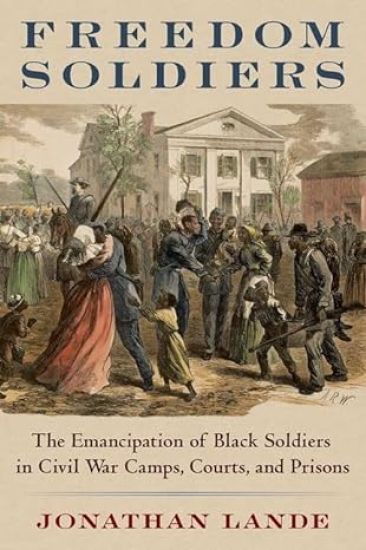
Freedom Soldiers

Freedom Soldiers

Jonathan Lande

OXFORD UNIVERSITY PRESS INC
2024
sidottu
Almost 200,000 African Americans fought to save the Union, many believing that military service was the pathway to freedom. Yet, even after enlisting, their journeys for liberation continued amid the bloody civil war. They marched across taxing terrain, performed backbreaking labor, and endured corporeal punishment meted out by white officers. They also agonized over families still enslaved and suffered virulent diseases. Many grew disillusioned, disgruntled, or homesick. They fought on bravely, yet thousands also ran. Chafing against restraints and violence reminiscent of slavery, they briefly liberated themselves from onerous army discipline. The men examined in Freedom Soldiers took self-granted breaks--"leaves of freedom"--and, once caught, were tried by the US Army for the military crime of "desertion." In the courts-martial, they justified their unauthorized departures by telling authorities that they left to temporarily help their families, regain their health, and evade violent officers. Army judges nevertheless convicted freedom seekers, sending most to military prisons. From prisons, the convicted deserters wrote petitions to President Abraham Lincoln and Union officials requesting release. These prisoners disputed rulings, offered their continued service to the Union, insisted on the injustice of incarceration, and explained the dire need of kin around the wartime South. Drawing upon transcripts of the nearly 80,000 Civil War courts-martial cases, as well as prisoners' petitions, soldiers' letters, and government reports, Jonathan Lande recovers this subset of soldiers who took leaves of freedom and defended their breaks within the military justice system. In doing so, he reveals how Black men fought for freedom not only against Confederates but also in US Army camps, courts, and prisons.
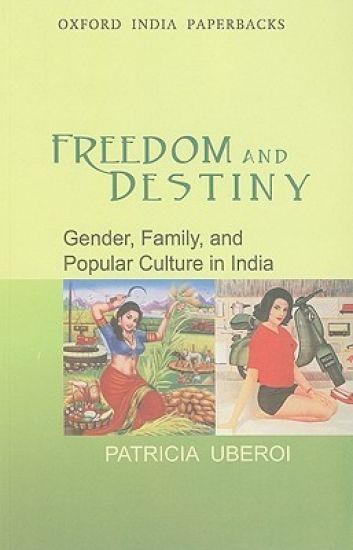
Freedom and Destiny

Freedom and Destiny

Uberoi Patricia

OUP India
2009
nidottu
This volume of seven essays on themes of family and gender in Indian popular culture seeks to commend popular culture as an important resource for sociological insights into contemporary social issues and processes. Drawing its material from three popular media - 'calendar art' (popular chromolithography), commercial 'Bollywood' cinema, and magazine romance fiction-the essays bring a gender-sensitive perspective to bear on the representation of the family, of childhood, of courtship and conjugality, of arranged and love marriage, of femininity and masculinity, and of sexuality within and outside marriage, as well as on the wider dilemmas and dynamics of Indian modernity and nation-building. While much has been written on the figure of the woman as icon of the national society and on the Hindu pantheon as a template for visualizing gender roles and relationships, the author also takes up here the iconicization of the child and the family in the national imaginary, illustrating her arguments with stunning visuals from her personal collection of Indian calendar art. Freedom and Destiny explores the contradictions in the moral economy of Indian family life as these are projected in the contemporary popular media. Particularly salient is the tension between the expression of female desire and culturally normative expectations of feminine deportment. But the book also addresses the insistent challenges of modernity in the domain of private life whereby, for men and women alike, the ideals of individual autonomy and freedom of choice and action are seen to be constrained by a social ethic that privileges the value structure of the joint family over the individual needs and desires of its members and the lure of romance. Written over the last dozen years since the institutionalization of policies of economic liberalization in the early 1990s, and revised in the present context, some of these pioneering essays have now become classics in their own right. By bringing them together, the author underlines their essential thematic unity across several distinct genres of popular culture. The effort has been to achieve accessibility and to avoid sociological jargon, without sacrificing either disciplinary rigor or, for that matter, the underlying feminist standpoint.
Freedom with Responsibility

Freedom with Responsibility

A. J. Nicholls

Oxford University Press
2000
nidottu
This book goes behind the success story of the Federal Republic of Germany since the Second World War to examine the principles underpinning the so-called 'economic miracle'. West Germany's Economics Minister, Ludwig Erhard, maintained that his Social Market Economy worked because it consisted of sound economic principles applied with common sense and consistency. It was a serious attempt to harness the dynamic forces of free-market competition while avoiding the damaging social problems created by unfettered laissez-faire. A. J. Nicholls examines the intellectual origins and history of the concept of the Social Market Economy, and its implementation in the difficult years of post-war devastation and recovery in West Germany. He traces the struggle of liberal economists to assert their ideas in the unfavourable circumstances from 1933 to 1948, when they triumphed with Erhard's implementation of a policy of liberalization following currency reform. The book analyses the extent to which West Germany's economic success was due to Erhard's policies, and assesses his attempts to attain the goals of the social market up to 1963, when he became Federal Chancellor. The Social Market Economy remains the official policy of the Federal Republic today, and must face up to new challenges in the former German Democratic Republic. A. J. Nicholls's study makes an important contribution to our understanding of the historical dynamics of the German economy and the political culture of the Federal Republic.
Freedom of Commercial Expression

Freedom of Commercial Expression

Roger A. Shiner

Oxford University Press
2003
sidottu
The U.S. Supreme Court extended constitutional protection to commercial expression or speech in 1976. The European Court of Human Rights and the Supreme Court of Canada subsequently did likewise. Historically, however, as Chief Justice Rehnquist memorably remarked in dissenting from the 1976 decision, freedom of expression relates to public decision-making as to political, social, and other public issues, rather than the decision of a particular individual as to whether to purchase one or another kind of shampoo. For all that, courts are now granting constitutional protection to the commercial advertizing of organizations such as tobacco manufacturers, breweries, and discount liquor stores. In this book, Roger Shiner subjects to critical examination the history of and reasoning behind the extension to commercial expression of the principles of freedom of expression. He examines the institutional history of freedom of commercial expression as a constitutional doctrine, and argues that the history is one of ad hoc, not logical, development. In examining the arguments used in support of freedom of commercial expression, he shows that even from within the borders of liberal democratic theory, constitutional protection for commercial expression is not philosophically justified. Commercial corporations cannot possess an original autonomy right to free expression. Moreover, the claim that there is a hearers' right to receive commercial expression which advertisers may borrow is invalid. Freedom of commercial expression does not fit the best available models for hearers' rights. Regulation of commercial expression is not paternalistic. The free flow of commercial information is not automatically a good, and in any case commercial expression rarely in fact involves information.
Freedom's Law

Freedom's Law

Ronald Dworkin

Oxford University Press
1996
sidottu
"The Constitution is America's moral sail, and we must hold to the courage of the conviction that fills it, a conviction that we can all be equal citizens of a moral republic. That is a noble faith, and only optimism can redeem it." So writes Ronald Dworkin in the introduction to this characteristically robust and provocative new book in which Dworkin argues the fidelity to the constitution and to law demands that judges make contemporary judgements backed on political morality, and why it encourages, or ought to encourage, an open display of the true grounds of judgement. The book discusses almost all of the great constitutional issues of the last two decades including abortion, affirmative action, pornography, race, homosexuality, euthanasia and free-speech and in doing so consistently offers a liberal view of the American Constitution. Dworkin's "moral reading" proposes that we all, judges, lawyers, citizens - interpret and apply the abstract language of the Constitution on the understanding that they invoke moral principles about political decency and justice. The "moral reading" therefore brings political morality into the heart of constitutional law. The various chapters of this book were first published seperately; now drawn together they bear all the hallmarks of Dworkin's legal and philosophical sophistication, his acute understanding of political process and his understanding of history. principles
Freedom's Law

Freedom's Law

Ronald Dworkin

Oxford University Press
1999
nidottu
Written by the world's best-known political and legal theorist, Freedom's Law: The Moral Reading of the American Constitution is a collection of essays that discuss almost all of the great constitutional issues of the last two decades, including abortion, euthanasia, capital punishment, homosexuality, pornography, and free speech. Professor Dworkin offers a consistently liberal view of the Constitution and argues that fidelity to it and to law demands that judges make moral judgments. He proposes that we all interpret the abstract language of the Constitution by reference to moral principles about political decency and justice. His `moral reading therefore brings political morality into the heart of constitutional law. The various chapters of this book were originally published separately and are now drawn together to provide the reader with a rich, full-length treatment of Dworkin's general theory of law.
Freedom of Speech and Employment

Freedom of Speech and Employment

Lucy Vickers

Oxford University Press
2002
sidottu
The book examines employment law implications for employees who exercise the right to freedom of speech, and argues for increased rights to free speech in this context. Most obviously employees need protection when speaking about immediate threats to health and safety or serious financial malpractice, but they also need protection when participating in debate on matters that are in the public interest. The book suggests that the rights of employees to participate in debate on matters of public interest are vital to a healthy democratic system. The book begins with a study of the philosophical basis for protecting the right to free speech and considers the extent to which that right should survive entry to the workplace. It establishes a principled basis upon which to determine the proper scope of the employee's right to free speech, taking into account the rights of both employers and employees. The impact of the Human Rights Act 1998 and the law under article 10 ECHR is assessed, together with the question of when the exercise of free speech by an employee breaches the contract of employment. The book contains a detailed treatment of the Public Interest Disclosure Act 1998, the rules on unfair dismissal, and the special position of employees working in the civil service, local government, and the NHS. Throughout the discussion of these issues, an assessment is made of the extent to which the current law complies with the proposed model for protection of employee speech.
Freedom of Expression and Freedom of Information
The volume deals with vital issues on freedom of expression and freedom of information and emphasizes the importance of the free exchange and dissemination of ideas and of open, and therefore more accountable, government. It notes the ways in which these freedoms have received recent legislative attention in the Human Rights Act 1998, the Public Interest Disclosure Act 1998 and the Freedom of Information Bill. Articles on subjects such as freedom of speech, religion, and assembly; defamation of the state and of politicians; harassment, official secrecy, public interest disclosure, and the protection of privacy; focus on issues of political and legal importance to all who take an interest in how their country is governed. These matters are addressed here by leading judges, practitioners, and scholars from the UK, the USA, Australia and New Zealand. They provide timely and authoritative analysis as well as comparisons between British protections of these freedoms and the safeguards offered by other Commonwealth states, the USA, the EU and under the European Convention on Human Rights. This book will be of interest to academic and practising lawyers, government officials, and academics working in departments of politics and government.
Freedom of Religion or Belief

Freedom of Religion or Belief

Heiner Bielefeldt; Nazila Ghanea; Michael Wiener

Oxford University Press
2016
sidottu
Violations of religious freedom and violence committed in the name of religion grab our attention on a daily basis. Freedom of religion or belief is a key human right: the International Covenant on Civil and Political Rights, numerous conventions, declarations and soft law standards include specific provisions on freedom of religion or belief. The 1981 Declaration on the Elimination of All Forms of Intolerance and of Discrimination Based on Religion or Belief has been interpreted since 1986 by the mandate of the UN Special Rapporteur on freedom of religion or belief. Special Rapporteurs (for example those on racism, freedom of expression, minority issues and cultural rights) and Treaty Bodies (for example the Human Rights Committee, the Committee on the Elimination of Racial Discrimination and the Committee on the Rights of the Child) have also elaborated on freedom of religion or belief in the context of their respective mandates. Freedom of Religion or Belief: An International Law Commentary is the first commentary to look comprehensively at the international provisions for the protection of freedom of religion or belief, considering how they are interpreted by various United Nations Special Procedures and Treaty Bodies. Structured around the thematic categories of the United Nations Special Rapporteur's framework for communications, the commentary analyses, for example, the limitations on the wearing of religious symbols and vulnerable situations, including those of women, detainees, refugees, children, minorities and migrants, through a combination of scholarly expertise and practical experience.
Freedom and Self-Creation

Freedom and Self-Creation

Katherin A. Rogers

Oxford University Press
2015
sidottu
Katherin A. Rogers presents a new theory of free will, based on the thought of Anselm of Canterbury. We did not originally produce ourselves. Yet, according to Anselm, we can engage in self-creation, freely and responsibly forming our characters by choosing 'from ourselves' (a se) between open options. Anselm introduces a new, agent-causal libertarianism which is parsimonious in that, unlike other agent-causal theories, it does not appeal to any unique and mysterious powers to explain how the free agent chooses. After setting out Anselm's original theory, Rogers defends and develops it by addressing a series of standard problems levelled against libertarianism. These include the problem of 'internalism--in that an agent is not the source of his original motivations, how can the structure of his choice ground his responsibility?; the problem of Frankfurt-style counterexamples--Do we really need open options to choose freely?; and the problem of luck--If nothing about an agent before he chooses explains his choice, then isn't the choice just dumb luck? (The Anselmian answer to this perennial criticism is especially innovative, proposing that the critic has the relationship between choices and character exactly backwards.) Finally, as a theory about self-creation, Anselmian Libertarianism must defend the tracing thesis, the claim that an agent can be responsible for character-determined choices, if he, himself, formed his character through earlier a se choices. Throughout, the book defends and exemplifies a new methodological suggestion: someone debating free will ought to make his background world view explicit. In the on-going debate over the possibility of human freedom and responsibility, Anselmian Libertarianism constitutes a new and plausible approach.