
Kirjahaku
Etsi kirjoja tekijän nimen, kirjan nimen tai ISBN:n perusteella.
1000 tulosta hakusanalla Foster

Foster2Foster: A Self-Guided Journal for children in foster care
Michelle Anderson
Generations Soar
2020
nidottu


Fosteriana. Consisting of Thoughts, Reflections, and Criticisms. Selected from Periodical Papers Not Hitherto Published in a Collective Form
John Foster
Antigonos Verlag
2025
nidottu

Fostering the Emotional Well-Being of Our Youth
Oxford University Press Inc
2021
nidottu
Despite the marked increase in anxiety, depression, and suicidal behaviour among school-aged youth, millions of children with mental health needs never receive treatment. Too many are overlooked by "refer-test-place" approaches that only consider evidence of psychopathology without examining students' psychological well-being (or lack of well-being). Consequently, many vulnerable students slip through the cracks without receiving interventions. Fostering the Emotional Well-Being of Our Youth provides an alternative--a dual-factor model of students' mental health that integrates wellness and pathology into a single multi-tier system of mental health support. Philip J. Lazarus, Shannon M. Suldo, and Beth Doll, with foremost scholars in the field, explain what this paradigm shift means for school mental health professionals: why the promotion of well-being is important; how practitioners' day-to-day practices will change; and what the outcomes will be. This volume provides the tools to advocate for and implement supports that foster students' complete mental health.
Fostering Accountability
Oxford University Press Inc
2010
sidottu
Fostering Accountability presents a model of child welfare decision making that holds public officials answerable for the integrity and validity of the actions they take on behalf of the children and families in their care. It operationalizes the concept of results-oriented accountability, which demands that administrators and practitioners show valid evidence of their success in improving child and family outcomes, not merely demonstrate mechanical procedural compliance. Drawing on the experiences of directors, staff, and evaluators, this timely and practical book describes the emergence of results-oriented accountability in child welfare with a special focus on the editors' role in establishing a university-agency research partnership under a federal consent decree. Chapters elaborate on the five successive stages of the results-oriented accountability framework-outcomes monitoring, data analysis, research review, evaluation, and quality improvement-and provide examples of applications of each stage for agency managers. By refocusing the emphasis on developing policies based on agency data, instead of purely reactive approaches that grasp at solutions and often fall short, Fostering Accountability guides administrators in monitoring outcomes, using evidence to select interventions to enhance results, and applying management strategies to evaluate and improve these efforts. The result is a pragmatic implementation guide for administrators seeking to bring safety, stability, continuity, permanence, and well-being to the lives of abused and neglected children in the United States.
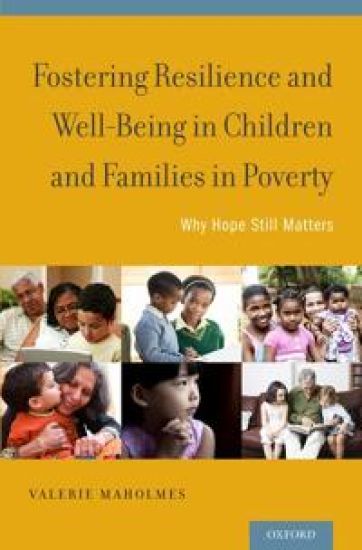
Fostering Resilience and Well-Being in Children and Families in Poverty
Valerie Maholmes
Oxford University Press Inc
2014
sidottu
The number of children living in families with incomes below the federal poverty level increased by 33 percent between 2000 and 2009, resulting in over 15 million children living in poverty. Some of these children are able to overcome this dark statistic and break the intergenerational transmission of poverty, offering hope to an otherwise bleak outlook, but this raises the question--how? In Fostering Resilience and Well-Being in Children and Families in Poverty, Dr. Valerie Maholmes sheds light on the mechanisms and processes that enable children and families to manage and overcome adversity. She explains that research findings on children and poverty often unite around three critical factors related to risk for poverty-related adversity: family structure, the presence of buffers that can protect children from negative influences, and the association between poverty and negative academic outcomes, and social and behavioral problems. She discusses how the research on resilience can inform better interventions for these children, as poverty does not necessarily preclude children from having strengths that may protect against its effects. Importantly, Maholmes introduces the concept of "hope" as a primary construct for understanding how the effects of poverty can be ameliorated. At the heart of the book are interviews with family members who have experienced adversity but managed to overcome it through the support of targeted programs and evidence-based interventions. Student leaders provide unique perspectives on the important role that parents and teachers play in motivating youth to succeed. Finally, professionals who work with children and families share their observations on effective interventions and the roles of culture and spirituality in fostering positive outcomes. Excerpts from these interviews bring research to life and help call attention to processes that promote hope and resilience. This book will be invaluable for policymakers, educators, and community and advocacy groups, as well as scholars and students in family studies, human development, and social work.

Fostering Friendship
AldineTransaction
1997
nidottu
A great number of children and adolescents face a world of violence and isolation. In this book, the members of the Group for the Study of Interpersonal Development at the Harvard Graduate School of Education and the Judge Baker Children's Center in Boston describe in detail an innovative intervention and prevention method, pair therapy, that is designed to address these issues by helping children develop healthy interpersonal relationships. Pair therapy is a relationship-oriented treatment modality that addresses the social context of the difficulties encountered in growing up in today's world. This approach has been developed not only as a therapeutic intervention in day and residential treatment centers but also as a prevention method that can be used in public schools, day care centers, and other contexts. This practical volume meets the demand for an accessible, hands-on guide to the pair method. The theoretical foundations of the approach are also presented in an accessible fashion here. The techniques described in this book model a relationship-building process between an adult professional and two children. This process replicates the social relations that happen naturally in healthy and happy interactions and long-term relationships among well-cared-for children in safe and secure communities. This book will be useful for a number of disciplines that deal with younger children and adolescents: social work, education, school and group therapy, and human development. It offers educators, therapists, and other practitioners in a wide variety of settings the opportunity to learn how to develop a pair therapy program. It will also be an indispensable tool in the libraries of mental health practitioners who counsel youth beyond ordinary clinical treatment.
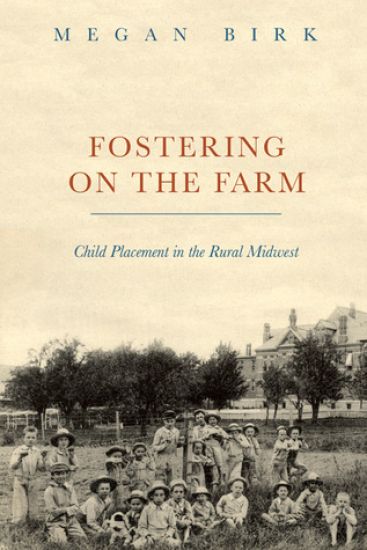
From 1870 until after World War I, reformers led an effort to place children from orphanages, asylums, and children's homes with farming families. The farmers received free labor in return for providing room and board. Reformers, meanwhile, believed children learned lessons in family life, citizenry, and work habits that institutions simply could not provide. Drawing on institution records, correspondence from children and placement families, and state reports, Megan Birk scrutinizes how the farm system developed--and how the children involved may have become some of America's last indentured laborers. Between 1850 and 1900, up to one-third of farm homes contained children from outside the family. Birk reveals how the nostalgia attached to misplaced perceptions about healthy, family-based labor masked the realities of abuse, overwork, and loveless upbringings endemic in the system. She also considers how rural people cared for their own children while being bombarded with dependents from elsewhere. Finally, Birk traces how the ills associated with rural placement eventually forced reformers to transition to a system of paid foster care, adoptions, and family preservation.
From 1870 until after World War I, reformers led an effort to place children from orphanages, asylums, and children's homes with farming families. The farmers received free labor in return for providing room and board. Reformers, meanwhile, believed children learned lessons in family life, citizenry, and work habits that institutions simply could not provide. Drawing on institution records, correspondence from children and placement families, and state reports, Megan Birk scrutinizes how the farm system developed--and how the children involved may have become some of America's last indentured laborers. Between 1850 and 1900, up to one-third of farm homes contained children from outside the family. Birk reveals how the nostalgia attached to misplaced perceptions about healthy, family-based labor masked the realities of abuse, overwork, and loveless upbringings endemic in the system. She also considers how rural people cared for their own children while being bombarded with dependents from elsewhere. Finally, Birk traces how the ills associated with rural placement eventually forced reformers to transition to a system of paid foster care, adoptions, and family preservation.
In Fostering Autonomy, Elizabeth Ben-Ishai explores the role of the state in fostering autonomy in vulnerable citizens—such as people who are addicted to drugs, domestic violence survivors, welfare recipients, and undocumented immigrants—through social service delivery. Building on a feminist conception of “relational” autonomy, the book draws on empirical examples of service delivery to generate a rich theoretical account of the autonomy-fostering state.Ben-Ishai's analysis focuses on four case studies. The first two cases, on “New Paternalist” programs and welfare policies for immigrants, present examples of programs and policies that fail to foster autonomy. This is in part because they are premised upon flawed notions of the autonomous individual and its relationship to the state. The second two cases, on services for domestic violence survivors and harm-reduction services for people who use drugs, turn the preceding autonomy-fostering failures on their head, pointing to unique instances of services that effectively enable autonomy. These cases demonstrate the ways government services shape citizens’ abilities to live autonomously—“to pursue their own ends or life plans.”
In Fostering Autonomy, Elizabeth Ben-Ishai explores the role of the state in fostering autonomy in vulnerable citizens—such as people who are addicted to drugs, domestic violence survivors, welfare recipients, and undocumented immigrants—through social service delivery. Building on a feminist conception of “relational” autonomy, the book draws on empirical examples of service delivery to generate a rich theoretical account of the autonomy-fostering state.Ben-Ishai's analysis focuses on four case studies. The first two cases, on “New Paternalist” programs and welfare policies for immigrants, present examples of programs and policies that fail to foster autonomy. This is in part because they are premised upon flawed notions of the autonomous individual and its relationship to the state. The second two cases, on services for domestic violence survivors and harm-reduction services for people who use drugs, turn the preceding autonomy-fostering failures on their head, pointing to unique instances of services that effectively enable autonomy. These cases demonstrate the ways government services shape citizens’ abilities to live autonomously—“to pursue their own ends or life plans.”
Fostering Flexibility in the Engineering Work Force
National Academies Press
1990
nidottu

Fostering Industry-Initiated Environmental Protection Efforts
National Academies Press
1997
nidottu
Fostering Research on the Economic and Social Impacts of Information Technology
National Academies Press
1998
nidottu
The tremendous growth in use of information technology (IT) has led to an increased interest in understanding its social and economic impacts. This book presents examples of crosscutting research that has been conducted to understand the impact of information technology on personal, community, and business activities. It explores ways in which the use of methodology from economics and social sciences contributes to important advances in understanding these impacts. The book discusses significant research issues and concerns and suggests approaches for fostering increased interdisciplinary research on the impacts of information technology and making the results of this research more accessible to the public and policymakers. This volume is expected to influence funding priorities and levels of support for interdisciplinary research of this kind. Table of Contents Front Matter Executive Summary 1 Introduction 2 Illustrative Examples and Unanswered Question 3 Data- The Basis for New Knowledge 4 Options for Fostering Interdisciplinary Research and Improving Access to Results Bibliography Appendixes Appendix A: Workshop Agenda and Participants Appendix B: Position Papers Submitted by Workshop Appendix C: Commissioned Papers
Fostering Rapid Advances in Health Care
National Academies Press
2002
nidottu
In response to a request from the Secretary of the Department of Health and Human Services, the Institute of Medicine convened a committee to identify possible demonstration projects that might be implemented in 2003, with the hope of yielding models for broader health system reform within a few years. The committee is recommending a substantial portfolio of demonstration projects, including chronic care and primary care demonstrations, information and communications technology infrastructure demonstrations, health insurance coverage demonstrations, and liability demonstrations. As a set, the demonstrations address key aspects of the health care delivery system and the financing and legal environment in which health care is provided. The launching of a carefully crafted set of demonstrations is viewed as a way to initiate a "building block" approach to health system change. Table of Contents Front Matter Executive Summary 1. The Time for Change Has Come 2. Chronic Care: Reducing the Toll of Chronic Conditions on Individuals and Communities 3. Primary Care: 40 Stellar Community Health Centers 4. Information and Communications Technology Infrastructure: A 'Paperless' Health Care System 5. State Health Insurance: Making Affordable Coverage Available to All Americans 6. Liability: Patient-Centered and Safety-Focused, Nonjudicial Compensation Glossary and Acronym List
Fostering Visions for the Future
National Academies Press
2009
nidottu
The NASA Institute for Advanced Concepts (NIAC) was formed in 1998 to provide an independent source of advanced aeronautical and space concepts that could dramatically impact how NASA develops and conducts its missions. Until the program's termination in August 2007, NIAC provided an independent open forum, a high-level point of entry to NASA for an external community of innovators, and an external capability for analysis and definition of advanced aeronautics and space concepts to complement the advanced concept activities conducted within NASA. Throughout its 9-year existence, NIAC inspired an atmosphere for innovation that stretched the imagination and encouraged creativity. As requested by Congress, this volume reviews the effectiveness of NIAC and makes recommendations concerning the importance of such a program to NASA and to the nation as a whole, including the proper role of NASA and the federal government in fostering scientific innovation and creativity and in developing advanced concepts for future systems. Key findings and recommendations include that in order to achieve its mission, NASA must have, and is currently lacking, a mechanism to investigate visionary, far-reaching advanced concepts. Therefore, a NIAC-like entity should be reestablished to fill this gap.

Fostering Geometric Thinking: A Guide for Teachers, Grades 5-10
Mark Driscoll; Johannah Nikula; Rachel Wing Dimatteo
HEINEMANN EDUCATIONAL BOOKS
2017
nidottu
The Trends in International Mathematics and Science Study has shown that American schools have consistently helped students understand algebraic and statistical concepts, leading to high achievement internationally. Now it's time to do the same for geometry. Mark Driscoll, author of the powerful and popular Fostering Algebraic Thinking, takes up the challenge and leads you to new, research-based ways to improve how your students conceptualize and apply geometric ideas. With Fostering Geometric Thinking any math teacher can discover essential, practical ideas for helping students cultivate geometric habits of mind that lead to success in this crucial mathematical subject. The book focuses on rigorous, problem-based teaching that encourages students to deepen their thinking in three key geometric strands: geometric properties geometric transformations measurement of geometric objects. Fostering Geometric Thinking shows you how the interplay of these strands helps students devise multiple solutions and develop a broader sense of geometric principles. It's loaded with helpful resources, including: engaging problems to use in your classroom examples of student solutions to these problems transcripts of classroom interactions online resources featuring in-the-field footage of students working through open-ended problems highlighted in the book. Geometry is a vital component of mathematical understanding, and it's time that it received the same attention that algebra and statistics do. With engaging problems and straightforward suggestions that can help students deepen, recognize, and describe their thinking, Fostering Geometric Thinking is the resource you need to ensure that when it comes to geometry, your students know all the angles.