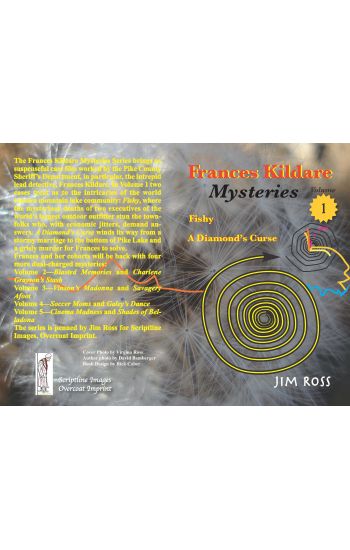
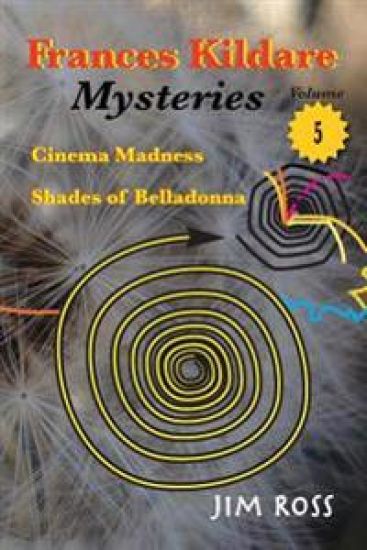
The Frances Kildare Mysteries Series brings us suspenseful case files worked by the Pike County Sheriff's Department, in particular, the intrepid lead detective, Frances Kildare. In Volume 1 two cases treat us to the intricacies of the world renown mountain lake community: Fishy, where the mysterious deaths of two executives of the world's largest outdoor outfitter stun the townfolks who, with economic jitters, demand answers. A Diamond's Curse winds its way from a stormy marriage to the bottom of Pike Lake and a grisly murder for Frances to solve.Frances and her cohorts will be back with four more dual-charged mysteries: Volume 2-Blasted Memories and Charlene Grayson's StashVolume 3-Vinson's Madonna and Savagery AfootVolume 4-Soccer Moms and Galey's DanceVolume 5-Cinema Madness and Shades of MadonnaThe series is penned by Jim Ross for Scriptline Images, Overcoat Imprint
Frances Kildare returns in Volume 2 with two more intricate case files that add to the criminal history of world-renown Pike County: Blasted Memories, in which three war buddies, explosive experts, return home to blast their futures from granite, only to find one of them presumed drowned on Pike Lake. Charlene Grayson's Stash finds the beloved movie star's jewelry stolen, and Frances working to unravel the crime.Frances and her cohorts will be back with four more dual-charged mysteries: Volume 1-Fishy and A Diamond's Curse?Volume 3-Vinson's Madonna and Savagery AfootVolume 4-Soccer Moms and Galey's DanceVolume 5-Cinema Madness and Shades of BelladonnaThe series is penned by Jim Ross for Scriptline Images, Overcoat Imprint
Frances Kildare returns in Volume 3 with twomore intricate case files that add to the criminalhistory of world-renown Pike County: Vinson'sMadonna and Savagery Afoot. Pike Valley may bea small town, but it has a world-class museumand a high school hacker who knows security systems.Savagery Afoot escalates from a geriatricdog dispute to injury and criminal coverup.Highstakes crime and fanning local flames keepsFrances on a tightrope to sway her election forSheriff.Frances and her cohorts return with four moredual-charged mysteries: Volume 1-Fishy and A Diamond's Curse?Volume2-Blasted Memories and CharleneGrayson's StashVolume 4-Soccer Moms and Galey's DanceVolume 5-Cinema Madness and Shades of BelladonnaThe series is penned by Jim Ross for ScriptlineImages, Overcoat Imprint
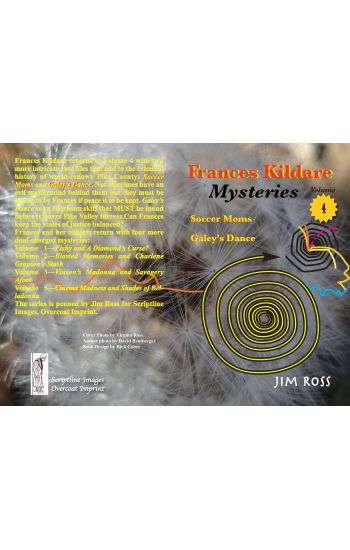
Frances Kildare returns in Volume 4 with two more intricate case files that add to the criminal history of world-renown Pike County: Soccer Moms and Galey's Dance. Not all crimes have an evil mastermind behind them but they must be attend to by Frances if peace is to be kept. Galey's Dance is an Heirloom skiff that MUST be found before it leaves Pike Valley forever.Can Frances keep the scales of justice balanced?Frances and her cohorts return with four more dual-charged mysteries: Volume 1-Fishy and A Diamond's Curse?Volume 2-Blasted Memories and Charlene Grayson's StashVolume 3-Vinson's Madonna and Savagery AfootVolume 5-Cinema Madness and Shades of BelladonnaThe series is penned by Jim Ross for Scriptline Images, Overcoat Imprint
Frances Kildare returns in Volume 5 with two more intricate case files that add to the criminal history of world-renown Pike County: Cinema Madness and Shades of Belladonna. The architect of downtown revival is murdered in his theater and it falls to Frances to piece the frames so they make sense. In Shades of Belladonna, an insecure cook show host dies over a menu of her own creation. Frances works to find the bad guys and keep the films and restaurants running.Frances and her cohorts return with four more dual-charged mysteries: Volume 1-Fishy and A Diamond's Curse?Volume 2-Blasted Memories and Charlene Grayson's StashVolume 3-Vinson's Madonna and Savagery AfootVolume 4-Soccer Moms and Galeys Dance The series is penned by Jim Ross for Scriptline Images, Overcoat Imprint.
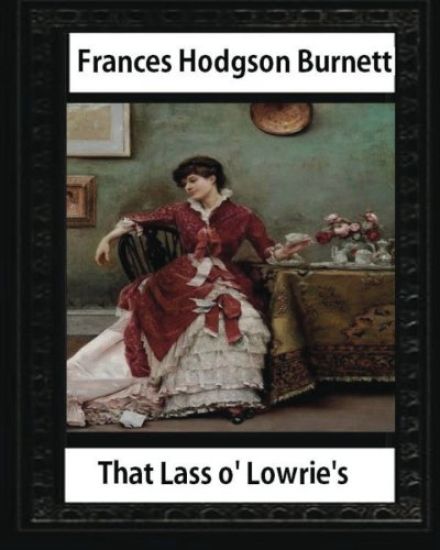
Frances Eliza Hodgson Burnett (24 November 1849 - 29 October 1924) was an English-American novelist and playwright. She is best known for the three children's novels Little Lord Fauntleroy (published in 1885-1886), A Little Princess (1905), and The Secret Garden (1911). Frances Eliza Hodgson was born in Cheetham, England. After her father died in 1852, the family fell on straitened circumstances and in 1865 immigrated to the United States, settling near Knoxville, Tennessee. There Frances began writing to help earn money for the family, publishing stories in magazines from the age of 19. In 1870, her mother died, and in 1872 Frances married Swan Burnett, who became a medical doctor. The Burnetts lived for two years in Paris, where their two sons were born, before returning to the United States to live in Washington, D.C., Burnett then began to write novels, the first of which (That Lass o' Lowrie's), was published to good reviews. Little Lord Fauntleroy was published in 1886 and made her a popular writer of children's fiction, although her romantic adult novels written in the 1890s were also popular. She wrote and helped to produce stage versions of Little Lord Fauntleroy and A Little Princess. Burnett enjoyed socializing and lived a lavish lifestyle. Beginning in the 1880s, she began to travel to England frequently and in the 1890s bought a home there where she wrote The Secret Garden. Her oldest son, Lionel, died of tuberculosis in 1890, which caused a relapse of the depression she had struggled with for much of her life. She divorced Swan Burnett in 1898, married Stephen Townsend in 1900, and divorced him in 1902. A few years later she settled in Nassau County, Long Island, where she died in 1924 and is buried in Roslyn Cemetery. In 1936 a memorial sculpture by Bessie Potter Vonnoh was erected in her honour in Central Park's Conservatory Garden. The statue depicts her two famous Secret Garden characters, Mary and Dickon. Childhood in Manchester Frances Eliza Hodgson was born in 1849 at 141 York Street in the Cheetham Hill township of the Borough of Manchester, England. She was the third of five children of Edwin Hodgson, an ironmonger from Doncaster in Yorkshire, and his wife Eliza Boond, from a well-to-do Manchester family. Hodgson owned a business in Deansgate, selling quality ironmongery and brass goods. The family lived comfortably, employing a maid and a nurse-maid.Frances was the middle of the five Hodgson children, with two older brothers and two younger sisters. In 1852 the family moved to a more spacious home with greater access to outdoor space.Barely a year later, with his wife pregnant for a fifth time, Hodgson died of a stroke, leaving the family without income. Frances was cared for by her grandmother while her mother took over running the family business. From her grandmother, who bought her books, Frances learned to love reading, in particular her first book The Flower Book which had coloured illustrations and poems. Because of their reduced income, Eliza had to give up their house and moved with her children to Seedley Grove, near Pendleton; there they lived with relatives in a home that included a large enclosed garden, in which Frances enjoyed playing. For a year Frances went to a small school run by two women, where she first saw a book about fairies. When her mother moved the family to Salford, Frances mourned the lack of flowers and gardens. Their home was located in Islington Square, adjacent to an area with severe overcrowding and poverty, that "defied description", as described by Friedrich Engels who lived in Manchester at the time.
Frances Eliza Hodgson Burnett (24 November 1849 - 29 October 1924) was an English-American novelist and playwright. She is best known for the three children's novels Little Lord Fauntleroy (published in 1885-1886), A Little Princess (1905), and The Secret Garden (1911). Frances Eliza Hodgson was born in Cheetham, England. After her father died in 1852, the family fell on straitened circumstances and in 1865 immigrated to the United States, settling near Knoxville, Tennessee. There Frances began writing to help earn money for the family, publishing stories in magazines from the age of 19. In 1870, her mother died, and in 1872 Frances married Swan Burnett, who became a medical doctor. The Burnetts lived for two years in Paris, where their two sons were born, before returning to the United States to live in Washington, D.C., Burnett then began to write novels, the first of which (That Lass o' Lowrie's), was published to good reviews. Little Lord Fauntleroy was published in 1886 and made her a popular writer of children's fiction, although her romantic adult novels written in the 1890s were also popular. She wrote and helped to produce stage versions of Little Lord Fauntleroy and A Little Princess. Burnett enjoyed socializing and lived a lavish lifestyle. Beginning in the 1880s, she began to travel to England frequently and in the 1890s bought a home there where she wrote The Secret Garden. Her oldest son, Lionel, died of tuberculosis in 1890, which caused a relapse of the depression she had struggled with for much of her life. She divorced Swan Burnett in 1898, married Stephen Townsend in 1900, and divorced him in 1902. A few years later she settled in Nassau County, Long Island, where she died in 1924 and is buried in Roslyn Cemetery. In 1936 a memorial sculpture by Bessie Potter Vonnoh was erected in her honour in Central Park's Conservatory Garden. The statue depicts her two famous Secret Garden characters, Mary and Dickon. Childhood in Manchester Frances Eliza Hodgson was born in 1849 at 141 York Street in the Cheetham Hill township of the Borough of Manchester, England. She was the third of five children of Edwin Hodgson, an ironmonger from Doncaster in Yorkshire, and his wife Eliza Boond, from a well-to-do Manchester family. Hodgson owned a business in Deansgate, selling quality ironmongery and brass goods. The family lived comfortably, employing a maid and a nurse-maid.Frances was the middle of the five Hodgson children, with two older brothers and two younger sisters. In 1852 the family moved to a more spacious home with greater access to outdoor space.Barely a year later, with his wife pregnant for a fifth time, Hodgson died of a stroke, leaving the family without income. Frances was cared for by her grandmother while her mother took over running the family business. From her grandmother, who bought her books, Frances learned to love reading, in particular her first book The Flower Book which had coloured illustrations and poems. Because of their reduced income, Eliza had to give up their house and moved with her children to Seedley Grove, near Pendleton; there they lived with relatives in a home that included a large enclosed garden, in which Frances enjoyed playing. For a year Frances went to a small school run by two women, where she first saw a book about fairies. When her mother moved the family to Salford, Frances mourned the lack of flowers and gardens. Their home was located in Islington Square, adjacent to an area with severe overcrowding and poverty, that "defied description", as described by Friedrich Engels who lived in Manchester at the time.
Frances Eliza Hodgson Burnett (24 November 1849 - 29 October 1924) was an English-American novelist and playwright. She is best known for the three children's novels Little Lord Fauntleroy (published in 1885-1886), A Little Princess (1905), and The Secret Garden (1911). Frances Eliza Hodgson was born in Cheetham, England. After her father died in 1852, the family fell on straitened circumstances and in 1865 immigrated to the United States, settling near Knoxville, Tennessee. There Frances began writing to help earn money for the family, publishing stories in magazines from the age of 19. In 1870, her mother died, and in 1872 Frances married Swan Burnett, who became a medical doctor. The Burnetts lived for two years in Paris, where their two sons were born, before returning to the United States to live in Washington, D.C., Burnett then began to write novels, the first of which (That Lass o' Lowrie's), was published to good reviews. Little Lord Fauntleroy was published in 1886 and made her a popular writer of children's fiction, although her romantic adult novels written in the 1890s were also popular. She wrote and helped to produce stage versions of Little Lord Fauntleroy and A Little Princess.Burnett enjoyed socializing and lived a lavish lifestyle. Beginning in the 1880s, she began to travel to England frequently and in the 1890s bought a home there where she wrote The Secret Garden. Her oldest son, Lionel, died of tuberculosis in 1890, which caused a relapse of the depression she had struggled with for much of her life. She divorced Swan Burnett in 1898, married Stephen Townsend in 1900, and divorced him in 1902. A few years later she settled in Nassau County, Long Island, where she died in 1924 and is buried in Roslyn Cemetery. In 1936 a memorial sculpture by Bessie Potter Vonnoh was erected in her honour in Central Park's Conservatory Garden. The statue depicts her two famous Secret Garden characters, Mary and Dickon. Childhood in Manchester Frances Eliza Hodgson was born in 1849 at 141 York Street in the Cheetham Hill township of the Borough of Manchester, England. She was the third of five children of Edwin Hodgson, an ironmonger from Doncaster in Yorkshire, and his wife Eliza Boond, from a well-to-do Manchester family. Hodgson owned a business in Deansgate, selling quality ironmongery and brass goods. The family lived comfortably, employing a maid and a nurse-maid.Frances was the middle of the five Hodgson children, with two older brothers and two younger sisters. In 1852 the family moved to a more spacious home with greater access to outdoor space.Barely a year later, with his wife pregnant for a fifth time, Hodgson died of a stroke, leaving the family without income. Frances was cared for by her grandmother while her mother took over running the family business. From her grandmother, who bought her books, Frances learned to love reading, in particular her first book The Flower Book which had coloured illustrations and poems. Because of their reduced income, Eliza had to give up their house and moved with her children to Seedley Grove, near Pendleton; there they lived with relatives in a home that included a large enclosed garden, in which Frances enjoyed playing. For a year Frances went to a small school run by two women, where she first saw a book about fairies. When her mother moved the family to Salford, Frances mourned the lack of flowers and gardens. Their home was located in Islington Square, adjacent to an area with severe overcrowding and poverty, that "defied description", as described by Friedrich Engels who lived in Manchester at the time.
Evelina, or the History of a Young Lady's Entrance into the World is a novel written by English author Fanny Burney and first published in 1778. Although published anonymously, its authorship was revealed by the poet George Huddesford in what Burney called a "vile poem". In this 3-volume epistolary novel, title character Evelina is the unacknowledged, but legitimate daughter of a dissipated English aristocrat, thus raised in rural seclusion until her 17th year. Through a series of humorous events that take place in London and the resort town of Hotwells, near Bristol, Evelina learns to navigate the complex layers of 18th-century society and earn the love of a distinguished nobleman. This sentimental novel, which has notions of sensibility and early romanticism, satirizes the society in which it is set and is a significant precursor to the work of Jane Austen and Maria Edgeworth, whose novels explore many of the same issues The novel opens with a distressed letter from Lady Howard to her longtime acquaintance, the Reverend Arthur Villars, in which she reports that Mme. Duval, the grandmother of Villars' ward, Evelina Anville, intends to visit England to renew her acquaintance with her granddaughter Evelina. Eighteen years earlier, Mme. Duval had broken off her relationship with her daughter Caroline, Evelina's mother, and has never acknowledged Evelina. Reverend Villars fears Mme. Duval's influence could lead Evelina to a fate similar to that of her mother Caroline, who secretly wedded Sir John Belmont, a libertine, who afterwards denied the marriage. To keep Evelina from Mme. Duval, the Reverend lets her visit Howard Grove, Lady Howard's home, on an extended holiday. While she is there, the family learns that Lady Howard's son-in-law, naval officer Captain Mirvan, is returning to England after a seven-year absence. Desperate to join the Mirvans on their trip to London, Evelina entreats her guardian to let her attend them, promising that the visit will last only a few weeks. Villars reluctantly consents.