Kirjojen hintavertailu. Mukana 11 699 587 kirjaa ja 12 kauppaa.

Kirjahaku

Etsi kirjoja tekijän nimen, kirjan nimen tai ISBN:n perusteella.

1000 tulosta hakusanalla Frederick Beiser

The Papers of Frederick Law Olmsted

The Papers of Frederick Law Olmsted

Frederick Law Olmsted

Johns Hopkins University Press
1983
sidottu
'The Years of Olmsted, Vaux & Company, 1865-1874' documents one of the most productive periods of Olmsted's career. During these years he and Vaux created their classic design for Prospect Park in Brooklyn, drew up plans for Riverside and Morningside parks in Manhattan, and designed Chicago's South Park. Its rich assortment of documents will be of interest to historians, landscape architects, urban planners, and anyone concerned with the roots of modern America. 'The Olmsted Papers project is supported by the Andrew W. Mellon Foundation, the National Endowment for the Humanities, and the National Historical Publications and Records Commission, and is sponsored by The American University.'
The Papers of Frederick Law Olmsted

The Papers of Frederick Law Olmsted

Frederick Law Olmsted

Johns Hopkins University Press
1992
sidottu
The Years of Olmsted, Vaux & Company, 1865-1874 documents one of the most productive periods of Olmsted's career. During these years he and Vaux created their classic design for Prospect Park in Brooklyn, drew up plans for Riverside and Morningside parks in Manhattan, and designed Chicago's South Park. Its rich assortment of documents will be of interest to historians, landscape architects, urban planners, and anyone concerned with the roots of modern America. The Olmsted Papers project is supported by the Andrew W. Mellon Foundation, the National Endowment for the Humanities, and the National Historical Publications and Records Commission, and is sponsored by The American University.
The Papers of Frederick Law Olmsted

The Papers of Frederick Law Olmsted

Frederick Law Olmsted

Johns Hopkins University Press
2007
sidottu
For decades Frederick Law Olmsted (1822-1903) designed parks and park systems across the United States, leaving an enduring legacy of designed public space that is enjoyed, studied, and protected today. His plans and professional correspondence offer a rich source for understanding his remarkable contribution to the quality of urban life in this country and the development of the profession of landscape architecture. Olmsted's writings also provide a unique record of society and politics in post-Civil War America. Historians, landscape architects, conservationists, city planners, and citizens' groups continue to turn to Olmsted for inspiration in their planning and protection of public open space in our cities. This latest and seventh volume of the Papers of Frederick Law Olmsted presents the record of his last years of residence in New York City. It includes reports on the design of Riverside and Morningside parks and Tompkins Square in Manhattan, as well as his comprehensive plan for the street system and rapid transit routes of the Bronx. It records his continuing work on Central Park and presents his final retrospective statement, "The Spoils of the Park." In addition, volume seven contains an annotated version of the journal in which Olmsted recorded instances of political maneuvering and patronage politics in the years before his dismissal from the New York parks department in 1878. Later documents chronicle the early stages of his planning of the Boston park system-the Back Bay Fens, Arnold Arboretum, and Riverway. Other major commissions, each with its own political complications, were the grounds of the U.S. Capitol, the completion of the new state capitol in Albany, the designing of a park on Mount Royal in Montreal, and construction of the park system of Buffalo, New York. The volume also presents Olmsted's commentary on issues of the times including federal Reconstruction policy and civil-service reform. The Olmsted Papers project is supported by the National Endowment for the Humanities, the National Historical Publications and Records Commission, the National Trust for the Humanities, the National Association for Olmsted Parks, as well as private foundations and individuals.
Frederick Douglass' Civil War

Frederick Douglass' Civil War

David W. Blight

Louisiana State University Press
1991
nidottu
In this sensitive intellectual biography David W. Blight undertakes the first systematic analysis of the impact of the Civil War on Frederick Douglass' life and thought, offering new insights into the meaning of the war in American history and in the Afro-American experience. Frederick Douglass' Civil War follows Douglass' intellectual and personal growth from the political crises of the 1850s through secession, war, black enlistment, emancipation, and Reconstruction. This book provides an engrossing story of Douglass' development of a social identity in relation to transforming events, and demonstrates that he saw the Civil War as the Second American Revolution, and himself as one of the founders of a new nation. Through Douglass' life, his voice, and his interpretations we see the Civil War era and its memory in a new light.
Frederick W. Lander

Frederick W. Lander

Gary L. Ecelbarger

Louisiana State University Press
2001
sidottu
Tall and handsome, vigorous and hot-tempered, fearless to a fault, Frederick W. Lander (1821- 1862) became one of the most name-recognized Americans in the years 1854 to 1862. A top-notch railroad and wagon-road engineer in the western territories, a popular lyceum speaker, a published fiction writer and poet, an adept negotiator with Native Americans, and an agent for the Lincoln administration and the Union army, the Massachusetts native attracted newspaper coverage from coast to coast for his renown and versatility. His name evoked emotion and passion among his friends and associates, including artists, poets, explorers, engineers, soldiers, and politicians, but at his untimely death early in the Civil War, he quickly and tragically descended into anonymity. With an energy that befits his subject, Gary L. Ecelbarger brings to life this intriguing, romantic personality of the nineteenth century, tempting the imagination to consider what Lander might have accomplished had he lived longer.Using more than five hundred unpublished letters and documents written by Lander and his colleagues, superiors, and subordinates, Ecelbarger delves into all of the major aspects of Lander's life but focuses upon its final chapter in the Civil War. Promoted directly from unpaid aide-de-camp to brigadier general, Lander was quickly dubbed ""the great natural American soldier"" by Lieutenant General Winfield Scott for his brilliant promise as a military leader. The author offers a richly detailed narrative of Lander's courageous participation in three campaigns during the first year of the conflict: Rich Mountain, May- July, 1861; Ball's Bluff, September- October, 1861; and the previously undocumented campaign against Stonewall Jackson, January- March, 1862.Ecelbarger studies Lander's flaws, attributes, and achievements to provide a judicious, comprehensive analysis of his actions and character. In Frederick W. Lander, he produces the spellbinding story of a once-forgotten hero who now appears life size.
Frederick Douglass and Herman Melville

Frederick Douglass and Herman Melville

The University of North Carolina Press
2008
nidottu
Frederick Douglass (1818-1895) and Herman Melville (1819-1891) addressed in their writings a range of issues that continue to resonate in American culture: the reach and limits of democracy; the nature of freedom; the roles of race, gender, and sexuality; and the place of the United States in the world. Yet they are rarely discussed together, perhaps because of their differences in race and social position. Douglass escaped from slavery and tied his well-received nonfiction writing to political activism, becoming a figure of international prominence. Melville was the grandson of Revolutionary War heroes and addressed urgent issues through fiction and poetry, laboring in increasing obscurity.In eighteen original essays, the contributors to this collection explore the convergences and divergences of these two extraordinary literary lives. Developing new perspectives on literature, biography, race, gender, and politics, this volume ultimately raises questions that help rewrite the color line in nineteenth-century studies.The contributors are Elizabeth Barnes, Hester Blum, Russ Castronovo, John Ernest, William Gleason, Gregory Jay, Carolyn L. Karcher, Rodrigo Lazo, Maurice S. Lee, Robert S. Levine, Steven Mailloux, Dana D. Nelson, Samuel Otter, John Stauffer, Sterling Stuckey, Eric J. Sundquist, Elisa Tamarkin, Susan M. Ryan, David Van Leer, Maurice Wallace, Robert K. Wallace, and Kenneth W. Warren.
Frederick Novy and the Development of Bacteriology in Medicine

Frederick Novy and the Development of Bacteriology in Medicine

Powel Harold Kazanjian

Rutgers University Press
2017
sidottu
At the turn of the twentieth century, Frederick Novy was the leader among a new breed of full-time bacteriologists at American medical schools. Although historians have examined bacteriologic work done in American health department laboratories, there has been little examination of similar work completed within U.S. medical schools during this period. In Frederick Novy and the Development of Bacteriology in Medicine, medical historian, medical researcher, and clinician Powel H. Kazanjian uses Novy’s archived letters, laboratory notebooks, lecture notes, and published works to examine medical research and educational activities at the University of Michigan and other key medical schools during a formative period in modern medical science.
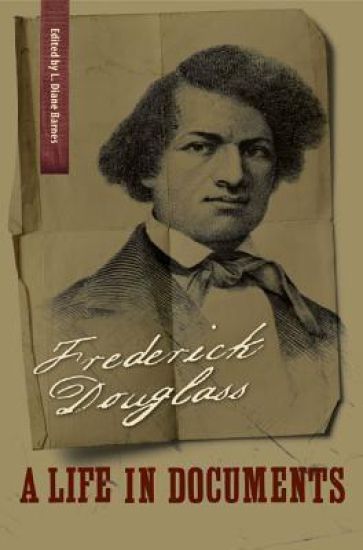
Frederick Douglass

Frederick Douglass

University of Virginia Press
2013
nidottu
Frederick Douglass was born enslaved in February 1818, but from this most humble of beginnings, he rose to become a world-famous orator, newspaper editor, and champion of the rights of women and African Americans. He not only survived slavery to live in freedom but also became an outspoken critic of the institution and an active participant in the U.S. political system. Douglass advised presidents of the United States and formally represented his country in the diplomatic corps. He was the most prominent African American activist of the nineteenth century, and he left a treasure trove of documentary evidence detailing his life in slavery and achievements in freedom. This volume gathers and interprets valuable selections from a variety of Douglass’s writings, including speeches, editorials, correspondence, and autobiographies.
Frederick Law Olmstead

Frederick Law Olmstead

Melvin Kalfus

New York University Press
1991
pokkari
Frederick Law Olmsted is famous for his urban landscape designs: Central Park in Manhattan, Prospect Park in Brooklyn, and Franklin Park in Boston. Olmsted devoted much of his later life to this work. What was the source of this creative energy and imagination in his fascinating years? Melvin Kalfus is the first author to examine Olmsted's troubled, sometimes tragic childhood and adolescence in a search for the inner sources of his creative imagination. Kalfus argues that Olmsted's distressing early experiences fired his ambition and led him so obsessively to seek the world's esteem through his works. Kalfus also looks at Olmsted's varied early career during which he worked as an apprentice merchant, a seaman, a farmer, a manager of a mining plantation in California, a journalist, and author of three istorically important books on slavery, and as the General Secretary of the Civil War's Sanitary Commission, and enormous project organized to provide medical aid to Union soldiers.
Frederick Douglass and Ireland
Frederick Douglass spent four months in Ireland at the end of 1845 that proved to be, in his own words, ‘transformative’. He reported that for the first time in his life he felt like a man, and not a chattel. Whilst in residence, he became a spokesperson for the abolition movement, but by the time he left the country in early January 1846, he believed that the cause of the slave was the cause of the oppressed everywhere. This book adds new insight into Frederick Douglass and his time in Ireland. Contemporary newspaper accounts of the lectures that Douglass gave during his tour of Ireland (in Dublin, Wexford, Waterford, Cork, Limerick, and Belfast) have been located and transcribed. The speeches are annotated and accompanied by letters written by Douglass during his stay. In this way, for the first time, we hear Douglass in his own words. This unique approach allows us to follow the journey of the young man who, while in Ireland, discovered his own voice.
Selected Works of Frederick J. Almgren, Jr

Selected Works of Frederick J. Almgren, Jr

Frederick J. Almgren

American Mathematical Society
1999
sidottu
A collection of some of the work of Frederick J Almgren, Jr, the man most noted for defining the shape of geometric variational problems and for his role in founding The Geometry Center. It includes a summary by Sheldon Chang of the famous 1,700 page paper on singular sets of area-minimizing $m$-dimensional surfaces in $R^n$.
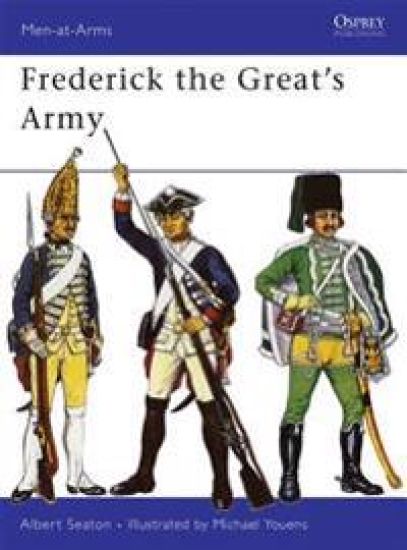
Frederick the Great's Army

Frederick the Great's Army

Seaton Albert

Osprey Publishing
1973
nidottu
This book examines the uniforms, equipment, history and organisation of the men who served in the army of Frederick the Great. Major engagements in the First and Second Silesian Wars (1740-1742 and 1744-1745) and The Seven Years' War (1756-1763) are all covered. Uniforms are shown in full illustrated detail.