Kirjahaku
Etsi kirjoja tekijän nimen, kirjan nimen tai ISBN:n perusteella.
1000 tulosta hakusanalla Friedrich Neumann
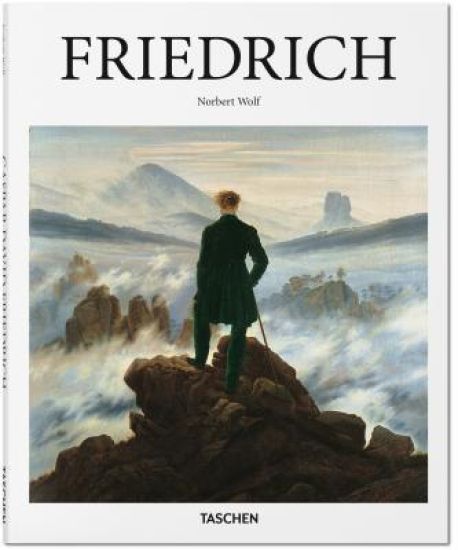
The beauty of nature and man’s loneliness are dominant themes in the work of Caspar David Friedrich (1774-1840). The artist often places a small human figure in a broad landscape, as in his famous paintings Monk by the Sea and The Wanderer above the Sea of Fog. For a long time the importance and influence of this great Romantic painter were underestimated. When he died, Friedrich had already been forgotten by his contemporaries and was only rediscovered in the early 20th century. Today he is considered to be the most important German painter of his generation and a precursor of Expressionism. Once Friedrich gave the following advice to an artist-colleague of his who was constricted by academic rules: “Shut your physical eye so that you first see your painting with your spiritual eye. Then bring to light what you saw in the dark so that it has an effect on others, shining inwards from outside.” In other words, concentration and not imitation, essence and not frivolous brushwork.
Unver nderter Nachdruck der Originalausgabe von 1888. Der Verlag Antigonos spezialisiert sich auf die Herausgabe von Nachdrucken historischer B cher. Wir achten darauf, dass diese Werke der ffentlichkeit in einem guten Zustand zug nglich gemacht werden, um ihr kulturelles Erbe zu bewahren.
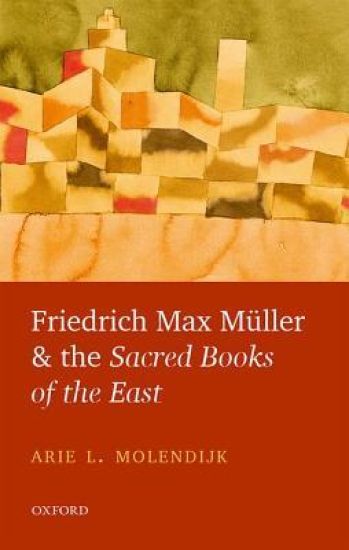
Friedrich Max Müller and the Sacred Books of the East
Arie L. Molendijk
Oxford University Press
2016
sidottu
This volume offers a critical analysis of one the most ambitious editorial projects of late Victorian Britain: the edition of the fifty substantial volumes of the Sacred Books of the East (1879-1910). The series was edited and conceptualized by Friedrich Max Müller (1823-1900), a world-famous German-born philologist, orientalist, and religious scholar. Müller and his influential Oxford colleagues secured financial support from the India Office of the British Empire and from Oxford University Press. Arie L. Molendijk documents how the series has become a landmark in the development of the humanities-especially the study of religion and language-in the second half of the nineteenth century. The edition also contributed significantly to the Western perception of the 'religious' or even 'mystic' East, which was textually represented in English translations. The series was a token of the rise of 'big science' and textualized the East, by selecting their 'sacred books' and bringing them under the power of western scholarship.
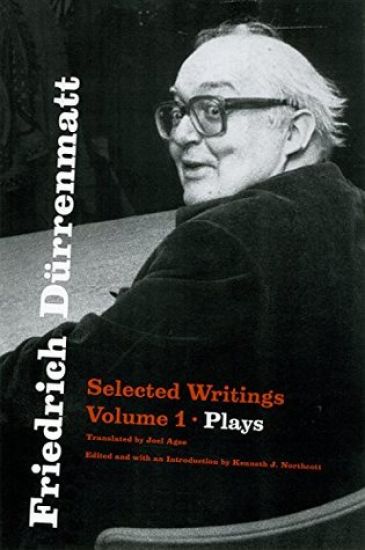
The Swiss writer Friedrich Dürrenmatt (1921–90) was one of the most important literary figures of the second half of the twentieth century. During the years of the cold war, arguably only Beckett, Camus, Sartre, and Brecht rivaled him as a presence in European letters. Yet outside Europe, this prolific author is primarily known for only one work, The Visit. With these long-awaited translations of his plays, fictions, and essays, Dürrenmatt becomes available again in all his brilliance to the English-speaking world. Dürrenmatt’s concerns are timeless, but they are also the product of his Swiss vantage during the cold war: his key plays, gathered in the first volume of Selected Writings, explore such themes as guilt by passivity, the refusal of responsibility, greed and political decay, and the tension between justice and freedom. In The Visit, for instance, an old lady who becomes the wealthiest person in the world returns to the village that cast her out as a young woman and offers riches to the town in exchange for the life of the man, now its mayor, who once disgraced her. Joel Agee’s crystalline translation gives a fresh lease to this play, as well as four others: The Physicists, Romulus the Great, Hercules and the Augean Stables, and The Marriage of Mr. Mississippi. Dürrenmatt has long been considered a great writer—but one unfairly neglected in the modern world of letters. With these elegantly conceived and expertly translated volumes, a new generation of readers will rediscover his greatest works.
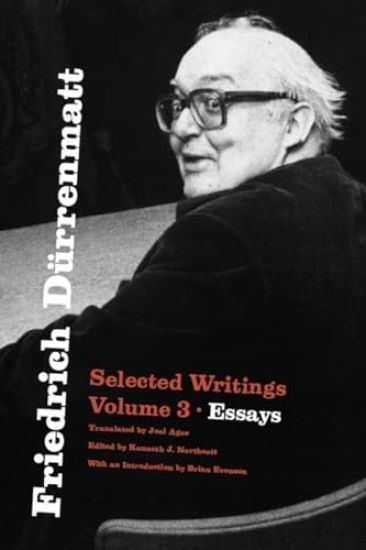
The Swiss writer Friedrich Dürrenmatt (1921–90) was one of the most important literary figures of the second half of the twentieth century. During the years of the cold war, arguably only Beckett, Camus, Sartre, and Brecht rivaled him as a presence in European letters. Yet outside Europe, this prolific author is primarily known for only one work, The Visit. With these long-awaited translations of his plays, fictions, and essays, Dürrenmatt becomes available again in all his brilliance to the English-speaking world. Dürrenmatt’s essays, gathered in this third volume of Selected Writings, are among his most impressive achievements. Their range alone is astonishing: he wrote with authority and charm about art, literature, philosophy, politics, and the theater. The selections here include Dürrenmatt’s best-known essays, such as “Theater Problems” and “Monster Essay on Justice and Law,” as well as the notes he took on a 1970 journey in America (in which he finds the United States “increasingly susceptible to every kind of fascism”). This third volume of Selected Writings also includes essays that shade into fiction, such as “The Winter War in Tibet,” a fantasy of a third world war waged in a vast subterranean labyrinth—a Plato’s Cave allegory rewritten for our own troubled times. Dürrenmatt has long been considered a great writer—but one unfairly neglected in the modern world of letters. With these elegantly conceived and expertly translated volumes, a new generation of readers will rediscover his greatest works.
These translations of Friedrich Dürrenmatt’s plays introduce the writer to a new generation of readers. The Swiss writer Friedrich Dürrenmatt (1921–90) was one of the most important literary figures of the second half of the twentieth century. During the years of the cold war, arguably only Beckett, Camus, Sartre, and Brecht rivaled him as a presence in European letters. Yet outside Europe, this prolific author is primarily known for only one work, The Visit. Dürrenmatt’s concerns are timeless, but they are also the product of his Swiss vantage during the cold war: his key plays, gathered in the first volume of Selected Writings, explore such themes as guilt by passivity, the refusal of responsibility, greed and political decay, and the tension between justice and freedom. In The Visit, for instance, an old lady who becomes the wealthiest person in the world returns to the village that cast her out as a young woman and offers riches to the town in exchange for the life of the man, now its mayor, who once disgraced her. Joel Agee’s crystalline translation gives a fresh lease to this play, as well as four others: The Physicists, Romulus the Great, Hercules and the Augean Stables, and The Marriage of Mr. Mississippi. Dürrenmatt has long been considered a great writer, but one unfairly neglected in the modern world of letters. With these elegantly conceived and expertly translated volumes, a new generation of readers will rediscover his greatest works.
These translations of Friedrich Dürrenmatt’s fiction introduce the writer to a new generation of readers. The Swiss writer Friedrich Dürrenmatt (1921–90) was one of the most important literary figures of the second half of the twentieth century. During the years of the cold war, arguably only Beckett, Camus, Sartre, and Brecht rivaled him as a presence in European letters. Yet outside Europe, this prolific author is primarily known for only one work, The Visit. This second volume of Selected Writings reveals a writer who may stand as Kafka’s greatest heir. Dürrenmatt’s novellas and short stories are searing, tragicomic explorations of the ironies of justice and the corruptibility of institutions. The most well-known work included here is The Pledge, a requiem to the detective story that was made into a film starring Jack Nicholson. The evocative novellas The Assignment tells the story of a woman filmmaker investigating a mysterious murder in an unnamed Arab country; it has been hailed by Sven Birkerts as “a parable of hell for an age consumed by images.” The novella Traps, meanwhile, is a chilling comic novella about a traveling salesman who agrees to play the role of the defendant in a mock trial among dinner companions—and then pays the ultimate penalty. Dürrenmatt has long been considered a great writer, but one unfairly neglected in the modern world of letters. With these elegantly conceived and expertly translated volumes, a new generation of readers will rediscover his greatest works.
These translations of Friedrich Dürrenmatt’s essays introduce the writer to a new generation of readers. The Swiss writer Friedrich Dürrenmatt (1921–90) was one of the most important literary figures of the second half of the twentieth century. During the years of the cold war, arguably only Beckett, Camus, Sartre, and Brecht rivaled him as a presence in European letters. Yet outside Europe, this prolific author is primarily known for only one work, The Visit. With these long-awaited translations of his plays, fictions, and essays, Dürrenmatt becomes available again in all his brilliance to the English-speaking world. Dürrenmatt’s essays, gathered in this third volume of Selected Writings, are among his most impressive achievements. Their range alone is astonishing: he wrote with authority and charm about art, literature, philosophy, politics, and the theater. The selections here include Dürrenmatt’s best-known essays, such as “Theater Problems” and “Monster Essay on Justice and Law,” as well as the notes he took on a 1970 journey in America (in which he finds the United States “increasingly susceptible to every kind of fascism”). This volume also includes essays that shade into fiction, such as “The Winter War in Tibet,” a fantasy of a third world war waged in a vast subterranean labyrinth—a Plato’s Cave allegory rewritten for our own troubled times. Dürrenmatt has long been considered a great writer, but one unfairly neglected in the modern world of letters. With these elegantly conceived and expertly translated volumes, a new generation of readers will rediscover his greatest works.
Friedrich Nietzsche and the Politics of Transfiguration (expanded ed.)
Tracy B. Strong
University of Illinois Press
1999
nidottu
Friedrich Nietzsche and the Politics of Transfiguration provides a comprehensive analysis of the politics that are implicit and explicit in Nietzsche's work. Tracy B. Strong's discussion shows that Nietzsche's writings are of a piece and have as their common goal a politics of transfiguration: a politics that seeks radical change in how human beings live and act in the modern Western world. This edition includes a new introduction that demonstrates how the styles of Nietzsche's writings expand our notions of democratic politics and democratic understanding.
Friedrich List Und Die Erste Grosse Eisenbahn Deutschlands
Robert Krause
Wentworth Press
2018
pokkari
Friedrich Schiller in Seinen Beziehungen Zur Musik Und Zu Musikern
Adolf Kohut
Wentworth Press
2018
pokkari