Kirjojen hintavertailu. Mukana 12 595 353 kirjaa ja 12 kauppaa.

Kirjahaku

Etsi kirjoja tekijän nimen, kirjan nimen tai ISBN:n perusteella.

1000 tulosta hakusanalla Gail Hester

Talking About Troubles in Conversation

Talking About Troubles in Conversation

Gail Jefferson

Oxford University Press Inc
2015
nidottu
Few conversational topics can be as significant as our troubles in life, whether everyday and commonplace, or more exceptional and disturbing. In groundbreaking research conducted with John Lee at the University of Manchester UK, Gail Jefferson turned the microscope on how people talk about their troubles, not in any professional or therapeutic setting, but in their ordinary conversations with family and friends. Through recordings of interactions in which people talk about problems they're having with their children, concerns about their health, financial problems, marital and relationship difficulties (their own or other people's), examination failures, dramatic events such as burglaries or a house fire and other such troubles, Jefferson explores the interactional dynamics and complexities of introducing such topics, of how speakers sustain and elaborate their descriptions and accounts of their troubles, how participants align and affiliate with one another, and finally manage to move away from such topics. The studies Jefferson published out of that remarkable period of research have been collected together in this volume. They are as insightful and informative about how we talk about our troubles, as they are innovative in the development and application of Conversation Analysis. Gail Jefferson (1938-2008) was one of the co-founders of Conversation Analysis (CA); through her early collaboration with Harvey Sacks and in her subsequent research, she laid the foundations for what has become an immensely important interdisciplinary paradigm. She co-authored, with Harvey Sacks and Emanuel Schegloff, two of the most highly cited articles ever published in Language, on turn-taking and repair. These papers were foundational, as was the transcription system that she developed and that is used by conversation analysts world-wide. Her research papers were a distinctive and original voice in the emerging micro-analysis of interaction in everyday life.

The Rise of the Public Authority

The Rise of the Public Authority

Gail Radford

University of Chicago Press
2013
sidottu
In the late nineteenth century, public officials throughout the United States began to experiment with new methods of managing their local economies and meeting the infrastructure needs of a newly urban, industrial nation. Stymied by legal barriers, they created a new class of quasipublic agencies called public authorities. Today these entities operate at all levels of government, and range from tiny operations like the Springfield Parking Authority in Massachusetts, which runs thirteen parking lots and garages, to mammoth enterprises like the Tennessee Valley Authority, with nearly twelve billion dollars in revenue each year. In "The Rise of the Public Authority", Gail Radford recounts the history of these inscrutable government corporations, examining the ways they were established and the unprecedented powers that they have exercised over the last hundred years. Radford has mapped this institutional terra incognita, giving readers a grand tour of these institutions and the way that they operate, making a substantial contribution to our understanding of these pervasive but elusive mechanisms - and their implications for American political development.
The Rise of the Public Authority

The Rise of the Public Authority

Gail Radford

University of Chicago Press
2013
nidottu
In the late nineteenth century, public officials throughout the United States began to experiment with new methods of managing their local economies and meeting the infrastructure needs of a newly urban, industrial nation. Stymied by legal barriers, they created a new class of quasipublic agencies called public authorities. Today these entities operate at all levels of government, and range from tiny operations like the Springfield Parking Authority in Massachusetts, which runs thirteen parking lots and garages, to mammoth enterprises like the Tennessee Valley Authority, with nearly twelve billion dollars in revenue each year. In "The Rise of the Public Authority", Gail Radford recounts the history of these inscrutable government corporations, examining the ways they were established and the unprecedented powers that they have exercised over the last hundred years. Radford has mapped this institutional terra incognita, giving readers a grand tour of these institutions and the way that they operate, making a substantial contribution to our understanding of these pervasive but elusive mechanisms - and their implications for American political development.
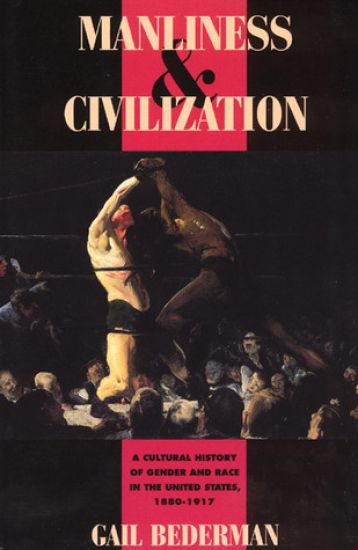
Manliness and Civilization

Manliness and Civilization

Gail Bederman

University of Chicago Press
1996
nidottu
When former heavyweight champion Jim Jeffries came out of retirement on the fourth of July, 1910 to fight current black heavywight champion Jack Johnson in Reno, Nevada, he boasted that he was doing it "for the sole purpose of proving that a white man is better than a negro". Jeffries, though, was trounced and Whites everywhere rioted. The furor, the author of this work seeks to demonstrate, was part of two fundamental and volatile national obsessions: manhood and racial dominance. In turn-of-the-century America, cultural ideals of manhood changed profoundly, as Victorian notions of self-restrained, moral manliness were challenged by ideals of an aggressive, overtly sexualized masculinity. Gail Bederman traces this shift in values and shows how it brought together two seemingly contradictory ideals: the unfettered virility of racially "primitive" men and the refined superiority of "civilized" white men. Focusing on the lives and works of four very different Americans - Theodore Roosevelt, educator G. Stanley Hall, Ida B. Wells, and Charlotte Perkins Gilman - she explores the ideological, cultural, and social interests these ideals came to serve.
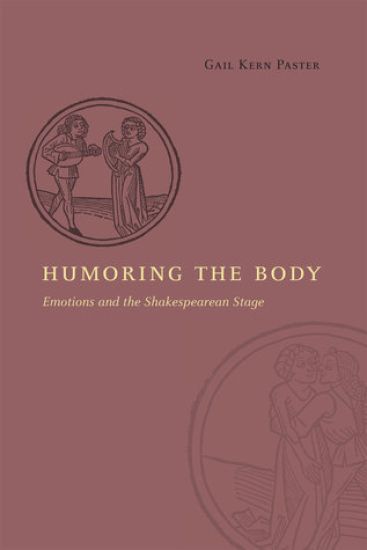
Humoring the Body

Humoring the Body

Gail Kern Paster

University of Chicago Press
2014
nidottu
Thought modern readers no longer believe in the four humors of Galenic naturalism - blood, choler, melancholy, and phlegm - early modern thought found in these bodily fluids the key to explaining human emotions and behavior. In Humoring the Body, Gail Kern Paster proposes a new way to read the emotions of the early modern stage so that contemporary readers may recover some of the historical particularity in early modern expressions of emotional self-experience. Using notions drawn from humoral medical theory to untangle passges from important moral treatises, medical texts, natural histories, and major plays of Shakespeare and his contemporaries, Paster identifies a historical phenomenology in the language of affect by reconciling the significance of the four humors as the language of embodied emotion. She urges modern readers to resist the influence of post-Cartesian abstraction and the disembodiment of human psychology lest they miss the body-mind connection that still existed for Shakespeare and his contemporaries and constrained them to think differently about how their emotions were embodied in a premodern world.
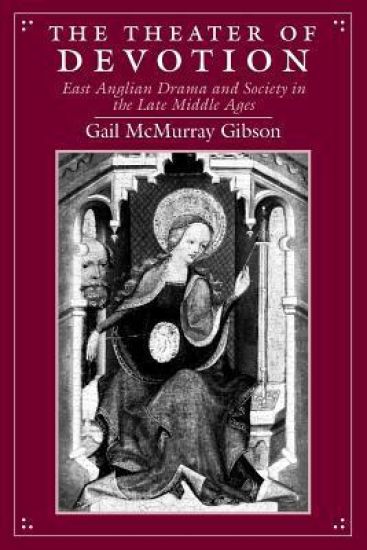
The Theater of Devotion – East Anglian Drama and Society in the Late Middle Ages
In this interdisciplinary study of drama, arts, and spirituality, Gail Gibson provides a reappraisal of 15th-century England through a detailed portrait of the flourishing cultures of Suffolk and Norfolk. By emphasizing the importance of the Incarnation of Christ as a model and justification for late medieval drama and art, Gibson challenges currently held views of the secularization of late medieval culture.
Raising Cane in the 'Glades

Raising Cane in the 'Glades

Gail M. Hollander

University of Chicago Press
2008
sidottu
Over the last century, the Everglades underwent a metaphorical and ecological transition from impenetrable swamp to endangered wetland. At the heart of this transformation lies the Florida sugar industry, which by the 1990s was at the center of the political storm over the multi-billion dollar ecological "restoration" of the Everglades. "Raising Cane in the Glades" is the first study to situate the environmental transformation of the Everglades within the economic and historical geography of global sugar production and trade.Using interviews, government and corporate documents, and recently declassified U.S. State Department memoranda, Gail M. Hollander demonstrates that the development of Florida's sugar region was the outcome of pitched battles reaching the highest political offices in the United States and in countries around the world, especially Cuba - which emerges in her narrative as a model, a competitor, and the regional "other" to Florida's "self." Spanning the period from the age of empire to the era of globalization, the book shows how the "sugar question" - a label nineteenth-century economists coined for intense international debates on sugar production and trade - emerges repeatedly in new guises. Hollander uses the sugar question as a thread to stitch together past and present, local and global, in explaining Everglades transformation.
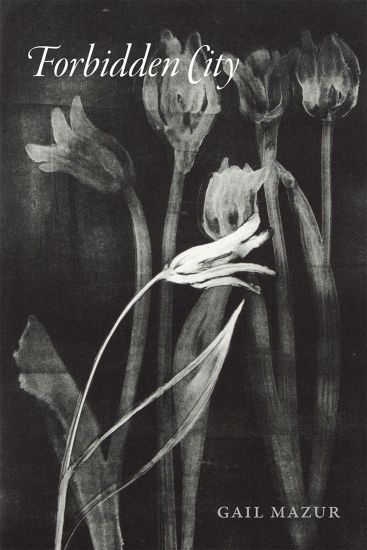
Forbidden City

Forbidden City

Gail Mazur

University of Chicago Press
2016
nidottu
from “Mount Fuji” A draughtsman’s draughtsman, Hokusai at 70 thought he’d begun to grasp the structures of birds and beasts, insects and fish, of the way plants grow, hoped that by 90 he’d havepenetrated to their essential nature. And more, by 100, I will have reached the stagewhere every dot, every mark I make will bealive. You always loved that resolve, you’d repeat joyfully—Hokusai’s utterance of faith in work’s possibilities, its reward, that, at 130, he’d perhaps have learned to draw. Gail Mazur’s poems in Forbidden City build an engaging meditative structure upon the elements of mortality and art, eloquently contemplating the relationship of art and life—and the dynamic possibilities of each in combination. At the collection’s heart is the poet’s long marriage to the artist Michael Mazur (1935–2009). A fascinating range of tone infuses the book—grieving, but clear-eyed rather than lugubrious, sometimes whimsical, even comical, and often exuberant. The note of pleasure, as in an old tradition enriched by transience, runs through the work, even in the final poem, “Grief,” where “our ravenous hold on the world” is a powerful central element.
The Common

The Common

Gail Mazur

University of Chicago Press
1995
sidottu
At the heart of Gail Mazur's The Common is the refusal to simplify what is paradoxical in our world and a recognition of the tensions in our own divided nature. These unflinching poems create a place where wisdom and foolishness, fear and courage, rage and pity, love and diffidence, naturally co-exist. Desire, ambition, devotion, and devastating loss are all subjects for Mazur's clear-eyed poems, which resonate with the contradictions between the body's yearning and the mind's acknowledgment of the consequences of our choices. In a poetry driven by unrelenting questioning, Mazur tries, in Rilke's worlds, "to love the questions themselves."
The Common

The Common

Gail Mazur

University of Chicago Press
1995
nidottu
At the heart of Gail Mazur's The Common is the refusal to simplify what is paradoxical in our world and a recognition of the tensions in our own divided nature. These unflinching poems create a place where wisdom and foolishness, fear and courage, rage and pity, love and diffidence, naturally co-exist.Desire, ambition, devotion, and devastating loss are all subjects for Mazur's clear-eyed poems, which resonate with the contradictions between the body's yearning and the mind's acknowledgment of the consequences of our choices. In a poetry driven by unrelenting questioning, Mazur tries, in Rilke's worlds, "to love the questions themselves."
Figures in a Landscape

Figures in a Landscape

Gail Mazur

University of Chicago Press
2011
nidottu
'Late September': Now, from the sweet fragrance of roses, bitterness stings our nostrils. The bay's withdrawn from us, the beach is littered with broken things - splintered oars, bits of old clay pipe from a long ago shipwreck, fragments of china plates. Enchanting, those days my townspeople scavenged rare cargo, furnishing their long winters with random wares. Now, the wind from two directions turns soft dubious summer to a hard estate. Now, when we know death is near, we walk with more courage, but slowly, alongside cavorting dogs. And soon he and I will wade together into the cold homecoming wave. A new inclusiveness, a heady freedom, grounded in the facts of mortality, inform Gail Mazur's recent poems, as if making them has served as both a bunker and a promontory, a way to survive, and to be exposed to, the profound underlying subject of this book: a husband's approaching death. The intimate particulars of a shared life are seen from a great height - and then there's the underlife of the bunker: endurance, holding on, life as uncompromising reality. This new work, possessed by the unique devil-may-care intensity of someone writing at the end of her nerves, makes "Figures in a Landscape" feel radiant, visionary, and exhilarating, rather than elegiac. Mazur's masterly fusion of abstraction with the facts of a life creates a coming to terms with what Yeats called 'the aboriginal ice.'
They Can't Take That Away from Me

They Can't Take That Away from Me

Gail Mazur

University of Chicago Press
2001
sidottu
A series of poems on the complexities of relationships between parents and children, the desires of the body and its frailties, the distinctions between memory and history, and the hope of art to recapture these seemingly inscrutable realities. Mazur's poems imply that life, with all its losses and triumphs is far richer and more metaphorical than poetry can aspire to be.
They Can't Take That Away from Me

They Can't Take That Away from Me

Gail Mazur

University of Chicago Press
2001
nidottu
A series of poems on the complexities of relationships between parents and children, the desires of the body and its frailties, the distinctions between memory and history, and the hope of art to recapture these seemingly inscrutable realities. Mazur's poems imply that life, with all its losses and triumphs is far richer and more metaphorical than poetry can aspire to be.
Zeppo's First Wife

Zeppo's First Wife

Gail Mazur

University of Chicago Press
2005
sidottu
From Enormously Sad...Sad, so sad - compared to what? To your earlier more oblivious state? It never was oblivious enough - always those presentiments of sadness prickling the limbic. Now a voice says, Get outside yourself, go walk on the flats. The tide's gone out - but your little metal detector will detect little metallic coins of enormous sadness in the teeming wet sand, and then, the tide will come back, erasing, cleansing! And you, standing there in the salty scouring air - will you still be enormously sad, While the other world, outside your tiny purview, struck by iron, reels? World of intentional iron, pure savage organized iron of the world, it hasn't the time that you have for your puny enormous sadness. Gail Mazur's mastery of narrative and meditative verse pervades "Zeppo's First Wife", which includes twenty-two new poems as well as excerpts from all of Mazur's four previous books. Epitomized by the worldly longing of the title poem, with its comic bravura and underlying poignancy, the new poems resonate throughout the collection, particularly with the earliest poem included here, the much-anthologized "Baseball," a stunning bird's-eye view of human foibles and passions. Her poems, deeply moving acts of empathy, give the feel of contemporary life, full of paradoxical griefs and desires - from the fraught, luscious Eden of the baseball park and the fragility of our closest human ties to the moral implications for America in a world where power and wars are cataclysmic for the weak as well as the strong. Pushing the stylistic envelope of the contemporary meditative lyric, Mazur's poetry crackles with linguistic invention, enacting the process of coming to terms with difficulty - a task she executes on behalf of us all with rare imagination, wit, and intelligence.
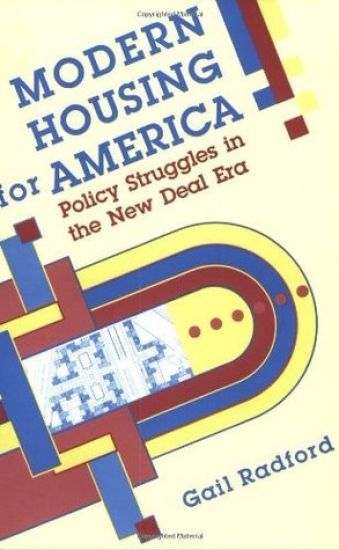
Modern Housing for America

Modern Housing for America

Gail Radford

University of Chicago Press
1997
sidottu
The basic shape of American federal policy in housing as in many other areas, was determined during the New Deal, but not without conflict among movements and intellectuals advocating alternative directions. One of these was "modern housing" - a set of proposals for a radical rethinking of homes and neighbourhoods. Supporters of this approach hoped that a significant proportion of American homes could be provided by a broadly targeted, noncommercial housing sector, supported by the federal government. They urged comprehensively planned neighbourhoods with generous public spaces, a range of public services, and resident participation in design and administration. While modern housing ideas failed to define the long-term thrust of federal policy, they did influence a short-lived programme of the Public Works Administration, seen in the case studies of the Carl Mackley Houses of Philadelphia and Harlem River houses of New York. The author concludes with a chapter on the long-range impact of New Deal policy on American politics and the legacy of the modern housing initiative for contemporary public policy debates.
Modern Housing for America

Modern Housing for America

Gail Radford

University of Chicago Press
1997
nidottu
The basic shape of American federal policy in housing as in many other areas, was determined during the New Deal, but not without conflict among movements and intellectuals advocating alternative directions. One of these was "modern housing" - a set of proposals for a radical rethinking of homes and neighbourhoods. Supporters of this approach hoped that a significant proportion of American homes could be provided by a broadly targeted, noncommercial housing sector, supported by the federal government. They urged comprehensively planned neighbourhoods with generous public spaces, a range of public services, and resident participation in design and administration. While modern housing ideas failed to define the long-term thrust of federal policy, they did influence a short-lived programme of the Public Works Administration, seen in the case studies of the Carl Mackley Houses of Philadelphia and Harlem River houses of New York. The author concludes with a chapter on the long-range impact of New Deal policy on American politics and the legacy of the modern housing initiative for contemporary public policy debates.
Land's End

Land's End

Gail Mazur

University of Chicago Press
2020
sidottu
With her latest poetry collection, Gail Mazur once again shows her mastery of the descriptive-meditative narrative, powerfully evoking the past while writing from the firm ground of the present. In Land's End, we see Mazur writing with the kind of lyric authority, ever-deepening emotional range, and intellectual and social scope that her readers have come to expect in her poetry. Beautifully crafted elegies meet with reflections on her own life, her family, and artists who have come and gone. In the title poem, she leads readers through a garden, where new and old growth twists together in an "almanac of inheritances" that conjures the rich memory of poets who have passed on. In this space of remembrance, Mazur also charges us with the responsibility of nurturing art and artists of the future, especially in the face of the disheartening absurdities of contemporary politics. Contemplating the growth and decay so entwined in life, these poems invite us to consider both inevitable brokenness and necessary hope, writing "My work now: to continue learning to absorb the loss, / and live." Through tidal creeks and the weightless scenes of ukiyo-e woodcuts, in artists' studios and along the frozen Charles River, Mazur connects passionately with the world around her. Carrying with her the undeniable presence of loss and of time past, she engages deeply with the present, her historic memory informing a deep concern for contemporary life. Reading Land's End, we find ourselves with the poet: as if here at land's end, here on the coast, urgent, together we'd have energies to do battle forever. As if we could rescue the guttering world....
Mother Shipton and the Sister Witches

Mother Shipton and the Sister Witches

Gail Roughton; Jude Pittman

BWL Publishing Inc.
2020
nidottu
The Shipton history is complicated. Some families have a guardian angel. The Shiptons have a guardian ancestor who whizzes through the centuries and jumps right in whenever one of her girls is in trouble. All the girls have power and they're watched over by elder sister Lillian, who takes her job as family trouble shooter seriously. There's no shortage of trouble to be sorted out either and even with their own powers each of the girls needs help. First Katherine's oilman fianc disappears in the Gulf of Mexico, and then Irene's world champion saddle bronc rider fianc is sabotaged and in danger of being trampled by a bucking bronco. The spider-web of trouble stretching between these three modern sister witches might be too much for even a time-traveling guardian angel to handle on her own.
Country Justice

Country Justice

Gail Roughton

BWL Publishing Inc.
2023
pokkari
What goes around comes around. That's justice. Especially in small towns where everybody knows how many eggs you ate for breakfast before you've even left the Scales of Justice Caf . Funny thing, though. Usually what everybody thinks they know-they really don't. Take the folks in Turkey Creek. Oh, everybody knows Maggie Kincaid doesn't speak to her father. They think they know why. But they don't. They know Billy Brayton died twenty-five years back. Too bad nobody told him. Because now he's home. And it's time to right some past wrongs. Time for justice. Country Justice.Reviews: "One of the best books I've ever read and I read about 100 or more a year. I loved the characters from the very beginning and was sorry when the story ended. I'm ready for the sequel-hint, hint." Amazon Reader tvlgds"I've never been to Georgia-and that's my loss. But Country Justice took me close. Real close. So come inside and meet some new good friends-and some bad ol' boys. Because there's a gray Mustang doing lickety-split over the hill. Because a dead man's coming home-and Turkey Creek doesn't know what's about to hit it." Author Graeme Smith
The Witch Wars

The Witch Wars

Gail Roughton

BWL Publishing Inc.
2023
pokkari
Ariel Anson thinks she has her life in order. She's young, smart, and beautiful, even she doesn't believe the beautiful part. She's a paralegal with a great career and a fianc who's a CPA. You just can't get any steadier than that. Then she meets private investigator, bounty hunter, process server Chad Garrett. What does War-N-Wit, Inc. stand for anyway? Warlock and Witch? For real? Oh, yes For real. Now every day is full of strange powers, secret societies, clandestine agencies, and out-of-this-world adventure. Her life as she knows it is over