Kirjojen hintavertailu. Mukana 11 342 296 kirjaa ja 12 kauppaa.

Kirjahaku

Etsi kirjoja tekijän nimen, kirjan nimen tai ISBN:n perusteella.

1000 tulosta hakusanalla Geoff Ryan P.M.P.

Introducing Functional Grammar

Introducing Functional Grammar

Geoff Thompson

Routledge
2013
sidottu
Introducing Functional Grammar, third edition, provides a user-friendly overview of the theoretical and practical aspects of the systemic functional grammar (SFG) model.No prior knowledge of formal linguistics is required as the book provides: An opening chapter on the purpose of linguistic analysis, which outlines the differences between the two major approaches to grammar - functional and formal. An overview of the SFG model - what it is and how it works. Advice and practice on identifying elements of language structure such as clauses and clause constituents. Numerous examples of text analysis using the categories introduced, and discussion about what the analysis shows. Exercises to test comprehension, along with answers for guidance.The third edition is updated throughout, and is based closely on the fourth edition of Halliday and Matthiessen's Introduction to Functional Grammar. A glossary of terms, more exercises and an additional chapter are available on the product page at: https://www.routledge.com/9781444152678.Introducing Functional Grammar remains the essential entry guide to Hallidayan functional grammar, for undergraduate and postgraduate students of language and linguistics.
Community Resilience and Environmental Transitions
This book discusses the resilience of communities in both developed and developing world contexts. It investigates the notion of ‘resilience’ and the challenges faced by local communities around the world to deal with disturbances (natural hazards or human-made) that may threaten their long-term survival. Using global examples, specific emphasis is placed on how learning processes, traditions, policies and politics affect the resilience of communities and what constraints and opportunities exist for communities to raise resilience levels.
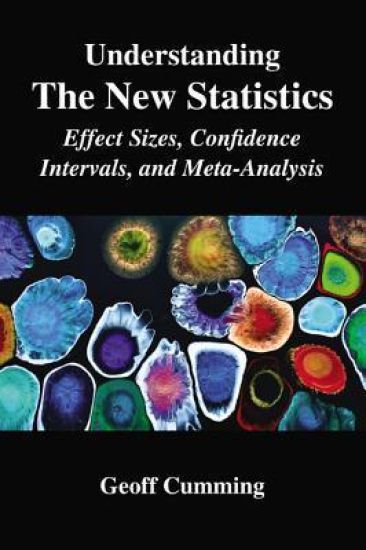
Understanding The New Statistics

Understanding The New Statistics

Geoff Cumming

Routledge
2011
sidottu
This is the first book to introduce the new statistics - effect sizes, confidence intervals, and meta-analysis - in an accessible way. It is chock full of practical examples and tips on how to analyze and report research results using these techniques. The book is invaluable to readers interested in meeting the new APA Publication Manual guidelines by adopting the new statistics - which are more informative than null hypothesis significance testing, and becoming widely used in many disciplines.Accompanying the book is the Exploratory Software for Confidence Intervals (ESCI) package, free software that runs under Excel and is accessible at www.thenewstatistics.com. The book’s exercises use ESCI's simulations, which are highly visual and interactive, to engage users and encourage exploration. Working with the simulations strengthens understanding of key statistical ideas. There are also many examples, and detailed guidance to show readers how to analyze their own data using the new statistics, and practical strategies for interpreting the results. A particular strength of the book is its explanation of meta-analysis, using simple diagrams and examples. Understanding meta-analysis is increasingly important, even at undergraduate levels, because medicine, psychology and many other disciplines now use meta-analysis to assemble the evidence needed for evidence-based practice.The book’s pedagogical program, built on cognitive science principles, reinforces learning: Boxes provide "evidence-based" advice on the most effective statistical techniques. Numerous examples reinforce learning, and show that many disciplines are using the new statistics.Graphs are tied in with ESCI to make important concepts vividly clear and memorable.Opening overviews and end of chapter take-home messages summarize key points.Exercises encourage exploration, deep understanding, and practical applications.This highly accessible book is intended as the core text for any course that emphasizes the new statistics, or as a supplementary text for graduate and/or advanced undergraduate courses in statistics and research methods in departments of psychology, education, human development , nursing, and natural, social, and life sciences. Researchers and practitioners interested in understanding the new statistics, and future published research, will also appreciate this book. A basic familiarity with introductory statistics is assumed.
Understanding The New Statistics

Understanding The New Statistics

Geoff Cumming

Routledge
2011
nidottu
This is the first book to introduce the new statistics - effect sizes, confidence intervals, and meta-analysis - in an accessible way. It is chock full of practical examples and tips on how to analyze and report research results using these techniques. The book is invaluable to readers interested in meeting the new APA Publication Manual guidelines by adopting the new statistics - which are more informative than null hypothesis significance testing, and becoming widely used in many disciplines.Accompanying the book is the Exploratory Software for Confidence Intervals (ESCI) package, free software that runs under Excel and is accessible at www.thenewstatistics.com. The book’s exercises use ESCI's simulations, which are highly visual and interactive, to engage users and encourage exploration. Working with the simulations strengthens understanding of key statistical ideas. There are also many examples, and detailed guidance to show readers how to analyze their own data using the new statistics, and practical strategies for interpreting the results. A particular strength of the book is its explanation of meta-analysis, using simple diagrams and examples. Understanding meta-analysis is increasingly important, even at undergraduate levels, because medicine, psychology and many other disciplines now use meta-analysis to assemble the evidence needed for evidence-based practice.The book’s pedagogical program, built on cognitive science principles, reinforces learning: Boxes provide "evidence-based" advice on the most effective statistical techniques. Numerous examples reinforce learning, and show that many disciplines are using the new statistics.Graphs are tied in with ESCI to make important concepts vividly clear and memorable.Opening overviews and end of chapter take-home messages summarize key points.Exercises encourage exploration, deep understanding, and practical applications.This highly accessible book is intended as the core text for any course that emphasizes the new statistics, or as a supplementary text for graduate and/or advanced undergraduate courses in statistics and research methods in departments of psychology, education, human development , nursing, and natural, social, and life sciences. Researchers and practitioners interested in understanding the new statistics, and future published research, will also appreciate this book. A basic familiarity with introductory statistics is assumed.
Management and Business Skills in the Built Environment

Management and Business Skills in the Built Environment

Geoff Crook; Mike Waterhouse

Spon Press
1995
nidottu
The third book in this series is written by a team of interdisciplinary teachers and professionals, led by Mike Waterhouse and Geoff Crook, is aimed at students and professionals in the built environment who wish to develop their management and business skills. In a rapidly changing world where techniques and custom and practice can date soon after discovery, where organisations are constantly changing shape and style to cope with rapid technological, economic, political and social change, there is a need for managers and built environment professionals who know how to learn, who are self-aware enough to know when they don't know, and who have the confidence and personal substance to be able to initiate the required learning activites when necessary.
Building Energy Management Systems

Building Energy Management Systems

Geoff Levermore

Spon Press
2000
nidottu
Energy management systems are used to monitor building temperature inside and outside buildings and control the boilers and coolers. Energy efficiency is a major cost issue for commerce and industry and of growing importance on university syllabuses. Fully revised and updated, this text considers new developments in the control of low energy and HVAC systems and contains two new chapters. Written for practising engineers (essential for control engineers) and energy managers in addition to being essential reading for under/postgraduate courses in building services and environmental engineering.
Building Energy Management Systems

Building Energy Management Systems

Geoff Levermore

Spon Press
2000
sidottu
Energy management systems are used to monitor building temperature inside and outside buildings and control the boilers and coolers. Energy efficiency is a major cost issue for commerce and industry and of growing importance on university syllabuses. Fully revised and updated, this text considers new developments in the control of low energy and HVAC systems and contains two new chapters. Written for practising engineers (essential for control engineers) and energy managers in addition to being essential reading for under/postgraduate courses in building services and environmental engineering.
Heinemann Advanced History: China, 1900-76

Heinemann Advanced History: China, 1900-76

Geoff Stewart

pearson education limited
2006
nidottu
Heinemann Advanced History titles focus on periods of great change in countries that are once again taking centre stage in world politics. Affordable and authoritative, Heinemann Advanced History features practice questions as well as advice on planning essays and interpreting tough exam questions. Written by highly respected and experienced teachers and examiners they provide tailored support for students making the jump from GCSE to A-Level.
Who Was Stan Lee?

Who Was Stan Lee?

Geoff Edgers

Grosset and Dunlap
2014
pokkari
Stanley Lieber was just seventeen when he got his first job at Timely Comics in 1939. Since then, the man now known as Stan Lee has launched a comic book empire, made Marvel Comics a household name, and created iconic superheroes such as Iron Man, Spider-Man, and the Fantastic Four. Stan Lee is still dreaming up caped crusaders and masked vigilantes in his nineties.
Logos and No Gos

Logos and No Gos

Geoff Steward

John Wiley Sons Inc
2006
sidottu
"Logos and No Gos ought to be mandatory reference material for all managers of branded products and services. It is a concise, easy read, jammed with crucial information on how to survive and thrive in the I.P. Jungle. It shows how to add brand value and how to guard that value with your life. When Kangol moved out of manufacturing and distribution into brand licensing it took us a while to realise that brand value lies as much in the quality and protection of the I.P. portfolio as it does in the image and trading performance. With Logos and No Gos on your desk there can be no excuse for sloppy I.P. management." —David M. Heys, C.E.O., Kangol Holdings Ltd "Geoff Steward is a highly experienced practitioner in the field of Intellectual Property and Trade Marks in particular. Logos and No Gos embodies his wide experience and is a very readable guide to what is otherwise a tortuous and, often, near impenetrable legal mine-field for the unwary brand owner and brand developer. Anyone thinking of launching any form of new business or product should read Geoff's book from cover to cover. Thus forewarned they should be able to avoid the worst pitfalls and, more importantly, be in a position to develop a valuable business asset." —Mark Platts-Mills QC, Barrister practicing in trade marks at 8 New Square, Lincoln's Inn Intellectual property is one of the most valuable assets of all brand owners, and separates them from their competition in local, national and global markets. Damage to brands can have a deadly impact on a company's bottom line. Despite this, few brand owners really understand how to identify, get maximum value from and properly protect their IP rights. Covering all aspects of rights protection in business—including copyright, designs trade marks, database right and domain names—Logos and No Gos is your complete guide for negotiating the minefield of IP in business. With the help of expert Geoff Steward, you will learn how to design and implement a strategy to fully protect your brand rights—and avoid inadvertently infringing those of others. Logos and No Gos is a plain English guide to identifying and managing the IP in brands. It's all you need to understand and make the most of: Trade marksCopyrightDatabase rightsDesignsDomain namesEmployment contractsContractorsLicensingAssignmentsFranchising
Essential Microbiology for Pharmacy and Pharmaceutical Science

Essential Microbiology for Pharmacy and Pharmaceutical Science

Geoff Hanlon; Norman A. Hodges

John Wiley Sons Inc
2013
nidottu
This text is an essential study guide for undergraduates studying microbiology modules on degree courses in pharmacy and the pharmaceutical sciences. Written by two pharmacists each with over 30 years experience of teaching, research and publishing in pharmaceutical microbiology, it distills the subject down into the essential elements that pharmacists and pharmaceutical scientists need to know in order to practice their profession, and it covers all the microbiology components of the Royal Pharmaceutical Society's indicative syllabus that is at the heart of every UK pharmacy degree. Much of the applied microbiology that a pharmacist or pharmaceutical scientist needs to know is unique: topics like the manufacture of microbiologically sterile medicines and their subsequent protection against microbial contamination and spoilage, the detection of hazardous microorganisms in medicines and antibiotics' manufacture and assay are all covered here. Essential Microbiology for Pharmacy and Pharmaceutical Science Students displays material in an easy to-digest format and concepts are explained using diagrams, tables and pictures wherever possible. The book contains an extensive self-assessment section that includes typical multiple choice, short answer and essay-style examination questions, and a companion website to further test your knowledge from a selection of questions along with further links to relevant sites.
Credit Derivatives

Credit Derivatives

Geoff Chaplin

John Wiley Sons Inc
2010
sidottu
The credit derivatives industry has come under close scrutiny over the past few years, with the recent financial crisis highlighting the instability of a number of credit structures and throwing the industry into turmoil. What has been made clear by recent events is the necessity for a thorough understanding of credit derivatives by all parties involved in a transaction, especially traders, structurers, quants and investors. Fully revised and updated to take in to account the new products, markets and risk requirements post financial crisis, Credit Derivatives: Trading, Investing and Risk Management, Second Edition, covers the subject from a real world perspective, tackling issues such as liquidity, poor data, and credit spreads, to the latest innovations in portfolio products, hedging and risk management techniques. The book concentrates on practical issues and develops an understanding of the products through applications and detailed analysis of the risks and alternative means of trading. It provides: a description of the key products, applications, and an analysis of typical trades including basis trading, hedging, and credit structuring;analysis of the industry standard 'default and recovery' and Copula models including many examples, and a description of the models' shortcomings;tools and techniques for the management of a portfolio or book of credit risks including appropriate and inappropriate methods of correlation risk management;a thorough analysis of counterparty risk;an intuitive understanding of credit correlation in reality and in the Copula model. The book is thoroughly updated to reflect the changes the industry has seen over the past 5 years, notably with an analysis of the lead up and causes of the credit crisis. It contains 50% new material, which includes copula valuation and hedging, portfolio optimisation, portfolio products and correlation risk management, pricing in illiquid environments, chapters on the evolution of credit management systems, the credit meltdown and new chapters on the implementation and testing of credit derivative models and systems. The book is accompanied by a website which contains tools for credit derivatives valuation and risk management, illustrating the models used in the book and also providing a valuation toolkit.
Growing Your Own Fruit and Veg For Dummies

Growing Your Own Fruit and Veg For Dummies

Geoff Stebbings

JOHN WILEY SONS INC
2009
nidottu
Save money and eat fresh with this hands-on guide to home-growing Growing you own produce is the only way to enjoy delicious, garden-fresh fruit and veg all year round. This practical manual gives you the lowdown on everything from finding the right tools and choosing which plants to grow, to nurturing your crops and bringing in your first harvest. The easy-to-follow advice will help you get started straight away and become a confident and successful kitchen gardener. • Get going with growing – discover which plants are best for you and how to make the most of your outdoor space • Prepare your plot – learn how to set up and maintain healthy beds for your fruit and vegetables • Grow tasty veg – choose your favourite veggies from asparagus and broccoli to courgettes, sweet corn and many more • Grow your own fruit salad – get quick results from fast-growing berries and learn to nurture slow-growing tree fruit and exotic greenhouse produce
Life Settlements and Longevity Structures

Life Settlements and Longevity Structures

Geoff Chaplin; Jim Aspinwall; Mark Venn

John Wiley Sons Inc
2009
sidottu
Recent turbulence in the financial markets has highlighted the need for diversified portfolios with lower correlations between the different investments. Life settlements meet this need, offering investors the prospect of high, stable returns, uncorrelated with the broader financial markets. This book provides readers of all levels of experience with essential information on the process surrounding the acquisition and management of a portfolio of life settlements; the assessment, modelling and mitigation of the associated longevity, interest rate and credit risks; and practical approaches to financing and risk management structures. It begins with the history of life insurance and looks at how the need for new financing sources has led to the growth of the life settlements market in the United States. The authors provide a detailed exploration of the mathematical formulae surrounding the generation of mortality curves, drawing a parallel between the tools deployed in the credit derivatives market and those available to model longevity risk. Structured products and securitisation techniques are introduced and explained, starting with simple vanilla products and models before illustrating some of the investment structures associated with life settlements. Capital market mechanisms available to assist the investor in limiting the risks associated with life settlement portfolios are outlined, as are opportunities to use life settlement portfolios to mitigate the risks of traditional capital markets. The last section of the book covers derivative products, either available now or under consideration, that will reduce or potentially eliminate longevity risks within life settlement portfolios. It then reviews hedging and risk management strategies and considers how to measure the effectiveness of risk mitigation.
New Market Mavericks

New Market Mavericks

Geoff Cutmore

John Wiley Sons Inc
2004
sidottu
This is a fresh approach to the investment industry, demonstrating how to make money by analysing methods and practices used by those surviving the bear market. Geoff Cutmore of CNBC's award winning Squawkbox programme provides in-depth insight into the practices and methods of successful individuals in four major areas of investment - technical analysis, historical analysis, hedge funds and fund of funds management. Cutmore's experience in the financial industry has demonstrated that in most instances, success in trading is about more than just technique; it is also useful to explore something of the individual's background and motivation. Through case studies and analysis, this book shows just technique to succeed in today's bear market. * Demonstrates ways of making money while other investors are not * Provides more in-depth insight into the practices and methods of individuals who are in some cases just starting to generate interest from the industry and are winning business mandates * Author is a well established financial reporter at CNBC
Making a World of Difference

Making a World of Difference

Geoff Walsham

John Wiley Sons Inc
2001
sidottu
Information Technology has become an essential component of contemporary society, allowing much faster and more widespread communication, not least through the growth of the Internet. However, many issues concerned with the human aspects of the use of IT remain problematic despite technological advances. An enhanced ability to collect and process data, or to communicate electronically across time and space, does not necessarily lead to improved human communication and action. This book explores the social aspects of computerisation, using a wide range of detailed case studies, analysed from a variety of conceptual viewpoints. A further distinctive feature of the book is that it draws on empirical material from across the world as a whole, including non-Western countries. It is argued that we should be using IT to support a world in which diversity and difference are respected. Synopsis Making a World of Difference provides a context for the whole debate about the relationship of people and computers. It looks at the role of IS/IT in a modern society and the way it impacts on people, companies, economics etc. Prof. Walsham readily acknowledges that this environment is rapidly changing and that it is therefore important not to focus too closely on current technologies or one particular system of thought, but consider them as one of many other alternatives. It is structured to be of use for academics and business audience - Part 1 is holistic and reflexive, while Parts 2 and 3 are written for the busy manager who can consider the key issues independently.
A Crooked Line

A Crooked Line

Geoff Eley

The University of Michigan Press
2005
nidottu
"Eley brilliantly probes transformations in the historians' craft over the past four decades. I found A Crooked Line engrossing, insightful, and inspiring."--Lizabeth Cohen, author of A Consumers' Republic"A Crooked Line brilliantly captures the most significant shifts in the landscape of historical scholarship that have occurred in the last four decades. Part personal history, part insightful analysis of key methodological and theoretical historiographical tendencies since the late 1960s, always thoughtful and provocative, Eley's book shows us why history matters to him and why it should also matter to us."--Robert Moeller, University of California, Irvine"Part genealogy, part diagnosis, part memoir, Eley's account of the histories of social and cultural history is a tour de force."--Antoinette Burton, Professor of History and Catherine C. and Bruce A. Bastian Professor of Global and Transnational Studies, University of Illinois"Eley's reflections on the changing landscape of academic history in the last forty years will interest and benefit all students of the discipline. Both a native informant and an analyst in this account, Eley combines the two roles superbly to produce one of most engaging and compelling narratives of the recent history of History."--Dipesh Chakrabarty, author of Provincializing EuropeUsing his own intellectual biography as a narrative device, Geoff Eley tracks the evolution of historical understanding in our time from social history through the so-called "cultural turn," and back again to a broad history of society.A gifted writer, Eley carefully winnows unique experiences from the universal, and uses the interplay of the two to draw the reader toward an organic understanding of how historical thinking (particularly the work of European historians) has evolved under the influence of new ideas. His work situates history within History, and offers students, scholars, and general readers alike a richly detailed, readable guide to the enduring value of historical ideas.Geoff Eley is Professor of History at the University of Michigan.
The Future of Class in History

The Future of Class in History

Geoff Eley; Keith Nield

The University of Michigan Press
2007
nidottu
Unifying concepts are essential when studying history. They provide students and scholars with ways to organize their thoughts, research, and writings. However, these concepts are also the focus of myriad conflicts within the field. Social history has experienced more than its share of such conflicts since its inception some forty years ago. In recent times the fields of “the social” and of “culture” have sometimes been presented as mutually exclusive and even hostile. Once again, conceptual innovation in history has been cast as a closure by which the new drives out the old: in this case, cultural history radically displacing social history. The Future of Class in History analyzes the effect of the conflict that followed the “turn to culture” in historical work by examining the use of class and demonstrates how practitioners in multiple fields can collaborate to produce the highest quality scholarship. “Offers new ways of thinking about ‘class’ and ‘society’ in a world in which such categories have been radically called into question.”—Sherry Ortner, University of California, Los Angeles“Brilliantly charts social history’s past achievement, present dilemma, and future promise in a work distinguished by intellectual openness and generosity.”—James A. Epstein, Vanderbilt University“Eley and Nield seek to rescue the deluded follower of social history from the enormous condescension of the cultural turn. They succeed admirably, making the case for a new hybrid socio-cultural history.”—Donald Reid, University of North Carolina at Chapel Hill“This terrific double act has once again produced a text that demands to be read by all those tired of the juxtaposition of social and cultural histories and still interested in the problematic of class and the politics of its past and present.”—James Vernon, University of California, Berkeley“Eley and Nield tackle a contentious debate with a gracious plea for collaboration. Their strong desire to get past the ‘culture wars’ and to engage social and cultural historians in fruitful dialogue is a welcome move, stylishly executed.”—Philippa Levine, University of Southern CaliforniaGeoff Eley is Professor of History at the University of Michigan.Keith Nield is Professor Emeritus of History at the University of Hull.