Kirjojen hintavertailu. Mukana 11 342 296 kirjaa ja 12 kauppaa.

Kirjahaku

Etsi kirjoja tekijän nimen, kirjan nimen tai ISBN:n perusteella.

1000 tulosta hakusanalla George Malcolm Stratton

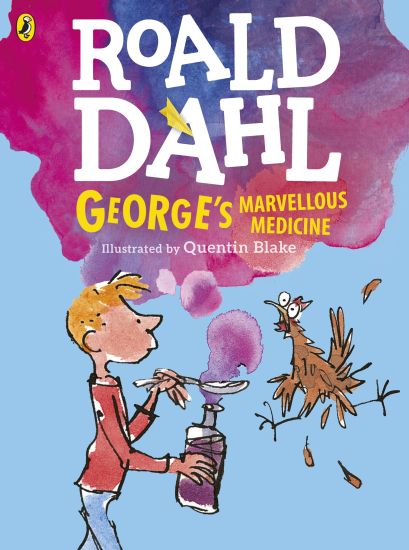
George's Marvellous Medicine (Colour Edn)
Phizzwhizzing new cover look and branding for the World's NUMBER ONE Storyteller!George Kranky's Grandma is a miserable grouch. George really hates that horrid old witchy woman.One Saturday morning, George is in charge of giving Grandma her medicine.So-ho! Ah-ha! Ho-hum! George knows exactly what to do.A magic medicine* it will be. One that will either cure her completely . . . or blow off the top of her head.*WARNING: Do not try to make George's Marvellous Medicine yourselves at home. It could be dangerous.Listen to GEORGE'S MARVELLOUS MEDICINE and other Roald Dahl audiobooks read by some very famous voices, including Kate Winslet, David Walliams and Steven Fry - plus there are added squelchy soundeffects from Pinewood Studios! Look out for new Roald Dahl apps in the App store and Google Play- including the disgusting TWIT OR MISS! and HOUSE OF TWITS inspired by the revolting Twits."A true genius . . . Roald Dahl is my hero" David Walliams
George's Marvellous Medicine
Puffin Audiobooks present a phizz-whizzing reading of Roald Dahl's George's Marvellous Medicine, read by Derek Jacobi. The audiobook features original music and 3D sound design by Pinewood film studios.George Kranky is eight-years-old and wondering what sort of mischief he might get into. George's Grandma is a grizzly old grouch and George wants to teach her a lesson . . .And when Grandma's finished drinking George's marvellous medicine, she'll really have something to grumble about.Listen to GEORGE'S MARVELLOUS MEDICINE and other Roald Dahl audiobooks read by some very famous voices, including Kate Winslet, David Walliams and Steven Fry - plus there are added squelchy soundeffects from Pinewood Studios! Look out for new Roald Dahl apps in the App store and Google Play- including the disgusting TWIT OR MISS! inspired by the revolting Twits.
George IV (Penguin Monarchs)

George IV (Penguin Monarchs)

Stella Tillyard

Allen Lane
2019
sidottu
George IV spent most of his life waiting to become king: as a pleasure-loving and rebellious Prince of Wales during the sixty-year reign of his father, George III, and for ten years as Prince Regent, when his father went mad. 'The days are very long when you have nothing to do' he once wrote plaintively, but he did his best to fill them with pleasure - women, art, food, wine, fashion, architecture. He presided over the creation of the Regency style, which came to epitomise the era, and he was, with Charles I, the most artistically literate of all our kings. Yet despite his life of luxury and indulgence, George died alone and unmourned. Stella Tillyard has not written a judgemental book, but a very human and enjoyable one, about this most colourful of all British kings.
George VI (Penguin Monarchs)

George VI (Penguin Monarchs)

Philip Ziegler

Penguin Books Ltd
2018
nidottu
The acclaimed Penguin Monarchs series: short, fresh, expert accounts of England's rulers - now in paperbackIf Ethelred was notoriously 'Unready' and Alfred 'Great', King George VI should bear the designation of 'George the Dutiful'. Throughout his life he dedicated himself to the pursuit of what he thought he ought to be doing rather than what he wanted to do. Inarticulate and loathing any sort of public appearances, he accepted that it was his destiny to figure regularly and conspicuously in the public eye, gritted his teeth, largely conquered his crippling stammer and got on with it. He was not born to be king, but he made an admirable one, and was the figurehead of the nation at the time of its greatest trial, during the Second World War. This is a sparklingly brilliant and enjoyable book about him.
George V (Penguin Monarchs)

George V (Penguin Monarchs)

David Cannadine

Penguin Books Ltd
2018
nidottu
The acclaimed Penguin Monarchs series: short, fresh, expert accounts of England's rulers - now in paperbackFor a man with such conventional tastes and views, George V had a revolutionary impact. Almost despite himself he marked a decisive break with his flamboyant predecessor Edward VII, inventing the modern monarchy, with its emphasis on frequent public appearances, family values and duty. George V was an effective war-leader and inventor of 'the House of Windsor'. In an era of ever greater media coverage - frequently filmed and initiating the British Empire Christmas broadcast - George became for 25 years a universally recognised figure. He was also the only British monarch to take his role as Emperor of India seriously. While his great rivals (Tsar Nicolas and Kaiser Wilhelm) ended their reigns in catastrophe, he plodded on.David Cannadine's sparkling account of his reign could not be more enjoyable, a masterclass in how to write about Monarchy, that central - if peculiar - pillar of British life.
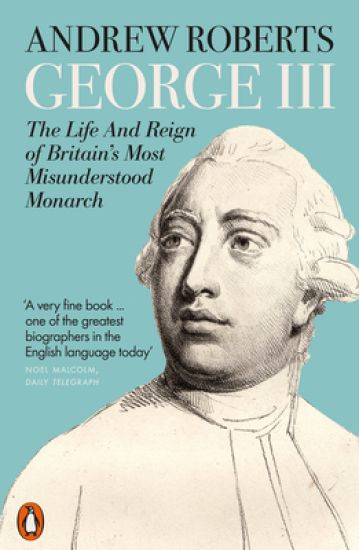
George III

George III

Andrew Roberts

PENGUIN BOOKS LTD
2023
pokkari
The Times Book of the Year*Winner of the Elizabeth Longford Prize for Historical Biography, 2022**Winner of the General Society of Colonial Wars' Distinguished Book Award, 2021**Winner of the History Reclaimed Book of the Year, 2022**Shortlisted for the Duff Cooper Prize, 2021*Andrew Roberts, one of Britain's premier historians, overturns the received wisdom on George IIIGeorge III, Britain's longest-reigning king, has gone down in history as 'the cruellest tyrant of this age' (Thomas Paine, eighteenth century), 'a sovereign who inflicted more profound and enduring injuries upon this country than any other modern English king' (W.E.H. Lecky, nineteenth century), 'one of England's most disastrous kings' (J.H. Plumb, twentieth century) and as the pompous monarch of the musical Hamilton (twenty-first century).Andrew Roberts's magnificent new biography takes entirely the opposite view. It portrays George as intelligent, benevolent, scrupulously devoted to the constitution of his country and (as head of government as well as head of state) navigating the turbulence of eighteenth-century politics with a strong sense of honour and duty. He was a devoted husband and family man, a great patron of the arts and sciences, keen to advance Britain's agricultural capacity ('Farmer George') and determined that her horizons should be global. He could be stubborn and self-righteous, but he was also brave, brushing aside numerous assassination attempts, galvanising his ministers and generals at moments of crisis and stoical in the face of his descent - five times during his life - into a horrifying loss of mind.The book gives a detailed, revisionist account of the American Revolutionary War, persuasively taking apart a significant proportion of the Declaration of Independence, which Roberts shows to be largely Jeffersonian propaganda. In a later war, he describes how George's support for William Pitt was crucial in the battle against Napoleon. And he makes a convincing, modern diagnosis of George's terrible malady, very different to the widely accepted medical view and to popular portrayals.Roberts writes, 'the people who knew George III best loved him the most', and that far from being a tyrant or incompetent, George III was one of our most admirable monarchs. The diarist Fanny Burney, who spent four years at his court and saw him often, wrote 'A noble sovereign this is, and when justice is done to him, he will be as such acknowledged'. In presenting this fresh view of Britain's most misunderstood monarch, George III shows one of Britain's premier historians at his sparkling best.
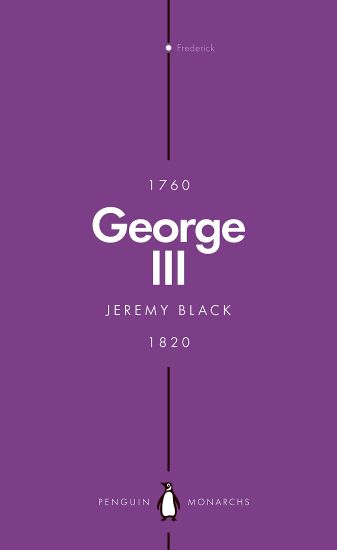
George III (Penguin Monarchs)

George III (Penguin Monarchs)

Jeremy Black

Penguin Books Ltd
2023
nidottu
King of Britain for sixty years and the last king of what would become the United States, George III inspired both hatred and loyalty and is now best known for two reasons: as a villainous tyrant for America's Founding Fathers, and for his madness, both of which have been portrayed on stage and screen.In this concise and penetrating biography, Jeremy Black turns away from the image-making and back to the archives, and instead locates George's life within his age: as a king who faced the loss of key colonies, rebellion in Ireland, insurrection in London, constitutional crisis in Britain and an existential threat from Revolutionary France as part of modern Britain's longest period of war.Black shows how George III rose to these challenges with fortitude and helped settle parliamentary monarchy as an effective governmental system, eventually becoming the most popular monarch for well over a century. He also shows us a talented and curious individual, committed to music, art, architecture and science, who took the duties of monarchy seriously, from reviewing death penalties to trying to control his often wayward children even as his own mental health failed, and became Britain's longest reigning king.
George's Marvelous Medicine

George's Marvelous Medicine

Roald Dahl

Viking Books for Young Readers
2007
nidottu
From the bestselling author of Charlie and the Chocolate Factory and Matilda George's grandma is a grouch She's always mean to George (and not much nicer to his parents, either). One day, when George is put in charge of giving Grandma her medicine, he wonders if he can come up with his own remedy to try and help Grandma become less of a grump. Using some rather unusual ingredients, George creates a magic medicine, a remedy for everything. But will it stop his grandma from being so horrible . . . or will it shoot sparks out of the top of her head?
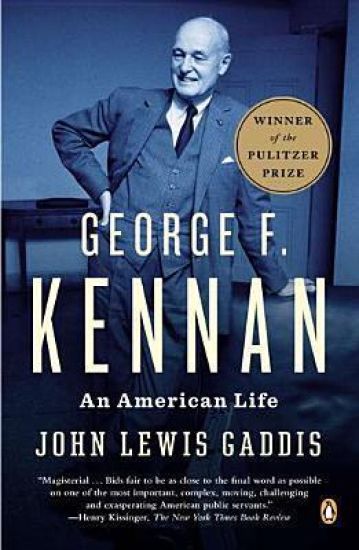
George F. Kennan

George F. Kennan

Gaddis John Lewis

Penguin USA
2012
pokkari
Winner of the 2012 Pulitzer Prize in Biography Widely and enthusiastically acclaimed, this is the authorized, definitive biography of one of the most fascinating but troubled figures of the twentieth century by the nation's leading Cold War historian. In the late 1940s, George F. Kennan--then a bright but, relatively obscure American diplomat--wrote the "long telegram" and the "X" article. These two documents laid out United States' strategy for "containing" the Soviet Union--a strategy which Kennan himself questioned in later years. Based on exclusive access to Kennan and his archives, this landmark history illuminates a life that both mirrored and shaped the century it spanned.
Collected Essays, Journalism and Letters of George Orwell, Vol. 4, 1945-1950
A record of a great writer's nonfiction work and an evolving picture of the last years of his life, during the time when he published Animal Farm and 1984. "A magnificent tribute to the probity, consistency and insight of Orwell's topical writings....A remarkable self-portrait" (Alfred Kazin, Book World). Edited by Sonia Orwell and Ian Angus; Index.
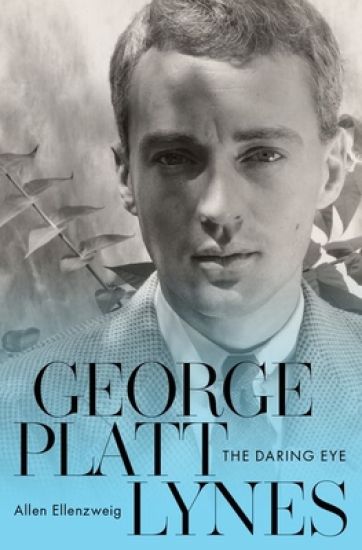
George Platt Lynes

George Platt Lynes

Allen Ellenzweig

Oxford University Press Inc
2022
sidottu
George Platt Lynes: The Daring Eye is a life of the gregarious American portrait, dance, fashion, and male nude photographer whose career spanned the late 1920s to 1955. From age 18, Lynes entered the cosmopolitan world of the American expatriate community in Paris when he became acquainted with the salon of Gertrude Stein and Alice B. Toklas. Intending to pursue a literary and small press publishing career, Lynes also began photographing authors like Stein, Jean Cocteau, André Gide, and Colette. Soon, he turned exclusively to photography, establishing himself as one of the premier fashion photographers in the Condé Nast stable, documenting the early ballets of George Balanchine, and pursuing his private obsession with seductive images of young male nudes almost never published in his time. Lynes's private life was as glamorous and theatrical as his images with their brilliant studio lighting and dramatic Surrealist set-ups. Barely out his teens, he met the publisher Monroe Wheeler who was already in a relationship with the emerging expatriate novelist Glenway Wescott. The peripatetic threesome maintained a polyamorous connection that lasted some 15 years. Their New York apartment became a mecca for elegant cocktail and name-dropping dinner parties. Their ménage-à-trois complicates our understanding of the pre-Stonewall gay "closet." This biography, drawing upon intimate letters and an unpublished memoir of Lynes's life by his brother, writer and editor Russell Lynes, paints a portrait of the emerging influence of gays and lesbians in the visual, literary, and performing arts that defined transatlantic cosmopolitan culture and presaged later gay political activism.
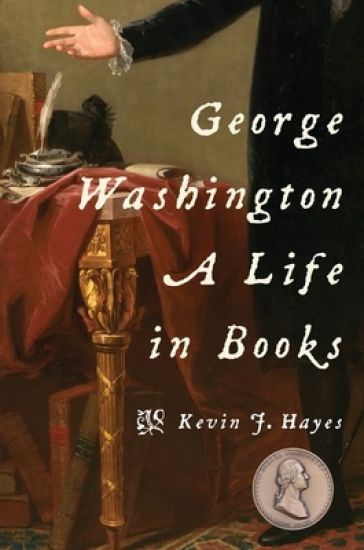
George Washington: A Life in Books

George Washington: A Life in Books

Kevin J. Hayes

Oxford University Press Inc
2017
sidottu
When it comes to the Founding Fathers, Thomas Jefferson, Ben Franklin, and Alexander Hamilton are generally singled out as the great minds of early America. Up until the present day, George Washington has never been taken seriously as an intellectual. Indeed, John Adams once snobbishly dismissed him as "too illiterate, unlearned, unread for his station and reputation." Yet Adams and most of the men who knew Washington were unaware of his regular devotion to reading as a program of self-improvement. Based on an exhaustive amount of research at the Library of Congress, the collections at Mount Vernon, and rare book archives scattered across the country, Kevin J. Hayes draws on juvenilia, letters, diaries, pamphlets, and the close to 1,000 books owned by Washington to reconstruct the active intellectual life that has gone largely unnoticed in conventional narratives of the first US president. Despite being a lifelong reader, Washington felt a sense of acute embarrassment about his relative lack of formal education and cultural sophistication, and in this lively literary biography, Hayes reconstructs how Washington worked tirelessly to improve his mind. Beginning with the primers, forgotten periodicals, conduct books, and classic eighteenth-century novels such as Tom Jones that shaped Washington's early life, Hayes engages with Washington's letters and journals, charting the many ways the books of his upbringing affected decisions before and during the Revolutionary War. The final section of the book covers the voluminous reading that occurred during Washington's presidency and his retirement at Mount Vernon. Throughout, Hayes also engages with Washington's writings as well as his readings, starting with The Journal of Major George Washington and going through his Farewell Address. The sheer breadth of titles under review here allow readers to glimpse Washington's views on foreign policy, economics, the law, art, slavery, marriage, and religion. Ultimately, The Books of George Washington's Life offers a startling new perspective on the mind of America's Father, uncovering the ideas that shaped his intellectual journey and, subsequently, the development of young America.
George Washington

George Washington

Kevin J. Hayes

Oxford University Press Inc
2020
nidottu
When it comes to the Founding Fathers, Thomas Jefferson, Benjamin Franklin, and Alexander Hamilton are generally considered the great minds of early America. George Washington, instead, is toasted with accolades regarding his solid common sense and strength in battle. Indeed, John Adams once snobbishly dismissed him as "too illiterate, unlearned, unread for his station and reputation." Yet Adams, as well as the majority of the men who knew Washington in his life, were unaware of his singular devotion to self-improvement. Based on a comprehensive amount of research at the Library of Congress, the collections at Mount Vernon, and rare book archives scattered across the country, Kevin J. Hayes corrects this misconception and reconstructs in vivid detail the active intellectual life that has gone largely unnoticed in conventional narratives of Washington. Despite being a lifelong reader, Washington felt an acute sense of embarrassment about his relative lack of formal education and cultural sophistication, and in this sparkling literary biography, Hayes illustrates just how tirelessly Washington worked to improve. Beginning with the primers, forgotten periodicals, conduct books, and classic eighteenth-century novels such as Tom Jones that shaped Washington's early life, Hayes studies Washington's letters and journals, charting the many ways the books of his upbringing affected decisions before and during the Revolutionary War. The final section of the book covers the voluminous reading that occurred during Washington's presidency and his retirement at Mount Vernon. Throughout, Hayes examines Washington's writing as well as his reading, from The Journal of Major George Washington through his Farewell Address. The sheer breadth of titles under review here allow readers to glimpse Washington's views on foreign policy, economics, the law, art, slavery, marriage, and religion-and how those views shaped the young nation.. Ultimately, this sharply written biography offers a fresh perspective on America's Father, uncovering the ideas that shaped his intellectual journey and, subsequently, the development of America.
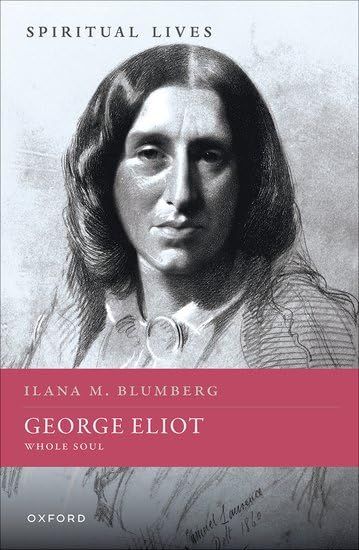
George Eliot

George Eliot

Ilana M. Blumberg

Oxford University Press
2024
sidottu
The girl who would become George Eliot began her professional writing life with a poem bidding farewell to all books but the Bible. How did a young Christian poet become the great realist novelist whose commitment to religious freethinking made her so iconoclastic that she could not be buried in in Westminster Abbey? Memorialized there today by a stone lain in the Poets' Corner in 1980, George Eliot wrote herself and her fellow Victorians through turbulent decades of moral and historical doubt in religious orthodoxy, alongside the unrelenting need to articulate a compelling modern faith in its place. Unafraid to confront the most difficult existential questions of her time, George Eliot wrote immensely popular novels that wrestled with problems whose hold has barely lessened in the last 150 years: the pervasiveness of human suffering and the injustice of its measures; the tension between fulfilling our ethical obligations to others and pursuing our own well-being; the impetus to act virtuously in this world without any guarantee of reward, and the need to make some "religion" in life, something beyond our own immediate, fluctuating desires. In this new account of George Eliot's spiritual life, George Eliot: Whole Soul, Ilana Blumberg reveals to us a writer who did not simply lose her faith once and for all on her way to becoming an adult, but devoted the full span of her career to imagining a wide religious sensibility that could inform personal and social life. As we range among Eliot's letters, essays, translations, poetry, and novels, we encounter here a writer whose extraordinary art and intellect offer us company, still today, in the search for modern meaning.
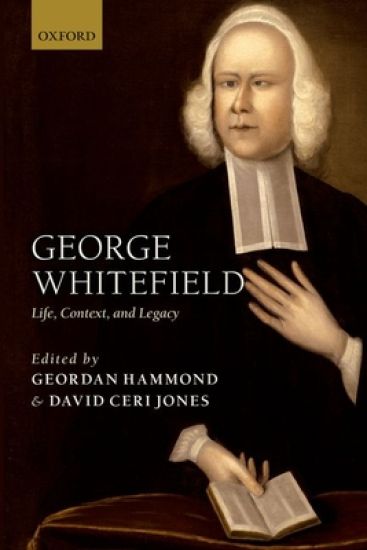
George Whitefield

George Whitefield

Oxford University Press
2021
nidottu
George Whitefield (1714-70) was one of the best known and most widely travelled evangelical revivalist in the eighteenth century. For a time in the middle decades of the eighteenth century, Whitefield was the most famous person on both sides of the Atlantic. An Anglican clergyman, Whitefield soon transcended his denominational context as his itinerant ministry fuelled a Protestant renewal movement in Britain and the American colonies. He was one of the founders of Methodism, establishing a distinct brand of the movement with a Calvinist orientation, but also the leading itinerant and international preacher of the evangelical movement in its early phase. Called the 'Apostle of the English empire', he preached throughout the whole of the British Isles and criss-crossed the Atlantic seven times, preaching in nearly every town along the eastern seaboard of America. His own fame and popularity were such that he has been dubbed 'Anglo-America's first religious celebrity', and even one of the 'Founding Fathers of the American Revolution'. This collection offers a major reassessment of Whitefield's life, context, and legacy, bringing together a distinguished interdisciplinary team of scholars from both sides of the Atlantic. In chapters that cover historical, theological, and literary themes, many addressed for the first time, the volume suggests that Whitefield was a highly complex figure who has been much misunderstood. Highly malleable, Whitefield's persona was shaped by many audiences during his lifetime and continues to be highly contested.
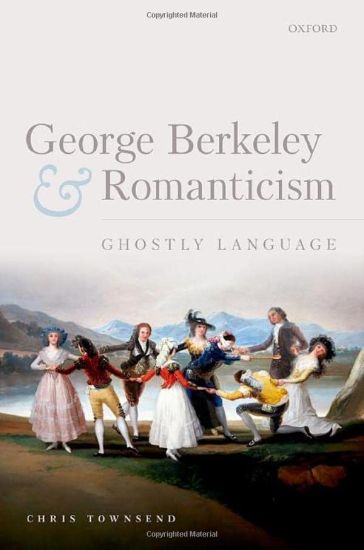
George Berkeley and Romanticism

George Berkeley and Romanticism

Chris Townsend

Oxford University Press
2022
sidottu
George Berkeley's mainstream legacy amongst critics and philosophers, from Samuel Johnson to Bertrand Russell, has tended to concern his claim that the objects of perception are in fact nothing more than our ideas. Yet there's more to Berkeley than idealism alone, and the poets now grouped under the label 'Romanticism' took up Berkeley's ideas in especially strange and surprising ways. As this book shows, the poets Blake, Wordsworth, Coleridge, and Shelley focused less on Berkeley's arguments for idealism than they did on his larger, empirically-derived claim that nature constitutes a kind of linguistic system. It is through that 'ghostly language' that we might come to know ourselves, each other, and even God. This book is a reappraisal of the role that Berkeley's ideas played in Romanticism, and it pursues his spiritualized philosophy across a range of key Romantic-period poems. But it is also a re-reading of Berkeley himself, as a thinker who was deeply concerned with language and with written--even literary--style. In that sense, it offers an incisive case study into the reception of philosophical ideas into the workings of poetry, and of the role of poetics within the history of ideas more broadly.
George Herbert: Complete Works

George Herbert: Complete Works

Oxford University Press
2025
sidottu
Famed for his heart-searching devotional lyric poetry, George Herbert (1593-1633) also authored some of the finest and most influential English prose of his era: The Countrey Parson, his oft-cited pastoral manual, still valued for its spiritual insight, shrewd advice, and a style at once lively and refined, engaging and serious; A Treatise of Temperance and Sobrietie, his translation of Luigi Cornaro's jovial Italian tract on dietary health; Notes on Valdesso, his judicious and appreciative commentary (and sole theological work) on the Considerations of controversial Spanish humanist Juan de Valdés; his collections of Outlandish Proverbs and Jacula Prudentum, pervasively popular for centuries and shot through with familiar wisdom and wit; his Letters, providing the most intimate records of and reflections on his brief life; and his Will, dictated and witnessed as he lay dying of tuberculosis in his Bemerton rectory at the age of 39. Each of these works, frequently cited as contexts for his renowned English poetry, appears here for close study in its own right. Volume I: English Prose offers textual and critical introductions and annotations, a concise title essay and overview of prominent criticism for each chapter or section in subdivided works, and, above all, rigorous scholarly texts based on the earliest and best manuscript and print sources--some newly discovered or confirmed. Serious literary art by any measure, Herbert's English prose has emerged in recent years from the shadow of his rightly famous poetry. Such attention stands here fully justified: an edition whose accessible texts, combined with extensive and meticulous critical apparatus, will equip scholars for new discoveries and accelerate the already global interest in Herbert's work.
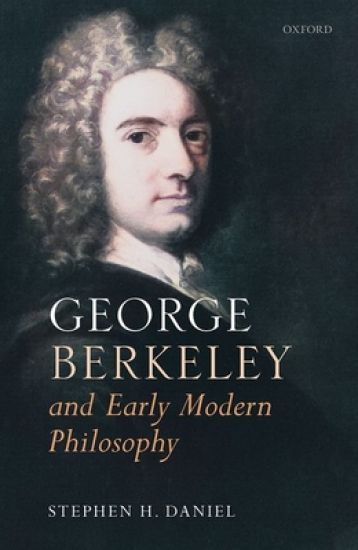
George Berkeley and Early Modern Philosophy

George Berkeley and Early Modern Philosophy

Stephen H. Daniel

Oxford University Press
2021
sidottu
Stephen Daniel presents a study of the philosophy of George Berkeley in the intellectual context of his times, with a particular focus on how, for Berkeley, mind is related to its ideas. Daniel does not assume that thinkers like Descartes, Malebranche, or Locke define for Berkeley the context in which he develops his own thought. Instead, he indicates how Berkeley draws on a tradition that informed his early training and that challenges much of the early modern thought with which he is often associated. Specifically, this book indicates how Berkeley's distinctive treatment of mind (as the activity whereby objects are differentiated and related to one another) highlights how mind neither precedes the existence of objects nor exists independently of them. This distinctive way of understanding the relation of mind and objects allows Berkeley to appropriate ideas from his contemporaries in ways that transform the issues with which he is engaged. The resulting insights--for example, about how God creates the minds that perceive objects--are only now starting to be fully appreciated.
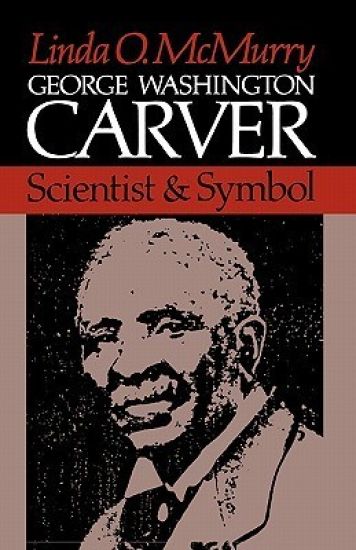
George Washington Carver

George Washington Carver

Linda O. McMurry

Oxford University Press Inc
1982
nidottu
An intimate and sensitive psychological portrait, a well informed intellectual sketch, and and unusually readable scientific treatise, this biography of Carver has a depth and a breadth of research rarely found in such studies.
George Steiner

George Steiner

George Steiner

Oxford University Press Inc
1987
nidottu
As an incisive and provocative critic of literature, language, and culture, George Steiner has acquired an international reputation and a devoted following. "He scatters bright ideas everywhere," writes The New York Times Book Review, "and they are sure to be picked up." This volume presents a rich sampling of Steiner's ideas, including selections from his seminal books The Death of Tragedy, After Babel, Tolstoy or Dostoevsky, and Language and Science. Aside from pointing to work that lies ahead, this anthology offers a rich retrospective of the intellectual ground Steiner has already covered. Whether discussing Marxist literary theory, the significance of Tolstoy, or the problems of treating sexual material in literature, Steiner's writings give us the pleasure of watching an astute and nimble mind constantly at work.