

Kirjahaku
Etsi kirjoja tekijän nimen, kirjan nimen tai ISBN:n perusteella.
1000 tulosta hakusanalla Gerd Tesch

The range of global human rights institutions which have been created over the past half century is a remarkable achievement. Yet, their establishment and proliferation raises important questions. Why do states create such institutions and what do they want them to achieve? Does this differ from what the institutions themselves seek to accomplish? Are global human rights institutions effective remedies for violations of human dignity or temples for the performance of stale bureaucratic rituals? What happens to human rights when they are being framed in global institutions? This book is an introduction to global human rights institutions and to the challenges and paradoxes of institutionalizing human rights. Drawing on international legal scholarship and international relations literature, it examines UN institutions with a human rights mandate, the process of mainstreaming human rights, international courts which adjudicate human rights, and non-governmental human rights organizations. In mapping the ever more complex network of global human rights institutions it asks what these institutions are and what they are for. It critically assesses and appraises the ways in which global institutions bureaucratize human rights, and reflects on how this process is changing our perception of human rights.

The range of global human rights institutions which have been created over the past half century is a remarkable achievement. Yet, their establishment and proliferation raises important questions. Why do states create such institutions and what do they want them to achieve? Does this differ from what the institutions themselves seek to accomplish? Are global human rights institutions effective remedies for violations of human dignity or temples for the performance of stale bureaucratic rituals? What happens to human rights when they are being framed in global institutions? This book is an introduction to global human rights institutions and to the challenges and paradoxes of institutionalizing human rights. Drawing on international legal scholarship and international relations literature, it examines UN institutions with a human rights mandate, the process of mainstreaming human rights, international courts which adjudicate human rights, and non-governmental human rights organizations. In mapping the ever more complex network of global human rights institutions it asks what these institutions are and what they are for. It critically assesses and appraises the ways in which global institutions bureaucratize human rights, and reflects on how this process is changing our perception of human rights.
This book presents a comprehensive study into Plato's theological doctrines, offering an important re-valuation of the status of Plato's gods and the relation between metaphysics and theology according to Plato. Starting from an examination of Plato's views of religion and the relation between religion and morality, Gerd Van Riel investigates Plato's innovative ways of speaking about the gods. This theology displays a number of diverging tendencies - viewing the gods as perfect moral actors, as cosmological principles or as celestial bodies whilst remaining true to traditional anthropomorphic representations. Plato's views are shown to be unified by the emphasis on the goodness of the gods in both their cosmological and their moral functions. Van Riel shows that recent interpretations of Plato's theology are thoroughly metaphysical, starting from aristotelian patterns. A new reading of the basic texts leads to the conclusion that in Plato the gods aren't metaphysical principles but souls who transmit the metaphysical order to sensible reality. The metaphysical principles play the role of a fated order to which the gods have to comply. This book will be invaluable to readers interested in philosophical theology and intellectual history.
This book presents a comprehensive study into Plato's theological doctrines, offering an important re-valuation of the status of Plato's gods and the relation between metaphysics and theology according to Plato. Starting from an examination of Plato's views of religion and the relation between religion and morality, Gerd Van Riel investigates Plato's innovative ways of speaking about the gods. This theology displays a number of diverging tendencies - viewing the gods as perfect moral actors, as cosmological principles or as celestial bodies whilst remaining true to traditional anthropomorphic representations. Plato's views are shown to be unified by the emphasis on the goodness of the gods in both their cosmological and their moral functions. Van Riel shows that recent interpretations of Plato's theology are thoroughly metaphysical, starting from aristotelian patterns. A new reading of the basic texts leads to the conclusion that in Plato the gods aren't metaphysical principles but souls who transmit the metaphysical order to sensible reality. The metaphysical principles play the role of a fated order to which the gods have to comply. This book will be invaluable to readers interested in philosophical theology and intellectual history.

Throughout the world, traffic levels are increasing and, in urban areas, these increasing levels have led to pressures on the road networks which are causing serious economic, environmental and social problems. This book examines the full range of 'push and pull' Travel Demand Management measures. This covers areas of regulatory, pricing, planning and persuasive policies to encourage individuals to make their trips in off-peak periods, by a different mode or to find another way of carrying out the trip purpose. Applying such measures can result in a more efficient transport system, improved environmental conditions and improvements in safety as well as revenue generation for use on alternative transport systems. The editors conclude with a summary of findings within the book and suggestions for best future practice.

Psychoanalytic Reflections on Love and Sexuality
Gerd H. Fenchel
University Press of America
2006
nidottu
Man has great difficulty accepting who he is. In Psychoanalytic Reflections on Love and Sexuality, author Gerd H. Fenchel traces how we have defined ourselves historically and in the present culture through the lenses of religion, poetry, art, and clinical psychoanalysis.
`This is surely the ultimate expression of the top-down approach to consciousness, written with Sommerhoff's characteristic clarity and precision. It says far more than other books four times the size of this admirably concise volume. This book is destined to become a pillar of the subject' -Rodney Cotterill, Technical University of Denmark The problem of consciousness has been described as a mystery about which we are still in a terrible muddle and in Understanding Consciousness: Its Function and Brain Processes, the author unravels this mystery through a clarification of the main concepts related to consciousness, followed by a comprehensive biological explanation. Consequently, this book will be ideal for a wide-range of upper-level undergraduate and postgraduate courses. The author interprets consciousness as a property that can also be possessed by creatures lacking a language faculty and comprises all of the following: awareness of the surrounding world; awareness of the self as an entity; and awareness of such things as thoughts and feelings. He argues that a biological approach can achieve both the necessary conceptual clarifications and a joint explanation of these divisions of awareness in terms of just two accurately defined concepts of 'internal representation' and two empirically supported assumptions about the functional architecture of a specific set of brain processes. Despite this striking simplicity, his model covers these divisions of awareness, both as objective faculties of the brain and as subjective experience. These conclusions are applied to a broad range of fundamental questions, including the biological rationale of subjective experience and where consciousness resides in the neural networks.
`This is surely the ultimate expression of the top-down approach to consciousness, written with Sommerhoff's characteristic clarity and precision. It says far more than other books four times the size of this admirably concise volume. This book is destined to become a pillar of the subject' -Rodney Cotterill, Technical University of Denmark The problem of consciousness has been described as a mystery about which we are still in a terrible muddle and in Understanding Consciousness: Its Function and Brain Processes, the author unravels this mystery through a clarification of the main concepts related to consciousness, followed by a comprehensive biological explanation. Consequently, this book will be ideal for a wide-range of upper-level undergraduate and postgraduate courses. The author interprets consciousness as a property that can also be possessed by creatures lacking a language faculty and comprises all of the following: awareness of the surrounding world; awareness of the self as an entity; and awareness of such things as thoughts and feelings. He argues that a biological approach can achieve both the necessary conceptual clarifications and a joint explanation of these divisions of awareness in terms of just two accurately defined concepts of 'internal representation' and two empirically supported assumptions about the functional architecture of a specific set of brain processes. Despite this striking simplicity, his model covers these divisions of awareness, both as objective faculties of the brain and as subjective experience. These conclusions are applied to a broad range of fundamental questions, including the biological rationale of subjective experience and where consciousness resides in the neural networks.

One of the main uses of computer systems is the management of large amounts of symbolic information representing the state of some application domain, such as information about all the people I communicate with in my personal address database, or relevant parts of the outer space in the knowledge base of a NASA space mission. While database management systems offer only the basic services of information storage and retrieval, more powerful knowledge systems offer, in addition, a number of advanced services such as deductive and abductive reasoning for the purpose of finding explanations and diagnoses, or generating plans. In order to design and understand database and knowledge-based applications it is important to build upon well-established conceptual and mathematical foundations. What are the principles behind database and knowledge systems? What are their major components? Which are the important cases of knowledge systems? What are their limitations? Addressing these questions, and discussing the fundamental issues of information update, knowledge assimilation, integrity maintenance, and inference-based query answering, is the purpose of this book. Foundations of Databases and Knowledge Systems covers both basic and advanced topics. It may be used as the textbook of a course offering a broad introduction to databases and knowledge bases, or it may be used as an additional textbook in a course on databases or Artificial Intelligence. Professionals and researchers interested in learning about new developments will benefit from the encyclopedic character of the book, which provides organized access to many advanced concepts in the theory of databases and knowledge bases.

In the tradition of Karl Rahner and Teilhard de Chardin, this book from renowned New Testament scholar Gerd Theissen daringly probes the innermost sanctuaries of the biblical tradition through the lens of evolutionary theory. Without associating evolution with a na?ve optimism about progress, Theissen shows how a thorough examination of the "cultural evolution" of the Christian faith can yield glimmers of a possible goal of history: "complete adaptation to the reality of God."
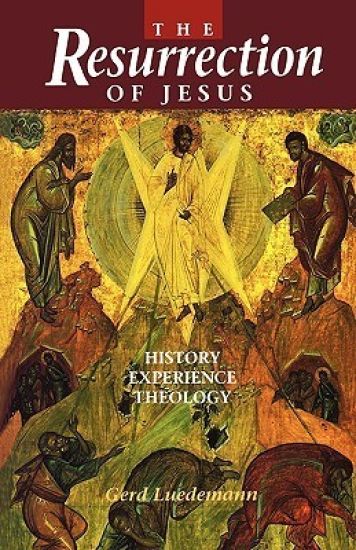
What actually happened at the resurrection of Jesus? Gerd Luedemann suggests that this question-considered unanswerable by many-is of crucial importance to Christians and that it can be answered more specifically than has been the case in recent studies. Luedemann begins with the oldest list of witnesses to the resurrection (1 Corinithians 15) and proceeds from there to three texts from Paul and the Gospels to investigate the events of Good Friday, Easter, and Pentecost. The Easter faith, which Luedemann finds had originally nothing to do with the empty tomb, ultimately stems from visions of Peter and the other disciples, both men and women. These, along with Paul's vision on the road to Damascus, Luedemann examines by means of historical criticism and depth psychology. He concludes that the original core of the Easter faith reflects the message of Jesus as the experience of forgiveness of sins and the overcoming of death.
In the continuing quest for the elusive but compelling figure of Jesus of Nazareth, Gerd Theissen and Annette Merz's authoritative yet engaging book is the single most helpful resource to date. Comprehensively detailing the sources for our knowledge of Jesus, Theissen and Merz fully explore the historical and social context of Jesus and his activity. They then unfold what we can know about Jesus' characteristics as a charismatic teacher, a Jewish prophet, a healer, a teller of parables, and an ethical teacher. Finally, they examine closely the historical questions surrounding Jesus' last supper, his violent death, the accounts of Easter, and the beginnings of Christology. Beholden to neither ancient dogma nor contemporary fantasy, written in a clear style with a variety of learning aids, The Historical Jesus will provide students, teachers, and other individuals with a fascinating and reliable guide into this most exciting field of Jesus research.
In these distinguished Oxford lectures, Theissen picks up where he left off in The Historical Jesus (1998). Employing the notion of religion as a "cultural sign language which promises a gain in life by corresponding to an ultimate reality," he plots the emergence of Christianity as a religion, with elements of myth, ritual, ethics, and an emergent symbolic system. He expands upon the historical, social, and theological analysis of his earlier works to cover such issues as the relationship of Jesus to the earliest churches, power, possessions, interpretations of Jesus' death, and the separation of the church and synagogue. Theissen's most complete and systematic treatment of early Christianity to date Traces the gradual emergence of the most important beliefs about Jesus Encompasses beliefs, ethics, ritual, and the origin of the New Testament canon in one synthesis

All the main issues for reading the New Testament are covered in this exciting new introduction by one of the world's foremost biblical scholars.

Why read the Bible? Gerd Theissen uses the wisdom gained from decades of teaching Bible instruction at a state university to address questions of the Bible's relevance in a postmodern, pluralistic society. He describes the core themes and enduring value of the biblical legacy for anyone seeking to be a well-informed, self-aware, and responsible citizen, and he commends the contributions the Bible can make to interreligious and secular conversation.
Miracle Stories of Early Chris
Gerd Theissen; Francis (TRN) McDonagh; John (EDT) Riches
Augsburg Fortress
2007
nidottu

Gerd Theissen describes the emergence of the New Testament canon out of the wide variety of early Christian literature, drawing on Max Webers discussion of the evolution of religious organizations. Theissen describes a series of phases in the life of the early Christian movement: the charismatic, the pseudepigraphic, the functional, and the canoni

For over three hundred years, the Indian peoples of North America have attracted the interest of diverse segments of German society—missionaries, writers, playwrights, anthropologists, filmmakers, hobbyists and enthusiasts, and even royalty. Today, German scholars continue to be drawn to Indians, as is the German public: tour groups from Germany frequent Plains reservations in the summer, and so-called Indianerclubs, where participants dress up in "authentic" Indian costume, are common. In this fascinating volume, scholars and writers illuminate the longstanding connection between Germans and the Indians. From a range of disciplines and occupations, the contributors probe the historical and cultural roots of the interactions between Germans and Indians and examine how such encounters have been represented in different media over the centuries. Particularly important are reflections and insights by modern Native American writers on this relationship. Of special concern is why such a connection has endured. As the contributors make clear, the encounters between Germans and Indians were also imagined, sometimes as fantasy, sometimes as projection, both resonating deeply with the cultural sensibilities and changing historical circumstances of Germans over the years.

Functional Calculus of Pseudodifferential Boundary Problems
Gerd Grubb
Birkhauser Boston Inc
1996
sidottu
Pseudodifferential methods are central to the study of partial differential equations, because they permit an "algebraization." A replacement of compositions of operators in n-space by simpler product rules for thier symbols. The main purpose of this book is to set up an operational calculus for operators defined from differential and pseudodifferential boundary values problems via a resolvent construction. A secondary purposed is to give a complete treatment of the properties of the calculus of pseudodifferential boundary problems with transmission, both the first version by Boutet de Monvel (brought completely up to date in this edition) and in version containing a parameter running in an unbounded set. And finally, the book presents some applications to evolution problems, index theory, fractional powers, spectral theory and singular perturbation theory. In this second edition the author has extended the scope and applicability of the calculus wit original contributions and perspectives developed in the years since the first edition. A main improvement is the inclusion of globally estimated symbols, allowing a treatment of operators on noncompact manifolds. Many proofs have been replaced by new and simpler arguments, giving better results and clearer insights. The applications to specific problems have been adapted to use these improved and more concrete techniques. Interest continues to increase among geometers and operator theory specialists in the Boutet de Movel calculus and its various generalizations. Thus the book’s improved proofs and modern points of view will be useful to research mathematicians and to graduate students studying partial differential equations and pseudodifferential operators.