
Kirjahaku
Etsi kirjoja tekijän nimen, kirjan nimen tai ISBN:n perusteella.
1000 tulosta hakusanalla Gerhard Hauser
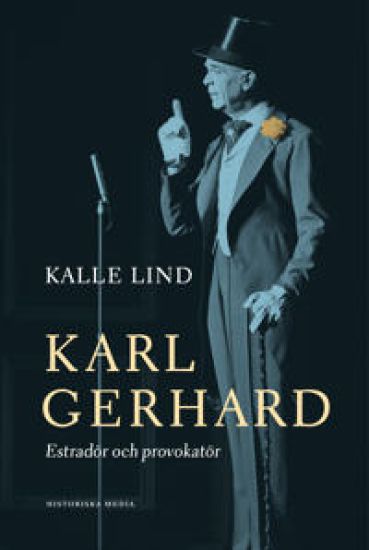
»Fängslande och välmatat« Ingalill Mosander, Aftonbladet»Kalle Lind skriver rakt och klart och utan att moralisera om ett annorlunda liv i ett land som är detsamma som nu, men på så många sätt förändrat ... En underhållande biografi och ett personligt tvärsnitt genom den moderna svenska historien.« Fokus»Kalle Lind manövrerar elegant bland det digra källmaterialet och argumenterar med emfas för samtidens behov av Karl Gerhard. ... Lind [är] en folkbildare av rang. Med vänlig och stadig hand leder han oss genom Gerhards oeuvre...« Expressen Revykungen och satirikern Karl Gerhard var en av Sveriges mest uppmärksammade mediepersonligheter. Han ansågs göra de kvickaste och elegantaste sketcherna och kupletterna, där han gisslade politiker, kungligheter och kulturelit. Under andra världskriget blev han en av landets tydligaste antinazistiska röster, vilket skrämde bort hans publik och tvingade honom att lämna sin teater. Privat levde han under sina sista decennier i en regnbågsfamilj med adoptivdottern Fatima och sambon Göthe.I biografin Karl Gerhard: Estradör och provokatör ger författaren och radioprataren Kalle Lind sin bild av en modig och modern man. Boken följer huvudpersonen från vaggan till graven, men lägger särskild vikt vid de dramatiska krigsåren och den HBTQvärld Karl Gerhard var en del av. Med utgångspunkt i bland annat Säpoakter och privat korrespondens låter Kalle Lind ett mer komplett porträtt träda fram. Det här är också berättelsen om Sverige före, mellan och efter två världskrig - ett land som hann förändras i grunden medan Karl Gerhard ivrigt drev med varje förändring från scenen. Med ambitionen att fånga Karl Gerhards drivkrafter, och i någon mån avslöja hans hemligheter, har Kalle Lind tagit sig an en av 1900-talets främsta svenska provokatörer.Fler röster om boken:»Kalle Lind ger en frisk, lättillgänglig och avdammad bild av en unikt briljant och modig men också självupptagen och gäckande estradör.« Sydsvenskan »Kalle Linds bok ger inte bara ett välformulerat porträtt av revykungen utan även en tidsbild från hela Karl Gerhards skiftande epok. Han har helt rätt i att i en tid som vår förtjänar Karl Gerhard att lyftas fram som förebild. När jag har läst ut boken ger jag kupletterna en chans till och denna gång hittar jag mer i dem. Karl Gerhard kan betraktas inte bara som en antitotalitär förebild utan också som en förebild för en nöjesscen som inte nöjer sig med en minsta gemensamma nämnare.« Gefle Dagblad
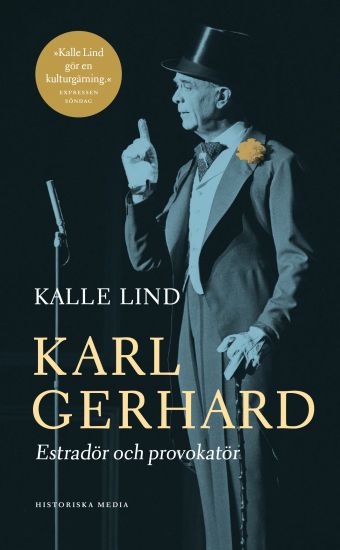
»Fängslande och välmatat« Ingalill Mosander, Aftonbladet»Kalle Lind gör en kulturgärning.« Expressen SöndagRevykungen och satirikern Karl Gerhard var en av Sveriges mest uppmärksammade mediepersonligheter. Han ansågs göra de kvickaste, elegantaste och elakaste sketcherna och kupletterna, där han gisslade politiker, kungligheter och kulturelit. Under andra världskriget blev han en av landets tydligaste antinazistiska röster – vilket skrämde bort hans publik och tvingade honom att lämna sin teater. Privat levde han under sina sista decennier i en regnbågsfamilj med adoptivdottern Fatima och sambon Göthe.I biografin Karl Gerhard ger författaren Kalle Lind sin bild av en modig och modern man. Boken följer huvudpersonen från vaggan till graven, men lägger särskild vikt vid de dramatiska andravärldskrigsåren och den hbtqi-värld Karl Gerhard var en del av.Med utgångspunkt i bland annat Säpoakter och privat korrespondens träder ett nyanserat porträtt fram. Samtidigt ges en bild av Sverige före, mellan och efter två världskrig – ett land som hann förändras i grunden medan Karl Gerhard ivrigt drev med varje förändring från scenen.

Adele Gerhard (1868-1956): Spuren Einer Schriftstellerin
Daniela Anna Frickel
Bohlau Verlag
2007
sidottu
Am literarischen Leben ihrer Zeit nahm Adele Gerhard mit ihren Schriften lebhaft Anteil und genoss in intellektuellen Zirkeln die Anerkennung von Personlichkeiten wie Thomas Mann, Kathe Kollwitz, Franz Werfel und Stefan Zweig. Literaturkritiker erachteten ihre Werke denen ihrer mannlichen Kollegen als ebenburtig und profilierten sie als vorbildliche Schriftstellerin. Gleichwohl musste sie lange um ihre Anerkennung als Autorin in einem patriarchalischen Kunstsystem kampfen. Auch ihre Texte weisen zahlreiche Spuren von Auseinandersetzungen mit der zeitgenossischen Geschlechterpolitik auf.Die vorliegende Biographie befasst sich mit den Diskontinuitaten im Werdegang einer Frau als Autor und fragt nach den Mechanismen, die dafur verantwortlich sind, dass Adele Gerhard nach ihrem Tode in Vergessenheit geriet. Neben der Auswertung interessanter, teils brisanter Korrespondenzen mit Literaturkritikern und Schriftstellern bietet das Buch zudem eine Untersuchung bisher kaum beachteter Aspekte weiblicher Autorschaft in der Zeit von 1890 bis 1933.
Der Gute Gerhard Von Rudolf Von Ems in Seiner Bedeutung Für Die Sittengeschichte
August Dobbertin
Wentworth Press
2018
sidottu
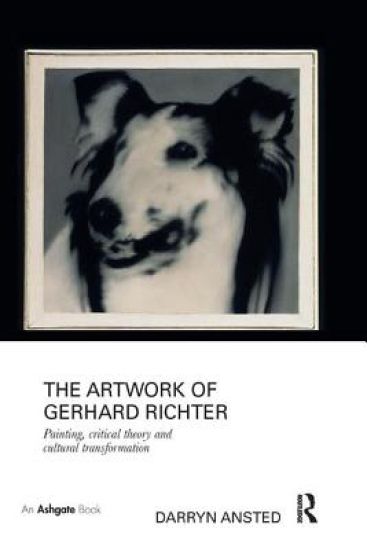
By uniquely treating Gerhard Richter’s entire oeuvre as a single subject, Darryn Ansted combines research into Richter’s first art career as a socialist realist with study of his subsequent decisions as a significant contemporary artist. Analysis of Richter’s East German murals, early work, lesser known paintings, and destroyed and unfinished pieces buttress this major re-evaluation of Richter’s other well known but little understood paintings. By placing the reader in the artist’s studio and examining not only the paintings but the fraught and surprising decisions behind their production, Richter’s methodology is deftly revealed here as one of profound yet troubled reflection on the shifting identity, culture and ideology of his period. This rethinking of Richter’s oeuvre is informed by salient analyses of influential theorists, ranging from Theodor Adorno to Slavoj Žižek, as throughout, meticulous visual analysis of Richter’s changing aesthetic strategies shows how he persistently attempts to retrace the border between an objective reality structured by ideology and his subjective experience as a contemporary painter in the studio. Its innovative combination of historical accuracy, philosophical depth and astute visual analysis will make this an indispensible guide for both new audiences and established scholars of Richter’s painting.
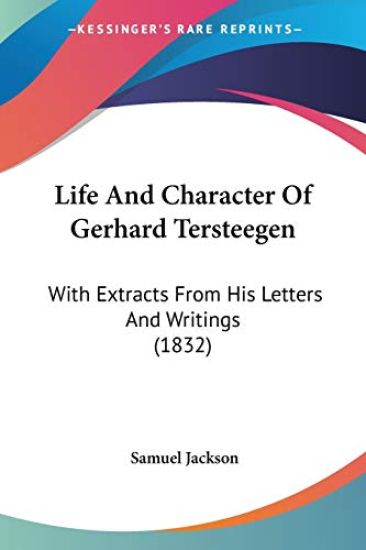
Life And Character Of Gerhard Tersteegen: With Extracts From His Letters And Writings (1832)
KESSINGER PUBLISHING, LLC
2008
sidottu

Text zu Eduard Gerhard's antiken Bildwerken.
Hutson Street Press
2025
pokkari

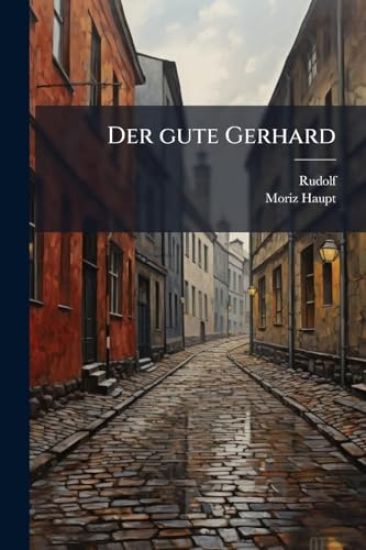
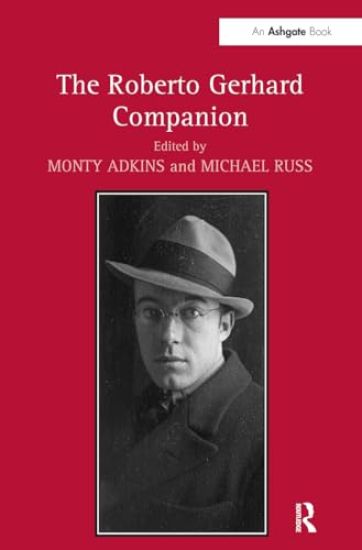
More than forty years after the composer's death, the music of Roberto Gerhard (1896-1970) continues to be recorded and performed and to attract international scholarly interest. The Roberto Gerhard Companion is the first full length scholarly work on this composer noted for his sharp intellect and original, exploring mind. This book builds on the outcomes of two recent international conferences and includes contributions by scholars from Spain, the USA and UK. The essays collected here explore themes and trends within Gerhard’s work, using individual or groups of works as case studies. Among the themes presented are the way Gerhard’s work was shaped by his Catalan heritage, his education under Pedrell and Schoenberg, and his very individual reaction to the latter’s teaching and methods, notably Gerhard’s very distinctive approach to serialism. The influence of these and other cultural and literary figures is an important underlying theme that ties essays together. Exiled from Catalonia from 1939, Gerhard spent the remainder of his life in Cambridge, England, composing a string of often ground-breaking compositions, notably the symphonies and concertos composed in the 1950s and 1960s. A particular focus in this book is Gerhard's electronic music. He was a pioneer in this genre and the book will contain the first rigorous studies of this music as well as the first accurate catalogue of this electronic output. His ground-breaking output of incidental music for radio and the stage is also given detailed consideration.
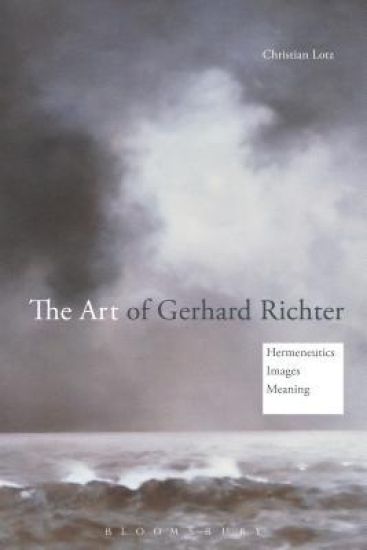
The Art of Gerhard Richter: Hermeneutics, Images, Meaning presents the first philosophical investigation of, arguably, one of the most popular and important painters working today, Gerhard Richter. From monochrome painting and photo realism to conceptual art and gesture-expressive painting, Richter has transformed the spectrum of 20th-Century painting. Building upon Gadamer’s notion of ‘formed images', the book outlines elements of a hermeneutics and a phenomenology of images and paintings. Moreover, the hermeneutic approach to art is combined with the crucial question of how paintings and photographs are related to each other for Richter. The author suggests that paintings “open up” the fixed relation and intentionality of photographs by idealizing and essentializing the content of the photographs. By relying upon a hermeneutical and phenomenological approach, rather than working from abstract theory, The Art of Gerhard Richter provides philosophical insights developed out of Richter’s works of art. Uncovering key philosophical aspects of Richter’s work, the author’s reflections discuss the relation between appearance and essence, the role of faith and hope, the dialectic of distance and nearness, the issues of death and terror, and the role of beauty and landscapes in Richter’s paintings.

The George Bell-Gerhard Leibholz Correspondence
Bloomsbury Academic
2021
nidottu
George Bell was one of the most significant British church leaders of the mid-20th century and in many ways he came to define the involvement of British church people with the issues which arose from the Third Reich. Gerhard Leibholz, a brother-in-law of Dietrich Bonhoeffer, was one of the most senior German lawyers of the period, a refugee from Nazism who would become a founding father of the new constitution of the Federal Republic of Germany. The two figures first encountered each other in the context of dictatorship and exile and in a brilliant, sustained collaboration over many years they fashioned a vigorous moral response to the crises of Nazism, Soviet communism, total war and cold war. This volume contributes fundamentally to our understanding of the ethical, religious, legal and political debates which Hitler’s regime provoked. It also brings to life a vivid picture of the realities of exile and the networks of support which were active internationally in the great refugee crisis of these momentous years.With its wealth of primary source material, previously unavailable in English, this book is an important contribution to the historiography of the Third Reich and will be of great value to scholars and students of Nazism and international history.
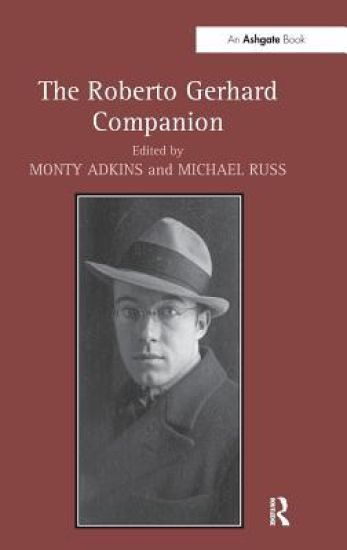
More than forty years after the composer's death, the music of Roberto Gerhard (1896-1970) continues to be recorded and performed and to attract international scholarly interest. The Roberto Gerhard Companion is the first full length scholarly work on this composer noted for his sharp intellect and original, exploring mind. This book builds on the outcomes of two recent international conferences and includes contributions by scholars from Spain, the USA and UK. The essays collected here explore themes and trends within Gerhard’s work, using individual or groups of works as case studies. Among the themes presented are the way Gerhard’s work was shaped by his Catalan heritage, his education under Pedrell and Schoenberg, and his very individual reaction to the latter’s teaching and methods, notably Gerhard’s very distinctive approach to serialism. The influence of these and other cultural and literary figures is an important underlying theme that ties essays together. Exiled from Catalonia from 1939, Gerhard spent the remainder of his life in Cambridge, England, composing a string of often ground-breaking compositions, notably the symphonies and concertos composed in the 1950s and 1960s. A particular focus in this book is Gerhard's electronic music. He was a pioneer in this genre and the book will contain the first rigorous studies of this music as well as the first accurate catalogue of this electronic output. His ground-breaking output of incidental music for radio and the stage is also given detailed consideration.
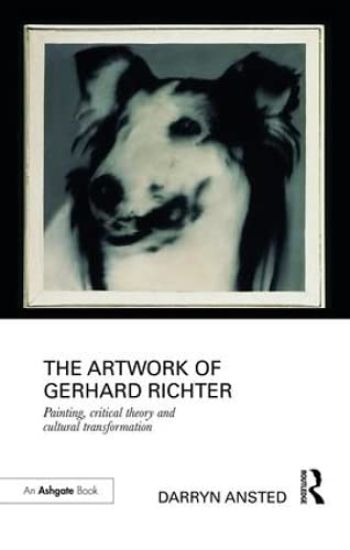
By uniquely treating Gerhard Richter’s entire oeuvre as a single subject, Darryn Ansted combines research into Richter’s first art career as a socialist realist with study of his subsequent decisions as a significant contemporary artist. Analysis of Richter’s East German murals, early work, lesser known paintings, and destroyed and unfinished pieces buttress this major re-evaluation of Richter’s other well known but little understood paintings. By placing the reader in the artist’s studio and examining not only the paintings but the fraught and surprising decisions behind their production, Richter’s methodology is deftly revealed here as one of profound yet troubled reflection on the shifting identity, culture and ideology of his period. This rethinking of Richter’s oeuvre is informed by salient analyses of influential theorists, ranging from Theodor Adorno to Slavoj Žižek, as throughout, meticulous visual analysis of Richter’s changing aesthetic strategies shows how he persistently attempts to retrace the border between an objective reality structured by ideology and his subjective experience as a contemporary painter in the studio. Its innovative combination of historical accuracy, philosophical depth and astute visual analysis will make this an indispensible guide for both new audiences and established scholars of Richter’s painting.
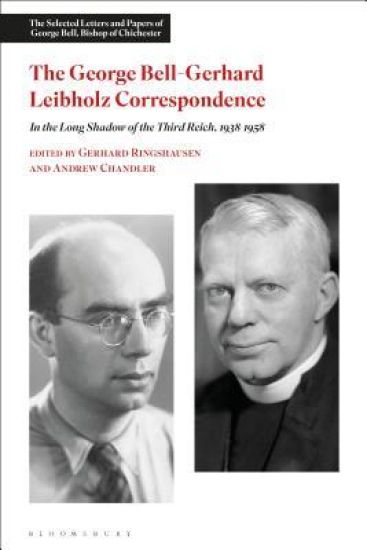
The George Bell-Gerhard Leibholz Correspondence
Bloomsbury Academic
2019
sidottu
George Bell was one of the most significant British church leaders of the mid-20th century and in many ways he came to define the involvement of British church people with the issues which arose from the Third Reich. Gerhard Leibholz, a brother-in-law of Dietrich Bonhoeffer, was one of the most senior German lawyers of the period, a refugee from Nazism who would become a founding father of the new constitution of the Federal Republic of Germany. The two figures first encountered each other in the context of dictatorship and exile and in a brilliant, sustained collaboration over many years they fashioned a vigorous moral response to the crises of Nazism, Soviet communism, total war and cold war. This volume contributes fundamentally to our understanding of the ethical, religious, legal and political debates which Hitler’s regime provoked. It also brings to life a vivid picture of the realities of exile and the networks of support which were active internationally in the great refugee crisis of these momentous years.With its wealth of primary source material, previously unavailable in English, this book is an important contribution to the historiography of the Third Reich and will be of great value to scholars and students of Nazism and international history.