Robert Louis Balfour Stevenson (13 November 1850 - 3 December 1894) was a Scottish novelist, poet, essayist, and travel writer. His most famous works are Treasure Island, Kidnapped, Strange Case of Dr Jekyll and Mr Hyde, and A Child's Garden of Verses. A literary celebrity during his lifetime, Stevenson now ranks as the 26th most translated author in the world. His works have been admired by many other writers, including Jorge Luis Borges, Bertolt Brecht, Marcel Proust, Arthur Conan Doyle, Henry James, Cesare Pavese, Emilio Salgari, Ernest Hemingway, Rudyard Kipling, Jack London, Vladimir Nabokov, J. M. Barrie, and G. K. Chesterton, who said of him that he "seemed to pick the right word up on the point of his pen, like a man playing spillikins"............ Gordon Frederick Browne (15 April 1858 - 27 May 1932) was an English artist and children's book illustrator in the late 19th century and early 20th century. He was born in Banstead, the younger son of notable book illustrator Hablot Knight Browne (who as "Phiz" illustrated books by Charles Dickens). He studied art at the Heatherley School of Fine Art and South Kensington Schools and started to receive professional commissions while still at college. From the 1880s, Browne was one of Britain's most prolific illustrators, his work appearing in newspapers, magazines and many books by children's authors including Frederic William Farrar, G.A. Henty, Juliana Horatia Ewing, Andrew Lang, Talbot Baines Reed, L. T. Meade, Catherine Christian and E. Nesbit........ WILLIAM HATHERELL (1855-1928) William Hatherell was a Victorian era illustrator who worked for magazines such as The Graphic, Harpers, Scribner's and the Century. Today he is mostly remembered for crudely printed images such as these: he printing technology in Hatherell's day was pretty primitive. Combined with cheap paper stock, it stripped Hatherell's work of much of its sensitivity and expressiveness. Of course, like all resourceful artists Hatherell made the best of his limitations; he emphasized strong compositions and high contrasts that could survive the publication process.Hatherell might easily have used the disadvantages of his medium as an excuse for dashing off fast, limited work. Many artists did. In fact, his employers encouraged him to do so, in order to increase productivity and profits. Instead, Hatherell worked carefully and deliberately, crafting sensitive pictures with subtle features that were undetectable to his larger audience. As one contemporary noted, Hatherell stubbornly refused to lower his standards: Hatherell became noted for his refusal to be pressured into hasty work. For illustrating current events, for instance, he used models, often carefully posed in his backyard....
Did you know that Gordon Korman’s mom typed his first book for him? This is because Gordon became a published author before he even graduated high school! This author profile for children introduces the lifelong writer responsible for sending troublemakers Boots and Bruno to Macdonald Hall.
The most comprehensive and authoritative reference available today on colorectal surgery This revised fourth edition of Gordon and Nivatvongs' Principles and Practice of Surgery for the Colon, Rectum, and Anus edited by David Beck, Steven Wexner, and Janice Rafferty strikes a perfect balance between evidence-based medicine, in-depth details, and clinical pearls. The result is a highly engaging and authoritative tome in the grand tradition of Philip Gordon and Santhat Nivatvongs. Building on the widely acclaimed previous editions' reputation for superb quality and reader-friendliness, the fourth edition includes contributions from an expanded cadre of internationally known experts. Significant advances have been made in this field since the third edition was published. The latest diagnostic modalities are highlighted such as MRI, CT angiography, and enterography. The first section covers essentials such as anatomy, physiology, diagnosis, colonoscopy, and patient management. Sections two through four discuss a full spectrum of anorectal diseases, colorectal disorders, trauma, unexpected challenges, and complications. Among the additions are expanded sections on transanal total mesorectal excision, genetics, personalized medicine, "wait and watch" principles, outpatient management of anorectal surgery, and large bowel obstruction. Key HighlightsThirty-seven chapters cover a wide array of gastrointestinal disorders such as fecal incontinence, ulcerative colitis, Crohn's disease, diverticulitis, carcinomas, and other malignant lesionsA multidisciplinary team approach to rectal cancer encompasses rectal cancer protocol MRI, synoptic reporting, and various neoadjuvant therapy protocolsThe use of cutting-edge approaches including laparoscopy, robotics, hyperbaric oxygen, and radiofrequency tissue remodelingSuperb full-color plates, illustrations, photographs, diagrams, detailed tables, graphics, and surgical videos elucidate underlying disease and management As the most comprehensive resource on colorectal surgery available on the market today, this is a must-have for every colon and rectal surgeon – from residents to veteran practitioners.
A joining of two artists, exploring their shared fixation on the problematics of architecture, language, institutions, scale, and value '[The exhibition is] powerful and unhinged and overbuilt—a monument to the entropy of the postindustrial city, and the tenuous dance of its inhabitants.' — The New York Times Gordon Matta-Clark and Pope.L are esteemed for their respective interdisciplinary practices that examine the value and paradoxes of urban life as well as the risk inherent in art making. Utilizing performance, film, drawing, and various multimedia projects, the two artists often open up interstitial spaces by realizing sweeping gestures that take into account shifting, decentralized zones. Grounded in the concept of failure, the sixth exhibition at 52 Walker and its accompanying catalogue reconsider societal, artistic, and structural failure—and in its expression a consideration of hope. With an introduction by the curator and director of 52 Walker Ebony L. Haynes, this publication also includes a conversation piece between Haynes, the artist Pope.L, and the director of LAXART, Hamza Walker, that discusses the visual, material, and conceptual similarities between Pope.L’s and Gordon Matta-Clark’s work and what it means to treat the possibilities of failure as an artistic medium. About Clarion The Clarion series of illustrated publications is positioned as an extension of each exhibition at the groundbreaking gallery space 52 Walker, curated by Ebony L. Haynes. The program focuses on showcasing conceptual and research-based artists from a range of backgrounds and at various stages in their careers. The series title is derived from the Clarion Science Fiction and Fantasy Writers’ Workshop, the oldest of its kind, at the University of California, San Diego. Octavia Butler attended this workshop in the 1970s. Butler’s writing has been influential in the conceptual framework of the program and the Clarion series. With a sleek design influenced by encyclopedias, each publication features color reproductions of the works on view, alongside an introduction by Haynes, commissioned essays, artist texts, archival materials, and more.
From Gordon B. White, finalist for the Shirley Jackson and Bram Stoker Awards, come fifteen tales of evocative prose and unparalleled imagination. From spirit-possessed postcards in the award-nominated title story to the eco-terror of "Dandelion Six" and riot-fueled nightmare of "One of the Good Ones," the armed invasion of a deity's corpse in "Godhead" and a drink with the damned in "Devil Take Me," these stories are haunted by weird ghosts and contemporary horrors. "These are stunning and provocative stories, full of surprises." -Brian Everson, author of The Glassy Burning Floor of Hell "Gordon B. White is in a genre-genus by himself, unclassifiable, breathtaking and beautiful all at once." -Clay McLeod Chapman, author of Ghost Eaters "Absolutely one of my favorite horror authors working today; I'll read whatever he writes." -Keith Rosson, author of Fever House
This book contains the transcriptions of a collection of letters and other documents belonging to a family that resided in northern Kentucky from the 1790s to the time of the Civil War and beyond. Their correspondence illustrates many of the conditions of everyday life in that time and place, with occasional references to local and national historic events.
This substantial volume is the first major resource on the life and work of Gordon Onslow Ford (1912–2003), the British-born painter who was the youngest member of André Breton’s surrealist group in Paris, and who spent more than 50 years in the San Francisco Bay Area. Marked by an initial interest in automatist techniques, Onslow Ford’s painting gradually developed through studies of Eastern philosophy, mysticism and ecology resulting in complex and varied works that incorporated cosmic charts and biomorphic abstraction. In this superb publication, a series of thoroughly researched essays, previously unpublished archival material and over 200 color illustrations trace Onslow Ford’s time spent in Paris, stints in New York and Mexico, culminating in his move in 1947 to the Bay Area. Organized and published by the Lucid Art Foundation (cofounded by Onslow Ford in 1998), this is a long-overdue and impressively executed survey.
Gordon Walker's (b. 1939) highly unusual design process has yielded an extensive architecture of extraordinary quality; he is a unique figure in the American architectural movement and in the history of the Pacific Northwest. This personal and professional biography contributes both to our understanding of the breadth of viable design processes and, in a broader sense, to regional and architectural history.Gordon Walker is a 1962 graduate of the University of Idaho. He was co-founder of Olson Walker Architects (now Olson Kundig), worked with NBBJ in Seattle and San Francisco, and practiced in his own name for twelve years before joining Mithun Architects as a consulting principal. His work embraces the American west coast from Davis, California, to the Canadian border. He has designed over thirty residences (and built several with his own hands); a host of buildings and plans for universities throughout the Northwest and California; three buildings for the Pacific Northwest Ballet; and myriad commercial buildings, remodels, restaurants, and parks. He has been an educator and mentor, teaching at the Universities of Idaho and Washington. In addressing all of its determinants simultaneously in plan, section, and elevation, Gordon Walker has, for half a century, created an architecture of exceptional merit.
Welcome to Baltimore. A city where every block holds a secret, and dreams can be deadly. Growing up here is hard, especially for kids too young to know the difference between monsters and men. Just ask Gordon Pope. He's a child psychiatrist on the front lines.Officer Dana Frisco has Pope's number on speed dial as the specialist to call for hard cases involving children. She and her partner are two of a handful of cops not in someone's pocket or pushing their own agenda. That makes them targets. Especially when things get messy.Pope and Frisco dig deep to help kids and close cases. But in Baltimore, secrets are buried for a reason. Dig too deep and it might cost you your life.This complete box set contains the first three books in the Amazon best-selling thriller series: The Sleepwalkers (Book 1), Mind Games (Book 2), and Shadow Land (Book 3).What readers are saying: ★★★★★ - "It's not often I enjoy a story this much "★★★★★ - "Riveting from beginning to end."★★★★★ - "Well, that was fun "★★★★★ - "Great characters and thrilling story."★★★★★ - "A true heart grabber "★★★★★ - "Deserves more than five stars."★★★★★ - "Grabs you by the throat."
Gordon Cressy is a walking, talking civics lesson. His work over the years has been a driving force in making Toronto what it is today - a city that takes top spots globally in livability rankings for diversity, inclusivity, and tolerance. Few know just how many lives he has had or the immense behind-the-scenes contributions he has made to the fabric of Canadian society.Through his stories, Gordon's life unfolds as a fish-out-of-water tale of a kid from North Toronto ending up in the Caribbean and transforming lives, including his own. It is also a story about youth and growing up. It is a story about giving. But it is ultimately the story of the people who made Toronto the community it is today.-Tony Wong
Unlock the dynamic journey of Gordon Moore, the visionary co-founder of Intel, in Gordon Moore: The Man Behind Silicon. Delve into his humble beginnings-from the curious child with a chemistry set to the pivotal force behind the microprocessor revolution. Discover how Moores groundbreaking law continues to shape the future of computing, all while grappling with ethical dilemmas and industry dominance. Peek behind the curtains of his personal life, revealing the supportive family, and passions that fueled his drive. A masterful chronicle of innovation, leadership, and a legacy that forever transformed technology.
Gordon Merrick and the Great Gay American Novel is the first biography of Gordon Merrick, the most commercially successful writer of gay novels in the twentieth century. This book shows how Merrick’s novels were largely based on his own life and time as a Princeton theater star, a Broadway actor, a New York reporter, an OSS spy, and the friend of countless artists and celebrities as an expatriate in France, Greece, and Sri Lanka. He lived much of his life as an openly gay man with his longtime partner, Charles Hulse. His 1970 novel, The Lord Won’t Mind, broke new ground by showing that an affirming, explicitly gay novel could be a bestseller. His subsequent gay novels were both a cultural phenomenon and a lightning rod for literary critics. This book also examines the complex, often conflicting responses to Merrick’s novels by gay readers and critics, and it thus recovers the early post-Stonewall debates over the definition of “gay literature.” By reconstructing Merrick’s life and critical fortunes, this book expands our understanding of what it means to be a gay man in the twentieth century.
Gordon Merrick and the Great Gay American Novel is the first biography of Gordon Merrick, the most commercially successful writer of gay novels in the twentieth century. This book shows how Merrick’s novels were largely based on his own life and time as a Princeton theater star, a Broadway actor, a New York reporter, an OSS spy, and the friend of countless artists and celebrities as an expatriate in France, Greece, and Sri Lanka. He lived much of his life as an openly gay man with his longtime partner, Charles Hulse. His 1970 novel, The Lord Won’t Mind, broke new ground by showing that an affirming, explicitly gay novel could be a bestseller. His subsequent gay novels were both a cultural phenomenon and a lightning rod for literary critics. This book also examines the complex, often conflicting responses to Merrick’s novels by gay readers and critics, and it thus recovers the early post-Stonewall debates over the definition of “gay literature.” By reconstructing Merrick’s life and critical fortunes, this book expands our understanding of what it means to be a gay man in the twentieth century.
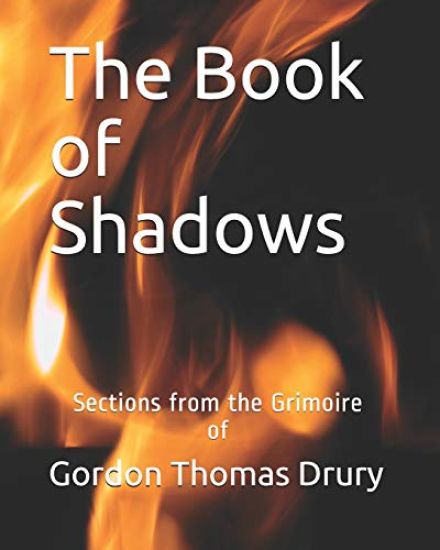
This is a manuscript of notes, writings, collated information, spells, incantations and magick collected over lifetimes. The oldest of the notes go back to my great grandfather, there are some from my grandmother, knowledge that my mother taught me as a child and the notes and writings of various gurus I have had over my adult years. This is neither a text book or a properly, punctuated, grammatically correct encyclopaedia. It is not a book designed to teach but more of my own scribblings for reference but I would not describe it as reference book either. My Book of Shadows was actually nine books long, in no particular sequence, except that I knew where I had written things, where to find loose leaf bits of paper that littered the pages and I could understand squiggles and shapes that I had entered both in a hurry and illegibly at times. I had set out many times to sort it out, sometimes copying up bits of paper into the books, adding a new herb, or crystal or animal entry when I came across them. The advent of the computer, modern day word processing software made the task somewhat easier although still a marathon task.
Shankly, My Dad and Me is the fascinating story of Gordon Milne, one of Bill Shankly’s first and most important Anfield signings, who played a key part in transforming Liverpool into a footballing dynasty. Moulded by his footballing father, Gordon was a successful player, manager and administrator at home and abroad. He played with, for, worked alongside and managed some of football’s most legendary names: Finney, Moore, Mortensen, Greaves and Lineker to name a few. Capped 14 times by Sir Alf Ramsey, he narrowly missed out on selection for the World Cup-winning squad in 1966. But this book is not about games, goals or medals; for Gordon, facts and figures remain secondary. Instead, this enthralling account spans six decades of an incredible journey through the game and his encounters along the way. From Preston to Newcastle via Liverpool, Blackpool, Wigan, Coventry, Leicester, Turkey and Japan, Gordon recounts his tale with honesty, humility and humour – while remaining eternally grateful for a bout of glandular fever! With forewords by Mark Lawrenson and Gary Lineker.