With clear presentation, broad coverage of economic topics and blend of theory and application, the 11th edition of 'Applied Economics' continues the traditions which have established it a prime text for students of applied economics.
This book explores models for youth ministry from the life and ministry of Christ. This area of study has become fossilised because youth workers rely too heavily on the notion of 'incarnational' or 'relational' youth ministry. This leads them to believe that they must spend huge amounts of time with young people in order to 'earn the right' to share the gospel with them. The author argues that this foundation for youth ministry is inadequate and impractical and that it is not how Jesus himself operated. He proposes a broader Christology as a foundation for youth ministry today. Each chapter includes study questions for individuals or groups.
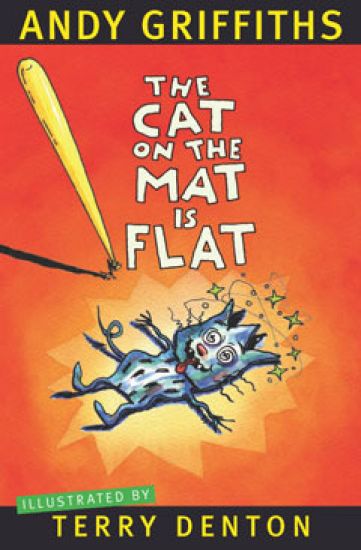
From the New York Times bestselling author of The Day My Butt Went Psycho , comes a collection of ten slimy, rhymey, easy-to-read Dr. Seuss-style short stories. Muck Uck Yuck It is just bad luck When the truck of a duck Gets stuck in the muck? Wacky rhymes that won't bore All of this and so much more; What are you waiting for? With silly rhymes, sound effects, and hilarious art on every page, Andy Griffiths and illustrator Terry Denton capture slapstick physical comedy in a book so easy to read that early elementary school students can read it themselves
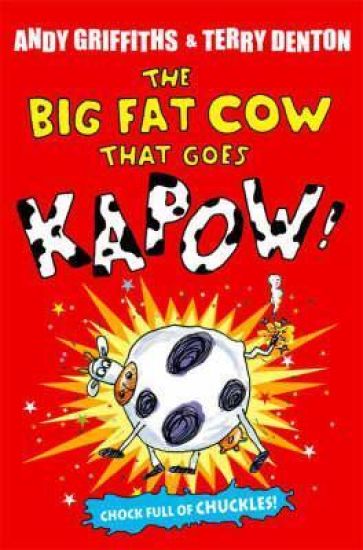
New York Times-bestselling author Andy Griffiths follows up his slimy, rhymey, easy-to-read hit, The Cat on the Mat is Flat, with ten more hilarious short, rhyming stories for elementary school readers. Look inside This book has a mouse with a house, and a mole in a hole, and a squirmy worm, and a spiky bike.And, of course, it has a big fat cow that goes5, 4, 3, 2, 1 . . . KAPOW
There's a rat with a bat and a very flat cat and a frog in a bog with a jet-rocket log, but the duck in the truck might just SUCK THEM ALL UP! Crash! Bang! Pow! Kersplack! This book will bring on a giggle attack! The Cat on the Mat is Flat by Andy Griffiths and Terry Denton is a collection of utterly nonsensical, totally irreverent rhymes. Dr Seuss meets Revolting Rhymes - perfect for reading aloud and learning to read.
Cows in boats. Cows in suits. Big fat cows in cowboy boots! Oh no - watch out! Don't look now! This one is an EXPLODING COW. The Big Fat Cow That Goes Kapow is a collection of utterly wacky and irreverent rhyming poems and short stories. The cleverly simple, repetitive texts and literally explosive denouements will entice even the most reluctant child to keep on reading. Andy Griffiths hilarious text is paired with energetic line illustrations by Terry Denton - the pair behind the mega-successful The 13-Storey Treehouse. 'Udderly amazing!' - The Moos of the World
Plant Here the Standard tells the story of the world's oldest evening newspaper, the (London) Evening Standard. Commencing in the time of Oliver Cromwell, it traces the history of the Baldwin Family, fearless Protestant publishers, whose successors launched The Standard in 1827. Later owners of the paper were to include: C.Arthur Pearson, founder of the Daily Express; Lord Beaverbrook; and, now, Lord Rothermere. And throughout there are tales of the paper's scoops, its famous journalists and cartoonists, and its political involvements.
This is a guide to the legitimate techniques which allow companies to manipulate the figures they publish in their annual report. It shows how businesses are able to beef up their balance sheets and pad out their profit and loss accounts, and describes all the dodges dreamed up by the financial minds in London and New York. Essential reading for shareholders and financial directors alike.
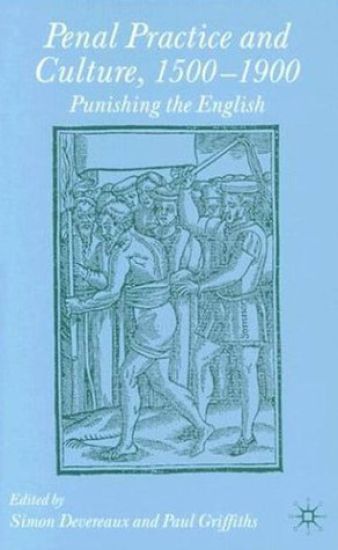
The English were punished in many different ways in the five centuries after 1500. This collection stretches from whipping to the gallows, and from the first houses of correction to penitentiaries. Punishment provides a striking way to examine the development of culture and society through time. These studies of penal practice explore violence, cruelty and shame, while offering challenging new perspectives on the timing of the decline of public punishment, the rise of imprisonment and reforms of the capital code.
This is a book for all researchers in educational settings whose research is motivated by considerations of justice, fairness and equity. It addresses questions such researchers have to face. Will a prior political or ethical commitment bias the research? How far can the ideas of empowerment or 'giving a voice' be realised? How can researchers who research communities to which they belong deal with the ethical issues of being both insider and outsider?The book provides a set of principles for doing educational research for social justice. These are rooted in considerations of methodology, epistemology and power relations, and provide a framework for dealing with the practical issues of collaboration, ethics, bias, empowerment, voice, uncertain knowledge and reflexivity, at all stages of research from getting started to dissemination and taking responsibility as members of the wider community of educational researchers.Theoretical arguments and the realities of practical research are brought together and interwoven. Thus the book will be helpful to all researchers, whether they are just beginning their first project, or whether they are already highly experienced. It will be of great value to research students in designing and writing up their theses and dissertations.
"Once again Morwenna Griffiths has produced a book on an important topic that speaks to theorists and practitioners alike. Read it.”Professor Alison Assiter, University of the West of England, Bristol.“This is a must read for anyone who wants to be provoked and supported toward action and change in education.”Professor Marilyn Johnston, College of Education, Ohio State University, USA."a thoroughly engaging text"British Journal of Educational Studies"Socrates said we can't teach anyone anything, but only help them to think - that's what this book did for me and that's why I liked this book and would recommend it to my students, my friends and my colleagues. Unlike the majority of academic books, I found myself treating it like a novel and saving it up to read before I went to sleep at night, reading it more slowly as it got near the end - not wanting it to be finished. I liked it because it resonated with many of my experiences over the years and reminded me that I'm not alone in finding the struggle for social justice in education hard - but passionately worthwhile." InService EducationSocial justice is a verb. This book puts forward a view of social justice as action orientated rather than as a static theory. Complex discussions of difference, equality, recognition, and redistribution are made accessible and relevant to issues of class, race, gender, sexuality and disability. Interwoven with the discussion are compelling individual accounts of the pleasures and pains, the pitfalls and glittering prizes to be found in education - told by individuals coming from a diversity of social, economic, and ethnic backgrounds. The second part of the book includes examples of successful interventions in real situations, related to self-esteem, empowerment, partnership, and the initiation of individual and joint action to improve social justice in education. The discussion is kept open through 'answering back' sections by educators committed to social justice: Deborah Chetcuti, Max Biddulph, Ghazala Bhatti, Roy Corden, Melanie Walker, Jon Nixon and Kenneth Dunkwu.
"This is an excellent text which covers all of the important research methods in the field, including randomised control trials. A strong component of the text is the inclusion of chapters on ethics and the future of paramedic research... The use of paramedic examples throughout the chapters will help students and other budding paramedic researchers connect with the subject matter and help them link theory, evidence and practice."Professor Peter O'Meara, La Trobe Rural Health School, La Trobe University, AustraliaThis practical book provides a no nonsense guide for student and qualified paramedics looking to understand the key elements of research, and what it means for their profession. The authors explain key concepts and methodologies to help you get to grips with the nature of paramedic research and how it works in practice. By drawing on a wealth of cases and examples, research is placed firmly in the context of clinical practice. The book will enable you to critique research and to engage in small-scale research projects of your own. Emphasising what you need to know, the book includes information on: Knowledge that underpins practiceKey elements of qualitative and quantitative researchResearch ethics and evidence based practiceUndertaking a literature reviewDissemination of research findingsConsiderations of the future for paramedic researchWritten by experienced lecturers, the authors offer practical advice and tips to more advanced researchers on getting work published and giving oral and poster presentations at conferences.Contributors: Jayne Cutter, Gary Rolfe, Megan Rosser, Julia Williams, Malcolm Woollard
This book offers friendly guidance on how to work with adult learners to develop their numeracy and mathematics skills. It brings together current research and practice on teaching adult numeracy into one handy volume and covers the major issues faced by teachers of adult numeracy such as current policy perspectives and implications for teaching practice. There are reflective tasks throughout, which encourage you to develop and apply your theoretical knowledge to your own experiences.Key features include: Reviews of existing policy and research and implications for practiceReflective tasks with commentary, encouraging you to develop and apply your knowledgeCase studies of real student experiencesPractical activities and ideas to support the planning, teaching and assessment of adult numeracyDrawing on the substantial experience of the contributors, who have a wealth of experience as practitioners and researchers in the field, this book is an essential resource for trainee and practising teachers of adult numeracy and mathematics. It is also an ideal textbook to support teacher training courses leading to a subject specific qualification in teaching numeracy to adults. Contributors: Jackie Ashton, John Barton, Carolyn Brooks, Martyn Edwards, Janette Gibney, David Holloway, David Kaye, Beth Kelly, Barbara Newmarch, Helen Oughton, David Prinn, Diana Spurr, Rebecca Woolley"This is a quite unique book about teaching adult numeracy, which will be invaluable to the many practitioners in this field. The chapters, contributed by a group of experienced and successful lecturers and practitioners, include all aspects of this field, from methods of teaching specific mathematical topics to more general explorations of dyscalculia and emotional factors in adult learners. Each chapter includes research findings and thoughtful presentation of ideas with practical ideas for teaching, and tasks for the reader. This is a market which has not been served well in the past, so it is good to see the gap filled at last."Margaret Brown, Emeritus Professor of Mathematics Education, King's College London, UK"The editors of this book set out to produce a text that would support teacher-education programmes for adult numeracy, and their book does that and more. The content covers different types of learners, different settings, different understandings of what numeracy actually is; and ranges from commentary on research through case studies to "how to" hints and tips for teaching. Chapters 7 (on provoking mathematical thinking) and 8 (attitudes, beliefs and teaching) should be a required read for any adult numeracy teacher. The book would be at home on any numeracy teacher's desk, and would make an excellent set text for numeracy teacher training courses."Carol Randall, course co-ordinator for numeracy in the department of Lifelong Learning Teacher Education, University of Greenwich, UK"This book is a welcome addition to the growing literature on adult numeracy. It should be essential reading for trainee and practising adult numeracy educators. It brings together relevant research and professional wisdom on a wide variety of aspects of adult numeracy teaching and learning in an accessible way, with well-focussed tasks for readers to extend their knowledge and understanding. While the book is born out of UK concerns and issues, it is also relevant to international readers. Highly recommended."Professor Diana Coben PhD, Director, National Centre of Literacy & Numeracy for Adults, University of Waikato, New Zealand, and Hon. Trustee, Adults Learning Mathematics - A Research Forum (ALM -- www.alm-online.net/)
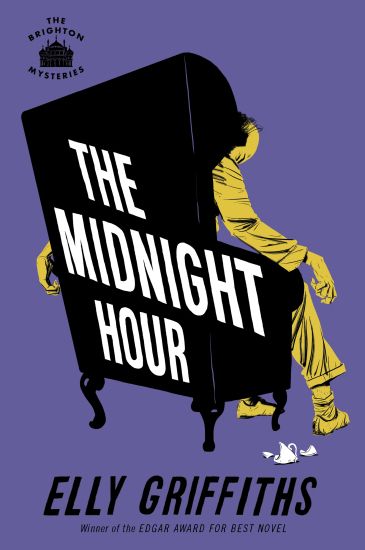
In a nail-biting hunt for a missing loved one, DI Edgar Stephens and the magician Max Mephisto discover once again that the line between art, life, and death is all too easily blurred. It's the holiday season, and Max Mephisto and his daughter Ruby have landed a headlining gig at the Brighton Hippodrome, the biggest theater in the city, an achievement only slightly marred by the less-than-savory supporting act: a tableau show of naked "living statues." But when one of the girls goes missing and turns up dead not long after, Max and Ruby realize there's something far more sinister than obscenity afoot in the theater. DI Edgar Stephens is on the case. As he searches for the killer, he begins to suspect that her fatal vanishing act may well be related to another case, the death of a quiet local florist. But just as he's narrowing in on the missing link, Ruby goes missing, and he and Max must team up once again to find her.
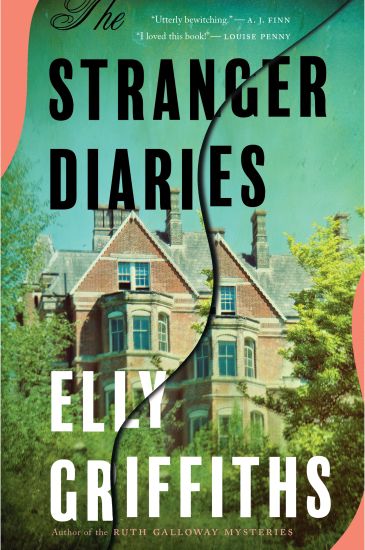
International Bestseller Winner of the Edgar Award for Best Novel "This lively whodunit keeps you guessing until the end." --People Death lies between the lines when the events of a dark story start coming true in this haunting modern Gothic mystery, perfect for fans of Magpie Murders and The Lake House. Clare Cassidy is no stranger to murder. A high school teacher specializing in the Gothic writer R. M. Holland, she even teaches a course on him. But when one of Clare's colleagues is found dead, with a line from Holland's iconic story "The Stranger" left by her body, Clare is horrified to see her life collide with her favorite literature. The police suspect the killer is someone Clare knows. Unsure whom to trust, she turns to her diary, the only outlet for her suspicions and fears. Then one day she notices something odd. Writing that isn't hers, left on the page of an old diary: Hallo Clare. You don't know me. Clare becomes more certain than ever: "The Stranger" has come to terrifying life. But can the ending be rewritten in time?
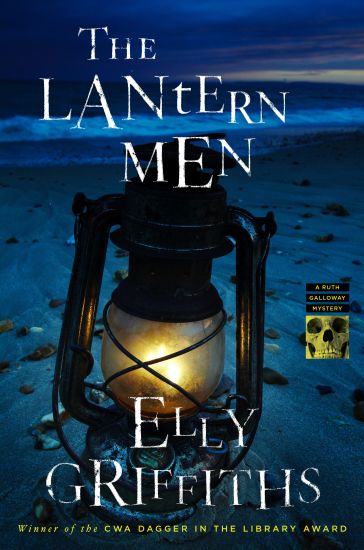
Forensic archaeologist Ruth Galloway changed her life--until a convicted killer tells her that four of his victims were never found, drawing her back to the place she left behind.Everything has changed for Ruth Galloway. She has a new job, home, and partner, and she is no longer North Norfolk police's resident forensic archaeologist. That is, until convicted murderer Ivor March offers to make DCI Nelson a deal. Nelson was always sure that March killed more women than he was charged with. Now March confirms this and offers to show Nelson where the other bodies are buried--but only if Ruth will do the digging.Curious, but wary, Ruth agrees. March tells Ruth that he killed four more women and that their bodies are buried near a village bordering the fens, said to be haunted by the Lantern Men, mysterious figures holding lights that lure travelers to their deaths.Is Ivor March himself a lantern man, luring Ruth back to Norfolk? What is his plan, and why is she so crucial to it? And are the killings really over?
A USA Today Bestseller There's nothing Ruth Galloway hates more than amateur archaeologists, but when a group of them stumble upon Bronze Age artifacts alongside a dead body, she finds herself thrust into their midst--and into the crosshairs of a string of murders circling ever closer. Ruth is back as head of archaeology at the University of North Norfolk when a group of local metal detectorists--the so-called Night Hawks--uncovers Bronze Age artifacts on the beach, alongside a recently deceased body, just washed ashore. Not long after, the same detectorists uncover a murder-suicide--a scientist and his wife found at their farmhouse, long thought to be haunted by the Black Shuck, a humongous black dog, a harbinger of death. The further DCI Nelson probes into both cases, the more intertwined they become, and the closer they circle to David Brown, the new lecturer Ruth has recently hired, who seems always to turn up wherever Ruth goes.
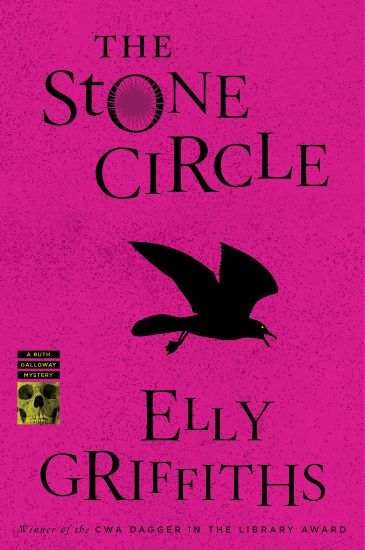
In this delightfully creepy mystery, Ruth Galloway--whom #1 New York Times bestselling author Louise Penny calls "a captivating amateur sleuth"--is haunted by a ghost from her past, just as her future lands on shaky ground. "Its patented combination of mysterious circumstances, police procedure, and agonizing relationship problems will keep you reading, and feeling, all night." --Kirkus Reviews (starred review) Ruth's partner in crime, DCI Nelson, has been receiving threatening letters. They are anonymous, yet reminiscent of ones he has received in the past, from the person who drew him into a case that's haunted him for years. At the same time, Ruth receives a letter purporting to be from that very same person--her former mentor, and the reason she first started working with Nelson. But the author of those letters is dead. Or is he? The past is reaching out for Ruth and Nelson, and its grip is deadly.
The Brighton police force is on the hunt for another killer, but this time they have some competition--a newly formed all-women's private eye firm, led by none other than the police chief's wife. Newly minted PI Emma Holmes and her partner Sam Collins are just settling into their business when they're chosen for a high-profile case: retired music-hall star Verity Malone hires them to find out who poisoned her husband, a theater impresario. Verity herself has been accused of the crime. The only hitch--the Brighton police are already on the case, putting Emma in direct competition with her husband, police superintendent Edgar Stephens. Soon Emma realizes that Verity's life intersects closely with her own--most notably in their mutual connection, Max Mephisto, who has returned to England from America with his children and famous wife, Hollywood star Lydia Lamont. Lydia, desperately bored in the countryside, catches wind of what Emma and Sam are up to and offers her services. What secret does Lydia know about Verity's past? The team of female PIs circle closer to the killer, with the Brighton police hot on their tail. The clues suggest they're looking for a criminal targeting the old music-hall crew. How long will it be before that trail leads straight back to Max?